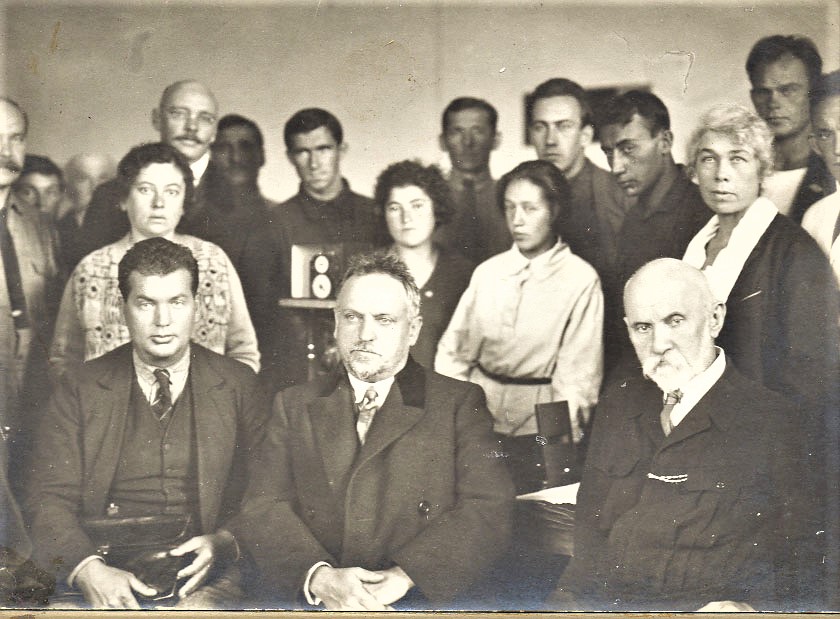
Semashko reports to participants of the Third Comintern Congress on the work of the People’s Commissariat for Health under the most difficult of circumstances. Tasked in 1918 as People’s Commissar of Health, Doctor Nikolai Semashko directed the pioneering public health care carried out by the Soviets in the first decade of the Revolution. Serving as Health Commissar until 1930, the preventative, child-focused, dispersed, and research driven system devised by him, the ‘Semashko System,’ would later be taken up in the Cuban Revolution where it remains the basis of their health programs today.
‘Health Protection in Russia’ by Nikolai Semashko from Moscow. No. 3 May 27, 1921.
The Results of the Activities of the People’s Commissariat for Health and its Possibilities.
The work of the Peoples Commissariat for the Protection of Health was conducted daring the last years under unheard of difficult conditions. First of all the inheritance received from the regime of the Czar and the capitalists was absolutely good for nothing: the medical organization of the capitalist regime was a class organization, it took care of the interests of the masters of the situation, the landlords and the capitalists. The institution of private property, the interests of surplus value placed insurmountable barriers for the carrying on of broad sanitary measures in the interests of the toiling masses. How could it be possible to better the housing conditions of the poor under the existence of private property of land and houses, safeguarding the housing privileges of the bourgeoisie. How was it possible to carry out the protection of labor, the protection of working women-mothers, and the protection of child labor in a regime, the bases of which were the interests of surplus value, the interests of capital?
This is the reason why we inherited from the Czarist Russia a complete absence of any broad sanitary (preventive) measures. That is why the sanitary conditions of the masses were appalling, and that is why for instance the child death rate in Russia was reaching such frightful dimensions unseen in any of the estates of Europe: Yearly out of 100 infants one year old, 26 were dying; that is more than one-fourth of the children born died in the first year of their life. Yearly in the country there were buried from a million and a half to 2 million infant corpses.
Not much more attention was given by the Czarist government to the medical cause: It was not to the interests of the capitalists to improve the health condition of the population at their expense or at the expense of the state but merely to cure the worker who has left the working ranks so as to place him again into the whirlpool of exploitation. That is why, however, more attention was paid to medicine. But even here the class capitalist state created a class medical apparatus. The first class medical aid was at the service of the masters of the situation, landlords and capitalists–and only the worse for the toiling masses. The best hospitals were concentrated in the cities, and their prices made them available only to the very rich circles of the bourgeoisie, the poor in the cities and especially the peasants in the villages were lucky if they could get even a surrogate of medical aid: Anot too well trained nurse or an ignorant midwife. Such forms of assistance as free medical aid at home, ambulance assistance for accidents amongst the poor was not provided for even in the capital cities. Thus the Soviet Government was faced with the basic problem of radically transforming the whole plan of the medical sanitary organization. First place in this reorganization was assigned to measures of prevention, because to them as our great authorities Pirogov and Verchov taught, belongs the future; it is in this way that the whole medical sanitary organization that was topsy-turvy and it was necessary to place it on its feet. Alongside with this revolution of the organization of medical and sanitary apparatus it was necessary to perform yet another one–it was necessary to unite the whole medical sanitary apparatus in to one organ (The People’s Commissariat for the Protection of Health–in the center, and its branches in the provinces) and in place of the former bureaucratic confusion, inconsistency of plans, waste of forces and means, create a single working organization that would take care of the whole medical and sanitary problems in the republic.
Furthermore, both in the sanitary and in the medical department it was necessary to pass a series of measures not in the interests of the parasiting minority but the numerous toiling majority. In order to achieve this in our republic of toilers it was necessary to carry out measures for the protection of labor. This protection of labor was entrusted to the toilers themselves: Both in the center and in the provinces there were created branches for the protection of labor of the representatives of the labor unions: in each factory and mill, in each institution there were organized local commissions for the protection of labor out of the members of the workers and employees themselves. Their functions were–to see to the exact fulfillment of the labor code of laws, to inspect the carrying out of the sanitary and technical conditions. Child labor was prohibited and the labor of youths was limited to 4-6 hours. The compulsory cessation of work by pregnant women for six weeks prior to and six weeks after child birth was established (prior to giving birth mothers are given linen for the child). Nursing mothers are granted certain privileges the choice of a place of work nearer to her home. Interruptions in work for the feeding of the child, and freedom from labor service) etc.
A whole series of Institutions for the protection of mothers and infants was created not only in the large cities but also in the remote provinces: we have now in the republic
Asylums for infants from 0 to 1 year old 267
From 1 to 3 159
Nurseries 567
Summer Nurseries 61
Free Medical consultation 180
Milk Kitchens 96
Homes for Infants and Mothers 108
Maternity Hospitals 13
Training School for Nurses and Instructors 15
Dispensaries 2
Milk Farms 1
Total 1459
The number of children in these institutions are 140,700
The number of mothers are 14,000
As regards children of a somewhat older age, schools were created in the woods for the physically weak in which the training is conducted in the open air, in a healthy locality and according to an abbreviated curriculum and children’s colonies and sanitoriums were also organized for the tubercular children. Attention is also given to the physically defective children. At the beginning of 1921 the number of institutions was as follows:
1. Medical Observation and Testing Wards 37: number of children in them 1360.
2. Auxiliary Schools for Mentally Backward Children 64: which contain 1890 children.
3. Colonies for Morally Defective Children 64: which contain 3060 children.
4. Schools and Pre-school Training for Deaf and Dumb Children 45: with 2247 children.
5. Schools for the Blind with 1215 children.
6. A State Institute for Scientific Investigations of the Defective child, with 5 departments (Mental defectives, Moral defectives, Functional neuroses, Psychiatric and Medical Observation Wards.) The city of Petrograd with its district alone has 53 institutions for defective children.
The question of the physical training of the growing generation was taken up anew: At the newly organized Central Institute of Physical Culture there were rapidly organized a whole series of courses for physicians and pedagogic-instructors on Jan. 1, 1921 we had the following establishments in this department:
Houses for Physical Culture 11
Courses Physical Training 13
Gymnasia and Athletic Fields 8
Training Camps and Sanitoria Colonies
Together with these measures for health protection the ordinary sanitary measures were carried out also: the protection of the sources of the water supply and their betterment, the sanitary protection of housing conditions, the improvement of canalization and sanitation, the struggle with epidemics (amongst other a decree was passed for the compulsory vaccination, etc.). In the purely medical department also first of all our attention was directed to the provision of medical aid for the poorest part of the population: Not only in the gubernia capitols, but even in the smaller cities there was organized medical aid at home, and rapid medical assistance for the poop er part of the population: medical assistance was brought nearer to the factories and the mills. Private hospitals formerly available only to the rich have been nationalised and are free to the whole population. Medicaments are given out gratis on prescription. The total number of beds in the hospitals were Increased; at present we have a total number of beds for civilians reaching over half a million (not considering the military beds of which there were on the first of Jan. 1921 400,000). That is we have an increase as compared with the pre war time of 30%. The best qualified medical aid is given first of all to the toiler: Sanatoriums, country places, watering places where formerly the rich bourgeoisie were spending away their lives are now filled by workers, peasants, Red army men. According to the established rules 65% of the rooming accommodations in the country places and sanatoriums are assigned to persons engaged in physical labor and only the remaining 35% to the other categories of citizens.
We have not by far carried out even half of what must be performed in the sphere of preventive (sanitary) measures. The cause of it is our poverty, economic and material ruin to which we were brought by the imperialistic and the civil war. We have not satisfied even one hundredth part of the needs, let us say in in the sphere of the protection of mothers and infants, and in the medical sphere we must at least create a whole chain of new hospitals, in order to somewhat satisfy the all growing needs of the population. The cause of that is the lack of the necessary equipment for hospitals, the result of the hideous blockade on us by the imperialists. For it is well known that Russia always received medicaments from abroad. Many plants from which the most necessary medicines are prepared do not grow in Russia (for instance, quinine)
Therefore, in spite of all our increased attempts to begin our own manufacture of medicines we could not cure the wounds caused by the blockade of the Entente. All this enables us to improve at once considerably the medical and sanitary department of the republic. The active participation in it of the whole toiling population serves as a pledge of its further development. For all measures of the People’s Commissariat for the Protection of Health are accompanied by a wide sanitary educational activity amongst the very broad masses of the people and because these measures are worked out and carried out with the actual and permanent participation of the cause of the workers themselves. The motto “The health of the workers is the cause of the workers themselves” is the basic motto of soviet medicine.
N. Semashko
Moscow was the English-language newspapers of the Communist International’s Third Congress held in Moscow during 1921. Edited by T. L. Axelrod, the paper began on May 25, a month before the Congress, to July 12.
PDF of full issue: https://www.marxists.org/history/international/comintern/3rd-congress/moscow/Moscow%20issue%203.pdf
 Revolution's Newsstand