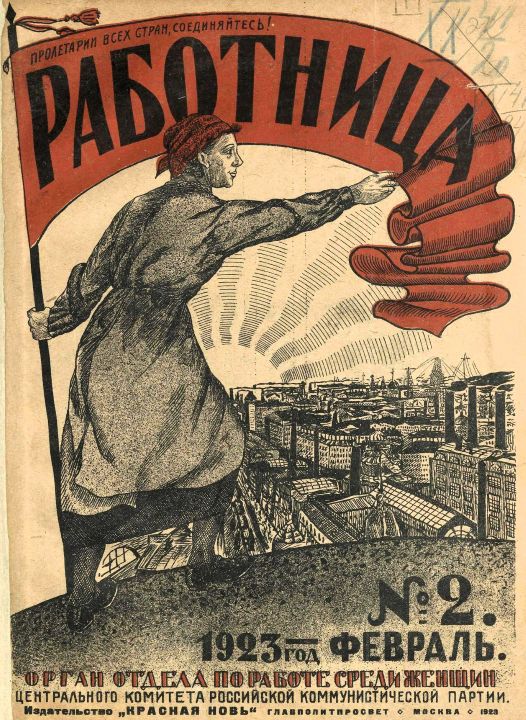
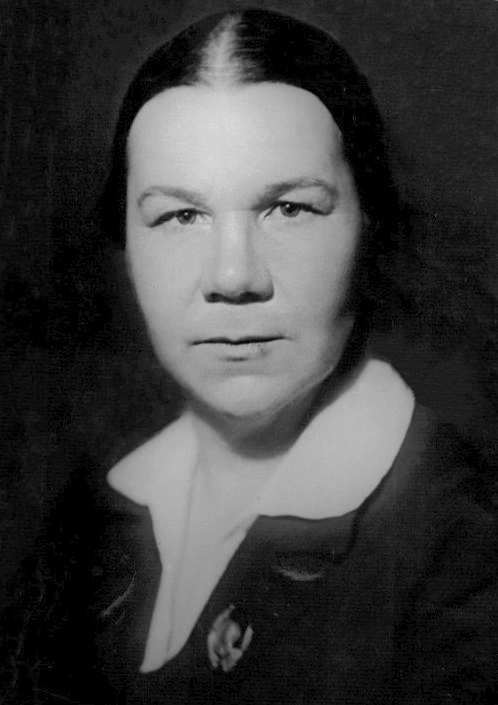
The Comintern’s Organization Conference on Communist Work Among Women was part of the larger reorganization, ‘Bolshevization’ process begun with the Fifth Congress of 1924. Coinciding with the general Organization Congress on the early Spring of 1925, below is the address of Clara Zetkin as head of the International Women’s Secretariat and Klavdiya Nikolayeva, an Old Bolshevik, trade unionist, and editor of the women’s periodical, Rabotnitsa.
‘Organization Conference on Communist Work Among Women: Reports’ by Clara Zetkin and Klavdiya Nikolayeva from International Press Correspondence. Vol. 5 No. 56. July 15, 1925.
Organisation Conference on the Work among Women.
Arranged by the Organisation and Women’s Departments of the Comintern during the Session of the Enlarged Executive on 5. and 6. April 1925.
Agenda: (Detailed Report of Conference.)
1. Report of the International Women’s Secretariat on its Activity, and on the Progress of Work among women in the Sections. Speaker comrade Zetkin.
2. Report on the activity of the Russian C.P. among the masses of women, and on the utilisation of the experience gained for work in the West. Speaker comrade Nikolayeva.
3. Reports of the Sections.
4. Discussion.
1. Session, 5. April 1925.
Comrade Kornblum (Secretariat of the E.C.C.I.) opened the meeting:
The Secretariat of the E.C.C.I., at its last meeting, decided to take the opportunity offered by the presence of delegations to the Enlarged Executive from so many countries for the purpose of holding a detailed consultation on the most important organisatory questions touching women’s work in all the Parties of the Comintern. This conference has now been convocated by the Organisation Department of the E.C.C.I. and by the International Women’s Secretariat. We shall here hear a short report from comrade Clara Zetkin on the work hitherto accomplished by the Women’s Secretariat, and a report from a representative of the central Women’s Department of the Russian C.P. A resolution it to be debated and passed on the conclusions to be. drawn from these reports and from the reports from the various countries.
The following presidium was unanimously elected on Kornblum’s motion:
Clara Zetkin (International Women’s Secretariat). Suzanne (France). Bertz (Germany). Nikolayeva (Russia). Kasparova (East. Dpt. of Int. Women’s Secretariat). Mizkevitch (Organisation Dpt. of E.C.C. I.). Kornblum (Secretariat).
Report On the Activity of the International Women’s Secretariat and the Progress of Work among Women in the Sections by Clara Zetkin.
My report will be brief. The point of greatest importance is to hear the reports given by the representatives of the individual sections.
The task set the International Women’s Secretariat was the execution of the decisions of the V. World Congress and of the International Communist Women’s Conference. This task consisted of the complete ideological and organisatory incorporation of communist work among women into the general work of the Party. This task has nothing to do with the question of the right and duty of women comrades to co-operate, on terms of perfect equality as members of the Sections, in all work, actions, and struggles in the Communist Parties. This right and this duty are beyond question. Our task is to win over the broad masses of working women for the principles of communism, and to make them so at one with these principles that their faith becomes action. The masses of proletarian women must be induced to take part in all the economic, political, and social struggles of the proletariat and to do this under the leadership of the Communist Parties and of the Communist International. The Communist Parties must create suitable organs for the accomplishment of this task. In every leading body from the national Central down to the nucleus one member is to be specially entrusted with the duty of systematically organising the work among the masses of the women. This member whether a man or a woman comrade must of course receive the help of the necessary technical aids and auxiliaries. The work of the women’s secretary or women’ secretariat must be complemented by the co-operation of auxiliary organs: women’s committees, women’s agitation committees, etc. The International Women’s Secretariat has set the example of complete incorporation. In every question it invariably co-operates with the corresponding working departments of the Communist International. It has done this with reference to the Department for Agitation and Propaganda, the Organisation Bureau and the Co-operative Department. It invites representatives of the various Sections to take part in its meetings. It co-operates with the related revolutionary organisations: the Red International of Labour Unions, the Peasants’ International, Youth International, International Red Relief and International Workers Aid.
Unfortunately the ideological and organisatory incorporation of communist work among women is still exceedingly incomplete in the majority of the Sections of the West. Very few of the Communist Parties possess the required apparatus.
The central incorporation of work among women has made the greatest progress in Germany. But there is still much left to be desired here in the districts and centres.
In France the central organ has been created by the appointment of a woman secretary, but until quite recently her activity was confined almost solely to Paris.
In Italy earnest endeavours have been made towards the organisation of a good apparatus, despite Fascism. Here there is a national women’s secretariat, reinforced by a national women’s committee, composed of representatives of the large provinces. 29 federal women’s agitation committees have already sprung into existence, but the Party has not yet organised and developed the work sufficiently in the various centres.
The apparatus is still exceedingly imperfect in England. The national woman secretary receives practically no technical aid, and in the various districts and centres there is a lack of organs making it possible to co-operate with the Central for the awakening and mobilisation of the masses.
Czecho-Slovakia possesses a well developed apparatus for work among the women. Unfortunately, up to the present, we have no definite information as to the relations between the various departments, as to the organisatory relations to the Party Executive, to the Party press, etc.
In the United States the organisation so it appears to us does not seem to have been commenced on right lines for our work.
This has however been the case in Austria and Holland. In Sweden and Norway there are still many remains of the old social democratic forms of organisation. We have no definite data of the state of affairs in Poland, the Party there being obliged to work illegally or semi-illegally.
As a general rule we find the following two erroneous tendencies with regard to the incorporation of women’s work into the general work of the Party. Despite the repeated decisions of the World Congresses there are still independent women’s communist organisations, working side by side with the Party. And on the other hand there is a tendency to deny the necessity of special systematic work among the masses of proletarian women, by means of special organs. Both tendencies must be overcome.
What has been accomplished towards carrying out the work itself? The World Congress and the Women’s conference laid special emphasis upon the extreme importance of reaching the working women in the shops and factories. This is closely bound up with the reorganisation of the Party with regard to factory nucleus work, and with the growing economic struggles of the proletariat. Unfortunately, work in this direction has not yet made much progress.
The best work has been done by the Communist Party in Germany, though even here it is by no means perfect. A beginning has been made with the work of organisation among the working women in large industrial centres, such as Berlin, Saxony, Thuringia and Wurtemberg. The initiative has been taken by the women’s departments, these entering into communication with Party and Trade Union functionaries. Special success is reported from the work among the women textile workers of Thuringia. In Gera it was possible to convocate a delegates’ meeting among the women textile workers, and this elected a permanent women workers’ committee. A committee of women home workers’ was founded in Berlin. Systematic work towards organising the women was interrupted by the election campaign undertaken by the Party. This fact shows the weaknesses of our general Party work in the shops and factories. The situation should have been utilised for mobilising the women workers in the factories.
In France the Paris Federation drew up an excellent programme for work among the women workers in the factories. The International Women’s Secretariat forwarded this to all Sections as information and stimulation. Up to the present we have received no report on the actualisation of this programme, nor on the necessary extension of the work to the great industrial centres in the provinces: the Département du Nord, Lyons and its environs, upper Alsatia etc.
In England, Party work among the proletarian masses has been chiefly confined to the miners, metal workers, and transport workers, these being the bearers of the Minority movement. Practically nothing has been done towards organising the working women in the factories. The Minority movement has been extended too little to the trade unions in which women are organised. It is not sufficient to organise women merely for the struggles against the employers, they are to be enlisted in the ranks of the fighters against trade union bureaucracy, and among the champions of trade union unity.
This must be done in all the countries of the West. Here the women organised in trade unions are everywhere supporters of trade union bureaucracy, although this betrays the interests of the working women.
In Germany the women Party functionaries held a conference participated in by the women shop stewards from different districts. This conference proposed that the elections to the factory councils and to the local trade union administrative bodies should be utilised for systematic work among the women, and for their trade unionist organisation and education. For this purpose working women are to be nominated as candidates in the oppositional or communist lists.
In France the C.G.T.U. has appointed in Paris a women secretary for the furtherance of trade union work among the working women, and is arranging a national conference at which this question will be dealt with. The C.G.T.U. intends to co-operate systematically with the national women’s secretariat of the French C.P. for the organisation of the women.
Up to now there has been but little Party activity in England towards the trade union organisation and schooling of the women workers in those industries in which women’s work plays a great, if not decisive role: the textile industry, ready-made clothing and foodstuff trades etc. The International Women’s Secretariat proposed to utilise the last unemployed conference for this purpose, as also the conferences held by the Minority movement. The work being done by our trade union fractions among the working women who are not organised in the trade unions, and among women trade union members, must be greatly increased. Detailed representations on these questions have been sent to England by the International Women’s Secretariat.
In districts where women take a smaller part in industrial. work, but where the attitude adopted by the housewives is of decisive importance in strikes and political struggles, auxiliary organs and organisations must be created for the activisation of the masses of proletarian women, and these must maintain a permanent and regular organised connection with the Communist Party, working under its leadership. These organs and organisations, which we require at the same time for the non-communist working women, must begin at once to develop on Russian lines into delegates’ corporations. This must of course not be done by mechanical imitation, but the actual given circumstances ruling in the separate countries must be taken into account.
The beginnings of such a development were noticeable in Germany, in the form of control and action committees, during the movement caused by the high prices. In England the proletarian women’s guilds comprise the proletarian women in sympathy with us.
Organisations of sympathising proletarian women have, been founded in Italy; these however appear to include communist women as well and thus go beyond the limits of their actual character. In the United States we had the “Council for working class women” to which not only many leading women communists and individual members belonged, but more than 40 non-communists women’s organisations. This was dissolved by the Workers Party, but it is certain to be reorganised and called back into existence.
It will be one of the leading tasks of this conference to follow comrade Nikolayeva’s address by a detailed discussion of the practical ways and means to be pursued for creating the organs and organisations which are to keep up the contact between the broad masses of proletarian women and the Communist Party. Methods of works among the peasant women have been indicated by a circular with question form sent by the I.W.S. to all Sections. Most of these have sent no reply. Reports on small holders’ conferences, press notices etc. show that slight efforts are being made to take up this important work in Germany.
With respect to our press, our Parties have no clear idea of the tasks and aims of the so-called women’s press. We are all agreed in principle that the theoretical and political schooling of our women comrades is to be effected by the general Party press, its political and scientific organs. The same applies to problems pertaining to the so-called women’s question and women’s demands, for these are at the bottom the problems and demands of the proletariat. The “Women’s Pages” and “Women’s Columns” in the general Party press should be adapted, like the special women’s papers, to the broad masses of working women. This object is but partially attained, owing to the double character of their publications. Their contents are adapted in part for women comrades, and in part for the masses of women just awakening. This is explained by the fact that the general press organs of our sections do not adequately fulfill the tasks of schooling the women comrades theoretically and politically, so that the need arises to deal with urgent question in special “Women’s Pages” and women’s papers.

Organs which are already fairly well adapted to the needs of the broad masses of women are following: in Germany the “Kommunistin”, organ of the German C.P. and various working women’s newspapers appearing in the provinces; in France the Party papers “L’Ouvrière”. Our Party press in Italy appeals to the women comrades, to the Party functionaries, and to the masses of the proletarian women. Almost all articles, notices, etc. are written in such a simple and popular style that they can be understood even by backward women. In this respect the character of our women’s press in Czecho-Slovakia is extremely contradictory and unclear.
As a general rule the purport of our women’s newspapers of every description is not yet sufficiently permeated with communist principles. The events and facts dealt with are not linked up vitally with the daily slogans of the Party, of the trade unions, or of the proletarian struggle. We receive valuable material from the women of the proletariat in support of our charges against capitalism, but this does not raise our women’s press to the level of an organ for training and leading the masses of women.
It is of leading importance for overcoming this drawback that Worker correspondents should by organised and schooled from among working women, workmen’s wives, and if possible peasant women. It need not be said that the letters sent by these women must be carefully examined, and brought into line with the principles of communism, naturally with the agreement of the writers. This must be done with the requisite fine feeling for the thoughts, feelings, and modes of expression of the correspondents. Their contributions must lose nothing of their freshness and originality, and on the other hand our women’s papers must not be permitted to become the gathering place of petty bourgeois and uncommunist views, and even of unconsciously anti-communist views. The correspondence carried on by working women, the contributions sent by working women to factory newspapers and other organs, educate proletarian women to independent thought, to independent activity and self-reliance. Besides this, they form personal, reliable, and zealous fulcrums for our organisatory work in the factories, and give us canvassers for our press. I confine myself to this abbreviated and general survey of the progress of our work among working women.
The experience gained by the I.W.S. shows that outside of the Soviet Union there is an international shortage of men and women comrades who, schooled in theory and practice, have actually grasped the whole complex of the women’s question as a part of the social question in the sense of Marxism and Leninism, and have there seen clearly that at the bottom every so-called woman’s question is also a man’s question, a children’s question in a word, a social problem concerning the whole proletariat. Our comrades are not yet thoroughly imbued with Lenin’s view that without the participation of millions of women the proletariat is not in a position to seize and maintain power, and is unable to reconstruct society on communist lines after seizing power.
We must call theory and practice to our aid clear away the Philistinism still clinging to many of our comrades. The whole of the institutions and organs of the Communist Parties are to be so adapted that they not only serve the purpose of general enlightenment, but ensure at the same time the development of Marxist understanding in the women’s question. Thus for instance the treatment of this question must be made part of the educational programme of the national sections. It is of the utmost importance to ensure that the largest possible number of women comrades utilise the educational opportunities. Lenin emphasised that we can only have a good revolutionary movement if we have a good revolutionary theory. Until this has been realised by both men and women comrades our work among the masses of women is but patchwork. Our utmost endeavous must be towards gaining the right to say: In this sphere too we are Bolsheviki, understanding pupils of the master, ready to convert good revolutionary theory into good revolutionary practice.
Comrade Nikolayeva’s Address
on the activity of the Russian C.P. among women and on the utilisation of the experienced gained for work in the West.
The active elements among the non-party working women were organised in such manner that circles were formed for the working women in the workshops and factories, by women comrades closely connected with the various shops, departments, etc.
Under the rule of the capitalist order, this form of work was the original form of the delegates’ meeting. But since it was not possible at that time to hold delegates’ elections in the factories, these circles were so organised as to permit the Party nuclei to exercise influence over the masses of working women.
The circle was conducted under the leadership of the nucleus, it served to maintain communication between the nucleus and the masses of women workers, it was the recruiting centre for gathering together more and more working women. The existence of such circles in the factories naturally led to systematic meetings among their organisers, to consistent and systematically conducted work.
Besides this, common meetings of all circles were held from time to time, in order that reports might be heard, a rapprochement made possible between the working women employed in different undertakings, the feeling of solidarity encouraged, and the members of the circles (and with these the broader masses of working women) revolutionised.
The organisation of working women correspondents organised by the periodical “Rabotnitza” (The Working Woman), an organ published by the Central Committee of the Russian C.P., attained a position of great importance in our sphere of activity, not only for our agitation and propaganda, but at the same time for the organisation of the masses of working women. The working women immediately connected with the factories and with the editorial staff of our newspaper were successful
in gathering the masses of non-party working women around our paper; this they attained by publishing notices, articles, and poems sent in by the working women, and by calling upon the women to support their own press organ.
By means of these measures, aided by the trade unions, the educational organisations and the workers’ clubs, we were able to so organise and revolutionise the working women under the leadership of the Party that the women have taken part in the strikes, and in the revolutionary actions entered into by the working class.
In the time during and after the February revolution, when our Party was no longer obliged to work illegally, but was able to go forward to real mass work, the Party activity in the women’s circles changed in character, and was also enabled to advance more and more to mass work.
The small circles in the separate factories were now replaced by large groups of women workers, connecting the different workshops and departments with the masses of proletarian women. The Central Committee of our Party received further aid through the affiliation of a special commission for conferring on the work to be done among the women. This commission formed at the same time the editorial staff of the periodical “Rabotnitza”. It organised the work among the women, and ensured its being carried on under the leadership of the Party. At the same time this commission was complemented by communist women workers working in the factories and districts.
Besides the general factory meetings, special women workers’ meetings were systematically organised by the groups of active women workers, under the leadership of the nucleus. At first the general mass of working women in the undertakings in question did not attend these meetings, but after a while, hand in hand with the development of our agitation, and with the increased organisation of the active elements among the non-party women workers around our Party, more and more women participated.
The working women, thus becoming accustomed to the women workers’ mass meetings, now began to attend other meetings, bearing a politically fighting character. Thus for instance in July 1917, when the Party was again forced into illegal activity, mighty meetings were arranged in the name of the “Rabotnitza”, the sole Bolshevist press organ left existing, for the purpose of enlightening the masses on the meaning of the events in July, and on the treacherous role played by the Mensheviki.
We sent special groups working women to the meetings called by the Mensheviki, to expose the true nature of Menshevist activity. Here we achieved positive results. We proceeded in the same manner at the meetings convocated by the “League for Women’s Rights”. At this time there was a mighty increase in the publication of leaflets, posters and other propagandist literature. We devoted special attention to our periodical, and its circulation increased rapidly.
We may claim that the whole of this work was eminently successful. The working women participated in enormous numbers in the street demonstrations in Leningrad on 21. April 1917, and in the June demonstrations. The preparatory work was carried forward not only by the Party members but by a large number of non-party working women. Many of these came to the office of the “Rabotnitza” to ask how they could best prepare for the coming demonstrations.
Besides this, the working women carried on active agitation among the soldiers sent to Petrograd by the provisional government to suppress the Bolsheviki. The forward march of General Kornilov on Petrograd aroused not only the workmen, but the working women as well.
Then came the Red October, and with it fresh work. But fresh forces came as well, fresh energies, fresh strivings in the struggle and for the establishment of our workers’ and peasants’ state. Every working woman saw a mighty field of activity opened out before her. Now she had become a citizen possessing equal rights, and now she could participate in the building up of the first workers’ and peasants’ state.
The Party made this clear to many thousands of women workers and peasants. Day by day, and month by month, the Party pursued its work of awakening fresh strata of the backward masses of working women. The Party had frequently passed resolutions, at its congresses, to the effect that the organisation of the broad masses of working women is one of the tasks incumbent on the whole Party, and the Party Committees were thus induced to pay special attention to this sphere of work.
Now that the Party had extended its influence to certain strata of the non-party working women, it became necessary to convocate conferences, first among the non-party women workers, and later among the non-party women workers and peasants.
The first of these conferences of non-party women workers tock place in Petrograd before the October revolution. About 800 delegates were present, representing 80,000 working women. The conference declared its complete solidarity with the Communist Party of Russia (Bolsheviki) in its struggle for the power of the Soviets.
This first conference was followed by a number of similar ones in all the industrial cities and districts of Russia. They proved of enormous organisatory significance. The October revolution faced us with the necessity of perfecting these forms of activity, in order to reach the greatest number of working women in every branch of industry, and to organise at the same time the women peasants and other strata of working women.
The departments already existing for work among the women were now developed into integral parts of the Party apparatus, employing paid comrades. Up to this time, in the first and second working periods, none of the comrades carrying on this work were paid, except the comrade responsible for editing the newspaper. The whole of the members of the lower Party apparatus performed their work for nothing, as a part of their duty as members of the Party. Now, however, a central apparatus was formed and affiliated to the Central Party Committee, and special organs were provided for the lower Party organisations. Every factory nucleus, and every Volost nucleus (rural district cell) appointed a special organiser for work among the women workers and peasants, and among the women of the other strata of the population. In every factory and village delegates’ meetings of working and peasant women were organised, the delegates being however no longer volunteers, but elected.
Systematic conferences were now held among the women organisers, and the question of training suitable comrades for this work arose. Work among the women could now be carried on in complete harmony with the tasks confronting the Party and the Soviet power.
Thus for instance the working and peasant women aided the Red Army during the civil war, took part in the sappers’ work, organised ambulance divisions, participated in the defence of towns, and performed every possible description of work. The actual participation of working and peasant women in the building up of the state became a reality. 40,000 peasant women became members of the village Soviets, thousands of working women worked in the city Soviets. Many hundreds of working and peasant women distinguished themselves not only in the civil war, but in every kind of civil service. Even the working women of the East, enslaved and suppressed for centuries, brought forth from their midst a considerable number of energetic women, capable of active participation in the constructive work of the Soviet power.
Millions of working and peasant women are represented by hundreds of thousands of women’s delegates. The organised cadres of working and peasant women gathered around the Communist Party grow from year to year. The number of our women Party members grows in proportion. The development of the institutions actuating the emancipation of working women, the abolition of illiteracy, and the uplift of the cultural and political level of the broad masses of the working and peasant women, are winning millions of these women for the social and political life of our country, and for the constructive work of the Union of Soviet Republics.
In this sphere of work the Party is following faithfully in the footsteps of Lenin.
International Press Correspondence, widely known as”Inprecor” was published by the Executive Committee of the Communist International (ECCI) regularly in German and English, occasionally in many other languages, beginning in 1921 and lasting in English until 1938. Inprecor’s role was to supply translated articles to the English-speaking press of the International from the Comintern’s different sections, as well as news and statements from the ECCI. Many ‘Daily Worker’ and ‘Communist’ articles originated in Inprecor, and it also published articles by American comrades for use in other countries. It was published at least weekly, and often thrice weekly.
PDF of full issue: https://www.marxists.org/history/international/comintern/inprecor/1925/v05n56-jul-15-1925-inprecor.pdf
 Revolution's Newsstand