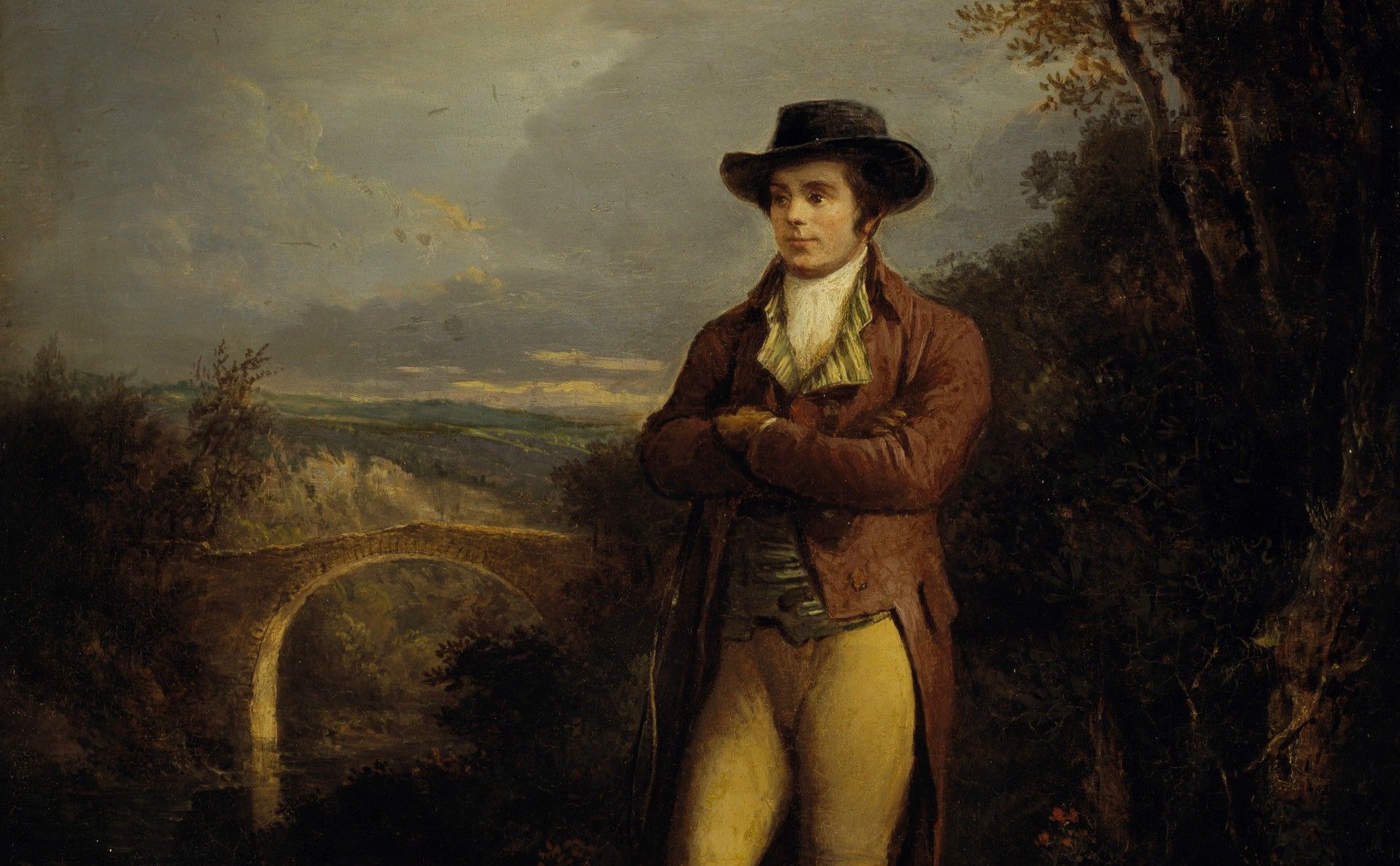
A left that read, thought about, discussed, and theorized poetry…The Modern Monthly’s V.F. Calverton looks at pieces by Margaret Widdemer, Francis Adams, John Masefield, Robert Burns and others in this essay on the role of the poet in a society under transformation.
‘Poetry and Revolution’ by V.F. Calverton from The Daily Worker Saturday Magazine. Vol. 3 No. 303. January 8, 1927.
Revolutionary poetry may be the result either of deep protest or discontent, or of a radical change in society. There was revolutionary poetry in Russia before the late Revolution of the Bolsheviki, and there was revolutionary poetry, too, in Germany in the eighteen-twenties, long before the proletariat was organized into either party or union. It is clear that certain dissections and definitions are imperative. In the first place, revolutionary poetry, it is obvious, is the result of an exciting and agitating social urge. It could scarcely arise in a placid society. It discloses the existence of social struggle and conflict. The artist is often unaware of the entire implications and extensions of his revolt. Of course, there are artists who are consciously revolutionary in their social attitude as well as their esthetic. The latter, however, are fewer in number than the former. The reaction of the artist is part of the behavior of social change. The extensity and intensity of his revolt is dependent upon his chemistry of character as well as his degree of social vision. Social vision alone does not give genius to the artist’s touch, but it is the necessary background for great social art, the production of moving social beauty.
Poems of protest are abundant; poems of revoIution are few. A poem such as Francis Adams
To the Christians,
“Take, then, your paltry Christ,
Your gentleman God.
We want the carpenter’s son,
With his saw and hod.
We want the man who loved
The poor and the oppressed,
Who hated the rich man and king
And the scribe and the priest
We want the Galilean
Who knew cross and rod.
It’s your “good taste” that prefers
A bastard “God!”
is certainly denunciatory of the bourgeoisie, but with its Christian sentimentalism, is assuredly not a poem of revolutionary vision. Margaret Widdemer’s Factories is a poem of social appeal:
I have shut my little sister from life and light
(For a rose, for a ribbon, for a wreath across my
hair),
I have made her restless feet still until the night.
Locked from sweets of summer and from wild spring
air;
I who ranged the meadow lands, free from sun to
sun,
Free to sing and pull the buds and watch the far
wings fly,
I have bound my sister till her playing-time is done
Oh, my little sister, was it I—was it I?
I have robbed my sister of her day of maidenhood
(For a robe, for a feather, for a trinket’s restless
spark).
Shut from Love till dusk shall fall, how shall she
know good,
How shall she pass scathless through the sinlit dark?
I who could be innocent, I who could be gay,
I who could have love and mirth before the light
went by,
I have put my sister in her mating-time away—
Sister, my young sister,—was it I?—was it I?
I have robbed my sister of the lips against her
breast
(For a coin, for the weaving of my children’s lacs
and lawn),
Feet that pace beside the loom, hands that cannot
rest,
How can she know motherhood, whose strength is
gone?
I who took no heed of her, starved and labor-worn,
I against whoso placid heart my sleepy gold beads
lie
Round my path they cry to me, little souls unborn,
God of Life—Creator! It was I! It was I!
and yet, it too, is not a revolutionary effort.
Even such a spirited and rhythmic poem as Masefild’s Consecration:
Not of the princes and pledates with periwigged
charioteers
Riding triumphantly laurelled to lap the fat of the
years.
Rather the scorned—the rejected—the men hemmed
in with the spears;
The men of the tattered battalion which fights till
It dies,
Dazed with the dust of the battle, the din and the
cries,
The men with the broken heads and the blood running
into their eyes.
Not the be-medaled commander, beloved of the
throne,
Riding cock-horse to parade when the bugles are
blown,
But the lads who carried the koppie and cannot be
known.
Not the ruler for me, but the ranker, the tramp of
the road,
The slave with the sack on his shoulders priced on
with the goad.
The man with too weighty a burden, too weary a
load.
The sailor, the stoker of steamers, the man with
the clout,
The chantyman bent at the halliards putting a tune
to the shout,
The drowsy man at the wheel and the tired lookout.
Others may sing of the wine and the wealth and
the mirth,
The portly presence of potentates godly in girth;—
Mine be the dirt and the dross, the dust and scum
of the earth!
Theirs be the music, the color, the glory, the gold;
Mine be a handful of ashes, a mouthful of mould,
Of the maimed, of the halt and the blind in the
rain and the cold—
Of these shall my songs be fashioned, my tale be
told.
is not a revolutionary production.
All of these poems express sympathy for the proletariat, all are in protest against a society that breeds poverty, hunger, and pain, yet none possesses revolutionary insight or philosophy. They are all part of that movement that marked the rise of new forms and the slow decay of old ideals in the latter part of the eighteenth century. They are in revolt against things aristocratic. They despise, too, the acquisite ideal. The lower classes have Captured their sympathy. At one time it was Rousseau, at another Paine, who believed in the future of democracy. For Paine, as for Mary Wollstonecraft and the Utilitarians who grew into a school of philosophic and economic significance, private-property was a virtue instead of a vice. Yet despite their philosophic defense of private-property these thinkers were part of the democratic movement we have described. They had a sympathy for the commoner. It was not a class-conscious sympathy, to be sure, but a sympathy that was significant in contrast to the contempt with which the older aristocracies had regarded the toiler. Out of this movement sprang the exclamatory enthusiasm of William Blake, the English poet, who, donning a red cap, declared himself a liberty-boy–“the shape of my head makes me so”–and who later was arrested for crying “Damn the king and you too!” when he tried to eject an officious soldier from his gardens. Burns, too; and the early Wadsworth, and Cowper, the young Southey and Coleridge, were expressive of the same reaction. The poet was moved often to an exciting if not ecstatic and revolutionary madness. Cowper, with all his pious skepticism, was thrilled by the Revolution, and called it a “wonderful period in the history of mankind.” Burns was beautifully dynamic in his enthusiasm. It was he who sent guns from a captured smuggling vessel to the Convention in Paris, and who enraged a military officer by stating that England, in her war with France, should meet with the failure she deserved. Burns’ poem, A Man’s a Man for a’ That, was written at this time, most likely in 1789, although it was not published until 1791. Wordsworth was gay in his early rebelliousness. To be alive was good, but to be alive was very heaven–such was the sentiment of the early Wordsworth who caressed love in those days with the carelessness of a young Lothario. As late as 1794 he wrote to his friend Mathews:
“I am of that odious class of men called democrats and of that class I shall forever continue.”
In another place he wrote, with equal fervor: “Hereditary distinctions and privileged orders of every specie, I think, must necessarily counteract the progress of human improvement, hence it follows that I am not amongst the admirers of the British Constitution.”
In the actual words of their poetry, these men stood with the suppressed classes. That their stand was sentimental is not to be argued. It was a sentimentality, however, that was persuasive and, at the time, influential. Burns’ poem, A Man’s a Man for a’ That, was expressive of an attitude that was not to be found in the aristocratic and bourgeois literature that had preceded Goldsmith’s lines:
“Ill fares the land, to hastening ills a prey,
Where wealth accumulates, and men decay:
Princes and lords may flourish, or may fade;
A breath can make them, as a breath has made:
But a bold peasantry, their country’s pride,
When once destroyed, can never be supplied,”
while not revolutionary in either form or substance, did chalk the growth of this sentiment of sympathy for the dispossessed which had not been known in literature, except by way of vain gesture of effusion, since the days of Jeremiah.
Our poetry, today, then, is chiefly poetry of protest instead of poetry of revolution. As poetry of protest is even adulterated with sugar phrase and lachrymose attachment. Dronke’s lines:
“And for your blood of God demand
Grim penalty,”
or those of Heine:
“A curse to the king, a curse to his coffin,
The rich man’s king whom our plight could not
soften;
Who took our last penny by taxes and cheats,
And lets us be shot like dogs in the streets,
We weave, we are weaving,”
ring with challenge that is little felt in our poetry today.
The poet who merely shrieks at the hideous hells we call factories, or wants to dynamite them like Yank in The Hairy Ape, or scrap them like the humanitarians of the nineteenth century, is not a poet of the revolution. A poet of the revolution must see in the factories the growth of man’s control, in machinery the mastery of nature which must be mastered by men. Out of ugliness must come beauty, by transformation of control and ideal, and not by destruction of substance and skill. The machine must be an ally and not a foe. It is the way the machine is controlled that embodies it with so much horror and destructiveness. Modern art has discovered in the lines of the machine the essence of exquisite form. Modern society must find in the machine the sesame to a future freedom of the toil and torture of our present life.
Revolutionary poetry, then, must embody an ideology entirely different from the one that has prevailed. Poetry of protest, as we have said, is not poetry of revolution. Revolutionary poetry involves a whole, life as a connected, coherent, synthetic faith in a new order. It is not one phase of life that it sings, one segment of experiences, but life as a whole, like as a connected, coherent, synthetic tiling, that it desires to express. Its vision should be inclusive. A new economic life, a new social life, a new sex-life, a new art life, a new scientific life—all these should be part of its vision. Revolution is not a simple, single thing, with simple, single manifestations. Its basis which is economic eventually comprehends every other experience. The revolutionary poet must acquire the completeness of this conception.
In the final analysis, poets must come to learn their place and function in society. With the ascendancy of the bourgeoisie, the artist has become an exalted curiosity in the social world. He must come to learn, as Lowell aptly expressed it in his essay on Nationality in Literature in 1849, that
“Poets, however valuable in their own esteem, are not, after all, the most Important production of a nation”
and also to continue to quote from Lowell:
“If we can frame a commonwealth in which it shall not be a misfortune to be born, in which there shall never be a pair of hands nor a mouth too much, we shall be as usefully employed as if we should flower with a Dante or so, and remain a bony stalk forever after.”
When the poet realizes that, after all, he is not an independent creation, but part of a social organism that his work must inevitably express and to which organism he owes a social obligation—then the new attitude of revolutionary poetry will have begun its rapid evolution. Then the poet will see in his old individualism, his elevation of personal eccentricity and vain caprice, motivations that art minor and insignificant Then he will see in himself and in his work past of the process of social change and revolution, and will realize that in the greater realities of our social world are themes for the greater poetry of our new era.
The Saturday Supplement, later changed to a Sunday Supplement, of the Daily Worker was a place for longer articles with debate, international focus, literature, and documents presented. The Daily Worker began in 1924 and was published in New York City by the Communist Party US and its predecessor organizations. Among the most long-lasting and important left publications in US history, it had a circulation of 35,000 at its peak. The Daily Worker came from The Ohio Socialist, published by the Left Wing-dominated Socialist Party of Ohio in Cleveland from 1917 to November 1919, when it became became The Toiler, paper of the Communist Labor Party. In December 1921 the above-ground Workers Party of America merged the Toiler with the paper Workers Council to found The Worker, which became The Daily Worker beginning January 13, 1924.
PDF of full issue: https://www.marxists.org/history/usa/pubs/dailyworker/1927/1927-ny/v03-n303-supplement-jan-08-1927-DW-LOC.pdf
 Revolution's Newsstand