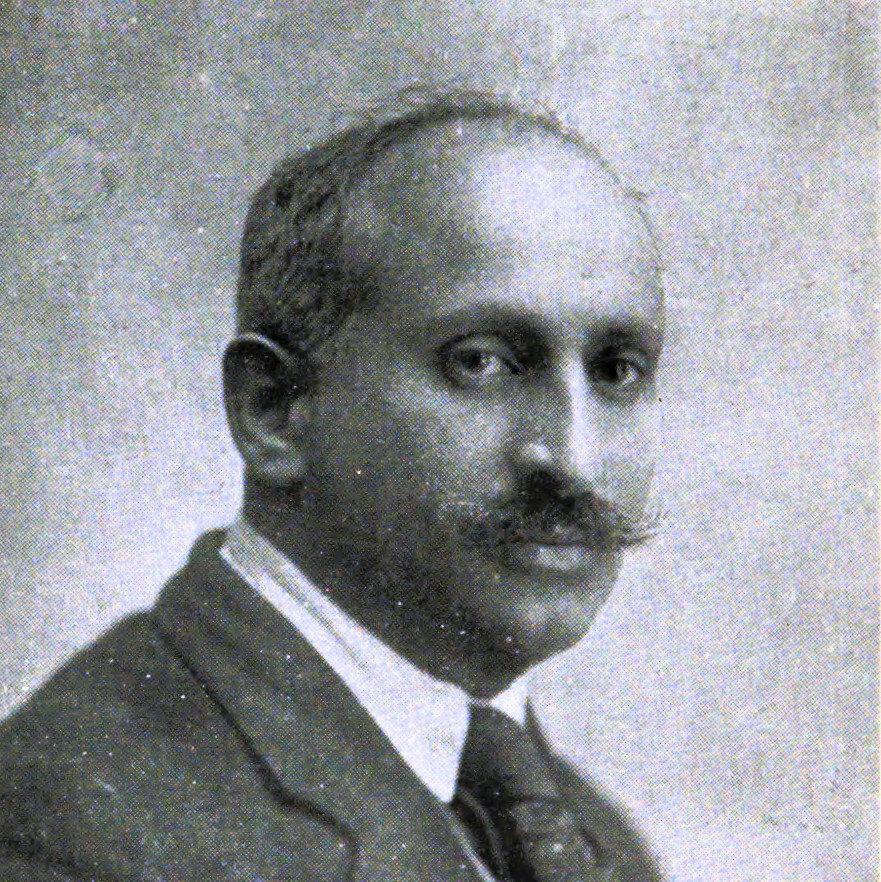
Elected to the Comintern’s Executive Committee in 1921 and its Secretariat in 1923, Piatnitsky was a central figure of the Communist International until 1935’s Seventh, and last, Congress which ushered in the Popular Front era. In 1924, Piantinsky, an Old Bolshevik with decades of labor and revolutionary work in multiple countries, was tasked with reorganizing sections of the Comintern in what was then commonly called ‘Bolshevization’. A report that will be of interest to all students of Communist history, below is Piatnitsky’s assessment of two years of that project in a report full of facts and figures on the state of many of the International’s constituents. A member of the Central Committee, and long loyal to Stalin’s leadership, Piatnitsky however refused to support the Moscow Trials, openly rejecting the veracity of the NKVD’s claims at a CC Plenum. Arrested in October, 1937, he refused to recant, even after torture and was executed a year later on October 30, 1938 at 56 years old.
‘Achievements and Immediate Tasks in Organisation’ by Osip Piatnitsky from Communist International. Vol. 4 No. 8. May 30, 1927.
During 1926 all the Sections of the Communist International have brought their organisations close to the Bolshevik form of organisation and to forms enabling them to strengthen their position in factories and workshops and in mass proletarian organisations.
Achievements
In Germany in the majority of industrial districts and the large towns (Berlin, Hamburg, Chemnitz, Leipzig, Halle, etc.), the old organisations on a residential basis have disappeared and in their place factory and street groups have been established. In these Party questions are discussed and settled and delegates are elected to the local and district conferences.
In the remaining industrial districts reorganisation is proceeding at full speed.
For the better service of the groups sub-locals and locals (in America, sections and sub-sections) have been set up, and the Apparatus of the Party organs has been improved.
The work of reorganisation is approximately in the same stage in Czecho-Slovakia. In many large works, groups have been organised through which the Party exercises considerable influence upon the masses of workers. Departments and commissions have been formed in connection with local and district committees in order better to be able to assist the work of the nuclei.
The Communist Party of Great Britain, during the General Strike, in March, 1926, thanks to the excellent work of the local Party organs and to a certain extent also of the factory groups, succeeded in occupying a prominent place in the strike committees and trades councils which led the strike locally.
The experience of the factory groups in publishing factory newspapers was utilised during the time of the strike, since the mass of the workers were deprived of the trade union press and of that of the political parties. During the strike the factory newspapers issued by the Communist Party groups became the organs of the Trades Councils and Strike Committees.
As a result of the correct tactics adopted by the Communist Party of Great Britain and the excellent work carried out by the local party organs, the Party increased its membership by 6,000 mainly from the ranks of the miners during their heroic struggle. Pit groups also were organised in the more important districts.
Finally, the Central Committee of the Communist Party of Great Britain gave an example of live and flexible leadership during the General Strike and the miners’ struggle. The Central Committee became only a small leading group of comrades at the centre, the mass of the Central Committee being sent out to the country districts where each member of the Central Committee directly took part in the direction of the movement. On the whole the correct tactics adopted by the Central Committee of the Communist Party of Great Britain rendered effective aid to the work in the localities during the General Strike and the miners’ strike.
The American Workers’ Party has changed from a federation of 19 national central committees into a centralised Party, with a single Central Committee, with united district committees and groups to which all members belong, irrespective of their language group affiliation.
The factory groups have succeeded in carrying out successful strikes and acquiring influence in the trade unions.
The work of organising factory groups is proceeding successfully in South America (in the Argentine, Brazil, Uruguay, etc.). In those countries many such groups are working well. The Central Committees and local Party organisations have become consolidated, and considerable success in organisational work is being achieved in South America.
The organisation work of the illegal Parties is also making progress.
The Polish Communist Party has adopted a uniform type of local organisation; factory and street groups have been set up and function in all the industrial districts of Poland. Only through the existence of these factory groups and our fractions in the trade unions can the fact be explained that in spite of the terror that our Party is subjected to even in Poland proper, the majority of the Polish workers still follow the lead of our Party, which has no legal press, while the Polish Socialist Party has a press and enjoys the protection of the authorities.
During the elections in the Sick Insurance Clubs in Warsaw, on November,1926, the “revolutionary opposition” obtained 12,554 votes, while the Polish Socialist Party and Bund combined received 11,121 votes. During the municipal elections in Prushkov, a suburb of Warsaw, on January 16, 1927, the “Lefts” secured 2,84 votes and 11 seats out of 24, while the P.P.S. got 754 votes and won only 4 seats.
Even under Fascism
In Italy, following on the “attempt” on Mussolini, the Fascist raid on all the anti-Fascist Parties forced the leaders and the leading centres of these parties, with the exception, of course, of the Central Committee of the Communist Party of Italy, to seek refuge abroad, and their local organisations have been scattered like dust before the wind.
The position of the Communist Party of Italy, however, is altogether different. Because the local organisations of the Communist Party of Italy were reorganised on a factory group basis, the foundations of the Party remained intact, in spite of the fact that the Fascist terror was directed principally against out Party. Naturally, the membership of the Party has diminished. Only the most active elements have remained in it; but the Party organisations live; in the place of the arrested organisers, secretaries and committees, new secretaries and committees are springing up. In the place of the suppressed Party organs, illegal organs are being published. There is no power in Italy that can destroy the Communist Party of Italy, which through the factories and workshops has grafted itself right into the masses of the workers.
Until the victory of Fascism, the Communist Party of Italy was organised on a residential basis and had about 50,000 members. After the victory of Fascism, in spite of the fact that the terror at that time was not so fierce as it is now, the Communist Party of Italy lost three-fourths of its membership and for a long time was incapable of fighting against Fascism, This was due, of course, not only to the wrong organisational forms, but also to the wrong policy then adopted by the Party. But even if the policy of the Party had been free from terror, the old organisational forms would nevertheless have prevented it from carrying on the struggle.
The situation is altogether different now. Both the policy and the forms of organisation of the Party are correct and in spite of the arrest of the parliamentary fraction and of numerous active comrades throughout Italy, the Party has remained unshaken.
The old residential form of organisation is dying out and giving place to factory groups; and that Social-Democratic survival, the system of permanent Party officials (appointed for a year by the Party committees) has already gone into the limbo of the past.
In Germany, Czecho-Slovakia and Austria, the officials decided the affairs of the Party although they had no mandate from the Party membership to do so. Now, however, town and district Party conferences are functioning properly; the delegates for these are elected by the factory and street groups.
At our first organisational conference, the French delegates and the representatives of the Young Communist International were opposed to the organisation of street groups, and for a long time abstained from organising them. Now, the Communist Parties of all countries have become convinced that it is impossible to dispense with street groups and they are now functioning in almost all countries (we will deal with the defects of the street groups later).
Prior to the International conference on organisation, the Communists in the trade unions were organised in fractions only in a few countries, and then only locally.
Now fractions exist in trade unions and other mass labour and peasant organisations in the majority of countries and the question to be stressed now is not that they must be organised but how the existing fractions should work. In this sphere also successes are to be recorded.
Influence of our Parties
In order to enable the reader to determine the extent of the influence of the Communist Parties and to what extent this influence is consolidated organisationally, we will quote the following statistics showing the numerical strength of certain of the large sections of the Communist International, the circulation of the Party press, influence in the trade unions and the number of votes obtained by the Party during elections to various representative bodies (parliament, municipalities, etc.).
The Communist Party of Germany in October, 1926, had 133,849 paying members (the number of members on the register may be reckoned to be 20 to 25 per cent. higher). The circulation of the 37 daily newspapers amounted in that month to 282,702; if we take the number of members on the register, we can claim 2.1 subscribers to the Party press for every member of the Party.
During the Reichstag elections in December, 1924, the Communist Party obtained 2,708,354 votes (23.5 votes for each Party member).
In regard to the trade unions let us take the following figures: of the 1,067 local trades councils affiliated to the A.D.G.B. (General Federation of Trade Unions attached to Amsterdam) with a membership of 3,559,952, the Communist Party of Germany in 1925 had a majority in only 70, with a membership of 74,025. The Party did not have a majority in any single union. In the metal workers’ union, out of 600 local organisations, the Communist Party controlled over 35. During the elections of delegates to the Metal Workers’ Congress, in 1926, the Communist Party obtained 33 per cent. of the total vote cast. In the Miners’ Union out of 300 local organisations, only 43 are under the control of the Party and during the election of delegates to the Miners’ Congress of 1926, the Party obtained go per cent. of the votes cast.
Membership too Small
What are the conclusions to be drawn from these figures?
Compared with the number of votes obtained by the Party during the Reichstag elections, which indicate that the Party enjoys wide sympathy among the masses, the numerical strength of the Party is relatively small, its daily press has a relatively small circulation and the influence of the Party in the trade unions, far from corresponds to the general ideological influence it exercises and could certainly be greatly increased.
The Communist Party of France in October, 1926, had 60,000 members. Its two daily newspapers have an average circulation of 240,000 (permanent subscribers represent only a small percentage of newspaper readers in France. The newspapers of all political tendencies are maintained by street sales).
During the last parliamentary elections in 1924, the Communist Party of France obtained 940,000 votes.
The C.G.T.U. (the Red Federation affiliated to the R.I.L.U.), which is under the influence of the Party, has a membership of 450,000, which represents from 40 to 45 per cent. of all the organised workers in France (in general the percentage of organised workers in France as compared with the total strength of the working class is small. Out of the 11 million workers barely one million are organised in trade unions).
The Communist Party of France has practically no influence in the reformist trade unions.
Thus, we have four purchasers of Party newspapers per Party member, seven and five-sixths members of Red trade unions, and fifteen and two-thirds votes cast during parliamentary elections per Party member.
The Communist Party of Czecho-Slovakia in 1925, had 125,000 members and eight daily newspapers (the central organ “Rude Pravo” is published twice daily), and 15 other newspapers, some of which are published twice or three times a week, whilst others are weeklies. The total circulation of all these papers is 149,500. (*This figure includes the circulation of the weekly publications of the central organ, which is published twice daily. The evening edition of the paper is not read, however, by all those who read the morning edition.)
In November, 1926, the membership of the Red Trade Unions stood at 201,035, which represents only 12 per cent. of the total organised workers. But taking into consideration the influence which the Communist Party of Czecho-Slovakia exercises in the reformist trade unions, it may be said that the Party influences 4o per cent. of the class trade unions (in Czecho-Slovakia nearly all the political parties have their trade unions).
During the municipal elections in 1925 the Party obtained 933,711 votes (the Party at that time had 90,000 members, consequently the above figure represents 10.3 votes per Party member).
The Communist Party of Belgium in 1926 had 853 members, and the circulation of the central organ amounted to 6,500. The Party exercised influence in several trade unions.
At the municipal elections in November, 1926, the Party obtained 70,000 votes, which represents 81 votes per Party member.
In Britain
The Communist Party of Great Britain in October, 1926, had 12,000 members. The Party weekly has a circulation of 80,000. The “Sunday Worker,” the organ of the Left Wing Movement, which is under the influence of the Party, has a circulation of 120,000.
At the special conference of the Minority Movement called at the beginning of 1927, delegates were present representing organisations with a membership of 1,080,000. The Communist Party did not put forward its own candidates at the parliamentary elections, but supported the Labour Party candidates. Several local Labour Parties put up Communists as their candidates.
Only in a few constituencies did the Party put up its candidates independently.
The conclusions already drawn in connection with the Communist Party of Germany may be applied to the Parties of France, Czecho-Slovakia, Belgium, Great Britain and other Parties, concerning which we have not quoted statistics, simply because they do not differ in character from those quoted.
What strikes one immediately is the numerical weakness of the Parties when compared with the votes cast at elections (in Belgium for example) and between the circulation of the Party press and the influence in the trade unions of the British Party. This influence is far from being consolidated organisationally as yet. During the miners’ fight neither the Communist Party of Great Britain, nor the Central Committee of the Minority Movement, managed to get resolutions passed by the Executives of trade unions to assist the miners, because neither the Communist Party nor the Minority Movement has a majority in any single trade union.
Although the membership of the Communist Party of Czecho-Slovakia is steadily increasing, nevertheless it does not correspond with the influence the Party exercises over the masses in the country, as indicated by the votes obtained at the municipal elections. Its influence in the trade unions is also inadequate, particularly in the non-class trade unions. The circulation of the Party press is very small even compared with the membership of the Party.
The situation in France is still worse. Recent campaigns have shown that the masses are following the lead of the Party. The readers of the Party press are four times more numerous than the Party membership.
Why No Increase?
Why does not the membership of the Party increase? Why is the circulation of the Party press relatively so small? Why does a Party like the Communist Party of Germany win influence in the trade unions so slowly in spite of the fact that the A.D.B.G. betrays the interests of the German proletariat every day? These are the questions that have to be answered.
It should be clear to everyone that if the Party conducts a proper policy, the larger the membership of the Party the greater the number of those who spread its influence and, therefore, the influence of the Party should become more widespread, presuming, of course, that the membership is not just ballast. How can the Communist Party of Great Britain consolidate its influence organisationally in the Labour Party, in the trade unions, in its co-operative societies, and numerous other organisations, when it has a membership of only 12,000? (In April, 1926, the Party had only 5,500 to 6,000 members). The organisations just enumerated have as many local branches as the Party has members (it is not a rare thing in England for only one Communist to be present at a trade union branch meeting, local Labour Party meeting, or other mass organisations, and to speak and move resolutions on all the points on the agenda).
However small a country Belgium may be, 850 members are not enough organisationally to consolidate the 70,000 voters who vote for the Party.
Recruiting Campaigns
The British and other Communist Parties understand this perfectly well. What is more they have conducted big recruiting campaigns and subscription campaigns for the Party press—in England, France, Germany, etc.—and in some countries have achieved fair success. Nevertheless the campaigns did not produce the required results; and what is still worse, the subscribers to the Party press are not retained and not all the new members are definitely attached to the Party organisation.
As has been stated already, the Party in Britain from April to October, 1926, recruited more than 6,000 members and increased the circulation of the Party organ to more than 80,000. But in examining the latest statistics of the Party membership according to districts we see that from August to December the London district lost 105 members, the Birmingham district 75 and Sheffield 200. It is not stated whether there has been a simultaneous decrease in the circulation of the Party press in these districts. Although certain district organisations have increased their membership during this period, and the influx of members into the Party has been due to the leading role the Party played in the miners’ fight, the above-mentioned losses cannot be attributed to mere accident. This is confirmed by another fact which the C.P.G.B. reports. In the Tyneside district, which is almost entirely populated by workers, of the 3,600 members of the Party, nearly 1,000 are practically outside of the Party organisation. The number of applications for membership exceeded 3,600, but a large number streamed out of the Party when their enthusiasm after the second month of the miners’ struggle had died down.
Recently the Communist Party of France carried out a successful recruiting campaign which produced over 5,000 new members. But as can be seen from the statement made by the chairman of the Paris district committee to the Organisation Bureau of the C.P.F., nearly 200 of the 1,000 members who joined the Party in the first days of the campaign failed to turn up to make good their applications for membership.
Passing through the Party
In the Berlin-Brandenburg organisation of the C.P.G., from January 1st, 1923, to October 26, 1926, 54,219 Party cards were issued. At the end of 1926 the membership of this organisation was 17,219. Consequently 37,000 members passed through the organisation (in 1925, 4,689 members—20.3 per cent.—left the Berlin-Brandenburg organisation, i.e., 1,095 more than joined the organisation. In the first half of 1926 4,760 members, or 21.7 per cent. left the organisation).
We do not think that these figures indicate a situation that is peculiar only to the above-mentioned organisations. On the contrary, we may consider it with slight variations one way or another, to be the common feature of all the legal sections of the Communist International.
What are the causes which retard the entry of revolutionary workers into some Parties (Belgium, Sweden, Norway, etc.), and of the constant fluctuation in membership of other Parties?
In Norway, Sweden and Belgium, prior to the war, Labour Parties (Social Democratic) existed to which the trade unions—and in Belgium even the co-operative societies—were affiliated as organisations. Individual membership in these Parties was insignificant.
(*To a certain extent England may be included among those countries in which the political Labour movement is based upon collective membership. The British Labour Party is made up of affiliated trade union and political parties (Independent Labour Party, which has 23,000 members, the Fabian Society with 3,000 members, and the Social Democratic Party with 1,000 members. The Communist Party has been refused affiliation but members of the Party belong to it through their trade unions). Thus we have 27,000 individual members as compared with several millions of trade unionists affiliated to the Labour Party through their trade unions. The numerical weakness of the political parties which existed before the war is most striking. Evidently collective affiliation to the Labour Party hinders the growth of the membership of the Parties affiliated.)
After the war (in 1919) the Norwegian Social-Democrats left the Norwegian Labour Party after the latter had affiliated to the Communist International. After the split in the Norwegian Labour Party in 1924, the Communist Party of Norway established its own organisation on the basis of individual membership. The Labour Party (Tranmael) remained an organisation based on collective affiliation. In Sweden, after the war, the Left Wing broke away from the Social Democratic Party and formed the Communist Party of Sweden, which was also based on individual membership. The Swedish Social Democratic Party remained an organisation with a collective membership, to which the trade unions were affiliated.
In Belgium, the Left Wing left the Labour Party and formed the Communist Party of Belgium. The trade unions, the co-operative societies and other organisations remained in the Labour Parties (members of the C.P.B. who belong to trade unions are thereby members of the Belgian Labour Party in spite of the fact that politically they have broken with the Party).
In the afore-mentioned countries the workers are accustomed to have their trade unions (through their central bodies) affiliated to the political party and pay their dues collectively. Recently there have been cases in Belgium when members of the Communist Party have been expelled from their unions because they have stood as independent Communist candidates during municipal or parliamentary elections. This not only means losing one’s job, but also losing insurance benefits because the insurance funds are under the control of the trade unions. The long-standing practice of belonging to the political party through the trade unions, which relieves them of the necessity of paying party dues individually, and the danger of being expelled from the trade unions, restrains the workers of Belgium from joining the Communist Party.
Mistaken Policies and Tactics
This may partly explain the difference between the small membership of the Party (850) and the relatively large vote obtained by the Belgian Party at the elections (70,000). I say “partly” advisedly, because the reasons for the fluctuation in the membership which are common to all the Communist Parties, and hamper the growth of the circulation of the Party press, apply less of course to Norway, Sweden and Belgium. In the latter countries the fear of losing their jobs is a factor which prevents the workers from joining the Party. The cause of the fluctuation in membership of the Parties in the second group of legal Communist Parties is the mistaken policy and tactics adopted on certain questions by the Parties (in such cases we lose not only members of the Party and leaders of the Party press, but also influence among the proletariat).
During the Reichstag elections in December, 1924, the German Party obtained 2,708,354 votes while the Communist candidate for the president of the Republic obtained only 1,869,553 and the fact that the Party put up a candidate of its own caused considerable dissatisfaction among the workers, who charged the Party with splitting the vote and allowing Hindenburg to be elected.
Lack of ability to conduct political campaigns, the youth and instability of the Communist Party and principally the fact that the local Party organisations functioned badly, are the most important causes of the fluctuation in membership.
As for the continuous fluctuation of the number of readers of the Party press and the difficulty encountered in increasing its circulation, this may be explained by the causes which bring about the fluctuation in Party membership, which, of course, affect the number of readers of the Party press, and also the lack of ability, in the majority of cases, to run a paper, particularly a daily.
In France the recent recruiting campaign was conducted by the central organ of the Party, “L’Humanité” and the parliamentary fraction of the Party through the medium of mass meetings. The factory and street groups and even the sub-district and district organisations, in the majority of cases, took no part in the campaign; and in those rare cases where they did take part their work was limited to technical work, such as pasting up posters, etc. The result of this method of conducting a campaign in Paris was that 200 of the thousand who applied for membership could not be retained in the Party from the very beginning. How many were lost in this way over the whole of France?
Planning Beforehand
Would this have happened if the recruiting campaign had been planned beforehand by the Central Committee and preliminary work carried on by the subordinate local organisations through the factory groups, which should have been helped by “L’Humanité,” the parliamentary deputies and municipal councillors and all the other active Party workers? Of course not. The applicants for membership who would have come to the Party, not merely as a result of the superficial impressions obtained at an enthusiastic mass meeting, would have been immediately taken into the Party through the factory groups, and the question which engaged the attention of the organisation bureau of the Central Committee of the C.P.F. and the Party press as to what to do with the new applicants would not have arisen (the trouble was whether to attach them for the time being to the street groups on the residential basis in order to “train them” in Party organisation, or to attach them immediately to the factory groups according to their places of employment).
During the recruiting campaign there were cases when five or six men working in the same factory applied for membership. These could immediately have been formed into a factory group in the factory where they were employed, if such did not exist there already; and if there was one already it would have been much more convenient for them to join it. No doubt this is what would have happened if the factory groups had taken part in the election campaign and in the everyday work of the Party.
In that case the factory groups would have established a reputation for themselves among the non-Party workers and would have gained experience by practice.
The workers regard the Communist Party as a leader capable of leading them in a fight. They are convinced that the Communist Party has excellently functioning Party organisations which are capable of fulfilling this task. But when they join the Party they do not find what they expect: the factory groups function badly, they are mostly engaged in internal Party disputes and differences which the new member cannot understand, and above all not sufficient attention is paid to the new members.
Members of the French Party have called attention to this. For example comrade Villatte, in giving the reason why people leave the Party says: “Too much attention is paid by the factory groups to the internal Party squabbles, which often bear a purely personal character, instead of devoting attention to the tasks of the Party.” In a report of one of the district committees comrade Delettre writes: “A number of serious comrades have left the Party because when they joined it they expected to find a well-organised, smoothly-working apparatus; instead of that they were obliged to listen to continuous chatter about organisation and discipline without practical activity.”
In one of the reports of the Central Committee of the Communist Party of Germany, dealing with the question of the fluctuation of membership, the same conclusion is drawn as that of the above-mentioned French comrade. Here is a quotation from this report: “One of the definite reasons for the newly-joined membership falling away is that up till now no attention was paid to them and they were not drawn into Party life…There have been cases when newly-joined members have attended the heated meetings of the Berlin organisations and then turned their backs on the Party.”
Waste of Energy
Of course, disputes and differences on tactics, programme and organisation cannot be avoided in a live Party, and still less in Communist Parties in capitalist countries where the process of consolidation is still going on. But this does not mean that the debates on these questions should not be organised in such a manner that the groups, district and: local organisations shall not be entirely absorbed by them, but shall engage themselves in other questions of everyday activity. Is it impossible to arrange that the groups and local organisations shall function in a proper manner? Is it impossible to draw the new members into practical Party work? Is it impossible to arrange short courses for new members and to publish suitable literature for them? All this can be done with the resources which each Party possesses, if only they desire to do so.
In many localities circulation campaigns have been conducted. In Germany—in the Ruhr and on the Rhine—such campaigns have resulted in an increase in a number of subscribers to the Party press by 2,000-3,000 and more. From Czecho-Slovakia it is reported that the number of subscribers in the factories is increasing, but at the same time there are not a few cases where the circulation of the papers has declined. This is explained by the fact that the Party press as a whole is dull and monotonous, is often entirely devoted to internal Party differences and tendencies; that it does not give the information which is given copiously in the capitalist press; it does not properly describe Party life; no constant aid is given to the Party organisation ; there is no summary of experiences; no reports from the factories, etc.
When in 1926 “L’Humanité” began to publish feuilletons and published sport news the circulation increased to 40-50,000.
However poor the Party may be in literary talent, more attention can be devoted to the daily Party press. The Central and district committees must devote particular attention to the Party press and its defects can be removed.
We have already pointed out what influence the legal Communist Parties have in the trade unions. Here it should be observed that even in the trade unions the influence of the Communist Parties is relatively greater than their organisational influence. The tendency revealed in the following figures concerning the influence of the Communist Party of Germany in the trade unions may be taken as applicable to all the other Communist Parties in which the trade union movement has not been split. In 1926, the Communist Party of Germany obtained in referenda on various questions in the metal workers’ union a majority in 80 local branches, whereas the committees are under the control of the Communists in only 35 branches. The Party obtained 4o per cent. of the total votes cast for the miners’ congress, but in only 43 out of the 300 local branches are the committees under Communist control, i.e., only 134 per cent.
In Chemnitz (Saxony) in 1926, the Communists obtained 23.3 per cent. of the votes in the communal elections, whereas the Social Democrats obtained 28.2 per cent. of the votes.
In October of the same year, during the elections to the Saxon Landtag, the Communists obtained 22.5 per cent. of the total votes cast and the Social Democrats 27.3 per cent. If we take into consideration the fact that the petty bourgeois elements vote for the Social-Democrats, and that only workers vote for the Communists, then we can say that the Communists received a larger proportion of working class votes than the Social Democrats. And yet on the Chemnitz Trades Council there are only 18 Communists out of a total of 120, and not less than 80 Social Democrats, i.e., more than four times the number of Communists.
The situation is no better in the lower trade union apparatus and with the trade union functionaries in the factories. In Chemnitz in factories employing a total of 28,010 workers the Social Democratic Party has 3,062 members and sympathisers and 164 trade union functionaries, whereas the Communist Party has 2,446 members and sympathisers and 49 trade union functionaries. All other things being equal the Social Democrats should have, for the 616 members and sympathisers which they have more than the Communists, not 115 trade union functionaries more, but only 26 or 27 more than the Communists.
This situation is due to the fact that Communists occupy themselves less with trade union questions than the Social-Democrats. The class-conscious workers know that the Communists defend the interests of the proletariat than the Social Democrats, that is why they vote for the Communist Party proposals, and elect Communists to Trades Union Congresses and Conferences. But when it comes to electing members to trade union committees they hesitate to elect Communists, because they have not seen them at work. This applies to the reformist trade unions where the Communist Party has to compete with the Social Democrats and where our comrades are not so well acquainted with the current questions in the trade union movement and for that reason are unable to combat the Social Democrats (questions of wages, labour laws, instructions, etc.).
It is possible organisationally to consolidate the relatively large influence which the Communist Parties have in the working class by increasing the membership of the Party, increasing the circulation of the Party press, and above all by improving the work of the Party organisations from the groups to the Central Committee. Only when the Party organs function properly, and the Parties adopt a proper policy, will it be possible to direct the work of the members of the Party in the Party press, in the trade unions and in other mass workers’ and peasants’ organisations.
The ECCI published the magazine ‘Communist International’ edited by Zinoviev and Karl Radek from 1919 until 1926 irregularly in German, French, Russian, and English. Restarting in 1927 until 1934. Unlike, Inprecorr, CI contained long-form articles by the leading figures of the International as well as proceedings, statements, and notices of the Comintern. No complete run of Communist International is available in English. Both were largely published outside of Soviet territory, with Communist International printed in London, to facilitate distribution and both were major contributors to the Communist press in the U.S. Communist International and Inprecorr are an invaluable English-language source on the history of the Communist International and its sections.
PDF of full issue: https://www.marxists.org/history/international/comintern/ci/vol-4/v04-n08-may-30-1927-CI-grn-riaz.pdf
 Revolution's Newsstand