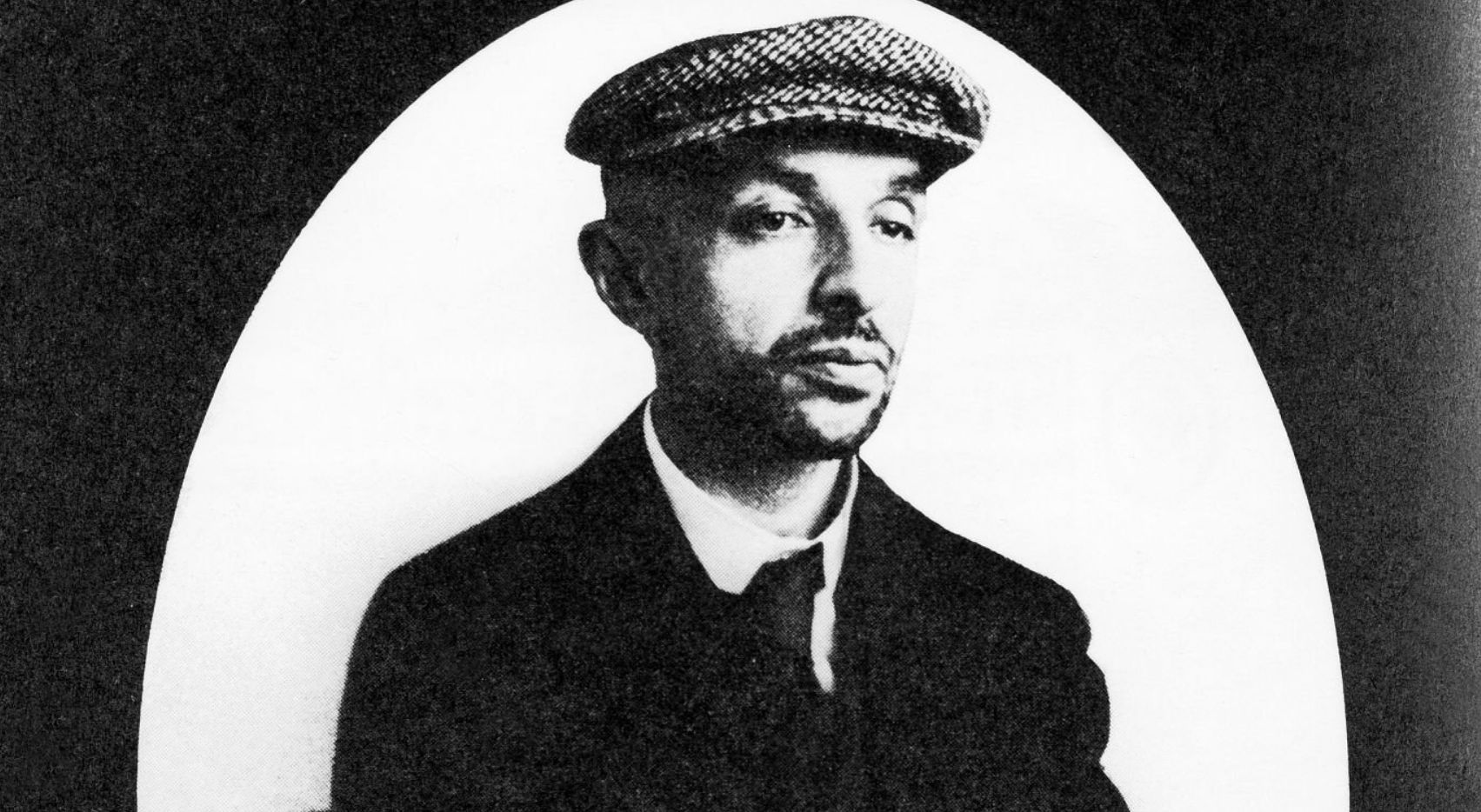
News of, and working class reaction throughout Germany to, the execution of a leading figure of the short-lived Bavarian Soviet Republic, comrade Eugene Leviné.
‘Heroes and Martyrs of the Proletarian Revolution: Eugene Leviné’ from Communist International. Vol. 1 No. 4. August, 1919.
Heroes and Martyrs of the Proletarian Revolution.
Under this heading we shall publish information concerning those of our fighters, who have perished for the cause of Proletarian Revolution.
The bourgeoisie metes out an equally ruthless treatment to all fighters for the proletarian revolution in Germany as well as in America, in France as well as in England. The brutality of the bourgeois savages in Finland as well as in those parts of Russia, where the white Guards were temporarily victorious, surpasses all description. Tens of thousands our best brothers fell victims to the bourgeois white terror of 1917-1919.
We must gather with love and reverence all information concerning the life, the struggle and also the death of our comrades tortured to death. The memory of these fighters will never fade.
In this number we give detailed information concerning Comrade Leviné, the leader of the Bavarian Communists, who was shot by the social-democratic executioners for calling upon the workers to overthrow the power of the bourgeoisie.
THE EDITORS.
The brutal assassination by the Bavarian whit Guards and social traitors of the header of the Munich communists, Comrade Leviné, asked a storm of indignation amongst the working classes of the whole of Germany.
Comrade Eugene Leviné, who was of Russian origin, was executed at Mun on the 5th of June 1919, in accordance with the coat martial sentence confirmed by the Bavarian Social Democratic Government.
Fearing the demonstration of popular anger, the Bavarian Government, who, like a criminal attempted hastily to cover the trails of its, crime, made haste on the very next day following the execution secretly to bury Comrade Leviné. Count Pezztalazi, the Counsel for the Defendant, made futile attempts to learn in advance from the Government authorities of the place and date of the burial. Only few hours prior to the actual burial which took place on the 6th July, was he informed that the body of the murdered man would be interred at 2 p.m. at the Schwabing Cemetery near Munich; a promise was exacted from him not to speak of this except to a few relatives and nearest friends of the diseased. Only a few persons were present at the funeral; the late Minister for Public Maintenance, Unterleitner, was the only person who was allowed to say a few words over the grave, concerning the personality of the fallen hero of the revolution.
The news concerning this new feats of the saviours of the bourgeois fatherland, however spread very rapidly all over Germany. On the very next day after the execution, the workers of Berlin began to organize meetings, passing vigorous resolutions of protest against the outrageous murder committed by the Government of social traitors. On the same day, that is to say, on Friday June 7th, a plenary sitting took place of the Berlin Soviet of workers and Soldiers Deputies, where a proposal of our Communist comrades was accepted to declare a one day’s strike in protest against the execution of Comrade Leviné.
Doctor Rosenfeld, one of the defenders or Comrade Leviné, related at this sitting how the executed communist hero was tried. The court martial made all attempts possible, by distorting facts, to dishonour the accused. Thus, the public prosecutor accused him of cowardice on the grounds that he did not come out to defend the Soviet Republic with arms. It has been indisputably established at the court that Comrade Leviné was deprived of the possibility of taking a personal part in the armed rising. “If you doubt my courage,” said he, turning to the public prosecutor, “l invite you to be present at my execution; you will see how I can die for Communism.” All the accusations made against comrade, Leviné,–he was by the way accused of the murder of hostages,–were refuted in the court; “and if in spite of all this the court passed sentence of death,” said Doctor Rosenfeld, “this is exclusively to be explained by the fact that the Munich military circles thirsted for the blood of this great revolutionary, and awaited his death with unconcealed impatience.”
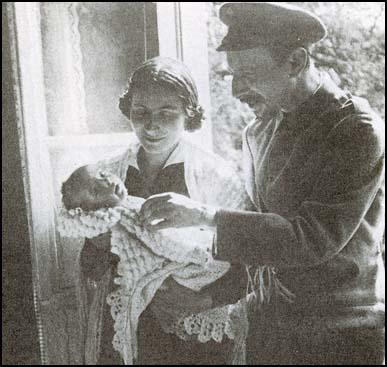
Counsel for the Defence hoped that the Bavarian Government, half of whom were socialists of the right wing, will not agree to confirm this juridically entirely unjustified sentence. But this hope was not justified…The treatment meted out to comrade Leviné, all the time from the moment of his arrest until the moment of his death, was, according to the words of Dr. Rosenfeld, most outrageous. The same outrageous treatment was shown by the “socialist” Government of Bavaria to the wife of Comrade Leviné, who is languishing in prison until the present time, although no kind of accusation was brought against her.
Dr. Rosenfeld’s description made a powerful impression, and the meeting was altogether in such a state of agitation, that it was decided to postpone all current business until the following session, and after passing the above-mentioned resolutions concerning the 24 hour’s strike, the conference dispersed.
Three resolutions were put before the meeting: the resolution of the Communists, of the Independents, and of the Right wing Socialists. Unfortunately, the complete text of the Communist resolution is not known to us. This resolution pointed out that the sentence of the Munich court martial throws an ineradicable shame upon the counter-revolutionaries and upon the traitorous Scheidemanns, with whose blessings the executioners perpetrated their ignoble deed. We were successful in receiving the resolution of the lukewarm Independents, which we quite here fully:
“The plenary sitting of the Berlin Soviet of workers and Soldiers Deputies reveres with a sense of mourning and respect the memory of the brave fighter for freedom, Eugene Leviné, who fell a victim of brutal class legal proceedings and counter revolution. The sitting of the Soviet remembers with gratitude all those who have given their lives and freedom in the struggle for the proletarian cause and socialism.
“The plenary sitting expresses its profound indignation that the death sentence on Leviné was carried out: it sees in this a new proof of the hatred which reaction entertains towards the revolutionary proletariat. With a feeling of the greatest indignation the sitting of the Soviet especially emphasizes the fact that this first political death sentence passed after 1848 was carried out by a Socialist Government. The Conference expresses its contempt for the socialist Government which his degraded itself to the role of counter revolutionary agents, and it calls upon the proletariat not to follow these traitors of socialism.
“The plenary sitting makes an earnest appeal to the German working class to strain all its efforts and to arise in a closely united single front against the counter revolution and against those Governments who have become meek tools in the hinds of rabid enemies of the revolution and of socialism. The counter revolution, thirsting for the blood of the workers, will be able to avert the last decisive fight against reactionary capitalism by any kind of provocation.
“The plenary sitting of the Soviet solemnly vows before the silent corpses of the brutally murdered Rosa Luxemburg, and Leviné, that it will do all in its power to rouse the working masses behind the Soviet and to lead them to battle a the defence of the revolution and of socialism.”
On the evening of the same day a number of meetings took place all over Berlin. The meeting of the employees of the 6th electoral district Conference deserves special notice. Opening the Conference, at which over 300 delegates were present, the president, Comrade Lied, said:
“We are today overwhelmed by a sentiment of mourning and indignation. Egged on by the bourgeoisie the soldiers continue the brutal persecution of the revolutionary fighters. Yesterday Eugene Leviné fell a victim to the bloodthirsty military dictatorship. He fought for the working class, he suffered and died for us. This man of supreme nobility and crystal purity of soul perished. Open-hearted and courageous to the last moment, he fell for us. The responsibility for this brutal murder falls upon the present Government which calls itself “Socialist.” Their hands are steeped in blood; in the blood of the fighters of the revolution. Leviné, Liebknecht, Rosa Luxemburg, Yogiches, and many another of our best comrades have fallen their victims. It is terrible to think of the losses yet likely to come. It is possible that we shall have to live through more than one such bloody bath. It is characteristic that the murderers of Liebknecht and Luxemburg and the sailors–the over-lieutenants Yogel and Marlow are enjoying freedom, whilst the fighters for revolution are being shot and hurled into prison.
“Let us then make a solemn promise that undaunted we still strive to attain revolutionary socialism, remembering the covenant of our fallen heroes. This is the best way of paying due reverence to their memory. Woe to those upon whose heads the storm of anger and indignation that they have accumulated in the masses during the time of their domination will be wreaked. The proletariat will become clearer sighted every day. It will not allow itself to be deprived a second time of its victory.”
Those present heard the speech delivered by Comrade Lied, standing.
The twenty-four-hour strike of protest proclaimed by the Berlin Soviet passed of most successfully. At three o’clock in the afternoon the tramway service was stopped. Towards the evening the strike enforced the cessation of the omnibus traffic which was still working. At 11 o’clock the air service and underground railway employees decided to join the strike and upon the following morning the whole of the city traffic was stopped. The strike was also joined by the workers and employees of almost all the Berlin industrial enterprises, by a considerable part of the railway workers of the suburb in and district railways, the workers of railway workshops and of electric stations, by all the employees of the district railway administration as well as by all the post and telegraph workers. The working misses preserved a most stringent discipline in spite of the fact that motor lorries containing armed with defenders of “order” careened the town with undisguised provocationary aims.
The organ of the independents, “The Freiheit” wrote the following on 8th June concerning the strike. “The one day strike which was decided with rare unanimity by the Berlin Soviet and which was carried out by the labour masses, truthfully expressed the unbounded indignation which the murder of Leviné has roused amongst the labour masses.
“The decisive and unanimous condemnation of this political murder was expressed in the close union, unwitnessed for a long time, of the whole of the proletariat without distinction of parties. The masses feel instinctively that this death sentence was prompted not only by hatred to one personality, but also by an attitude of hostility towards an entire system, and by a desire to deal a severe blow to the whole of the socialist movement.
“This explains why the execution of Levine hitherto known only to a small circle of workers, roused this tremendous tempest of indignation. The verdict of the Munich court martial and its ratification by the Government, the majority of which consists of “socialists,” has proved with extreme clarity that the danger of unrestrained reaction is approaching ever nearer.
“…The conduct of the Bavarian Government is indeed monstrous, for in spite of complete legal and actual baselessness of the verdict it was confirmed and executed.
“This brutal infringement of socialist principles was answered by all the workers of Berlin without distinction of political tendencies, by a menacing warning to reaction and to those who, without authority, act in the name of the proletariat, and aid and abet the counter revolution. Let them remember that this is the final warning; let them rethink themselves before it is too late.”
The protest was not confined to Berlin. On the 9th of June, a mass meeting which ended in a street demonstration took place at Hanover. At the meeting a resolution was passed demanding the resignation and expulsion from the party of all the leaders implicated in this affair, the abolition of military and extraordinary courts, and the repeal of martial law. At Vienna on the 7th June the labour Commune of the Socialist Students Group passed the following resolution:
“We, student socialists of the higher educational in institutions of Vienna, have learned with great indignation of the murder of Leviné. We protest against the revolutionary parasites of the socialist majority who, having allowed this crime, continue to call themselves Socialists.
“We protest against the shameless secret Bavarian and Prussian legal proceedings; demand the immediate liberation of Toller, and proclaim our complete solidarity with the German workers who have proclaimed a struggle against the blood-stained Government and against the terror of the dominating military cliques.”
To appease public anger and to exculpate himself, Scheidemann hastened to publish in the newspapers the fact that he desired to prevent the execution of comrade Leviné, and to that end he sent to Hoffman, the Bavarian prime minister, the following telegram: “Although I am neither able or intend to take official steps, I appeal to you as personal favour, to postpone the execution of the sentence on Leviné and Toller till personal negotiations between you and myself.”
Hoffman also hastened to reply to this communication declaring that at the time of the Leviné trial he was on his vacation In Switzerland, and immediately upon the receipt of Scheidemann’s telegram he gave telegraphic directions to suspend the execution of the sentence until his arrival at Munich; this telegram however was received too late.
The attempt of the ministers to excuse themselves by ignorance however was not successful. The well-known member of the “Independent” Party, Hasse, proved that two days before the execution he sent a telegram to Hoffman and the Bavarian minister of Justice, Muller-Meiningen, where he requested him on behalf of the various political parties not to confirm nor to execute a single political death sentence.
Whatever the executioners who have murdered Levine say or write at the present time, and whatever their “grand” protectors do, the confidence of the wide masses towards the “socialist” Government, has been shaken forever. This is also evidenced by the fact that simultaneously with the mass protest against the execution of comrade Leviné and immediately upon it, a great movement arose in favour of another Munich Communist comrade Ernest Toller; we have already seen that the Vienna students demanded his liberation; a similar demand was put forward by the socialist students of Berlin and Charlottenburg to the “national conference” and to the Bavarian Landtag. The fate of comrade Toller agitated the wide masses of working class circles. It must be noticed here that the brutal treatment of comrade Leviné was in no way an exceptional occurrence: the official number of victims of the revolution who fell at Munich during the week from April 30 to May 8th is an eloquent testimony of the bloodthirstiness of the Bavarian “democrats.” Altogether 557 men were killed, 303 wounded, and 186 shot by court martial. Of the whole number only 145 men were killed in open battle.
Yes, comrade Lied is right; the outlook of the proletariat is getting clearer every day. The inexorable course of historical development makes ever clearer to the working class the wide schism which separates its interests, views and aspirations from the real striving of the compromisers who, using the name of the proletariat as a screen, support the lass domination of the enemies of the proletariat. The united mass demonstrations of the workers, welded by the blood which was shed by their true leader, was only one of the first distant peals of thunder of the approaching proletarian revolutionary tempest.
The ECCI published the magazine ‘Communist International’ edited by Zinoviev and Karl Radek from 1919 until 1926 irregularly in German, French, Russian, and English. Restarting in 1927 until 1934. Unlike, Inprecorr, CI contained long-form articles by the leading figures of the International as well as proceedings, statements, and notices of the Comintern. No complete run of Communist International is available in English. Both were largely published outside of Soviet territory, with Communist International printed in London, to facilitate distribution and both were major contributors to the Communist press in the U.S. Communist International and Inprecorr are an invaluable English-language source on the history of the Communist International and its sections.
PDF of full issue: https://www.marxists.org/history/international/comintern/ci/old_series/v01-n04-aug-1919-CI-grn-goog-r3.pdf
 Revolution's Newsstand