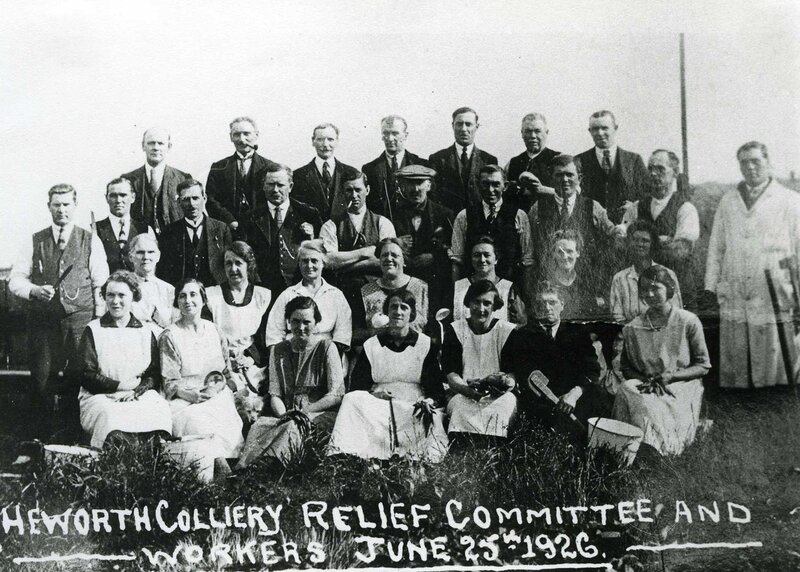
Foster gives historical context as he analyzes the 1926 British General Strike and its betrayal.
‘The Left Wing and the British Labor Movement’ by William Z. Foster from The Daily Worker. Vol. 3 No. 116. May 27, 1926.
FOR the past 18 years Great Britain has been the scene of a series of bitter industrial struggles, of which the recent historic general strike was the culmination. These fights have centered mostly around the Miners’ Union, the heart of the British trade union movement. In all these struggles the left wing has played an important role. Let us trace briefly the broad outlines of this great movement, especially with regard to the role of the left wing.
From 1910 to 1914.
A vital phase in the development of the recent gigantic struggle of the British workers was the tremendous movement of the trade unions in 1910-14. The first shot in this campaign was the conference of the left wing in Manchester in 1910. The militants at that time were led by Tom Mann, Purcell and others. They launched a big movement to swing the British unions into, an offensive against the employers. The workers were in an aggressive mood and the campaign succeeded brilliantly. A series of great strikes developed, all of them either directly under the leadership of the left wing or largely influenced by it. The right wing bureaucracy viewed the rank and file uprising with great alarm and opposition.
The first struggle was the general strike of the Transport Workers in 1911. These workers, hitherto practically unorganized and suffering miserable working conditions, completely tied up all shipping and water front transport. The powerful British Shipping Federation was compelled to capitulate in a week. The effect upon the labor movement as a whole was electrical. Soon afterwards the railroad men carried thru their big strike successfully. Then followed a strike of the million coal miners, which established the minimum wage in principle and defeated the government.
This militant offensive by the transport workers, railroad men and miners raised the morale of the working class enormously. The labor movement became infused with a new spirit, and within the next three years gained a million members. The amalgamation movement spread rapidly, many new consolidations taking place. The Transport Workers’ Federation was definitely established, the National Union of Railwaymen was formed, the scattered miners’ unions were finally consolidated into a national industrial union, and, most important of all the development, was the formation, on the eve of the war, of the Triple Alliance, consisting of the railroad workers, transport workers and miners. Upon the Triple Alliance the workers depended to unite the forces of labor against the employing class in the great struggles that were bound to come.
One of the outstanding features of the vast movement, 1910-14, was the powerful part played by the left wing. The revolutionary militants were the heart and brain of the entire struggle.
From 1914 to 1921.
The next general phase of the struggle in Great Britain lasted from the outbreak of the war until the spring of 1921. During the war the unions made substantial gains in membership. They were fed up with promises by the employers that after the war there would be a new Britain, in which poverty and injustice would be no more. But no sooner was the war ended, and when the unions were crippled by a big army of unemployment, than the employers, under the pressure of a decadent capitalist system, forgot their fair promises to the unions and made war all along the line against the workers. Wage cuts were the order of the day in every industry.
The struggle climaxed in a general attack by the mine operators and the government against the living standards and organization of the miners early in 1921. All England was shaken by the struggle. The workers looked to the Triple Alliance, as their great weapon to defend them from the employers’ offensive. The left wing was ideologically and organizationally unprepared for the struggle. During the war, in the shop steward movement, it had made a militant and successful fight. But the later movement became infected with ultra-leftist conceptions, such as dual unionism, non-participation in the Labor Party, etc., which Lenin later so successfully polemized against. The British Communist Party, heart of the left wing movement, was torn with factionalism. The left wing had lost contact with the masses and also the skill in leadership which it had so brilliantly displayed in the movements of 1910-14. With the left wing torn by dissensions and weakened by ultra-leftism, the masses of workers, who wanted to fight, had no militant leadership. The situation was in the hands of the right wing, the McDonalds, Hodges, Hendersons, Clynes, etc. The inevitable happened. They betrayed the miners on the unforgettable Black Friday. They refused to allow the Triple Alliance to strike in support of the miners. The result was a great debacle, the severest defeat ever suffered by British labor. The direct cause of it was the treachery of the right wing; the indirect cause, the state of demoralization and sectarianism prevailing among the left wing. In all such struggles the right wing will betray the workers. In the big strikes of 1911 it was unable to do so because of the strong position of the left wing, but in 1921, when the left wing was paralyzed, the right wing was able to carry through its betrayal policy.
The General Strike.
After the Black Friday debacle the British unions suffered a crisis. Faith in the effectiveness of trade unionism weakened. The unions lost heavily in membership; in some places even the militant coal miners’ union was almost wiped out. The Triple Alliance, upon which the workers had placed such great hopes, collapsed. The masses turned to parliamentarism for relief, and the spectacular rise of the Labor Party took place.
But the workers could not remain passive. The elements of a new and still greater struggle began to develop. The employers tried to revive their diminishing industries by forcing lower standards of living upon the workers. Wage cuts and lengthenings of the work day multiplied. Unemployment ran rife. The workers were progressively driven to desperation. The labor government did nothing to relieve their condition. The industrial system in Great Britain became a tinder box awaiting the spark. The workers began to move forward to the present gigantic clash.
Decisively important in the course of events was the enormous strengthening that took place in the ranks of the left wing. Lenin shattered the ultra-leftism of Pankhurst and opened the door for the eradication of the remnants of sectarianism from the left wing. Factionalism came to an end in the Communist Party. The British militants reestablished their mass contacts. By 1924 the Minority Movement had got well under way. The election of A.J. Cook as secretary of the Miners’ Federation was the first big victory of the growing left-wing movement. Through a series of national and district conferences the Minority Movement won the ideological leadership over ever larger masses of workers. United Front contacts were set up with the middle, or progressive, group of trade union leaders, such as Purcell, Bramley and others.
Under pressure of mass discontent and strong left-wing organization the British Trade Union delegation went to Soviet Russia and later made its now famous report, which was so sympathetic in tone as to send a shiver of apprehension all thru the ranks of European capitalists and their allies in the Second International. Then came the formation of the Anglo-Russian Committee for World Trade Union Unity. The workers of Great Britain, as part of the general revolutionizing process going on among them, are turning their attention to Soviet Russia. There they see the new social order rapidly growing and expanding, while in England industrial paralysis and slave conditions for the workers are creeping over the land.
Inevitably this rising wave of militant working class resistance had to come into conflict with the employers. The first clash took place ten months ago. As usual, the bone of contention was the standard of living of the miners. The employers, bearing in mind the debacle of Black Friday, pushed their case to the limit. But this time the Hodges and Thomases could not save them as they did in 1921. The whole labor movement rallied so strong behind the miners that the employers had to give in. The government granted a nine months’ subsidy to the coal industry, and the workers of England won a major victory through their splendid solidarity under the leadership of the left wing. This was Red Friday.
On May 1 1924 [sic] came the showdown. The government subsidy for the industry had expired. The employers were demanding their pound of flesh in slave standards for the miners. The miners struck to a man, and the organized trade union movement, profiting by the disastrous lesson of Black Friday, supported them by the general strike, which, next to the Russian revolution, was the greatest demonstration of working-class solidarity ever made. It was a forerunner of the time when the organized masses in Great Britain, animated by an even better understanding and solidarity and possessed of a still stronger organization, will strike a death blow at British capitalism.
The launching of the general strike was a great demonstration of the growing power of the left wing in England. It could only be accomplished in the face of the opposition, none the less effective because it was disguised, of the Hendersons, Clynes, Thomases, Hodges, et al. These men have no more love for the general strike now than they had in 1921, when they betrayed the coal miners by demoralizing the Triple Alliance. They fear the growing revolutionary spirit of the British workers. Their “support” of the strike was only lip service. Never has the international labor movement witnessed a more contemptible spectacle than the tears of Thomas, the sickly apologies of Clynes, and the platitudes of McDonald, as these gentlemen tried to evade responsibility for the general strike and to convince capitalist England that the workers did not mean anything really harmful to the employers by their historic demonstration of solidarity.
The strike has ended in a betrayal. The masses, under left-wing leadership, were able to force the right-wing leaders to permit the strike to take place, but they were unable to prevent these opportunists from betraying it in its course and at the conference table. Consequently the strike was robbed of much of its militancy, and its eventual betrayal stripped the workers of the brilliant victory they had won. MacDonald and his right-wing associates were prepared to accept the most fatal compromise in order to get rid of the hated and dreaded general strike, which was fast bringing Great Britain into a revolutionary situation. Like John L. Lewis in the coal strike of six years ago, they “refused to fight the government,” when it was exactly the government they had to fight if the strike were to achieve victory.
The strike will have profound consequences. Class antagonisms In England will be sharpened. The stage will begin to be set for an even greater struggle than the one just concluded. The most Intelligent elements among the workers will not fail to learn the lessons pf this battle, chief of which is the necessity to rid the working class of the leadership of the Clynes, Thomases and their similars. While these are occupying key positions in the labor movement, an effective fight against the capitalists is impossible. The struggle for control between the right wing and the left wing will be intensified. The whole International labor movement, not excepting even that in the United States, will feel the effects of the struggle. The eventual result will be an intensified left development everywhere.
The Daily Worker began in 1924 and was published in New York City by the Communist Party US and its predecessor organizations. Among the most long-lasting and important left publications in US history, it had a circulation of 35,000 at its peak. The Daily Worker came from The Ohio Socialist, published by the Left Wing-dominated Socialist Party of Ohio in Cleveland from 1917 to November 1919, when it became became The Toiler, paper of the Communist Labor Party. In December 1921 the above-ground Workers Party of America merged the Toiler with the paper Workers Council to found The Worker, which became The Daily Worker beginning January 13, 1924.
PDF of full issue: https://www.marxists.org/history/usa/pubs/dailyworker/1926/1926-ny/v03-n116-NY-may-27-1926-DW-LOC.pdf
 Revolution's Newsstand