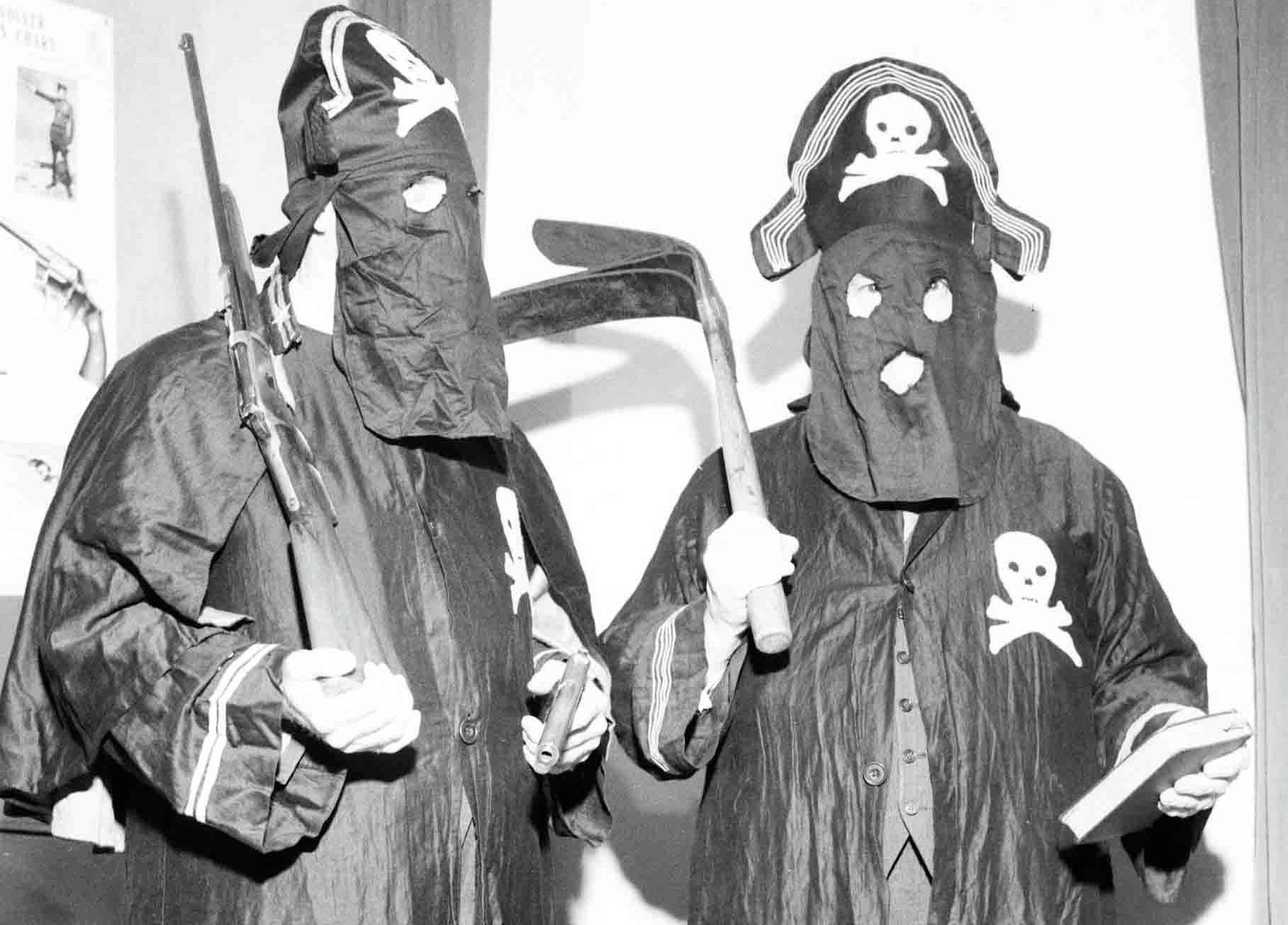
Anna Damon, writing for the I.L.D. with a forensic statement of facts, demands that authorities open an investigation into U.S. fascist organization the Black Legion, which terrorized Michigan in the mid-1930s in a campaign against labor, immigrants, Black workers, Jews, radicals, and personal enemies with many of that state’s leading and most ‘respectable’ citizens, including the mainline Republican Party and Henry Ford’s operation, deeply involved. They refused.
‘The Black Legion: We Accuse’ by Anna Damon from Labor Defender. Vol. 12 No. 8. August, 1936.
This document was sent to the Department of Justice, Senators, Congressmen, the five presidential candidates, leading newspapers. It PROVES that the BLACK LEGION can be smashed.
Facts
The striking feature of the story of the Black Legion as it has unfolded from day to day is that in instance after instance, rumor of its crimes have grown from suspicions, to proven facts. In the face of such a damning accumulation of evidence, the continued existence of this organization in at least 5 states free from federal investigation is intolerable. We submit herewith the detailed account of the facts as thus far reported, based upon accredited newspaper reports in the Detroit Free Press, Detroit Times, Detroit News, New York Herald-Tribune, and New York Times.
Murders
1. Charles A. Poole. The existence of the Black Legion was brought to public attention when the Michigan police authorities who already had some knowledge of its nature, proceeded to investigate the death of Charles A. Poole. Poole was found shot to death, his body lying in a ditch beside a suburban road outside Detroit, Michigan, May 13, 1936. The first rumors were that a spontaneous vigilante group had acted to punish Poole upon the belief that he had beaten and kicked his pregnant wife. Investigation led to the arrest of 16 men, and then the outstanding news came forth on May 23 that 3 had confessed. Subsequent confessions in open court of one of the defendants, Dayton Dean, confirmed the fact that Poole was killed in the calculated plan of the Black Legion acting as an organization. His wife, who gave birth to a child the day after her husband’s murder, proved the falsity of the alleged rumors that he had ever beat her. Poole’s sister-in-law told of the malicious way in which the gossip had begun which furnished the pretext of the murder. Apparently, Poole had learned some of the secrets of the Black Legion and was thereupon considered “dangerous” according to the irresponsible decision of its leaders.
2. George Marchuk. On December 22, 1933, the body of George Marchuk, a Ford worker and member of the Communist Party, was found in Lincoln Park, Wayne County. At that time, his death was set down by the police as a suicide. But the evidence of a Ford Company investigator made public by the Sheriff of Monroe County, makes it clear that Marchuk was slain because of labor union activity. The members of the Black Legion had previously requested that Marchuk be dismissed and threats against him were made. Marchuk had moved when his previous home was fired upon from an automobile. The Ford Company investigator who joined the Black Legion learned of determined plans to get rid of Marchuk. Corroborating facts are found in the avowed aims of the Black Legion as anti-Communists, anti-aliens, anti-Jews, anti-Negroes, and anti-Catholics. Moreover, its efforts to control positions in factories, motivated by the depression against bona fide labor organizers. Harry Colburn, chief investigator for the Wayne County prosecutor’s office, has already uncovered enough evidence to reopen the case.
3. Jack Bielak. In March 1934, Jack Bielak was taken out to Carleton in Monroe County by 4 men in two cars and shot to death. The motive for the murder is the same as that in the case of Marchuk. The evidence is even more conclusive. Applications cards for membership in the American Federation of Labor union were found on Bielak’s body, and neatly placed on his corpse, a card of the Wolverine Republican Club one of the fronts for the Black Legion. At the time of the murder, the police claimed Bielak had been killed by Communists because he deserted their party. The case has now been reopened and the local police are certain it can be attributed to the Black Legion.
4. Paul Avery. Paul Avery, a Michigan State prison guard, died, April 14, 1935, as the result of a flogging at the hands of Black Legion members. He was forcibly taken to a farm house and beaten with a leather thong. Ray Ernest, a guard at the same prison and his two brothers have already been arrested. Avery’s widow and their son, Ralph, have supplied the local police with sufficient evidence to lay the basis for further investigation.
5. Roy V. Pidcock. In the midst of the disclosures of the extensive activities of the Black Legion, came the shocking news that the lifeless body of Roy Pidcock was found May 29, 1936, hanged on Fighting Island, Detroit River, on the Canadian side. It is known that Pidcock was active in labor organization, and his widow stated that he was recently flogged by the Black Legion. Prior to his death, it appears that he had been receiving threats and lived in fear and worry. That the Black Legion should have dared to commit this crime while under scrutiny is not surprising. As we shall point out later on, the police force, as well as all other departments of state and local government in Michigan, are honey-combed with members of the Black Legion.
These are the known cases of murder. Countless others are charged; specifically the following:
1. Alfred Roughley. Roughley was found shot to death. He was known to have invited 4 men to join the Legion who have since been suspended from the Detroit City payroll because of their membership.
2. Jerome Garfield Wolfe. Wolfe, an oil prospector of Marion, Michigan, was known to have been on drinking parties with Black Legion members. His body was found on a lonely road late in 1933.
3. Rudolph J. Anderson. Anderson was a fellow employee of Harvey Davis, the “colonel” of the Black Legion who directed the murder of Poole, and Dayton Dean, who did the shooting of Poole. All three were employed by the city of Detroit. Anderson was found dead on a street in Detroit, December 16, 1935, with a bullet wound in the chest, and a high powered rifle nearby. His death was set down as unsolved by the local police.
4. Walter Fisher. Fisher’s body was found, his head and shoulders thrust into a furnace in the basement of his own home on May 9, 1935. His wife was away on a visit at the time. The police recognized that it was scarcely possible for a suicide to face the torture of such a death, but were unable to solve the case.
5. Oliver Hurkett. Hurkett was found dead in his car on a Macomb County road on April 25, 1935. Relatives state that he had received threatening letters and belonged to a secret society. He carried the bullet charm, known to be the insignia of the Black Legion. Its readiness to punish recalcitrant members for the slightest infraction of “discipline” is already notorious.
6. Howard Curtis. Curtis was found shot to death at Milford, Michigan, July 1934. Curtis came from Youngstown, Ohio, and was visiting his sister. A pigeon fancier, he was lured to his death by two men who called on him to inspect a pigeon at Milford. His body was found, partially burned, with a bullet wound in the head.
7. R.T. Phillips, a Detroit street railway conductor, was found drowned in 1933 in a pool at Rouge Park, Michigan.
8. George A. Lang. Lang, a prominent Catholic of Mishawaka, Indiana, was found clubbed to death by “persons unknown”.
Floggings
It is reported that in these floggings, as well as in the case of murders, members of the Legion were brought from other states “to do the job” in order to prevent detection. The number of floggings are innumerable.

1. Denver Carter of Nowell, Michigan.
2. William M. Smith, a farmer, was beaten for refusing to join the Black Legion.
3. Harley Smith who couldn’t attend meetings because his wife was ill, was lashed for his indifference.
4. Robert Penlon of Ecorse, was kidnapped and whipped by a band of seven Black Legion members.
5. Rees Spillman, a young 21 year old farmer of Sterling, Illinois, was kidnapped, beaten, tied to a tree and his farm burned.
6. Marcus Wollman of Detroit was beaten by the robed gang and even his own brother does not dare to tell the truth.
7. Mrs. Dorothy Guthrie, at whose home meetings of the Black Legion had been held, and whose husband had printed its hateful circulars, was struck down in her own home, gagged and beaten. She had told what she knew. This culminating instance of terror, unrestrained by local police, needs no pleading to reveal the necessity for Federal authority.
Bombings
The evidence is by now clear that the bombing of the home of Mayor Voisine of Ecorse, Michigan, on August 7, 1935, was the work of the Black Legion. That no one was injured was not intended by the perpetrators of the violence. The threats against Mayor Voisine continued, and as his friend, who joined the Black Legion to protect him, reports, plans were laid to get rid of him. The motive for such planned evidence was simply political rivalry for control of the town. For Federal authorities to refuse an investigation when town politics are invaded by terrorists forming part of an interstate organization in incredible.
The other two bombings are of the same nature as the murders. of Marchuk and Bielak. The Oakland County Workers Home, and the Workers Hall in Detroit were used by labor organizations. Both were bombed and local police now believe the Black Legion responsible.
Arms
It is clear that this organization used arms. Raids have already led to the discovery of guns and rifles. By organizing themselves into rifle clubs, the members of the Black Legion were even able to have the Federal Government supply them with free ammunition. The Wayne County Rifle and Pistol Club thus secured four rifles and a large quantity of ammunition.
Threats And Intimidation
Specific cases of overt threats are already known. Father Coughlin received warnings. Glenn Finkel, a salesman, in command of a “regiment” is being held on $3,000 bail as the leader of an effort to coerce Reverend Ralph Montague, Baptist clergyman, into joining the Black Legion. Mary Hirlehy, who was the stenographer for the Ohio Legislative Investigating Committee, was approached by four men demanding her stenographic notes of the hearing. Albert Bates, a Ford Motor Company transportation superintendent, narrowly missed being the victim of Black Legion terror. The men who sent him threats are known, Harvey Davis and Lowell Rushing, two of the defendants in the Poole murder case. George R. Fink, a veteran steel master and founder of the Great Lakes Steel Corporation, was threatened with a bombing in 1935, when he tried to uncover the activities of the Black Legion in terrorizing the mill workers. The men who sent him the threats are likewise known.
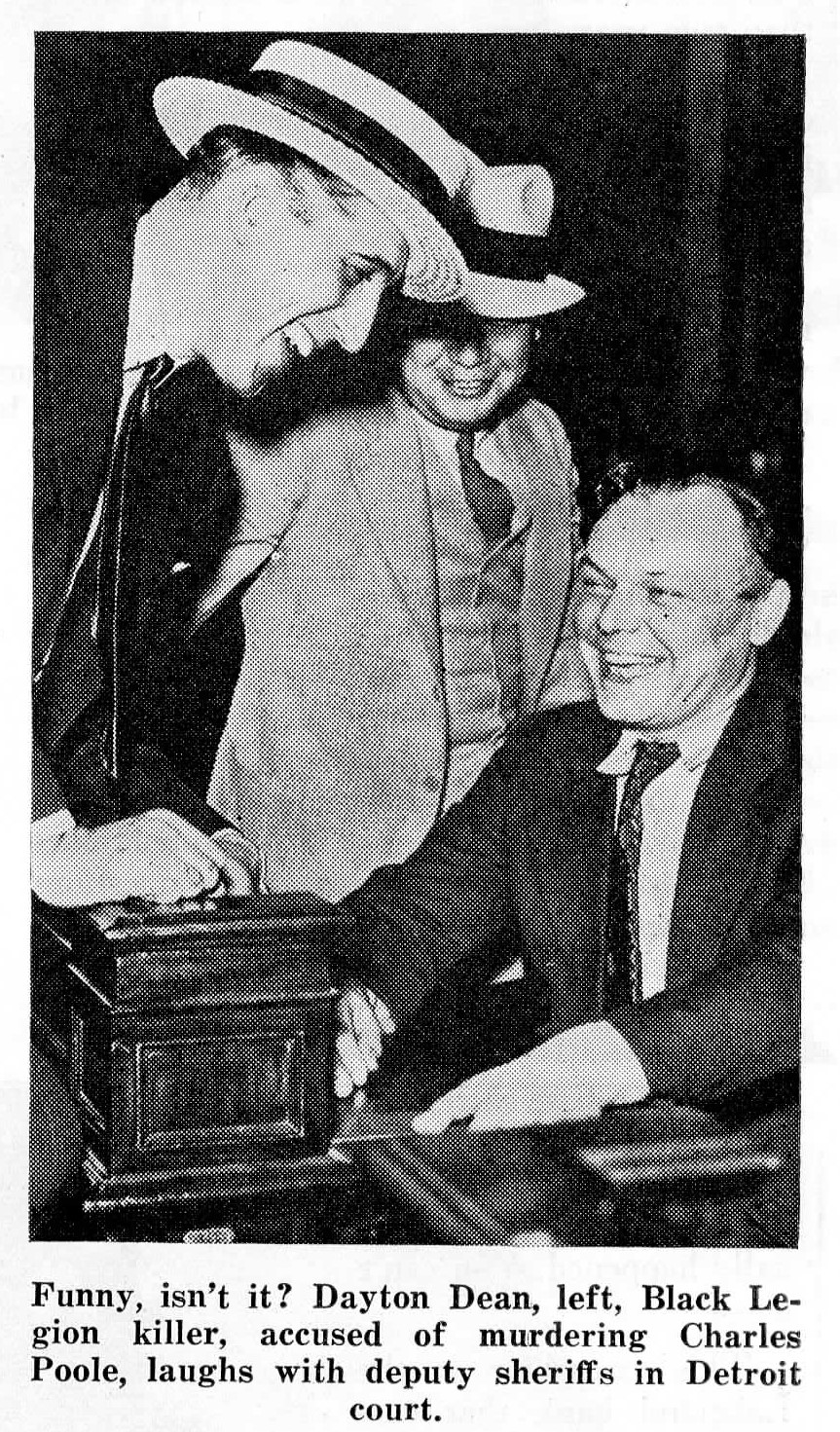
In the course of the present investigation by the authorities, the officials have publicly declared that witnesses have been intimidated by threatening messages. The organization feeds on terror, and spreads its terror by intimidation, even against its own members. The Conference for the Protection of Civil Liberties, a body of citizens determined to end the increasing danger, received a letter of warning from the Black Legion. The farmers of Napoleon County, Michigan, have told how a whole community was forced to join.
Arson
The most recent of the disclosures of the Black Legion’s utter unlawfulness has come with the exposure by one of its own members of a planned scheme of incendiary activity. The fire which destroyed the Coughlin Shrine at Royal Oak, may well be thus explained. Investigators for the Ohio State Legislative Committee learned that the Black Legion had burnt a Twin Oaks roadhouse near Lima, Ohio. We have already pointed out one case of arson–destruction of Rees Spillman’s farm. The burning of the home of William F. Mollenhauer at Oakland County in 1934 has been confessed to be the work of the Black Legion arson squad. Such is the brazen nature of the Black Legion that shortly after the arrest of Poole’s murderers, a farm house was burned to show its defiance of the local authorities. It is no exaggeration to say that nothing has been omitted by the Legion that is calculated to inspire wide spread terror. It is organized for murder and terror.
Conspiracies To Murder
When Arthur L. Kingsley, editor of the “Highland Parker”, devoted his columns to the defeat of N. Ray Markland for Mayor of Highland Park in 1934, a blood pact was signed by members of the Black Legion, supporting Markland, to “rub out” Kingsley. One wild six mile automobile chase nearly succeeded. Dayton Dean, Roy Hupner and Clarence C. Fry have confessed to this crime. When William W. Voisine was elected Mayor of Ecorse, and refused to give jobs to the Black Legion members, that organization sought to kill him. The bombing of his home, heretofore recounted, was part of the plot. Mayor Voisine even now requires the protection of two bodyguards.
When Maurice Sugar became the center of a growing political movement defending civil liberties, the Black Legion sent its gunman on a mission to end his life. It was only the very audacity of the plot that thwarted its commission.
Despite this series of intended political murders by an interstate organization, there has been no Federal action by the Department of Investigation. Yet it has been reported that when a jewel robbery was committed at the Coe estate on Long Island the Federal Department commenced an investigation. Surely there are more urgent reasons for Federal action in the case of the Black Legion than in the case of a jewel robbery, however important that may be.
Interstate Activities
While the larger number of crimes which mark the record of the Black Legion thus far disclosed took place in Michigan, nevertheless a threatening series of interstate operations has been shown. Outstanding is the simple fact that V.F. Efflinger, one of the chiefs of the Black Legion, has his office, at Lima, Ohio. He has openly revealed his position as a directing officer, and his disclaimers of violence and threats are certainly no excuse for the failure to make a Federal investigation. The Ohio State Legislature in 1934 made an investigation that showed how the Black Legion sought to control relief jobs just as it did city jobs in Michigan, and in the onion fields of Ohio, as it did the factories of Detroit. There is no reason for supposing that its methods were any different. The investigation in Michigan has already proved that its methods were any different. The investigation in Michigan has already proved its interstate character. In fact, Frederick A. Gulley, a defendant in the Penlon flogging and kidnapping, declared that his father had been a member in Ohio and insisted that it was even better organized and disciplined there. The Ford Company investigator knows the joint meetings of the Ohio and Michigan “regiments” of the Black Legion were held in Ohio. Members, some involuntarily, in dread and terror were transported across state lines to attend these meetings where plots against the liberty and lives of its “enemies” were planned. But it is not only in Ohio and Michigan that the Black Legion operates. Prosecutor McCrea, in charge of the Poole case, who appealed for Federal aid, has made public letters which he received from Kansas, Colorado, Montana, and Texas, wherein the writers set forth authentic accounts of Black Legion activity. Application blanks and copies of its horror-inspired oaths have been found in apartment houses in Indianapolis, Indiana.
Bars To Local Investigation
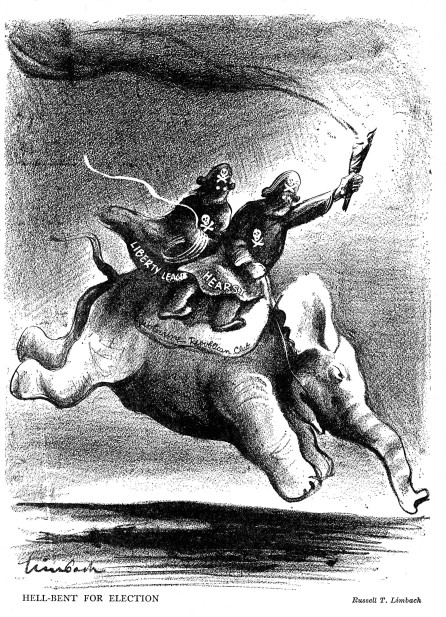
Local authorities are hampered by fears of witnesses and spread of influence. The Detroit newspapers have indicated the conclusive evidence which shows how the Black Legion dominates even upper circles of officialdom. Members of the City Commission, police and fire trial boards that must investigate membership among police and firemen, employees of state administrative agencies, prosecutors, judges’ assistants, ministers and prominent citizens, even judges themselves–all are infected. Bullet Clubs and Wolverine Republicans are fronts for its secret terrorism. Elections, Federal relief administration, industrial employment, are objects of its influence.
Legal Basis For Federal Investigation
1. Prohibition of night riding in the civil rights law.
2. Kidnapping persons in interstate and foreign commerce.
3. Threatening communications in interstate commerce.
4. Moving in interstate or foreign commerce to avoid prosecution for a felony or giving testimony.
5. Interference with Federal Relief Administration.
6. Fraudulently obtaining Federal aid given to rifle clubs.
The authority for this investigation is found in Art. 300 of the 5 U.S.C. which provides that:
“For the detection and prosecution of crimes against the United States and for the acquisition, collection, classification, and preservation of criminal identification records and their exchange with the officials of states, cities, and other institutions, the Attorney General is authorized to appoint officials who shall be vested with the authority necessary for the execution of such duties.”
The Division of Investigation was consolidated by Executive Order No. 6166, Section 3, pursuant to the Departmental Economy Act (5 U.S.C., Art. 125). More recently the Division of Investigation was given broad powers of arrest and seizure and its members authorized to carry firearms. 5 U.S.C. Art. 300a. To refuse an investigation now is to deny the very reasons for broadening its authority.
Conclusion
The Black Legion nourished its evil roots in the migration of workers to the industrial centers of America, and grew rapidly with the depression. It fastened upon factory jobs, political jobs, relief jobs and cloaked itself in a violent ritual that was performed in terroristic action. Directing its secret force, against Communists, Jews, Catholics, Negroes and “aliens,” it nevertheless coerced Protestant ministers, beat farmers, and murdered Protestants. Intimidations, floggings, bombings, arson and murder were perpetrated as part of its organized activity. A young W.P.A. worker was brutally shot, his body left in a ditch, and local police suddenly laid bare what was already known to many of its members. The state attorneys, county prosecutors and chiefs of police, have already accumulated a great mass of evidence of crimes committed in a similar manner throughout Michigan and Ohio. The Department of Justice can no longer wait. Its purpose is to detect crime–not merely to prosecute known crimes. Nothing is clearer than that there now exists a basis for Federal action upon six different grounds, each constituting a separate federal offense, and any one of which alone is sufficient. The public interest requires that the orderly democratic institutions of this country be freed from the terror of the Black Legion. The task is imperatively one for the Federal government.
Respectfully submitted,
(Signed) ANNA DAMON INTERNATIONAL LABOR DEFENSE Acting National Secretary
THEY ANSWER
DEPARTMENT OF JUSTICE WASHINGTON, D.C.
July 21, 1936.
Mrs. Anna Damon, National Secretary, International Labor Defense, 80 East 11th Street, New York, New York. Dear Madam:
Further reference is made to your letter of July 8, 1936, directed to the Attorney General, with which you submitted a memorandum upon “the necessity and basis of a Federal investigation by the Department of Justice into the activities of the Black Legion.”
In this connection please be advised that after a careful and thorough analysis of the facts and law set forth in the submitted memorandum the conclusion is reached that no sufficient factual or legal basis is shown thereby which would justify the Federal Government in assuming investigative jurisdiction of the Black Legion activities therein outlined.
Respectfully,
For the Attorney General BRIEN MCMAHON, Assistant Attorney General.
Labor Defender was published monthly from 1926 until 1937 by the International Labor Defense (ILD), a Workers Party of America, and later Communist Party-led, non-partisan defense organization founded by James Cannon and William Haywood while in Moscow, 1925 to support prisoners of the class war, victims of racism and imperialism, and the struggle against fascism. It included, poetry, letters from prisoners, and was heavily illustrated with photos, images, and cartoons. Labor Defender was the central organ of the Scottsboro and Sacco and Vanzetti defense campaigns. Not only were these among the most successful campaigns by Communists, they were among the most important of the period and the urgency and activity is duly reflected in its pages. Editors included T. J. O’ Flaherty, Max Shactman, Karl Reeve, J. Louis Engdahl, William L. Patterson, Sasha Small, and Sender Garlin.
PDF of full issue: https://www.marxists.org/history/usa/pubs/labordefender/1936/v12-%5B10%5Dn08-aug-1936-orig-LD.pdf
 Revolution's Newsstand