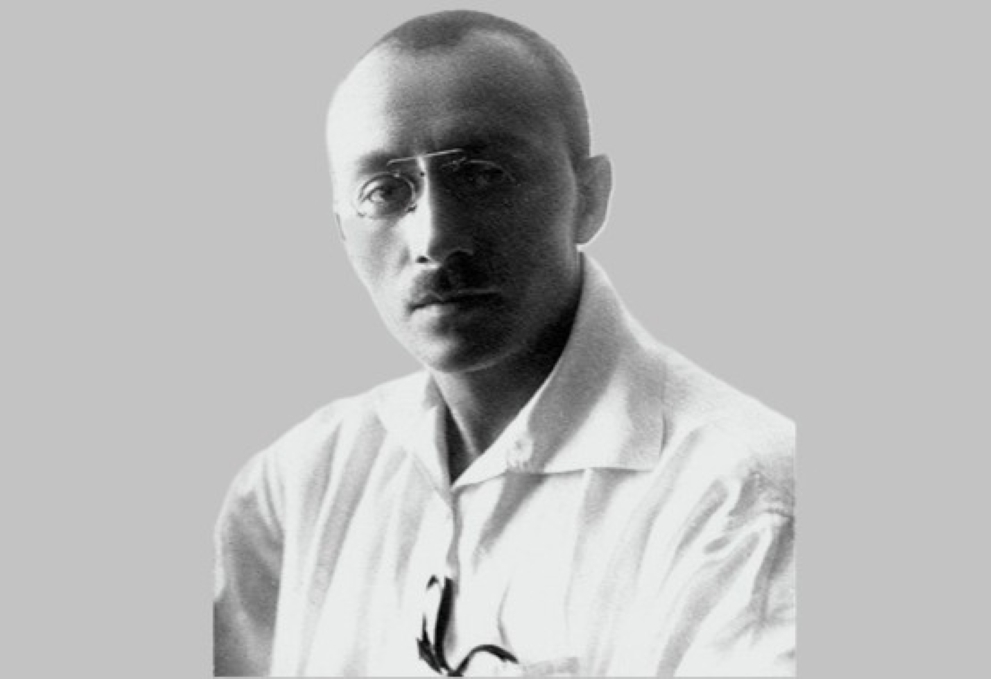
The leading early Soviet economist introduces the New Economic Policy to delegates at the Third Comintern Congress. Nikolay Milyutin was a Bolshevik trade unionist, architect, and soldier who, literally, stormed the Winter Palace in October, 1917. After the revolution he was engaged almost entirely in planning and economy, being the Commissar for Finances for much of the 1920s, a city planner during the Five Year Plans and then as an academic of architecture.
‘New Phases in Russia’s Economic Policy’ by Nikolay Milyutin from Moscow. No. 32. July 3, 1921.
The development of Soviet Russia’s economic policy was determined by the conditions under which it had to live and work, and had not changed for a period of 3 years, but now in 1921 a radical change is taking place. Comrade Lenin, at the Party conference last May, described the entire period of 1917-1920 as the epoch of militant Communism, and stated that 1921 was the beginning of a new stage in the life and development of Soviet Russia.
It is quite natural for Marxists to examine the development of any economic policy, but the changes which have been introduced into the economic policy of Soviet Russia today are received with an altogether false interpretation by many of our comrades.
In 1921 the conditions under which we had to determine our economic policy were distinguished first by the end of the civil war and secondly the delay of the world revolution (Soviet Russia still being surrounded by Capitalist States) and thirdly, the precarious economic condition of the town and the village. (1920 experienced a poor harvest and a series of peasant revolts).
Such are the conditions into which we have to enter the period of “Peaceful Construction”, after a fierce war with its slogan “All for the Red Army”.
To understand clearly the reason why we take this particular line of action, and no other, we should bear these facts in mind.
We are living in a period of transition from Capitalism to Socialism and our economics must be those of the transitionary period. This following is how Comrade Lenin explains the transition and its application of economics.
“Does it not signify the need for applying necessary economics, when we have in our State, elements and portions of Capitalism and Socialism. Everyone agrees with this. But not every one takes into consideration the nature of these different social economic structures which actually exist in Russia today. And this is where the root of the matter lies.
“Let us enumerate these elements. 1. Patriarchic i.e. the greater part of primitive peasant forms. 2. Small Industrial production (this) includes the majority of those). 3. Private capitalism. 4. State. 5. Socialism.
“Hence we can see that we have five different economic structures. Moreover the present form of agriculture has a tremendous influence in Russia and is likely to remain so for a long time to come. Therefore it follows that during the Dictatorship of the Proletariat, the economic policy, which aims at the strengthening and development of socialist enterprise, must bear in mind the other four forms and must consider their needs and the laws of their development, whilst keeping to the path to Socialism. The ability to fulfil this economic policy is determined by the general economic conditions of the transitionary period. Therefore our policy must envelop certain Capitalist forms which exist here”.
The Proletariat as the guiding and ruling class, must be able to formulate its policy says comrade Lenin so as to solve immediately the most pressing and difficult problems. This is the direction which our mic policy must take during the transitionary period.
During 1917-1921 all industry was nationalised in Soviet Russia with the exception of small industrial undertakings. A State-monopoly was declared upon nearly all industrial products and raw materials. The free market was closed. The system of distribution was strictly centralised. All this helped us to concentrate our attention and the forces of the State in solving the outstanding problems of that political period the overcoming of the external civil war. 1921 is the period of turning to peaceful reconstruction. As a result of this many important and serious changes have taken place.
First of all the change in our attitude towards agriculture. Comrade Lenin pointed out that our most important problem today was to increase the productive forces of the peasant farm, which is the foundation of our agriculture. Without this it will be impossible for the State to solve its fundamental problem of creating a productive reserve of 400 million poods of food stuffs.
Hence it is necessary to stimulate the development of peasant farming. Therefore the State requisitioning, which deprived the peasant of his supplies in order to benefit the State has been replaced by a tax which leaves a considerable quantity of the surplus products and raw materials in the hands of the producer.
In the second place as a result of the replacing of requisitions by a tax the small producer can do just as he pleases with his surplus, and the market is open for the buying and selling of food and agricultural products.
As an organisation which only took part in distribution the co-operative movement steps into the market as an organisation which undertakes an exchange of products. The State is concluding an agreement with it (in the person of the people’s Commissar for food on its one hand and the Centrosoyus on the other) by which the cooperative takes control of the productive reserve and guarantees to prepare and hand over a corresponding quantity of food and raw materials.
The factory workers, who organise cooperatives produce a number of articles to supplement for the State reserve. A separate trading fund is allotted to this purpose.
In the sphere of industry, where formerly special attention was paid to the development and strengthening of large industry, special attention is being devoted to the development of small industry. Their development is having a tremendous Influence on the production of articles and spare parts indispensable for the peasants implements and domestic utensils.
It has become possible for the People’s Agricultural Councils to leave various industrial undertakings to cooperatives and to private individuals. Taking Into consideration the large number of idle undertakings, this step will have a large effect on the increase of production.
The centralized system of granting privileges and independence to local organisations has considerably weakened. The majority of the undertakings passed directly into their control, and extensive privileges have been granted to them in the preparation of any form of reserve.
Such are chief changes in the new turn of economic policy. What then are these new moves. Are they the surrender of some of our posts, a retreat” as some try to demonstrate them, or, are they the logical and necessary steps in our fundamental aim the further strengthening and developing of the Soviet System? We have already demonstrated that we must not only take control of these spheres of our national economy in which the new social form of economic relations (large industry) exposes themselves, but also take control of those parts which are still dominated by bourgeois and petit-bourgeois ideas.
From this point of view the steps taken are absolutely comprehensible. It would have been of course a negation of our principles if the centre of gravity of our economic policy were transferred to the development of private industrial undertakings. Then our opponents would have been justified we would have surrendered some but not of our vital positions.
However only those who look through the one eye, see that side of our economic policy, which conducts the fundamental line in developing and strengthening those forms of economic life, where the new Socialist structure finds its being i.e. the nationalised industry and new forms of economic life, in the towns and villages.
It would have been economical, short-sightedness, and extremely erroneous to expect the strengthening of our economic life while not having strengthened its basis the great nationalised industry. Such a mistake we shall certainly not permit. It is sufficient to quote the following passage from the resolution of the last congress of the Council for National Economy:
“Our nationalised industry, continues to be the foundation of our national-economy, and become the new turning point in our economic policy, from that under which it lived, and developed in the years preceding. The development of our nationalised industry must continue on the lines of improving its enterprises, the increasing production and the improvement of supplies. The formation on considerable lines of fuel, metal, and other kinds of raw material, the transport service, and the production of machinery, and in general all means production continued to be her task, and is the basis of Russia’s national economy.
“But it can only fulfill these tasks under conditions of improved supplies and of improved labour forces. This is one of the chief tasks in production at the present time. It is necessary to reduce the number of staff workers, and to improve the supplies of these remaining at work. With this aim in view it is necessary to concentrate on production, which gives the possibility not only of reducing the number of workers, but also to exercise economy in fuel and energy. The enterprises which are remaining at work must continue their work. Only under such conditions will it be possible to increase production”.
All our attention is now centred around our political economy, for the development of a systematic economy. The general management of our economic life has been transferred to the hands of a council for Labour and Defence. They have formed a special state system commission into which enter the best specialists in the various branches of our economic life. It examines and confirms current economic plans, as well as carrying out experiments.
At last the plan for the electrification is nearing its accomplishment. During 1921-22, four large district stations will be completed, and a series of work in connection with the unification of the existing electric stations, is going on. This technical reshaping, of the country is only one part of the basis for the new economic order. In the foundation of our economic basis lies the development of our production and the productive forces of the country. From the foregoing we can see that this something “new” which we are bringing in, gives now possibilities of raising the standard of our economic life. Is it not possible in the process of developing Capitalistic forms of industry to conquer our Soviet economy, our nationalised industry. Many comrades have expressed their apprehension of this idea. However it is well to take into consideration that the whole transport, the railway as well as the waterways, are in our hands, that the whole of the fuel is nationalised, and that the whole attention, forces, and means of the Soviet apparatus, is directed for the strengthening and development of our nationalised industry, for these apprehensions to lose their significance. External contradictions ought not to hide us from this fact; that the strengthening of the whole economic foundation of Soviet Russia, this turning point in our economic policy does not predict a turning back, but rather, getting round the corner to climb the hill. This change in our economic policy is necessary for the development of our economic life, and in that lies our task and our aim.
Moscow was the English-language newspapers of the Communist International’s Third Congress held in Moscow during 1921. Edited by T. L. Axelrod, the paper began on May 25, a month before the Congress, to July 12.
PDF of full issue: https://www.marxists.org/history/international/comintern/3rd-congress/moscow/Moscow%20issue%2032.pdf
 Revolution's Newsstand