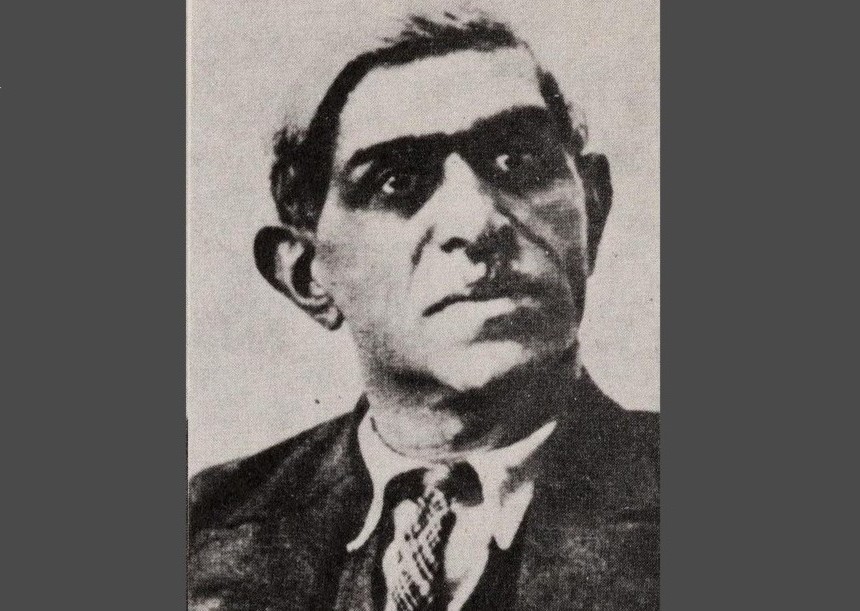
Chattopadhyaya on what was one of the central questions of the liberation movement before partition.
‘The Indian Mohammedans and the Revolutionary Movement’ by Virendranath Chattopadhyaya from International Press Correspondence. Vol. 10. No. 27. June 5, 1930.
The imperialist press agencies have been busy, ever since the beginning of the present revolutionary wave, in creating the impression that the Mussulmans in India are keeping aloof from the movement for independence. And they are spreading statements to this effect in order to counteract the growing anti-British movement in the Arabian and other Muslim countries. But all the evidence that has been accumulating during the last six weeks goes to show the extraordinary solidarity that has characterised the mass movement of revolt.
During the last few years the Government of India had succeeded in creating Hindu-Mohammedan riots in almost all parts of the country, through the instrumentality of communal leaders who are fighting one another for obtaining more posts in the Imperialist Administration. That conflict has suddenly disappeared since the movement has been taken up by the masses. In other words, with the emergence of the class line in the struggle, the religious differences that had been skillfully exploited for years together by the feudal and bourgeois leaders in their own interests and in the service of imperialism have ceased to be any longer effective.
We now find that in the present phase of the movement, the Hindu and Mohammedan landlords are completely united in supporting the Government against the growing agrarian movement, the Hindu and Mohammedan industrial and commercial bourgeoisie are united in the suppression of the revolutionary movement of the workers and on the other hand, that the workers, peasants, and the city poor, without any distinction of their inherited or nominal religious beliefs, are united in the widespread revolt against imperialism.
Nearly all the conflicts that took place in former years between the two communities, the Hindus and the Mohammedans, were located in the provinces of the Punjab and Bengal, where the Mussulman population is slightly in excess of the Hindu. In most cases the fights were engineered by feudal and clerical reactionaries whose religion was only a cover for the protection of their landed interests. But it is exactly from these two provinces that reports keep pouring in of the solidarity between the Hindu, Sikh and Muslim masses. The recent events in Peshawar have given conclusive proofs of the facts that the economic factors that bind the peasants and the workers are stronger than their traditional allegiance to their feudal and clerical chiefs. The whole country round Peshawar is mostly Mohammedan, and in the revolutionary organisations such as the “Red Shirts” of the Frontier and the Naujawan Bharat Sabha (Revolutionary Youth League), the membership is predominantly Mohammedan.
The “Times” correspondent speaks of “the artificial nature of the agitation stirred up among the Muslims of the North by walking delegates from Bombay or Bengal” (by which is insinuated that the delegates are Hindu agitators), and the Government of India’s communiqué of May 5th condemns “the vain and criminal attempts to stir up trouble on the Frontier and to embroil Muslims in a movement opposed to their true interests”! But the “Times” special correspondent from Peshawar cannot conceal the growing agrarian revolt among the peasantry which is the true cause of the mass solidarity that has been so remarkable a feature of the events of the last few weeks. He admits that propagandists “have found ready soil for their seed in districts which are suffering from poor agricultural seasons, failure of crops, and a certain amount of and land unrest consequent on the systems of revenue tenancy”.
The organisation of the “Red Shirts” which has its headquarters at Utmanzai is a good illustration of the new forces that are stirring among the Pathans (the Mussulmans of the North West). The Pathans are a fighting race and supply a number of regiments to the Imperialist Army. Their “fanatical devotion” to their religion was generally accepted as a fact, and they were often easily roused by their religious leaders against the Sikhs and the Hindus, when it suited the Government (though their religion did not prevent them from fighting against the Turks for the British Government). It was believed that even revolutionary propaganda among the Pathans should be based on their religion.
This seems to have been the case also with the “Red Shirts”, who call themselves “Servants of God”. Recruits are sworn in on the Koran to follow the teachings of Islam, to live a pure and righteous life, and to refrain from violent resistance if persecuted. These objects are anything but revolutionary. But the terrible economic conditions in the Pathan villages have forced them into the anti-imperialist struggle, and the well-disciplined “Red Shirts” are now marching from village to village with the war-cry of “Inkilab zindabad” (Long live the Revolution) and creating organisations in every village. Their leader Abdul Ghaffar Khan has been arrested, and their the Haji of allies from the other side of the Frontier who came Turangzai, Fazli Wahid, and his son Badshah Gul have been forced to retire to their support with an army, under bombardment by MacDonald’s airplanes to the mountain fastnesses of Ghalanai and the village of Matta Mughal Khel, from where the “Red Shirts’ are continuing their revolutionary activities in the surrounding areas.
These activities of the “Red Shirts” will have a far-reaching effect upon the peasantry and the Pathan regiments. When we consider that former areas of religious conflicts, such as Multan, Dera Ismail Khan, etc., have become centres of mass demonstrations in which all religious denominations have participated, that the efforts of the landlords to keep the Muslim peasants away from the struggle have completely failed, and that Hindu regiments have refused to fire upon Muslim demonstrators, we realise that in the Punjab we have come one step nearer to the agrarian revolution.
The active participation of the youth and poorer middle-class intellectuals of the Punjab in the anti-imperialist struggle is shown by the activities of the Congress committees and youth organisations. The most active and determined leaders of the Congress committees and of the so called “War Council” are Mohammedans like Dr. Saifuddin Kitchlew and Dr. M hammed Alam, whose arrests led to violent mass demonstrations. In Amritsar, the Sikh centre, the Muslim Youth Association resolved unanimously to call upon all Muslims to participate actively in the struggle for national independence. On May Day all the branches of the Naujawan Bharat Sabhi, (Revolutionary Youth League), of which the membership is largely Mohammedan, took part in the celebrations and hoisted the Red Flag over the offices of the Sabha.
Similar is the position in Bengal. The Bengal Muslim Political Conference held at Chittagong unanimously passed a resolution identifying the Conference fully and whole-heartedly with the present revolt and with the goal of complete national independence The police have been doing their best to provoke religious feuds, as is proved by the tight provoked in Dacca on May 24th Bu such instances of successful provocation have been rare, although the danger still remains and may prove a hindrance to the movement.
The resolution of the Bengal Conference was in full accordance with the resolution passed by the Jamiyat-el-Ulema-i-Hind (Al-India Association of Muslim Scholars and Theologians) who issued a fetwa (religious ordinance) calling upon all Muslims to join the independence movement. The fetwa does not indicate that the ulemas have become revolutionary, but only that they have, in order to preserve their own position as religious leaders, given expression to the irresistible sentiment of the Muslim masses.
How strong the class-line has developed is shown by the movement in the province of Sind where the Muslims constitute 90 percent of the whole population.
The British Government has been arranging “Muslim Conferences” against the revolutionary movement. It is obvious that the ackeys who do this work are landed proprietors. On May 22nd Sir Shah Nawaz Khan Bhutto (whose title explains itself) presided over a meeting of Muslims of the Three Upper Sind Districts held at Sukkur, and advised his colleagues all landowners and upper middle-class gentry “not to fall a prey to the Hindu schemes”. But the answer to the gentlemen was given at a mass meeting of the Muslims held at Karachi on May 23rd, that endorsed the resolution of the Jamiyat-el-Ulema-i-Hind urging Muslims to take part in the movement for the independence of India and to carry out the programme of the Jamiyar which includes the publication of proscribed literature etc. In a conflict with the police next morning the masses shouted revolutionary war-cries.
The treacherous role that is being played by Mohammed All and Shaukat Ali cannot sufficiently often be exposed. Through their Khilafat agitation they have acquired a certain position in the Muslim world and while they are anxious to retain this popularity in the Arabian countries for whose independence they are agitating in India, they are afraid of the revolutionary mass movement which is developing in their own country. The recent mass meetings organised by them in Bombay and Madras and attended by over 100,000 Muslims passed resolutions in favour of Arab and Egyptian independence only, but also afforded a clear proof of fact that the Muslim masses in the cities are just as much in favour of India’s independence.
The question of Muslims as a separate community does not arise in the case of the industrial workers, among whom economic and political factors alone count. The attempt to create “muslim” unions has failed. It is these industrial workers that are playing an important role in the destruction of the religious illusions that are still strong among the peasantry.
International Press Correspondence, widely known as”Inprecorr” was published by the Executive Committee of the Communist International (ECCI) regularly in German and English, occasionally in many other languages, beginning in 1921 and lasting in English until 1938. Inprecorr’s role was to supply translated articles to the English-speaking press of the International from the Comintern’s different sections, as well as news and statements from the ECCI. Many ‘Daily Worker’ and ‘Communist’ articles originated in Inprecorr, and it also published articles by American comrades for use in other countries. It was published at least weekly, and often thrice weekly.
PDF of full issue: https://www.marxists.org/history/international/comintern/inprecor/1930/v10n27-jun-05-1930-inprecor-Virginia.pdf
 Revolution's Newsstand