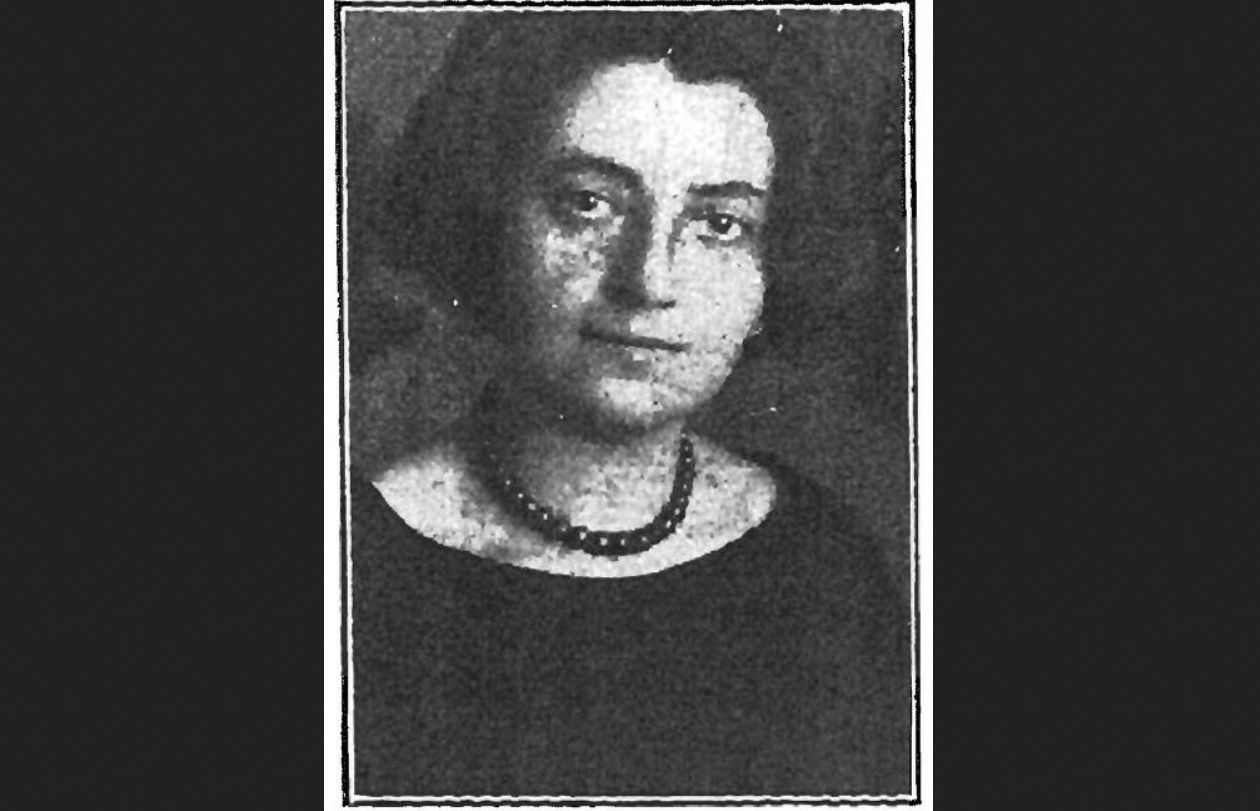
Rose Wortis on the need of an international body to coordinate the activities and struggles of textile workers globally.
‘The Needle Workers International’ by Rose Wortis from Labor Herald. Vol. 2 No. 3. May, 1923.
MUCH has been written about the International Federations in the different industries, such as that of the Metal Workers, Building, Transport, Miners. etc. About the International of Clothing Workers, or as it is better known, the Copenhagen International, little has been heard. So far as its So far as its influence in the life of the affiliated unions is concerned it might never have existed. But the reason for this is not, as some may contend, that the needle workers are not sufficiently developed. A brief review of the conditions in the clothing industry of some of the important countries will prove that these workers can be brought into the vanguard of the revolutionary trade union movement of the world.
The German Clothing Workers
In Germany the clothing workers are organized to the number of 180,000, in one centralized clothing workers’ union. This organization has three departments, corresponding to the three main branches of production covered by the union, men’s clothing, women’s clothing, and white goods. There is also a Cap and Hat Makers Union, numbering 20,000, which is a part of the Hirsch-Dunker Union, a religious organization.
The general disappointment in the ranks of the German workers, as a result of the failure of the revolution and the continuous betrayals of the Social Democrats, has not failed to have its effect upon the clothing, workers. Though there is little unemployment, the wages of the workers have been reduced to about 28% of pre-war wages. Home-work, which had almost disappeared during the war, has again made its appearance. This brings many married women, who are unable to go to the factories because of family duties, into the industry. From 15% to 20% of the workers in the industry are thus employed. This has a demoralizing effect on the whole industry.
The left wing in the German clothing union has been very strong. At the convention of 1920, 49% of the delegates were in the opposition to the reactionary Social Democrats, under the leadership of the Communists. This high point has not been retained. During the period of the capitalist offensive, many new political orientations have taken place. Many workers who were carried along by the popular wave of revolution in 1918-1920 and supported the Communists, have gone over to the side of the officials or withdrawn from activity. Many active rebels who threatened the control of the old leaders were expelled from the union on one pretext or another, according to the well-established practice of bureaucrats everywhere.
In spite of all the set-backs, the German clothing trades hold forth good promise for revolutionary union activity in the future. The workers engaged in the industry, particularly the women, are new and raw elements. They have not been poisoned by the Social Democratic ideas of class peace. This is a great advantage, since in Germany the most difficult task of the Communists and rebels, is to overcome the Social Democratic traditions of the workers. An active movement in the clothing trades is being established in Berlin, Leipzig, Chemnitz, and other cities. As in America, this left wing stands for amalgamation of all clothing trades unions.
In the Capital of Style
In France, “the Capital of Style” for the clothing industry, there is grave lack of organization among the workers. Of near to one million employees, only between 12 and 15 thousand are in the unions, of which there are three. In the reformist C.G.T. there are about 4,000 members, in the revolutionary C.G.T.U. (Unity Confederation of Labor) about 8 to 10,000 members, and in the latter organization a small union of hat and cap makers.
The conditions of the clothing workers of France, as a result of the capitalist offensive, have been greatly lowered. The chaotic condition in the industry in the small and unimportant countries Czecho-Slovakia, Jugo-Slavia, Lithuania, and the great unemployment in those countries, offers a cheap labor market to the French clothing capitalists, who are establishing special agencies to attract workers to Paris. This foreign element, because of its unfamiliarity with the language, does not easily lend itself to organization and serves to underbid the French workers and destroy whatever little influence they have in the industry.
To cope with this difficult situation, it is necessary to concentrate all forces in organization work. The reformist leaders of France, however, consider their control of the unions of greater importance than the interests of the workers whom they are supposed to serve. Instead of working to bring the unorganized workers into the ranks of the union, they have brought about a split amongst the organized, compelling the majority of the members to organize a new union. This newly organized union has seriously taken up the most difficult task. The first step is to unite the cap makers with the other clothing workers. They have addressed an appeal to the workers of other countries not to heed the promises of the capitalists of France. They are also attempting to establish connections with the unions in those countries so that the immigrants may continue their union membership in the French union when employed in that country.
Clothing Workers in Revolution
The first attempt at organization of the Russian clothing workers occurred in Petrograd on January 9, 1905, where 90 workers came together to form a trade union. This meeting elected a committee which was to prepare a constitution and arrange another meeting where the union was to be launched officially. The meeting arranged by the committee a few weeks later was raided by the police and the most active workers thrown into prison. Though the organization had been deprived of some of its most energetic forces, nevertheless, the seeds of organization had been planted. On the fifth of October of the same year after the revolutionary uprising, the clothing workers again met, and this time it was to elect a delegate to the Soviet of Deputies which existed for a short time after the revolution of 1905. These short-lived soviets were of great historical importance to the revolutionary movement of Russia. In these hastily-formed soviets Lenin recognized the definite form of the proletarian state.
In December, 1905, the union of clothing workers already counted a membership of 2,000 and issued a trade paper called, the “Tailor and Furrier.” The reaction of the December days forced the clothing workers union, together with the rest of organized labor in Russia, into an illegal existence. However, the union had already made in roads upon the minds of the workers, who joined it in spite of the great dangers that union membership involved in this country of darkest reaction. In March, 1912, another trade paper, called “The Council of Clothing Workers,” was issued. After a short period, the editors were arrested and the paper driven out of existence.
After the revolution of 1917 the first conference of clothing workers for the purpose of finally uniting the separate locals that existed throughout the country into one National Union of Clothing workers, was held. From the very beginning it was organized on an industrial basis including all workers engaged in the production of all branches of clothing. Until this very day the Russian union is the only union in the clothing industry of the world that has put into actual practice the slogan of one Union for each industry, to the great advantage of the workers.
Hard times were ahead of this newly-born union. The disorganization that followed the February revolution seriously affected the clothing industry, which during the period of the war had to a very great extent been turned into a war industry, resulting in great unemployment. Then came the October revolution, followed by a civil war, foreign invasion, famine, etc. During all these times of stress the workers of the clothing industry always stood in the front ranks on the battle front.
For a Real International
The crying need of the moment in all industries is consolidation in the ranks of labor. Everywhere, whether Germany or France, England or America, the main issue on the order of the day is amalgamation of all crafts or trades in an industry into one centrally organized industrial union. One Union for every industry. Greater participation of the masses in the life of the union, through the establishment of the shop delegates system, is the slogan of the revolutionary workers of all countries.
A real International of clothing workers, including the now barred 60,000 Russian clothing workers, with their tremendous revolutionary experience, would prove to be a great source of strength to the workers in the industry, who are facing a well organized capitalist class in their daily struggle for existence.
To bring about an amalgamation of all branches in the clothing industry in every country, and amalgamation of the different Internationals that now exist into one powerful revolutionary International of clothing workers, an International conference of 15 revolutionary workers representing minorities in the reformist unions as well as organizations, was held in Moscow on December 6, 1922
The conference elected an International Propaganda committee whose purpose it shall be to establish closer connection amongst the clothing workers of all countries, so as to jointly work to convert the Copenhagen paper International into a revolutionary International of Clothing Workers that will be the guiding spirit to the workers in their struggles, and aid them to work ceaselessly with other International Unions for the overthrow of capitalism and the establishment of a workers’ government.
The Labor Herald was the monthly publication of the Trade Union Educational League (TUEL), in immensely important link between the IWW of the 1910s and the CIO of the 1930s. It was begun by veteran labor organizer and Communist leader William Z. Foster in 1920 as an attempt to unite militants within various unions while continuing the industrial unionism tradition of the IWW, though it was opposed to “dual unionism” and favored the formation of a Labor Party. Although it would become financially supported by the Communist International and Communist Party of America, it remained autonomous, was a network and not a membership organization, and included many radicals outside the Communist Party. In 1924 Labor Herald was folded into Workers Monthly, an explicitly Party organ and in 1927 ‘Labor Unity’ became the organ of a now CP dominated TUEL. In 1929 and the turn towards Red Unions in the Third Period, TUEL was wound up and replaced by the Trade Union Unity League, a section of the Red International of Labor Unions (Profitern) and continued to publish Labor Unity until 1935. Labor Herald remains an important labor-orientated journal by revolutionaries in US left history and would be referenced by activists, along with TUEL, along after it’s heyday.
PDF of full issue: https://www.marxists.org/history/usa/pubs/laborherald/v2n03-may-1923.pdf
 Revolution's Newsstand