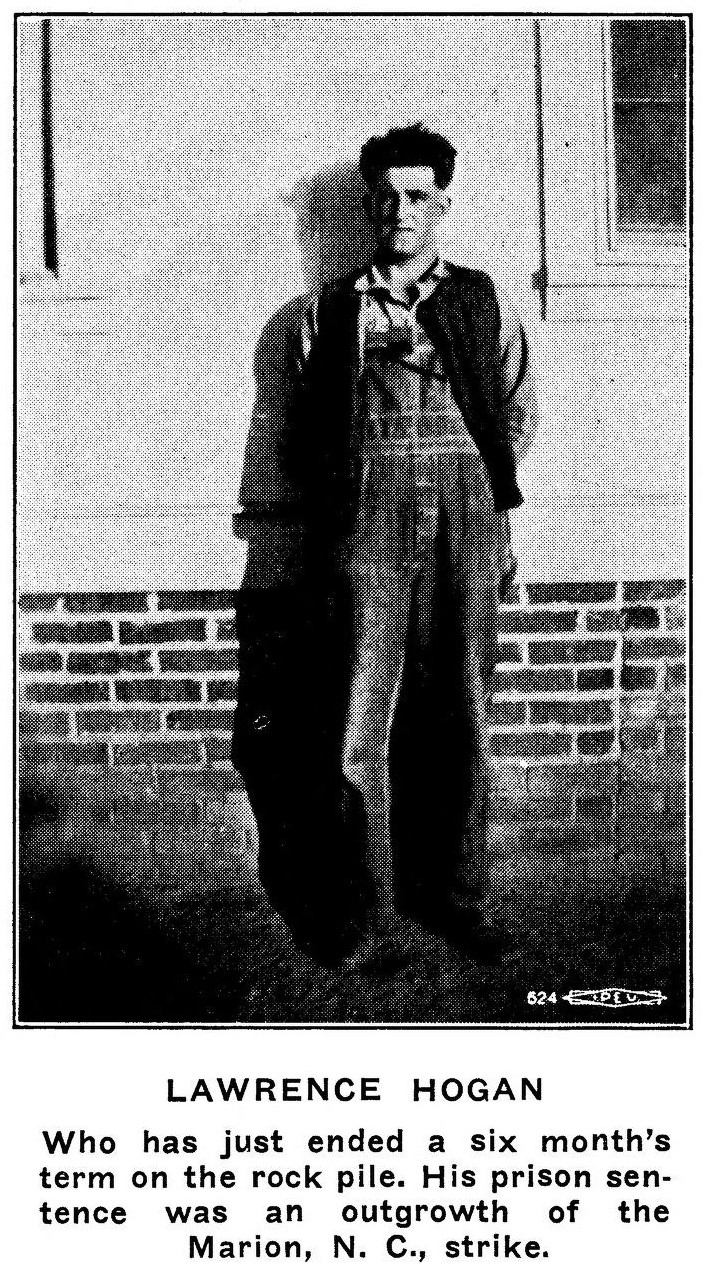
Hogan on the struggle at the Stehli Mill in High Point, North Carolina. Larry Hogan was textile worker who became a union leader, served time on the rock pile, and went Brookwood Labor College, joining the American Workers Party before dying at just 30 in 1935.
‘The Stehli Strike’ by Lawrence Hogan from Labor Age. Vol. 12 No. 10. October, 1932.
THE Stehli Silk Corporation is trying to make it appear that the Stehli strike at High Point is settled. Yet a worker tells me, “It is impossible for me to buy the very necessities to keep my family from being hungry.” The strike is far from settled. There is a lull like the lull before a storm. The company has already broken every part of the agreement made with the strikers.
The 450 Stehli workers came out on strike August 28, against wage reductions, stretch-out, bad working conditions and slave driving. They have had 50 per cent wage reductions. After the strike they placed a strong picket line around the mill and began the fight. The company refused to have anything to do with the committee representing the workers and for three weeks refused to meet any one from the workers. After the strike had gone a week they opened the gates with the assistance of the law. Some 50 people tried to enter the mill. They had to walk over the prostrate bodies of the workers, through teargas, rotten eggs and other disagreeable things to get by the gates.
The company declared, when the strike occurred, that it was going broke; but immediately wages were raised in its Lancaster, Pa., plant, 10 per cent; and since then wages in its northern plant have been raised 17 per cent more. Meanwhile here the workers tell stories of suffering. They are unable to pay house rent and buy the simple foods, meat and bread and beans, on their low wages. The company apparently operates on the policy that Southern labor needs less to eat than workers in Pennsylvania.
Workers Tricked
At the end of three weeks High Point politicians and “public spirited citizens” managed to trick the workers into a settlement. Strike-breaking police were protecting anybody who wanted to enter the mill. The number of scabs had grown from 50 to 125. All the local strike leaders were being placed under heavy peace bonds, making it almost impossible for them to be active. People were hired or intimidated into bringing charges against them. No money or trouble was spared to break the strike. But they were up against a militant bunch of workers, anything but docile workers who are easily frightened or satisfied.
The local civic organizations and politicians, thinking they would save the good name of the town (cheap and contented labor) and get more votes by posing as the workers’ friends, began working to settle the strike.
Then the company promised the workers—if you will return to work, we will give you a 17 per cent wage increase, take all the people back within a few days without discrimination. But the company stood out against a grievance committee. The workers decided to accept. They went back to work. Then the company began blacklisting with a vengeance and around 200 have been blacklisted and they are working them out as fast as they can. Like the Marion settlement of 1929 they are passing the buck, each official claiming that the person who is out of town is the one that remedies these things!
The strike was unorganized. The workers didn’t belong to any union and the strike was on the spur of the moment, as it happens so often in the South. They were all so dissatisfied that the moment the word “strike” started, the revolt occurred. Their eyes have been opened by this experience. It has shown them the need for an organization. It has convinced them that they must have a labor party. They have learned that the company to gain its ends can use and will use old party public officials that the people have elected to legalize the spilling of workers’ blood.
Strike Hard Fought
The so-called law tried to make it appear in the beginning that it was for the workers, but when the show down came the law lined up with the boss. When the company announced that the mill gates would be opened all of High Point’s sixty policemen were on the job. Cops were carried here from Greensboro. The county sheriff was here with all the thugs he could muster. But the workers, as in many previous Southern strikes, were filled with a spirit of fighting militancy. Still, as in all Southern strikes, when the situation came to a show down, they found themselves ranged not only against the boss, the politicians, and the civic organizations, but against the “law” itself.
Yet Highpoint police praise themselves for “leaning away from duty on the side of leniency” during the strike; but when Stehli shook the bag of gold at them and the politicians began to shuffle about, the cops were not with the hungry devils who were fighting for bread, but they were ready for “duty”–ready to break the strike.
Scores of strikers were arrested for merely standing by telephone posts. They were charged with inciting to riot and assault and placed under bonds. Policemen and scabs weighing 200 pounds swore on the stand that they were afraid of 16 and 17 year old girls, underweight at that. They gassed and clubbed men and women alike. Several women are seriously ill from tear-gas used by the police to clear the way for the scabs to get into the mill. Some have bruised and scarred bodies from being kicked, after they had been felled by the police. Three of them have been under the care of doctors for more than three weeks, and many others should be. Their relatives and friends were knocked unconscious when they tried to pick them up and carry them away from the gas.
Myrtle Carden’s Story
Myrtle Carden, one of the victims, is not expected to live, the doctors say, unless great care is taken of her. She is only 17 and worked before the strike for about $4.50 a week. Just because she was on the picket line she was clubbed down by the police. After being knocked down she was again clubbed, trampled upon and gassed. The doctors say that she is hurt internally, that her lungs are injured. Unless her condition changes North Carolina will add another victim to the lust for dividends.
Myrtle Carden had worked for the company five years. Her mother and father have always respected the law. They can’t understand why their daughter was beaten and gassed by the strong policemen, arrested for inciting to riot, carried to jail nearly dead, and there kept from them for several hours. They can’t understand why the father and younger brother were clubbed and beaten and arrested when they tried to rescue Myrtle, or why Ruth, her sister, was arrested when she tried to help Myrtle up from where she had fallen.
Myrtle Carden doesn’t understand.
“At first,” she says, “I was overcome by tear-gas and fell to the ground. The pickets all ran and a girl helped me up. Then policeman E.E. Batley knocked me down. He hit me on my breast several times. While I was on the ground Batley and policeman Brindle kicked me in my sides and stomach and on my legs until I was skinned and bruised. They would not let anyone help me up. My father and my brother tried to get to me and the police arrested them and wouldn’t let them touch me. When my sister finally got to me and helped me up they arrested both of us. I was sick and about to faint when they arrested me and carried me to police headquarters. I can’t sleep and I feel so queer ever since they beat me.”
Dr. C.D. Thompson, who has been treating Myrtle every day, states: “Miss Carden is in a serious condition. She has bruises on her neck, sides and legs, below her knees, and she is hurt internally. Her shoulder is also wrenched. She has not eaten a mouthful this week and seems to be nauseated from tear gas.”
I saw women go on the picket line spitting blood as a result of being gassed; they said they would fight just as long as they could stand and get to the line. They didn’t stop to explain why, but I knew—they had for a long time been slowly starving. Jane Freeman was only able to stay on the picket line short turns each day by taking dope. She was painfully injured by gas and the strong-arm trick of the police. Bessie Eghert got her side wrenched by a cop. Doctors say it will take her years to recover.
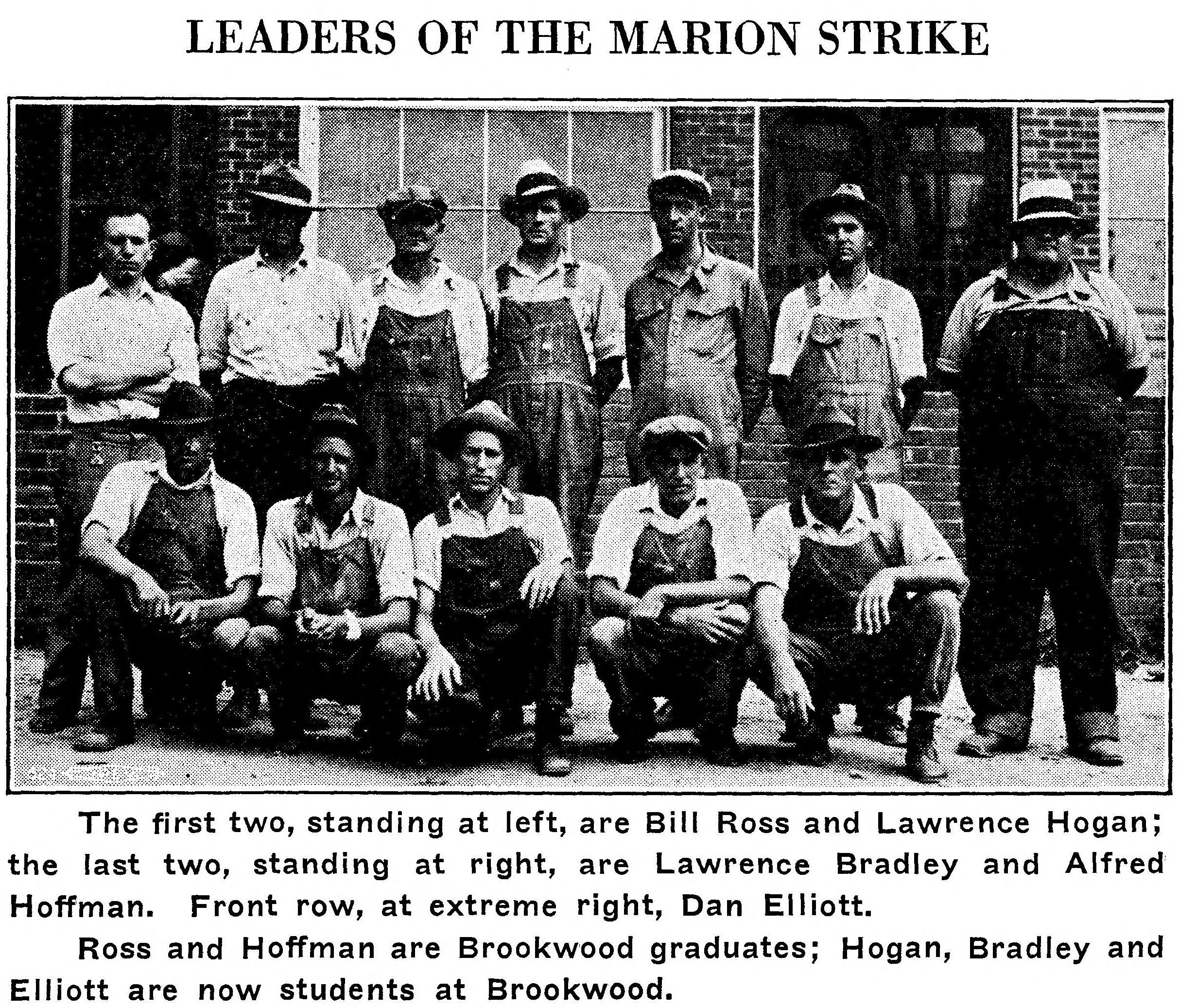
So ends another Southern strike—but is it ended? People who are working with the blacklisted are inclined to believe otherwise. Since the ending of the struggle the workers have found out how they were gipped and they are holding meetings. They are assisted in this by Mr. Richie, local president of the U.T.W. and Central Body Secretary, and myself working in the interest of the American Federation of Full Fashioned Hosiery Workers and the C.P.L.A.
Already the workers have set up machinery to carry on the fight. A relief committee has been formed, Richie and myself on the committee. And this week they voted to carry on in dead earnest. With 200 blacklisted and now out for five weeks, relief is the pressing problem. The committee is doing all it can. Farmers are bringing in food, but more is needed. If these people fight to a finish they will have to have the assistance of laboring people all over the country.
Comrades! They are fighting! They need your help!
The lull before the storm inspires the civic organizations to send about word that things are once more quiet in High Point. They will be surprised.
The eyes of Southern workers are opened, organizations are springing up everywhere, Southern labor stirs.
Note: Send communications to Stehli Silk Relief Committee, Box 219, High Point, N.C.
Labor Age was a left-labor monthly magazine with origins in Socialist Review, journal of the Intercollegiate Socialist Society. Published by the Labor Publication Society from 1921-1933 aligned with the League for Industrial Democracy of left-wing trade unionists across industries. During 1929-33 the magazine was affiliated with the Conference for Progressive Labor Action (CPLA) led by A. J. Muste. James Maurer, Harry W. Laidler, and Louis Budenz were also writers. The orientation of the magazine was industrial unionism, planning, nationalization, and was illustrated with photos and cartoons. With its stress on worker education, social unionism and rank and file activism, it is one of the essential journals of the radical US labor socialist movement of its time.
PDF of full issue: https://www.marxists.org/history/usa/pubs/laborage/v21n10-oct-1932-labor-age.pdf
 Revolution's Newsstand