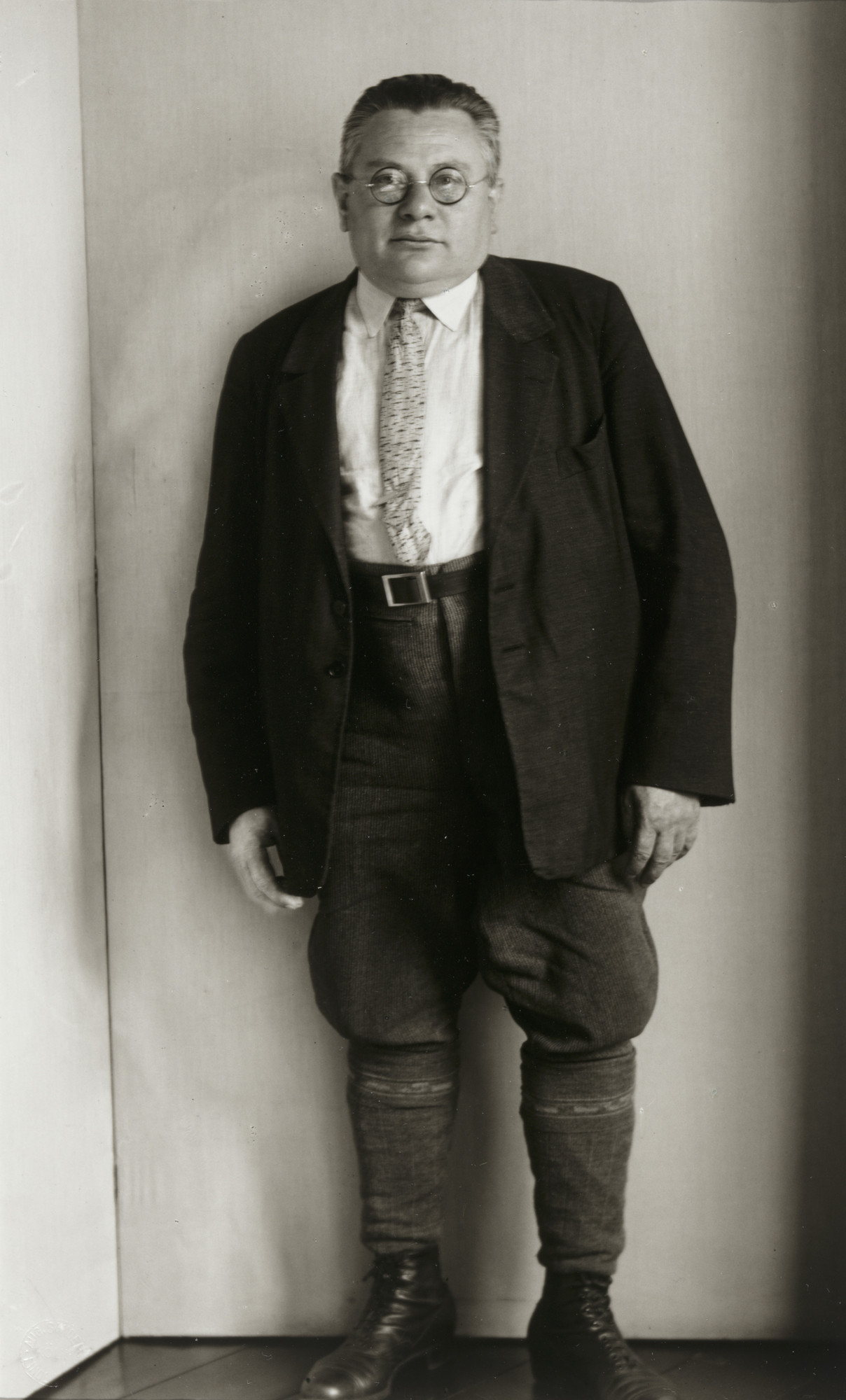
Facing a treason trial for his role in 1921’s ‘March Action,’ this biography of the veteran revolutionary and leading German Communist was written for delegates to the Comintern’s Third Word Congress.
‘Heinrich Brandler: Man and Fighter’ from Moscow. No. 21. June 19, 1921.
Brandler was born on July 3, 1881 in Warnsdorf a Northern Bohemian textile workers village in a weaver’s family, which led a miserable existence. In his boyhood at Warnsdorf he not only knew the misery of the proletariat by his own experience, but he also saw there the first beginnings of the labour movement. He saw the poor weavers and spinners rebel against the incredible oppression by the rich factory owners, he witnessed the wild spontaneous strikes of the first period of the labour movement, he saw how political charlatans tried to take advantage of the need of the masses and their instinctive rebellion against their oppressors, to further all sorts of reactionary schemes. When he was twelve, he was busily engaged in smashing windows during the Baden riots. At the same period for the first time he became acquainted with the socialist movement. When socialist agitators came to Zittau, a town situated at a few hours distance, he walked there led by his father and other weavers across the mountains to hear with his elders, what the socialist agitators had to say to the weavers and spinners of the Eulengebizhe. The tall boy was hit hard not only by the general proletarian poverty, but also by a personal ailment. Owing to a fall he was permanently disfigured by a disease of the spine, which made him appear a hunch back. From the age of 13, he started to learn mason’s work in the summer, and in the winter he sought work in the textile trade. Even as an apprentice, he took an active part in the Labour movement of his native town and its nearest surroundings. In 1900 he went on a “Wanderreise” to lead the life of a Young Journeyman, as it is customary among the builders. At the time of the builders’ strike in Dresden, he had the misfortune to be arrested as a picket, and he was banished from Saxony, that beautiful police state for the rest of his life.
He then wandered through Germany, Switzerland, Italy and the Balkans. In 1903 he landed in Hamburg, a man with a clear vision in politics, with a strong will. He soon made himself prominent there owing to his extraordinary ability and his great political energy. He was specially active in the young workers’ movement of self-education. He became president of the Hamburg Education Committee. In connection with a builders’ strike in Hamburg, Brandler was condemned to 6 months imprisonment, which sentence he served in Neumünster. The imprisonment laid the foundation to his study of Marx, for there he was able to read all the books on classical economy. The recklessness with which he fought is all trimmers in politics and especially be reformism, which was then at its height brought on him the enmity of the old party gods and the Trade Union bureaucrats. But the police also took note of him once more and expelled him from Hamburg in 1908. Thence he went to Bremen, where in the first period of his at stay there, he was specially active as an agitator for the builders’ Union, but also took a lively interest in party work. At that period Bremen was the scene of great quarrels in which Alfred Henke, Heinrich Schalz, Fritz Ebert, the present president Winklemann and Deichmann the presidents of the Boiler and Tobacco Workers’ Unions respectively.
Brandler took the side of Henke and Schultz, who were, then champions of radicalism against reformism. Now both of them are thorough reformists. The resolute appearance on the side of the left of the Social Democratic Party brought on him great enmity from the rights and Brandler was soon to experience the method with which the rights were fighting their enemies, methods that were as were in those days as they are now. A savage persecution was started against him, in which Franz Martin the president of the Builders Union who is now the Syndicalist leader, gained special notoriety. Brandler was brought by these gentry before a bourgeois court and condemned to three months imprisonment. However the case was tried over again and he was acquitted. Nearly all his former opponents subsequently proved themselves to be despicable scoundrels. The latter fight which Brandler had to sustain in defence of his political convictions and of his personal honour, brought on his great material need, which subsequently forced him to leave Bremen, for no one would employ a builder who was such a noted firebrand.
During nearly the whole period of his stay in Bremen, he was leader of the young workers’ movement and in this capacity, he was connected with Ludwig Frank and Karl Liebknecht, who were guiding this movement in Mannheim and Berlin respectively. Brandler took a very active part in all the fights which the young workers’ movement fought in the old social democratic party. He was engaged on this question at the Nuremburg Party Congress.
In December 1909 Brandler emigrated to Zurich and remained there until 1913. As in Germany, he continued there to serve the Swiss labour movement with all his enthusiasm. The Union of International Socialists of Switzerland employed him three consecutive winters as a travelling teacher and as such he delivered lectures on the history of the Socialist Movement and the theory of Marxism in nearly all the important towns of Switzerland. For several years he was president of the Central Education Committee and took a prominent part in the discussions on the necessity of uniting the four Swiss parties. It was especially this activity which made him odious to many opportunist elements, which rightly held the view that they would no longer be able to continue their reformist strongly bourgeois policy in a united party.
In Switzerland as well as formerly in Bremen, a group of young comrades holding similar views gathered round Brandler and they like Brandler took part in the subsequent war and revolution as staunch fighters for the workers cause. In 1913 Heinrich Brandler was again forced by straightened circumstances to go to Chemnitz. Here the builders elected him official of the local group which position he retained until a few weeks be- fore the end of the war. In the months immediately preceding the war he was a well know personality in the Chemnitz workers’ movement and worked for the recruiting of new fighters for the Marxian Left of the German Social Democracy,
in this thoroughly opportunist area where probably more than anywhere else revisionism was perpetrating its crimes. After July 23, the day of the Austrian mobilisation order against Serbia, it became clear at once that Brandler had not gone over to the camp of social patriots. He started at once a violent anti- militarist propaganda among the thousands of Austrian workers, who resided in Chemnitz, and who were affected by the mobilisation. Later on when there was a German mobilisation, Brandler and some of his friends attempted to persuade the Chemnitz party and trade union leaders, that it was necessary to resist war the by strikes and insurrection. A resolution which was proposed at a workers’ meeting by Brandler and his friends, and which demanded resistance to the war, was suppressed by the social patriots and Ernst Heilman, who later on became the notorious publisher of the war correspondence of Baumeister and who rat that time was chief editor of the “Chemnitz Volksstimme,” declared in open meeting that Brandler must be thankful to them for the suppressing the publication of this resolution as in this way he spared Brandler at least 10 years imprisonment.
The fight which Brandler continued against the Noskes, Heilmanns, Erich Kuttners, etc., was the cause of his receiving an invitation to call on the criminal police which told him that if he we continued to speak against Messrs. Noske, Heilmann or the “Volsstimme” he will be put in jail for a year. The criminal police continued its friendly attentions to Brandler during the whole course of the war, as all political activity was rendered impossible to him not only by the police, but also by the social-democratic party he was immediately forced to do underground work. He took part in the s foundation of the Spartacus Bund, organised new revolutionary groups, organised revolutionary propaganda and the distribution of leaflets both among the local population and soldiers.
The success of this propaganda work, which at the beginning of the work was initiated by three comrades, produced in the course of the war a body of capable revolutionary propagandists and later Chemnitz made the chief bulwark of the Spartacus movement. Brandler had to go through many domicial searches and examinations, but neither the political police nor the public prosecutor had any success in this matter. Only in August 1918 did the judicial authorities attempt to paralyse the Spartacus propaganda in the Chemnitz region by means of a bold stroke; they imprisoned several of his friends and Brandler himself for the second time was “forever” expelled from Saxony. A short time afterwards he was called back by the revolution and elected managing secretary of the Chemnitz Workers Council. Although he displayed great activity at this post, he managed by sacrificing his night rest, to create and then publish and edit the Kampfer. As editor of this paper, he was fighting all the revolutionary battles until August 1919, when the commander In chief of Socialist Saxony caused him to be prosecuted, on an anonymous denunciation, for the organisation of an armed rebellion to overthrow the government.
Just before the Kapp days, Brandler was forced to act underground. In the meanwhile the Heidelberg Party Congress elected him to the Central Committee of the Spartacus Union. In the Kapp days he was again to be found in Chemnitz as president of the local Workers Council, leading the struggle of defence. It was owing to his resolute actions that in the whole of the Erzgebierge and the district of Chemnitz the Kapp rebellion was completely suppressed on the second day and the whole power remained in the hands of the armed workers. He never regarded himself as one of the “loyal” opposition, he was always in favour of an unconditional defeat of the enemy, Brandler was now more and more gaining in influence in the Spartacus Union. He helped first of all to organise the trade union opposition, and when the union was effected with the left U.S.P. he was made secretary of the new party. At the joint party congress in December 1920, Brandler delivered a report on the tasks of trade unions in time of revolution. His report was a reckless appeal to fight, compared to the disquisitions of Levi and Daumig, which were of a pacifying character. The whole bourgeois press noticed it at once. It drew the attention of the judicial authorities to the ideas of Brandler and declared that a very dangerous enemy has come forward. If his views and temperament gain the upper hand in the party, they would have to prepare themselves for stubborn struggle with the communists.
Levi who at first showed great favour to Brandler and often appealed to his powerful support, was no longer friendly after he returned from the Second World Congress; for Brandler supported the Executive Committee. Violent conflicts often occurred between the two. After the exclusion of Levi and four friends from the Executive of the Party, it became clear to everyone that Brandler was destined to lead the Party. He was at the helm of the latter in the March days, when the communists proletariat of Germany had to fight alone against the attacks of the bourgeoisie and its lackeys from the social patriotic camp, he stood unyielding and bold, while in party itself, Levi was gathering all passive elements to form a front against the revolutionary fighters, he fought hard for the preservation and consolidation of the party and lived to witness at the last meeting of the Party Committee on the 4th, 5th, and 6th of May, not indeed the ruin of the party, as was prophesied by Levi and his friends, but its consolidation into a firmer, structure, prepared for new struggles against the enemy. The bourgeoisie then became aware that the radiant future which Levi prophesied in his “revelations” on the ruin of the party, were based on wrong presumptions. It thought itself cheated of a triumph and therefore Brandler was seized by it police and brought before a special court which found him guilty of high treason and condemned him to 5 years confinement in a fortress. It was not he so much who was condemned, it was the fighting spirit which again won the upper hand in the Communist Party of Germany. The sentence was meant to curb the spirit d communist action. However, the explanations of the accused proved that the watch dogs of capitalist Germany did not even succeed in making the accused swerve in his replies to the tribunal. He exclaimed to them and to the sceptics of Levi’s camp: We shall march on untiringly on our path, until the bourgeoisie and the social traitors are stamped under the feet of the proletarian revolution.
We hope Heinrich Brandler will be liberated from his dungeon by the fighting labour hosts and we know that in the future, he is destined to be the first champion of our cause.
Moscow was the English-language newspapers of the Communist International’s Third Congress held in Moscow during 1921. Edited by T. L. Axelrod, the paper began on May 25, a month before the Congress, to July 12.
PDF of full issue: https://www.marxists.org/history/international/comintern/3rd-congress/moscow/Moscow%20issue%2021.pdf
 Revolution's Newsstand