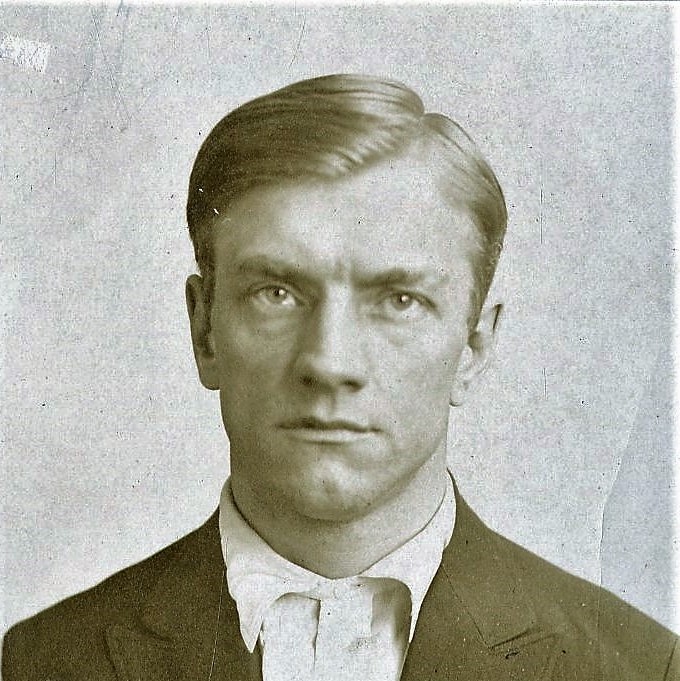
This country. An absolutely harrowing tale of police torture and murder of working class rebels. Ted Fraser tells of his journey from The Bay to San Diego in an effort to join the I.W.W.’s Free Speech struggle there, literally made to run the gauntlet and forced to kneel and kiss the flag by ignorant thugs. When we collect on our bill, comrades…
‘In Thy Name, Oh Profits!’ by Red Fraser from Revolt (San Francisco). Vol. 3 No. 50. April 13, 1912.
VIGILANTES INTRUSTED WITH POLITICAL POWER BY THE CAPITALIST LEECHES OF SAN DIEGO!
Chicago, Ill., April 11, 1912.
REVOLT, San Francisco:
Fellow Worker Schwandt and I left ‘Frisco Monday, April 1st, and arrived in Los Angeles Tuesday, April 2nd. On arriving here, we proceeded to find the local here. After a search of half an hour or so we finally found it. Then we were informed that a large number of the boys had left there some two hours or more before and were on the road to San Diego. On being informed that the party would stay in Fullerton, which is about 23 miles south of this city, fellow worker Schwandt and I decided to go to Fullerton on the car and catch the boys there. We got a car from Los Angeles about 5 o’clock which took us to Fullerton Roads. From there we walked to Fullerton, advance of four miles and a half, arriving in Fullerton about 8:30 p.m. There were two other fellows left Los Angeles with us also. Arriving in Fullerton, we had supper. Then we started to look for the other fellows. We found them down the railroad track around a big fire. There must have ben about seventy of them. Well, the boys made our little addition welcome and then proceeded to plan our next move. The plan was to take a ride on a Santa Fe freight train as far as Santa Ana and hold a meeting in Santa Ana and also see the boys in jail there. Well, we had just finished making plans when a freight train hove in sight and we proceeded to board her. We all climbed aboard a flat car and when the brakemen saw the bunch they never said a word.
Well, we reached Santa Ana about 11 o’clock p.m. and we were met by the village policemen to the number of three. They seemed very much surprised to see such a crowd and asked us why we did not stay aboard that train. Fellow worker Sebastian being the spokesman, he told the policemen that we intended to stay in town all night and see the boys in jail the next day and also that we would like to hold a street meeting in that town. Well, the policemen were in a very nervous condition and did not know what to do about the matter. I guess they had read about us in the capitalistic press and thought that we were. dangerous characters. They seemed surprised when they saw what an orderly and cheerful bunch of men they had to deal with and they were soon. laughing and joking with the boys. I believe we could have made I.W.W.’s out of them if we would have stayed and talked to them. Well, fellow worker, they finally decided to call the Mayor and Chief Marshal of the town by telephone and shortly after these gentlemen appeared in an automobile. They, too, were surprised to meet us, but they treated us very gently, and in a soothing voice asked our spokesman what it was intended to do whilst in their city. Our spokesman answered that as it was pretty late that night we had no desire to do anything just then except sleep and that he would oblige us if he would show us a place to sleep in, and that after we had rested we would call on the boys in jail and we would like to have our meeting on the street. Well, Mr. Mayor or whatever he was, was quite amiable. and showed the committee a place to sleep, but this place was a poor affair, being without doors and too cold for a dog to lie in. So our spokesman asked him if we could not sleep in a box car, but he said it was not in his power to say yes, so we decided to sleep in the box car anyway.
Well, the next morning we got up and soon had a big fire going. Then the committee went up town and purchased food and coffee for the bunch. We had a first class chef amongst us and he proceeded to make an appetizing dish of fried steak and potatoes and bread a la carte. After the meal the committee went to town to interview the Sheriff and get a permit to see the boys in jail. But the Sheriff told the committee that Thursday was visiting day and that they could not see them that day as it was Wednesday. Well, the boys tried every means of getting to see them but it was useless, so they sent a message to cheer them up, after which the committee got a notice from the Mayor that they could hold a meeting in any part of the town as long as they were a hundred yards from the main street. Well, about 7:30 twenty of us proceeded up town to hold a street meeting. Arriving there we sang two or three songs and by that time we had quite a nice crowd around. Then our chairman opened the It was then that we all got a huge meeting and pleasant surprise, as a lady in the audience volunteered to speak for us. We did not know that Santa Ana had any I.W.W.’s except the boy’s in jail. But we discovered that Mrs. Irene Smith was a good and a live member of the I.W.W.’s, and that she had lived in Santa Ana for some time. The way she talked to the natives would have done you good could you have heard her as we did. Well, fellow worker, Mrs. Smith took up a collection for us and we got seven dollars and some cents, for which we gave papers away. That was a pretty good collection for a small burg like Santa Ana. Well, we left $2.50 with the Sheriff to buy tobacco for the boys in jail and then we went back to the camp, where we waited for a train that would take us to San Diego. About 11 o’clock p.m. a freight train came in and we got aboard a flat car again. When we were on the Sheriff of Santa Ana came down to us and talked very nice to us. He wanted to know why we didn’t take a box car as that would be much nicer and warmer for us. But we told him that we preferred a flat car just then. While he was talking to us there were between twenty and twenty-five big, well-dressed fellows with their pockets bulging and overcoats on passing by him and I took a look down the train to see where they were all going and I was not a bit surprised to see them climb in the caboose. Well, when these fellows had all got in the caboose and the train was about to start the Sheriff gave us a fond farewell and wished us good luck and told us he would remember us to the boys in jail. Well, we were on the last stage of our journey at last and we expected to reach Ocean, Side that night, a distance of 85 miles from Los Angeles. We had determined to stick in a bunch so that if any of the armed thugs in the caboose ordered us off we would not obey until we reached Ocean Side, which was our objective point for the night. Well, fellow worker, we had reached a point called San Onofre, which is 18 miles from Ocean Side, and 33 miles from Santa Ana, and here is where the murdering commenced.
All along the line were armed guards on both sides of the railroad track and they were strung out for three or four hundred yards or more. And so you can see where we got off at. When the train stopped the bunch of thugs who were close to the car we were on hollered to the rest to come up, which they did on the run. They all had white handkerchiefs around their arms and they had a rifle apiece which they pointed full at us. They also had a revolver and a club apiece. There must have been 200 of these brave fellows and in awful language they told us to get off the car but we refused and told them to go ahead and shoot us if they liked.
Well, fellow worker, we were just wondering what to do next when we were attacked from an unexpected quarter. The thugs from the caboose came along and climbed on top of the box car next to our flat car and started to club the boys off. Well, the boys stood that as long as they could, but their heads not being made of iron and having nothing to defend themselves with we had to get off. As soon as we were off we had as many as three guards apiece, all armed in the same manner, lining us up. They first pointed their guns at us and ordered us to throw up our hands, and having no desire to die yet we naturally threw our hands up. While in this position they came and searched every one of us; one man would feel on the outside of our clothes and another on the inside, and to make sure they’d missed nothing two other fellows started all over again and what money the boys had on them these human vultures kept. While standing in this position so long our arms naturally got tired but when we attempted to lower them at least a bit, a thug at the back of us would call us vile names and crack our knuckles with his club. When they had thoroughly searched the crowd they began looking us over, still keeping us covered with their rifles. Every once in a while they would recognize some fellow who had been there before and then they would yell and curse and call him a son of a and other vile names, and, while he had his hands up in the air, some thug kept him covered with a rifle, and the rest of us too, these brutes in human form would kick and thump and club and curse their victim. I saw five of these wild animals thirsting for blood pull a fellow worker out of the line and while the poor fellow was helpless and at their mercy, they struck him in the mouth and then knocked him on the head with their clubs until he fell helpless at their feet. Then when he was down they kicked him in the ribs and smashed him all over the body with clubs, cursing him and us in the same breath, and when they had deliberately murdered as brave a man as ever lived they threw his body in a corner of the small tent as if it was the carcass of a dog. His name was Marko.
When we saw this brutality in front of our eyes we moved forward impulsively, but they commenced to put their guns right close up to us and call us vile names and promised the first one who dropped his hands that he would be shot, and believe me, they would have done it, too. Well, fellow worker, this makes me awful sick to have to write about it, but it was awful to be compelled to see it. Well, after Well, after poor Marko was dead they selected another victim, I think it was Sebastian this time, but whoever it was they put him through the same as poor Marko. Then they marched all of us fellows that were still alive into a cattle corral with our hands still in the air and then they came around and took what white handkerchiefs there wherein the crowd or anything that happened to be white. Then, still our hands in the air, they marched us around the cattle corral in twos with fellows sitting on the fences and other brutes sitting on the ground keeping us covered with their guns. Then they came to look the crowd over again with flash lights and this time they dragged fellow worker Noble out of the crowd and beat him unmercifully. Next they dragged fellow worker Goule from Portland out of the crowd. They took him to the tent where the poor Greek and the others were lying and they asked him numerous questions. Then they stripped him naked and beat him terribly about the body and accused him of being a leader of the I.W.W.’s. Well, fellow worker, Goule managed to make his escape from the tent but a guard saw him and fired fourteen shots after him, but a good farmer saw the plight he was in and took him ten miles out of the way of them. While in the hands of these thugs he heard them say who were going to be killed. And the secretary of San Diego is marked for death, and Mrs. Emerson for tar and feathers. Well, fellow workers, after keeping us in the corral for about one hour and a half they told us we could put our hands down now and to get together like a bunch of sheep and lie where we were. This we did, being very thankful to get our hands down. Then they came around us while we lay shivering there and they cursed us and called us all kinds of dirty names and told us if they came back there again they would kill us. Well, after a night of extreme misery spent, in the open air without a bite to eat or anything to cover us, they had us get in a corner and there they took our picture. Then they herded us in another corner where a slimy, dirty cur, calling himself an officer, gave us a lecture. He said we didn’t love the stars and stripes and that we were hoboes and bums and anarchists and we did not believe in a Supreme Being, like he did, and that if we persisted in coming to the fair city of San Diego with its forty thousand inhabitants and tried to set aside a law that they had made there were plenty of hills around the fair city where our bones would lie rotting, and he said: “Bring on your I.W.W.’s, we can kill them all, and we will do so if they come a second time.” Then his patriotic thugs clapped their hands and he, after telling us that we were a pack of cowards and to take all that was coming and never show up around there again, departed.
Then came an order from a thug there that five of our fellows had to step forward. They did so and under a guard of five thugs they were marched down the track. While I was waiting for my turn to go automobiles kept coming from the desert and fellow workers from San Diego county jail with blood streaming from their faces and limping painfully were pushed in with our crowd; there were 14 of these new arrivals, and with every new arrival the thugs would laugh approvingly of me.
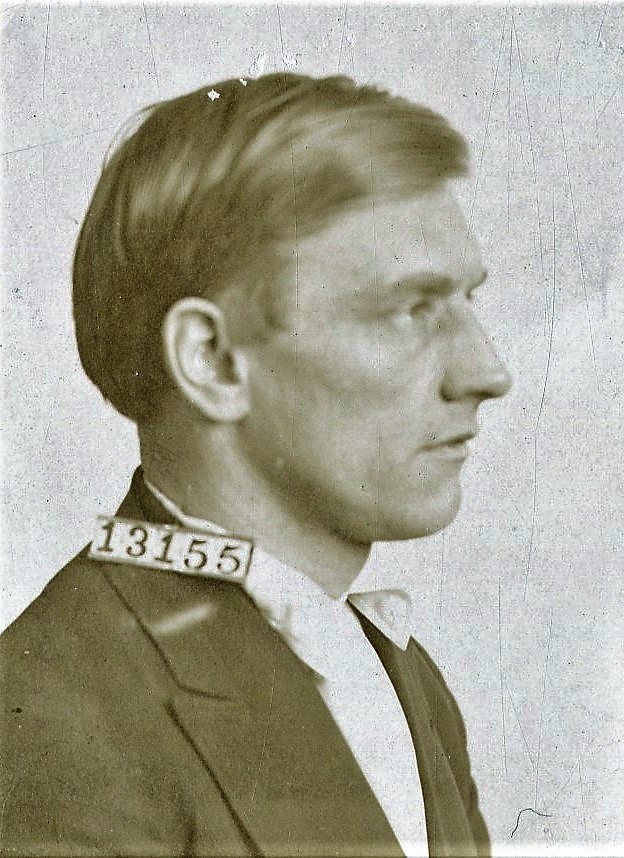
Finally fellow worker Schandt and myself, with two others, were ordered out and five guards took us down the track. Well, after walking about a hundred yards or so we were commanded to stop. We did so. Then, for the first time since leaving the corral I saw a sight that amazed me. All down the track were human brutes to the number of fifty-three on each side, 106 in all. My friend had to go before me and had an opportunity to look ahead All down the track were the boys and these thugs rushing out at them with different weapons. Then I had just got an eye full of this when I was ordered to take off my coat like the rest had to do. This I did. Then they said: “Kneel down and kiss the flag.” The flag was a paper about 4 inches square. I knelt down all right, but I did not do any kissing. Well, when I got up the first brute grabbed me by the collar and pulled me in the center of the track. The next one fired his pistol over my head. Another struck my legs with a wheel spoke, another my body with a bull whip and another struck me in the back with the butt of his rifle, and so on and on and so on, down the line. All the boys had to go through it. Even those from the jail–what do you think of that, fellow worker, in 1912, too? Well, after we had all run the gauntlet we started to walk to Santa Ana, my friend and I getting there about 6:30 a.m., when I proceeded to dig up another hat, having lost mine running the gauntlet.
About twenty-three of us walked there, thirty miles without food and head covering. Well, my friend and I came to Los Angeles, as I wanted to write as soon as I could, having promised you I would.
Well, I think this is all for the present, fellow worker, so will wish you good-by, for the time being. I remain yours sincerely, fellow worker. (Signed) TED FRASER.
P.S. There is no exaggeration in this letter whatever. In fact I have made it as light as possible.
I am staying here until I find out what is going to be done. We are willing to go again if we can win by so doing.
(Forwarded by the general office Industrial Workers of the World).
ST. JOHN,
Secretary.
Revolt ‘The Voice Of The Militant Worker’ was a short-lived revolutionary weekly newspaper published by Left Wingers in the Socialist Party in 1911 and 1912 and closely associated with Tom Mooney. The legendary activists and political prisoner Thomas J. Mooney had recently left the I.W.W. and settled in the Bay. He would join with the SP Left in the Bay Area, like Austin Lewis, William McDevitt, Nathan Greist, and Cloudseley Johns to produce The Revolt. The paper ran around 1500 copies weekly, but financial problems ended its run after one year. Mooney was also embroiled in constant legal battles for his role in the Pacific Gas and Electric Strike of the time. The paper epitomizes the revolutionary Left of the SP before World War One with its mix of Marxist orthodoxy, industrial unionism, and counter-cultural attitude. To that it adds some of the best writers in the movement; it deserved a much longer run.
PDF of full issue: https://www.marxists.org/history/usa/pubs/revolt/v3-w50-apr-13-1912-Revolt.pdf
 Revolution's Newsstand