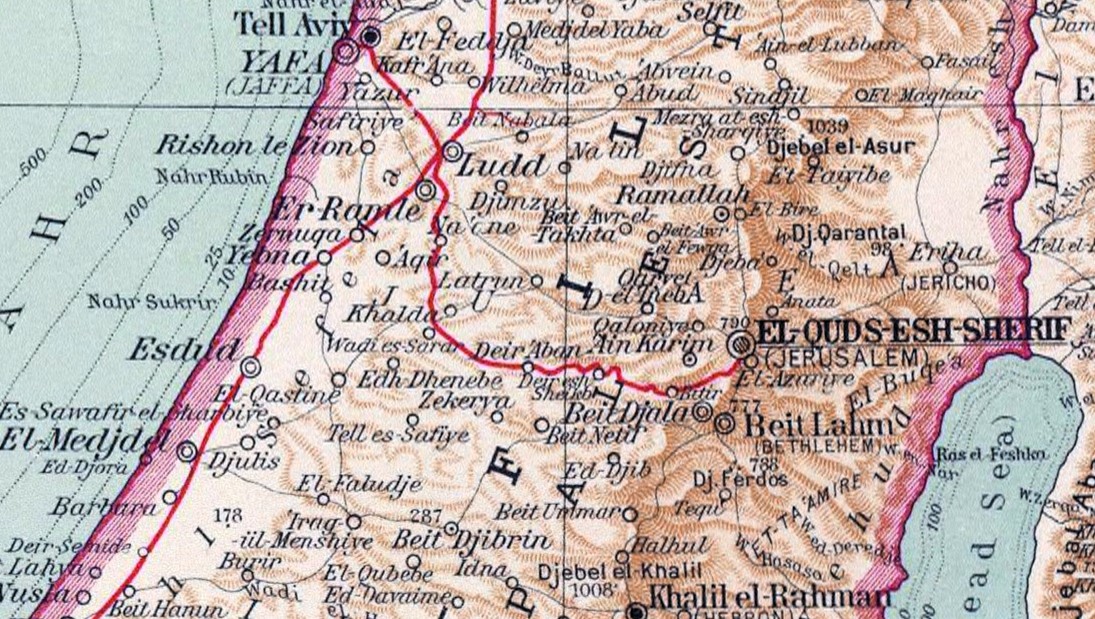
Regaining the initiative after the dispersal of 1929’s Revolt, Zionists renew their colonization efforts in an atmosphere of severe repression under British occupation.
‘The Agrarian Disturbance in Palestine’ by Bob (Joseph Berger) from International Press Correspondence. Vol. 10 No. 43. September 18, 1930.
Whilst in Geneva diplomatic speeches on the Palestine problem are being made, in which concern” for the well-being of the population is always placed in the foreground and the representatives of British social imperialism (Henderson, Drummond Shieds & Co.) at one moment appeal to the world to pity them in their “hard task” in this country, and the next moment praise their agents and officials (who are guilty of the worst acts of oppression and violence) on account of their cleverness and circumspection, the imperialist robber policy in Palestine is still being carried on.
The occupation army is being constantly increased. Almost every month fresh regiments arrive in the little country. The visits of the British fleet are becoming more and more frequent. The aerodromies which already exist are being extended and new ones are being erected. All this is to serve to arouse respect and fear among the population for British imperialism. The persecution of the revolutionaries, before all of the Arab and Jewish Communists, who have already been ten times “exterminated” and “liquidated” (if one is to believe the local press) and of which there are ever fresh “nests” to be discovered, and the ruthless throttling of the press and of the right of assembly serve the same purpose.
In addition, British imperialism, in spite of all past fa lures, is still endeavouring to set up a block with the Arab big landowners and big merchants. The “conciliatory” attitude of the Arab Executive Committee shows that the national reformists, in spite of stormy mass protests, is continuing to pursue the path of treachery.
Under the protection of the British bayonets, the Zionist adventurers now believe that the time has come to renew the campaign of conquest against the Arabs which was interrupted by the August revolt. The new acts of conquest of the Zionists have already resulted in serious agrarian disturbances–in fact even bloody collisions whilst the excitement of the Arab masses is growing all round.
The scene of the disturbances is the district of Wadi Havaras. The Zionists want to drive out the 12,000 Arab Fellahin and Bedouins who inhabit and cultivate the soil in this district and settle thousands of Jewish Halluzim (pioneers) in their place. The Fellahin have nothing in the world beyond their land and cattle. Even after the big landowners (Effendi) bargained away their land to the Zionists, the Fellahin never recognised this commercial bargain concluded behind their backs between the Zionists and the big landowners. On the contrary, the British soldiers who came to drive the inhabitants of Wadi Havaras from the land, encountered obstinate and desperate resistance, in which the women and children of the poor peasants participated. Although many Fellahin were injured and numerous others arrested, and although further reinforcements were sent into the district, the peasants have not yielded up their land. They have inflicted losses on the police troops and also on the Zionist settlers, who came under the protection of the bayonets of the former. The peasants have not yet been driven out and the fights are still going on.
It is certain that these disturbances will not fail to awaken an echo in the whole of Palestine and in the neighbouring Arab countries. Even the imperialist committee of investigation which investigated the question of the Palestine revolt had to admit that one of the chief causes of the revolt was the fear of the Arab Fellah that he might suffer the same fate as the inhabitants of Wadi Havaras”. But the fight against the imperialist and Zionist robber-policy cannot be conducted under the leadership of the treacherous nationalists. In order to be successful it must be headed by the workers and their Communist Party. The slogans of the Communist Party, which Summon the Fellahin and the workers to show solidarity with the peasants of Wadi Havaras and which make clear also to the Jewish workers that their place is not at the side of the British soldiers and of the Halluzim but in the anti-imperialist front of the Arab workers, are finding increasing acceptance among the masses. Only under these slogans can the sporadic agrarian movements grow into a real agrarian revolution against the imperialists, the Zionists and the Arab big landowners.
International Press Correspondence, widely known as”Inprecorr” was published by the Executive Committee of the Communist International (ECCI) regularly in German and English, occasionally in many other languages, beginning in 1921 and lasting in English until 1938. Inprecorr’s role was to supply translated articles to the English-speaking press of the International from the Comintern’s different sections, as well as news and statements from the ECCI. Many ‘Daily Worker’ and ‘Communist’ articles originated in Inprecorr, and it also published articles by American comrades for use in other countries. It was published at least weekly, and often thrice weekly. Inprecorr is an invaluable English-language source on the history of the Communist International and its sections.
PDF of full issue: https://www.marxists.org/history/international/comintern/inprecor/1930/v10n43-sep-18-1930-inprecor-Virginia.pdf
 Revolution's Newsstand