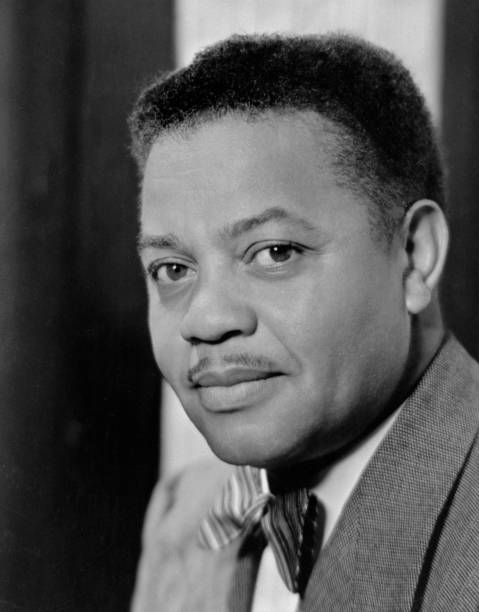
This speech by Ford to 1930’s Seventh Convention of the C.P., the first since the expulsion of the ‘Right’ leadership majority around Lovestone, is a good summary of the Party’s positions on Black self-determination around the height of the politics of the Third Period.
‘On the Negro Question’ by James W. Ford from The Daily Worker. Vol. 7 No. 225. September 18, 1930.
To approach the Negro question we must do so from three points of view. We must approach from the point of view of the Negro workers as an exploited group of workers, as a part of the working class of the country, similarly as we treat the whole American working class in its struggles here in America. This approaches the question from the class point of view, the Negro being regarded as an exploited worker. Second, from the point of view of the Negro being an oppressed nationality, a suppressed minority, suppressed by the capitalist class. And finally from the international scope, a point of view which takes in several revolutionary movements in the colonies; the national colonial movements, and independence movements carried on by the Indian and the Chinese workers, particularly as these relate to the struggle for self-determination and the struggle for independence from imperialist oppression…In regard to the second viewpoint, the Negro as a suppressed nationality group. The question is mainly a national question from the point of view of racial oppression, discrimination and abuse heaped upon him as an oppressed race. Connected with this is the question of the Negro peasantry. The Comintern has pointed out the basis of the Negro question in this country as a national question, outlining in detail the struggles of the exploited peasants in the South, who are the great majority of the Negro workers in this country, against semi-slave and serf conditions. These struggles against the domination of the white ruling class against these slave remnants makes the peasant question the central question for the struggle of the Negro workers in this country. At the same time it involves the struggle of the peasants in the South for land which has been denied them.
Connected with this is the question of self-determination. This is part of the national question. The logical conclusion of the struggle against semi-slave conditions, against the conditions of the peasantry must be the right of self-determination. The struggle for self- determination must be put forward now as the struggle for the rights of the Negro workers and as a part of the struggle of the peasantry against the semi-slave conditions. The struggle for self-determination is logically connected up with the struggle of the Negro for equal rights, against the dominant ruling class that denies and takes away from the Negro workers and peasants all rights, civil, political, denying them any so-called democratic rights. Therefore our struggle for self-determination must be part of the national struggle. The slogan for self-determination, as pointed out by the Comintern letter is a propaganda slogan at the present moment. However, because this is not an action slogan but a propaganda slogan we must not deny the Negro workers the right of self-determination, to struggle for the realization of this slogan at the present time. We must not confuse the idea of self-determination and the struggle of the Negro workers, with the petty bourgeois idea of Garveyism but all the more struggle against them. Comrades, any vacillation in putting forward the question of self-determination of the Negro workers in this country and the Negro peasants denies the political line as laid down by the CI with regard to the Negro question. If we have any vacillation on this question it has in it the basis of white chauvinism.
As I said before, the struggle for self-determination, is one for the liquidation of slave remnants and serfdom conditions imposed on the Negroes. Any other idea leads us astray. For example the idea of Lovestone that the industrial revolution will take care of the Negro question. If we vacillate we will go over to the idea of the industrial revolution in the South being the means to liberate the Negro workers and peasants. In other words we will make the question of self-determination a question purely of proletarian struggles, that is, that we cannot struggle for the Negro peasants until after the realization of the revolution, that we can develop a movement among them only through the proletarianization of the peasant masses in the South, that this must occur before they can become a factor in the struggles of Negro workers in this country. Such a vacillation denies the struggle for the liquidation of the serf and semi-slave conditions and at the same time puts forward the reactionary theory of Lovestone that the Negro peasants in the South are a reserve of capitalist reaction. We find to the contrary that the movement in the South is a part of the revolutionary struggle in this country. At the same time we may also fall into a wrong theory, advanced by Pepper, for the struggle immediately for a Soviet Republic in this country. This policy is absurd; because the whole of the Negro question cannot be solved until the realization of the proletarian revolution and the victorious socialist struggle in this country, then nothing can be done before. This is a “leftist” conception leading to no action at all.
Now, comrades, with regard to self-determination and question of the Negro and white workers: the white workers as well as the Negro industrial workers of the North must be shown that the struggle for self-determination in the first place is a part of the struggle of the white workers against capitalism, against imperialism in the U.S.
First, why does the bourgeoisie uphold the idea of 100 per cent nationalism in this country? It upholds the idea of 100 per cent nationalism in order to separate the Negro workers from the white workers, in order to exploit without hindrance both the Negro workers and the white workers of the whole working class. That is white nationalism, the separation of the Negro workers on the basis of racial inferiority and white superiority. This gives the A.F. L. more hold upon the white workers, more opportunity to carry out their fascist role against the workers. It helps the socialist party play its social-fascist role.
Secondly, we must point out racial difference as factors in lowering the standards of the working class. When the white bosses can keep the races divided, they are able, as we know, to keep the standards of both white and Negro workers down. As long as the ruling class is able to keep up racial differences, the standards of the white workers are pushed down, and the standards of the general working class is lower. We have seen this in a number of cases. This is the second reason why we must draw the white workers into the struggle of the Negro workers for self-determination.
Thirdly, self-determination is the highest expression of complete social and political equality for the Negro workers. This is the crux of our struggle. We must point out that precisely at the present moment, in Gastonia and our struggle in the South, the sharpest struggles have developed because we began to undermine this oppression and exploitation of the Negro workers, and began to unify the Negro and white workers against the capitalists in the South. Immediately for this reason the bosses made such vicious attacks against us. The struggle for equality is in the main a struggle against the whole capitalist class, in which the Negroes stand at the very bottom of the exploited group in this country and thus form a base for the exploitation of the whole working class.
Fourthly the struggle for the political and social equality of Negro workers is in this way a part of the task of organizing and mobilizing the masses of Negro workers against capitalism and imperialism. We do not give chauvinism its class character, how it will affect our movement from a class point of view. Some of our comrades think that the Negro is not a factor when they are numerically weak. When we say the Negro workers are not a factor in an industry, we are denying that the Negro workers are a factor in the revolutionary struggle. Precisely in Gastonia, where the Negro workers in the textile industry consist of about 1 per cent to 4 per cent of the workers in the industry, precisely there, we had the sharpest struggle on the racial issue. We see that the expression, that the Negro workers are not a factor in an industry, shows a tendency of opportunism, a tendency of not putting every one of our revolutionary unions into the struggle of making the Negro question an issue in this country. In one union because the Negro department which was organized for the definite purpose of seeing that the union had a proper orientation to Negro work, and because the Negro Department fought bitterly against the opportunist tendency in the union, these Negroes were called black chauvinists. This is another way to cover up. incorrect policies. I do not mean to say that there is any such thing as black chauvinism. Black chauvinism has been discussed by the Comintern. The Comintern is opposed to the idea that there is any such thing as black chauvinism. Why? Because when we take the Negro question as a question of oppression, we have had the bourgeoisie for 100 years and more utilizing the white working class against the Negro worker and therefore the Negro workers are suspicious of the white worker. Comrade Lenin at the Second Congress said that we had to lean back to reach them.
In regard to the ANLC we do not yet see that we must win the majority of Negro masses and backward elements, the peasantry, by a liberation movement which must be built among the Negro workers. The ANLC has not gone forward properly. We must build the ANLC into a broad mass organization. Also we have not sufficiently brought the Negro workers into the TUUL.
Our Negro department should not be isolated in general from the movement of the Party but every section of the Party must take steps to organize the Negro workers. Some say that the Negro department of the TUUL is too much connected up with the TUUL, that it is too much a part of the TUUL. That is precisely what we are trying to do is to make the Negro Department a part of the TUUL, so that every department is ization. But at the same time we are not trying to bring Negro workers into the organtrying to lose the identity of the Negro Department. [sic—some typesetting issues here]
Now, Comrades, on the question of the Negro reformist organizations in this country. We will take up first the National Association for the Advancement of Colored People–an organization that has been organized some twenty years, and at that time put forth the question of social and political equality of Negro and white workers from a petty bourgeois point of view. At the present time this organization is a petty bourgeois organization of intellectuals, which has not become. numerically very large. The N.A.A.C.P. is the mouthpiece of this new rising bourgeois class of the Negro and at the same time shows its relationship with the white bourgeois class by having on its board of directors such fellows as Rosenwald, Rockefeller and other millionaires. This organization is now openly struggling against the whole working class. It is the same way with the Urban League. This is an urban organization having as its idea, organizing the workers for jobs. But it does not put forth wage demands of the workers, and says that the workers should not strike for better conditions or higher wages, but should consider the boss their friend. The Garvey movement is a nationalist movement, a black Negro capitalist movement. Garvey is putting forth the idea of black capitalist enterprise and denying the right or the need of the Negro workers to organize in trade unions.
Closely connected with these reformist Negro organizations is the reformist trade union organization led by Randolph, and which he has betrayed–the Brotherhood of Negro Sleeping Car Porters. He betrayed this union into the A.F. of L. and at the same time has carried on open fascist attacks against the organizers of the American Negro Labor Congress, and at the present time is responsible for the imprisonment of Comrade Saul and Comrade Harper. We must make a determined struggle against these organizations.
Now, comrades, I want to take up the international aspect of our Negro question. The Negro workers in South Africa, in the West Indies are exploited in the same manner as the American Negroes. In South Africa the basis of reaction among the peasant and native elements of South Africa is the native chiefs, who are the agents of American and British imperialism. The struggle there must be made by the workers and peasants, against the whole imperialist oppression of the workers of these countries. We must put forward the setting up of native republics under peasants and workers control as is being done in India. and China. It is in this connection that the London Conference of Negro workers which is to take place in Germany instead of London, where it was barred, has great importance. The Negro movement of this country, by developing a mass liberation movement of the Negro workers in this country will be able to influence and direct the liberation movement of the Negro workers in other parts of the world, and it is therefore, comrades, significant and important that we should give full support to our Negro work.
The Daily Worker began in 1924 and was published in New York City by the Communist Party US and its predecessor organizations. Among the most long-lasting and important left publications in US history, it had a circulation of 35,000 at its peak. The Daily Worker came from The Ohio Socialist, published by the Left Wing-dominated Socialist Party of Ohio in Cleveland from 1917 to November 1919, when it became became The Toiler, paper of the Communist Labor Party. In December 1921 the above-ground Workers Party of America merged the Toiler with the paper Workers Council to found The Worker, which became The Daily Worker beginning January 13, 1924.
PDF of full issue: https://www.marxists.org/history/usa/pubs/dailyworker/1930/v07-n225-NY-sep-18-1930-DW-LOC.pdf
 Revolution's Newsstand