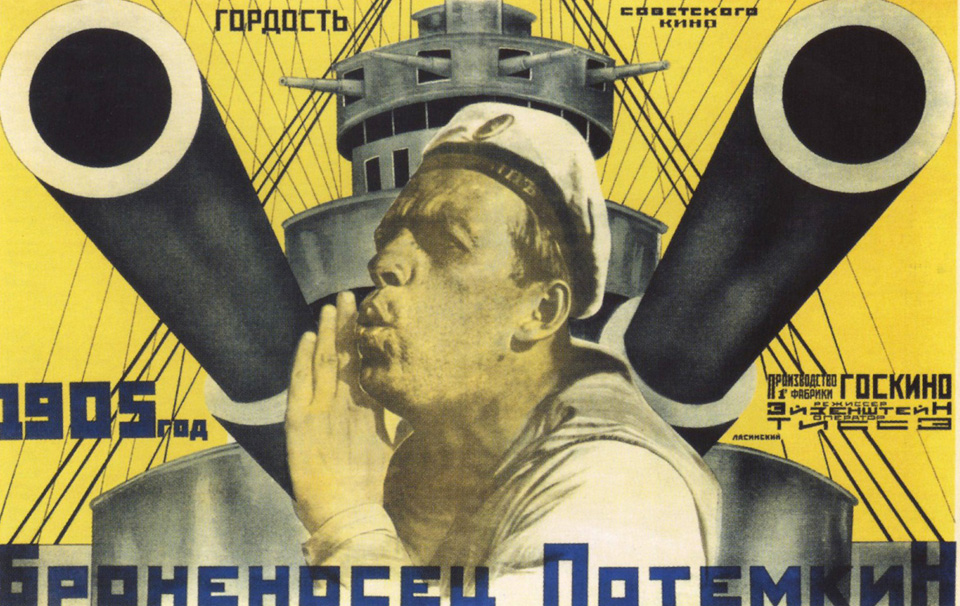
A marvelous essay guaranteed to make even the most cynical Communist misty-eyed as Charles Ashleigh meets a Red Navy officer at the opera, he and his entourage of foreign revolutionaries are invited the next day to visit the fleet of the “proletarian Argonauts.”
‘A Day with the Red Navy’ by Charles Ashleigh from The Worker. Vol. 4 No. 259. January 27, 1923.
As a preliminary to our day with the Red Fleet, we went to the opera. The great Opera House of Petrograd is called the Marinski Theatre, and is so named in honor of the sailors of the Russian Navy who fought for the young revolution,
A party of eight of us went to the theater–where they were giving Prince Igor–the evening of the day of our arrival in Petrograd. But we could get no seats the first act was nearly over, and the box-office was closed. Then the audience poured out into the hall to smoke and talk. Hundreds of sailors were among them; the sailors of the Red Fleet look upon this theatre as their own pet play-house.
One of our number, a stout Welshman who had been in Russia before and who spoke some fifty or sixty words of the language, told a couple of sailors of our disappointment. They consulted together for a moment, and then fetched two of their officers.
“Delegat, delegat. Comintern,” we heard them say, over and over again.
The magic wards worked. The officers went away for a moment, returned and asked us to follow them. We were conducted to a box–a most capacious and luxurious box which must surely have belonged to a Grand Duke. We wanted to pay for our seats. “No, no,” said they. “You are Communist delegates, you are our guests.”
When this was interpreted to me I protested–I did not want be under false colors.
“I am no delegate,” I said, “I’m only a poor journalist, alas!”
The stout Welshman interpreted, and then obviously added something on his own account. The officers turned to me, smiling, shook hands, and gently pressed me into a seat. What did you say to them, I asked the Welshman, accusingly.
I just told them what you said; and then added that you’d been in jail three years for the cause, said this most unreliable and conspiratorial interpreter. So, if I gained nothing else by doing time, at least I got a seat at the opera.
During the next entr’acte a young naval officer was brought to our loge. He was introduced to us as the commander of a naval academy. He was thirty years old, and was in charge of some two thousand cadets. Tall and thin, with a lean dark face, he was active, keen and poised. He had been a sailor of the Czar’s feet when the Revolution came. Now he was entrusted with the political education of the new material for the Soviet Fleet.
At the end of the performance, he asked whether we would like to see some ships the next day. We would. We made an appointment. And so, amid the medieval and barbaric glow of Prince Igor, we were inducted into the modern miracle of a revolutionary navy.
In the morning, our Commander turned up on the second at our hotel. We didn’t. Some us had been allured into a walk down that great Avenue that used to be called the Nevsky Prospekt, but which had been renamed the 25th of October Prospekt, this date being the equivalent, in the old Russian calendar, of November 7th. And so we drifted in, in twos and threes, only about half an hour late; thus disproving, at the first opportunity, the statement we had so often heard in England and America–that Russians were frightfully unpunctual, and that we business-like Anglo-Saxons were the only persons who ever kept appointments.
First, we went to the museum, the Naval Museum. I hate museums and I must confess that, when I heard we were going to one, I was inclined to balk. But I am glad I went; for, although I hate museums, I love ships and there were hundreds of models of ships in this museum. There were Viking galleys and fat, heavy galleons, and lumbering wooden frigates and perky clippers–every kind of ship that had ever sailed the seas, and even some that never had: grotesque inventions that sank as soon as launched; a completely circular steamer, for example, which was designed by the order of some whimsical Czar, whose knowledge of marine architecture, probably, was only equaled by his knowledge of all other subjects.
The whole ground floor of the museum dealt with the pre-revolutionary period. On the second floor, they were beginning their collection of revolutionary exhibits. Only one section of the immense corridor was in use. There were flags, the flags of ships which had fought for the Revolution–the Black Sea Beet, and the ships which left Helsingfors, which was in the hands of the Whites, and sailed round to Cronstadt to fire their guns over the cowering orators in the Duma—a journey of over two weeks through sea which was partly ice–a heroic and almost impossible voyage’ a journey of proletarian Argonauts seeking the treasure of freedom through perilous seas. Torn flags, stained, and bullet-pierced flags of red, hanging upon the walls over the photographs of sailors who had died, leading their comrades in the fight, the warrior agitators of the revolutionary fleet.
The Commander–we called him, the Commander, not because it was his rank, but as a sort of affectionate nick-name; he was so young and boyishly keen and even naif, with all his responsibility–led us to a ship, which lay moored alongside the Neva quay. We did not board this ship, however; the Commander cautioned us not to stray while he went aboard and spoke with the Commissar of the Fleet, to secure permission for us to visit a torpedo boat, a destroyer and a submarine.
He soon returned, and we started for the destroyer. But we went very slowly. One of our number, a Belgian, had a wounded foot; and, at every few steps, the Commander would ask us to go slowly so that our lame comrade could catch up with us. But, after he had made this kindly request about five times, I glanced round and there was our limping Belgian right in the midst of us. So why all the consideration? Then I saw a red sailor go past us at a run, struggling under the burden of a big bass drum. Another careened after him, engirdled with a shining euphonium. And, after these heavy artillerists came the rest of the band, all at a trot. Right then I had suspicion as to the real cause of the Commander solicitude for our Belgian. At all costs, the band must get there before us. But I said nothing–I would not have anticipated our surprise welcome for the world.
Marvel of organization! Who said the Russians couldn’t organize things, that they weren’t efficient, that they were slow? It took us about seven minutes to walk from the one ship to the other, and, when we arrived, there was the whole ship’s company lined up on deck, with the officers standing at the gangway at salute, and the band striking up the International for all it was worth, as soon as we stepped on to the gang-plank. We walked up the gangway, hat in hand, slowly; the ranks of sailors stood rigidly at attention. My feelings were rather mixed: there was more than a touch of self-consciousness, and–I suppose I tried to look dignified–and I am quite sure I failed; and I know that I was exalted. We were introduced to the officers, were led down past the long line of sailors. The band stopped; we stood there bare-headed and received the welcome of the Red Sailors.
“Three cheers for the Communist International!!” cried the Commander. And we waved our cosmopolitan hats and beamed at the smiles of broad Slavonic faces looking which looked straight and trustfully at us.
Then came the speeches; and, as usual I interpreted. We were welcomed in the name of the Red Navy in Russian. The Commander interpreted into German, and I passed the good word along in English. Then we replied. First came a German youth, who spoke in the name of the Young Communist International–he came first because the Young Communists have adopted the whole Red Navy recently but I shall tell you more of this later. Then came an Englishman whose fair words were rendered by me into a German passing strange, but it must have all been put right again in Russian, judging by the response the audience gave us; it sounded as though the entire navy were applauding.
Then we went over the boat. We saw guns, and machinery and cabins–all hung with pictures of Comrades Marx, Lenin and Trotzky–and mess rooms and galleys and chatt rooms. And then the crew lined up again on the other side of the ship, while we went over the side, down a precarious ladder, into a smart little launch. The band played a farewell to us, and we stood up unsteadily in the crowded little boat and waved to the boys.
Down the Neva; and factory chimneys were pouring smoke into the sky. Churches thrust their spires high, and solid public buildings stood by the water’s edge.
There were two submarines, resting brotherly side by side in the water.
We climbed up the narrow ladder and stood upon the foot-wide iron running board which was the deck of the long black iron rigger. Not much of the submarine showed above the water; their life was lived down below. We went down the tricky ladder into the entrails of the boat.
I am not going to describe the submarine A revolutionary submarine is just like a capitalist submarine, as far as appearance goes; there were the long thin tubes, from which death glided out A revolutionary submarine is just like a capitalist submarine. Except for the enemy it fights and the cause it defends. Those steel tubes would, perhaps, one day send out a swift high-tempered messenger of death to the navies of imperialism…Those sailors and officers who fraternized down in the long iron corridor, in which they lived, slept, ate, and would one day fight–they would one day stand in the thick used air of the submerged vessel, sending out their torpedoes to keep freedom alive in the world. “This is not our Navy, it is yours,” said the sailors to us.
Thousands of members of the Young Communist League are in the Navy. Some time ago, the Russian Young Communists realized that they had not yet adopted any part of the Red fighting forces. It is a custom for a branch of the Communist Party to adopt a battalion, or even a regiment in the army. The Young Communist League debated for a while as to whom they should pick among the unadopted regiments. It was hard to choose. Then someone thought of the Navy. The Navy had no revolutionary foster parents “Let us pick a ship in the Navy,” he suggested.
“A ship?” they cried. “We’ll adopt the whole Navy!” And so they did. We’ shook hands with the submarine crews and reboarded our boat. It was getting late, and we had to take the train for Moscow at six.
“You haven’t seen anything yet, really,” said the Commander, regretfully. “You should go to Kronstadt, the naval station; and you should look aver our naval academies.”
“What do you teach them there, besides naval subjects?” I asked.
“Communism.” he replied. “They start with an examination on the A.B.C. of Communism:’ if they haven’t read it, they must do so. Bucharin’s new book, ‘The Materialistic Conception of History.’ is another book in our compulsory reading course. And, of course, they have to read Marx and Engels, and other earlier Communist writers.
Think of a whole Navy that has read these things. And a whole army, too! The danger of a return to capitalism joyfully deplored by our Reformist and Anarchist friends seems rather far away. “Don’t bother about capturing the power of the State.” I think I can remember my syndicalist friends saying. But the long black guns, pointing over the sides of ships; and the sunlight, broken by a thousand bayonets into as many points of light; these are the Communist arguments that shatter their fallacies and send light through the midst of their pacific theorizing.
The Daily Worker began in 1924 and was published in New York City by the Communist Party US and its predecessor organizations. Among the most long-lasting and important left publications in US history, it had a circulation of 35,000 at its peak. The Daily Worker came from The Ohio Socialist, published by the Left Wing-dominated Socialist Party of Ohio in Cleveland from 1917 to November 1919, when it became became The Toiler, paper of the Communist Labor Party. In December 1921 the above-ground Workers Party of America merged the Toiler with the paper Workers Council to found The Worker, which became The Daily Worker beginning January 13, 1924. National and City (New York and environs) editions exist.
PDF of full issue: https://www.marxists.org/history/usa/pubs/theworker/v4n259-jan-27-1923-Worker.pdf
 Revolution's Newsstand