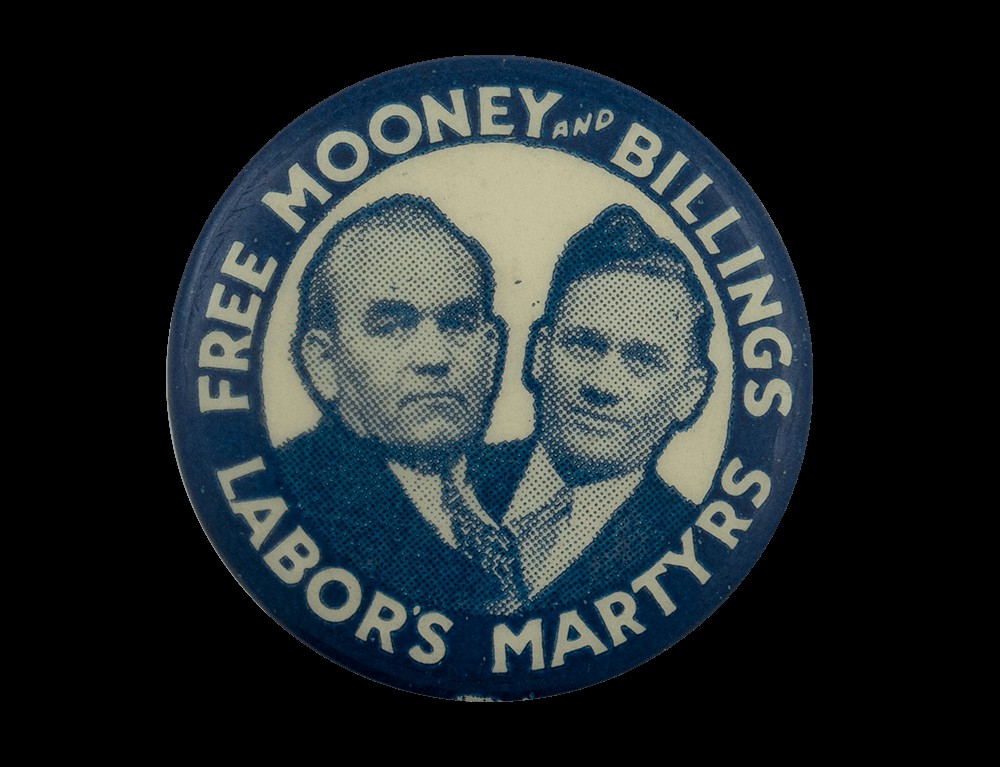
Outside their families, no activist was more invested in the case of political prisoners Tom Mooney and Warren Billings, framed for the 1916 Los Angeles Times bombing than Minor. Here he summarizes the case he was there for the beginning of.
‘Mooney and Billings: Ten Years in Hell’ by Robert Minor from Labor Defender. Vol. 1 No. 7. July, 1926.
IT WAS on July 27th, 1916—ten years ago—that Tom Mooney and Warren Billings were placed in the county jail at San Francisco to be tried in the so-called bomb cases.
The “Mooney case” has been a world affair during most of that ten year period. Those ten years, counted from the beginning of the pro-war movement in this country in 1916, when a series of “preparedness parades” were held throughout the country—the one in San Francisco being accompanied by a bloody catastrophe followed by the arrest of Mooney and Billings—up to the present time, have been for the whole world the richest ten years in history. Within that decade three mighty empires—those of the German and Austrian kaisers and the Russian tsar—have fallen before the forces of war and revolution. Within that decade the European “world war” became a world war in which the United States was included. Europe, the base of two thousand years of civilization, was torn into a new pattern. The biggest phenomenon of centuries—the working class state power of the Soviets, arose upon the ruins of the tsarist autocracy. Two more Soviet republics arose and fell in Bavaria and Hungary. A new French empire threw its power across Europe, and then as quickly decayed. The British empire, the largest of all in the history of the world, added new empires to its fold and then rapidly receded before the new imperial power of North America. The storms of revolution swept over the vast continent of Asia, bringing into the current of modern history more than half of the world’s population which had slept for centuries.
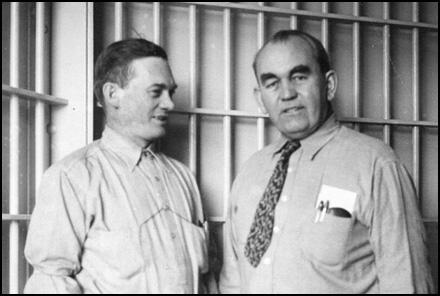
The world has been shaken to its foundations and started on a new epoch of revolution in these ten years since a little street car strike in San Francisco in July, 1916, which threw the name of Tom Mooney into world history. And in most of this time the “case of Tom Mooney” has played a part in the affairs of nations.
In these ten years, Warren Billings, taken as a boy of the picket line, has spent inside of Folsom penitentiary all of the adult life that he has known. Tom Mooney has seen the gallows built for him and has grown into a grey haired man in the run-way between the death cell and the cell of life imprisonment.
As the tenth anniversary of the arrest of Tom Mooney approaches, it is well for the labor movement to take stock of itself. The Mooney case has more to do with the labor movement than it has to do even with Mooney and Billings. Failure to rescue Mooney and Billings is a failure of the labor movement. The presence of these two men in life cells—whom all men know to be utterly innocent and unconnected with the crime of murder—is a standing insult, a sneer and a challenge to the labor movement.
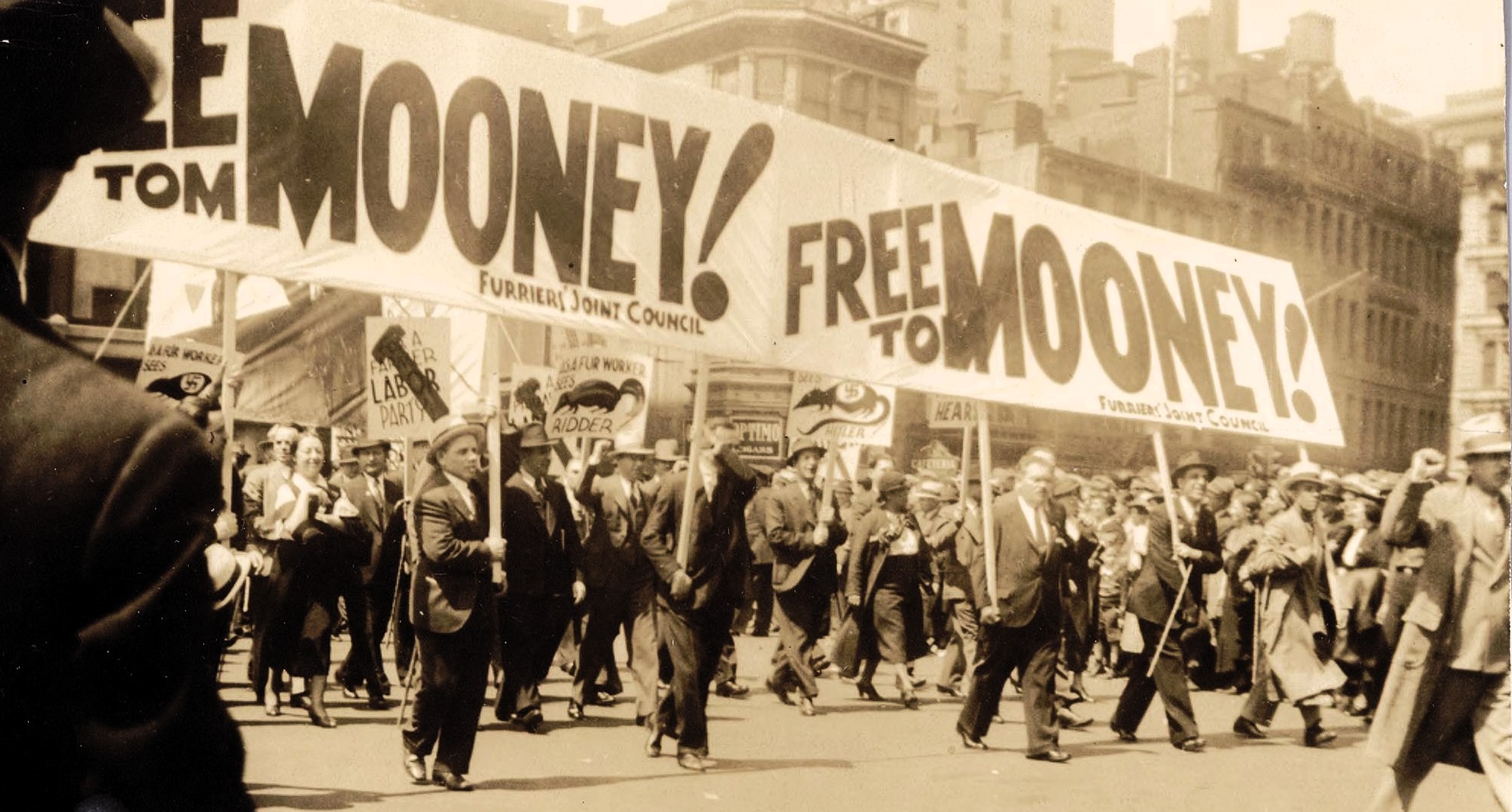
On the occasion of the tenth anniversary of the arrest of Mooney, the labor movement should revive the world-wide campaign to compel the liberation of Mooney and Billings.
With this idea in mind, I will attempt a brief review of the “story of Tom Mooney,” than which there is nothing more interesting or more vital in all of the annals of the struggles between capital and labor.
It started out in San Francisco as a simple street car strike. Mooney, a long-standing member of Local No 164 of the Molders’ Union, was appointed by the Amalgamated Association of Electric and Street Railway Employees to organize the workers of the United Railways, and the drive for organization led to a strike. The actual strike lasted hardly more than one hour, before it was broken. But the strike was one of a series of events in a long labor war in California. The labor movement had gone through a succession of defeats, and the open shop movement, under the leadership of Frederick J, Koster, president of the Chamber of Commerce, was deploying its forces for an open shop drive to sweep trade unionism from the Pacific coast.
It happened that the beginning of this open shop drive coincided with the “preparedness” movement for putting the United States into the world war. The “open shop drive” and the “preparedness” movement converged in San Francisco, with the forces of capital and labor sharply taking opposite sides on both issues. The Chamber of Commerce, which led and organized the open shop movement, also led and organized the movement to hold a “preparedness parade” in which it was planned to have 150,000 persons participate. The United Railways street car company and the Pacific Gas and Electric Company were the most aggressive of the corporation interests in the movement. Organized labor opposed the efforts of the Chamber of Commerce to force the workers of all establishments to march in the parade, and by its opposition cut down the size of the parade from an estimated 150,000 to an actual 22,000 marchers.
The parade was set for July 22nd. The social atmosphere was charged with electricity as the day approached. Many anonymous warning letters were received by prominent persons connected with the parade arrangements, in which threats were made. But the authorities and the business interests prevented all public knowledge of these threats for fear of a dampening effect upon the demonstration. However, the San Francisco Labor Council received word of such warning letters and took the precaution of communicating to the trade unions the advice to be on guard against probable actions by agents provocateurs for implication of the labor movement.
At six minutes past two o’clock on the afternoon of July 22nd, while the parade was in motion, a bomb or some other explosive instrument was detonated in a side street among spectators and ten persons were killed or mortally wounded.
Within one hour the police “frame-up system” of handling this case, all the details of which have since been discussed in every civilized land, was well under way for the implication in the affair of those persons who had been most active and directly concerned in the strike the week before The method was, first of all to turn the investigation entirely over to the control and direction of the chief of detectives of the Pacific Gas and Electric Company and the United Railways Company, an ex-Pinkerton named Martin Swanson. The entire police department including the chief of city detectives, Duncan Matheson, followed entirely the dictation of this private corporation detective, Swanson. An important detail is that the district attorney (state prosecutor), Charles M. Fickert, was a creature of the United Railways, having been placed in office by the United Railways for the purpose of dismissing some old indictments against some officials of that company. Himself virtually an employee of the street car corporation, the district attorney gave his authority in support of the United Railways detective.
Therefore there was no investigation whatever of the direct evidence concerning the nature and cause of the fatal explosion. Instead of an objective investigation of the facts concerning the catastrophe, all direct evidence of essential importance as to the cause of the explosion was discarded, and the dossier of the United Railways concerning the leaders of the labor troubles of the street railway company and of the gas and electric company were taken as the basis and beginning of the investigation. Before the heat of the explosion had cooled, a squad of men under the direction of Martin Swanson had almost completely obliterated the traces of the explosion. All eye-witnesses who reported to the police that they had actually seen the explosion—six witnesses in all—were discarded by the detectives, and the district attorney issued a sensational statement accusing the leader of the recent street car strike, Tom Mooney, of having bombed the “preparedness” parade.
A reward which eventually totaled $17,000 was offered through the newspapers for any evidence leading to the conviction of any person or persons on the charge of murder, while the district attorney in a series of public statements sharply indicated that the persons to be convicted were Thomas J. Mooney and his associates in the street car strike.
Mooney as well as his wife and three associates in the labor movement, Warren K. Billings, past president of the Shoe Workers (though then only 23 years of age), Edward D. Nolan of Lodge No. 68 of the International Association of Machinists, and Israel Weinberg, member of the United Brotherhood of Carpenters and Joiners and member of the Executive Board of the San Francisco Jitney Bus Drivers’ Union, were locked in the county jail. From that moment on a reign of police terror enveloped San Francisco. The police sent away from the city two or more of the eye-witnesses of the explosion and terrorized and threatened others. The entire press was mobilized to the service of the prosecution and refused to publish anything of any sort except the propaganda issued by the district attorney. Everything was directed against the strike leader and carefully calculated to make the preparedness parade explosion the means of a quick and sweeping victory of the open shop movement.
There was recruited for the first trial, that of Warren K. Billings, the most remarkable set of witnesses that had ever appeared in a criminal trial. Aside from a few persons who testified on purely routine matters, the only essential witnesses used in the prosecution were the following:
A convicted thief who had been released by police favor. Another, the now famous John McDonald, who has since confessed under oath that his story told under police coaching was false, that it was changed twice by dictation of street car company detective, and that his identification of Mooney and Billings was fictitious.
A prostitute, once a defendant in a murder trial, who has since confessed that her testimony was false and that it was given under inducement of the offer of a share in the reward.
Her mother, who has confessed that her testimony was false and that it was given under promise of a pardon for her husband (then in prison for forgery) as well as a share in the reward.
The mother’s extra-legal lover, who at first refused to accept police dictation of his testimony until threatened with prosecution for adultery in living with the mother of the prostitute. (When he agreed to perjure himself he was appointed as a “police guard” for the woman and permitted to live with her on a police salary.)
Two alleged chance patients of the dentist (who happened to be the only two “patients” the dentist had whose names were not registered on the office books). Of these, one was a petty thief, once convicted of petty larceny in Alaska, where he had run a gambling house. The other, a man from Honolulu, not known to have had any police record.
The testimony of all but the first two of these witnesses related solely to a supposed event at a dentist’s office a full mile away from the scene of the tragedy. Under ordinary circumstances, not one word of it would have been taken seriously. It was brought in only because of an absolute lack of any real testimony that could in the remotest way connect Mooney with the crime at the scene at which it occurred. The dentist’s office, we repeat, was a mile away from the explosion. The theory voiced by the prosecution was that Warren Billings came to the dental office with a suitcase containing a time-bomb (set to go off by an alarm-clock arrangement), and, contemplating throwing this bomb from the roof, remained there a while, then gave up the plan and left. Mooney and Mrs. Mooney were, according to this testimony, on the sidewalk below (at the point where the bomb was to be dropped), shouting orders to Billings above. The use of such an absolutely idiotic story can be accounted for only by the fact that there were no other means of identifying Mooney and the fact that police characters subject to manipulation, ‘as “witnesses” are not found easily at any point where they may be wanted.
Warren Billings was convicted on the testimony of these witnesses and on this absolutely preposterous story. After the utterly disgraceful farce of the testimony, one of the assistant prosecutors, James Brennan, overcome with shame, requested the jury not to give the death penalty, but to convict Billings so that he would then tell who the real criminals might be. As the jury was composed of twelve professional jurymen living solely by the fees obtained by the prosecutor’s permission to serve on juries, they construed the request of Brennan as an order, and complied. It was for this reason alone that Billings was not hanged, but was given life imprisonment. The preponderance of the evidence in his favor was so great that the common talk of the court house was that the conviction of Billings was secured merely as a help to “get Tom Mooney.”
As the date for the trial of Mooney approached, the defense obtained important information. It had been previously known that a set of snap-shot photographs of the preparedness. parade, taken by a young man from the roof of a building next door to the home of the Mooneys, showed both Tom Mooney and his wife watching the parade among a crowd of spectators on the roof of the building in which they lived. As this place was more than a mile away from the scene of the explosion, and as a well-known jeweler’s street-clock appeared in the photograph, the pictures might be of extreme importance to Mooney’s defense. But when copies of the photographs, which had been confiscated from the young amateur photographer by the police, were obtained by the defense, the face of the clock in the photograph could not be read. After Billings had been convicted, a police photographer accidentally let slip a piece of information that had the value of life and death. It was that the copies of the photograph that had been turned over to the defense were not direct prints from the negative itself, but were the result of manipulation in the photographic department of the police. Instead of a direct print from the negative, the police had given the defense attorney copies obtained by re-photographing from successive copies until the result was about six times removed from the original film. In this way the photograph had been so dimmed that the face of the street clock could no longer be read to ascertain the time at which Mooney’s presence at his home (a mile and a quarter from the murder-scene) was established by the photo.
By strenuous insistence the defense attorney persuaded the court to order the district attorney to permit the defense to make prints from the negatives. In these prints the time on the clock dial was easily visible. Three of the pictures showed Mooney and his wife. One had been snapped at two minutes before two o’clock, another at one minute past two, and a third showed the time at four minutes past two o’clock. The testimony of the state’s witnesses had been that Mooney and Billings were at the scene of the crime (one and a quarter miles away from this clock) at precisely that time. It could no longer be disputed that ALL testimony regarding Mooney’s alleged presence at the murder scene was false.
At the trial of Mooney the defense exhibited an enormous photographic enlargement of the face of the street clock. It was taken for granted that this undisputed evidence (the time on the clock was admitted, the accuracy of the clock was admitted, and identity of Mooney and his wife was admitted) would free Mooney and Billings and put an end to the prosecution of the strike leaders.
But the jury was composed (as was afterward exposed) by the fraudulent means of a mechanical trick with the jury wheel by which the court clerk drew from the wheel only names that had been selected by the district attorney in advance. The foreman of the jury who had been selected by secret arrangement before his name was drawn from the wheel, was carried in a closed automobile every night during the trial to a secret conference with an assistant of the district attorney. The jury as a whole had been fraudulently selected by the trick of the jury wheel. There was no chance for an acquittal, regardless of what the evidence might have been.
The state’s “evidence” brought forth for the trial of Mooney was vastly different from the testimony of the same witnesses in the Billing’s trial. The former chief witness, the derelict, John McDonald, who had convicted Billings by swearing that he saw Mooney at the scene of the catastrophe at eight minutes before two o’clock, and until four minutes after two, now testified that it was not at that time at all, but much earlier. Other witnesses changed their testimony in all respects relating to time, except some who were dropped altogether. Then appeared a new star witness—the famous “cattle man from Oregon”—who swore that he had seen Mooney and Billings, Mrs. Mooney and Israel Weinberg, and an unidentified man arrive at the scene of the explosion in Weinberg’s automobile at two o’clock, place a suitcase at the point of the explosion and then drive away in the same car. His testimony, also, was adjusted to the earlier period of time.
Mooney was convicted of murder in the first degree and condemned to be “hanged by the neck until dead.”
Mooney would have been hanged, and after him would likely have followed Mrs. Mooney, Weinberg and Nolan—if the labor movement of the world had not now taken a hand as never before. The February Russian revolution had occurred and throughout all of Russia the name of Tom Mooney was on the lips of every working man and woman. A monster demonstration of workers in Leningrad (then Petrograd) put the question up to the American ambassador in Petrograd as to whether “Tom Muni” was to be hanged. Because of the war situation, President Woodrow Wilson intervened and the death sentence of Mooney was commuted to—life imprisonment!
So they “got” Tom Mooney and Warren Billings. Since that time many things have happened. Before Wilson’s intervention the defense attorneys had secured through the head of the labor movement on a tip given by a bell-boy in a San Francisco hotel, conclusive evidence that the “cattle man from Oregon” was a simple perjurer with a criminal record. The now famous letters written by Frank C. Oxman to Ed Rigall offering a sum of money to Rigall for perjured testimony are known to all of the American labor movement. The confession of Estelle Smith, the prostitute witness of the dental office, the confession of her mother and the confession of John McDonald, that their testimony was false and given under inducement of a promise of money reward—all of this is commonplace history to the working class of the world.
But the years roll on, and Mooney and Billings remain in the penitentiary at San Quentin and Folsom, California. No one seriously claims any more that either of them are guilty of murder, but only that they fought the Chamber of Commerce open shop drive. There are only two arguments: one, that Mooney is a bad fellow who ought to be in jail anyhow for the trouble that he made in the struggle between labor and capital in California; the other is that there is no legal way to get Mooney and Billings out, because “the court did not err” in any technical way, and “cannot take legal cognizance” of the confessions of the witnesses made after the legal record was closed.
Some think that the labor movement has expended its strength in the case, and that it can do no more; this is the view of persons to whom legal formalities delineate the framework of life.
But something can be done. Only a slave-psychology can induce a contrary view. If these men were members of the upper class, with a powerful sentiment of the upper class behind them, they would be freed. Being members, and representative members of the working class—being men of militant record in the labor movement—these men are rotting their lives away and will be released only if a powerful organized sentiment of the working class is put into motion on their behalf. There is no use in mincing words. The labor movement has disgracefully laid down on the Mooney case. A slave-psychology has been allowed to prevail: The mass-will of the employing class has been to destroy the labor-leader, Mooney; the mass-will of working class, the labor movement, has given way to the mass-will of the employing class for making away with this labor man, Mooney. It is these things, and not the formal mummeries of courts which decide such questions.
Are Mooney and Billings to remain to the end of their lives in prison?
I maintain that the answer to this question is solely and entirely within the power of the labor movement, entirely a question of the will and initiative of the labor movement. Will the labor movement mobilize its ranks, with pride and confidence, for a concerted, organized pressure for the release of Mooney and Billings?—that is the sole question.
The tenth anniversary of the imprisonment of Mooney and Billings, July 27, 1926, I think should be made the occasion for a world-wide demonstration of the entire labor movement of all countries for the liberation of Tom Mooney and Warren Billings.
Labor Defender was published monthly from 1926 until 1937 by the International Labor Defense (ILD), a Workers Party of America, and later Communist Party-led, non-partisan defense organization founded by James Cannon and William Haywood while in Moscow, 1925 to support prisoners of the class war, victims of racism and imperialism, and the struggle against fascism. It included, poetry, letters from prisoners, and was heavily illustrated with photos, images, and cartoons. Labor Defender was the central organ of the Scottsboro and Sacco and Vanzetti defense campaigns. Editors included T. J. O’ Flaherty, Max Shactman, Karl Reeve, J. Louis Engdahl, William L. Patterson, Sasha Small, and Sender Garlin.
PDF of full issue: https://www.marxists.org/history/usa/pubs/labordefender/1926/v01n07-jul-1926-ORIG-LD.pdf
 Revolution's Newsstand