The third chapter of Meily’s 1911 book on the capitalist religion of Puritanism.
‘The Origins of Puritanism’ by Clarence Meily from Puritanism. Charles H. Kerr Publishers, Chicago. 1911.
The feudal system was essentially rural, being grounded upon the tillage of the soil. Its peculiar form of property was real estate, held in feudal tenure. Its characteristic industry was agriculture, its form of exploitation, rent, its organization, military. In the medieval cities a new form of property—born of the feeble commerce and manufacture of the times and consisting chiefly of money and merchandise, the beginnings of modern “capital”—was gradually creating a new proprietary class having interests widely at variance from those of the feudal aristocracy. Here the form of social organization was no longer military, but commercial and industrial. The form of exploitation was interest on loans (the medieval “usury”), and profits arising from manufacture and trade. The new industrial system did not center in the relation of lord and serf, but, evolving out of the connection between apprentices and wandering journeymen on the one hand and master mechanics on the other, developed into the freer and more flexible wage system of today.
As the growth of the new system exposed its fundamental characteristics and gave it definiteness of form and outline, it became evident that a relentless and dire conflict must take place between the two schemes of social organization. Premonitions of this struggle were found in the persecutions of the Jews, who were the pioneers of the nascent capitalism, by the feudal nobles. The thin disguise of religious animosities is not sufficient to conceal the true nature of these persecutions as the first faint mutterings of those terrific tempests of war and revolution which for centuries were to demonstrate the irreconcilable antagonism between the old order and the new. In this long period of bitter strife, the commercial or trading class, the bourgeoisie, necessarily assumed the role of revolutionist, and, like all revolutionary cults nursed inspiration from noble ideals of social reconstruction. But the particular and peculiar ideal in the name of which the bourgeoisie fought, and enticed the working-class to fight, in its repeated onslaughts upon the feudal polity, was that of “Liberty,” to the evolution of which we may devote a moment’s space.
Commerce and industry are carried on with reference to an ever shifting, changing market. Hence the organization of business and manufacture must be pliable, capable of quick expansion or contraction to meet the opportunities of the moment, the exigencies of varying demand. A fixed and immobile relation between proprietor and worker, a changeless status such as exists in chattel slavery or serfdom, is manifestly impossible here. On the contrary, the employer must be free to assume or discontinue his relation to the worker, to hire or discharge, as the circumstances of his business may require. For the worker, this meant the novel boon of personal liberty. He was no longer the chattel of a master or a portion of the live stock attached to the soil. He gained the first requisite of manhood, independence of movement. He was no longer condemned by birth to a status of servility, but could now voluntarily assume servility through the medium of a free contract. He could as yet know nothing of that subtle economic coercion, growing out of his exclusion from direct and unhampered access to the means of production, which, under the guise of economic necessity, formless, intangible, yet inexorable, was to force him implacably into this “free contract” and hold him beyond escape in the bondage of the new servitude. Nor could he as yet realize that, despite his new-found liberty, he was still the patient subject of exploitation, the lean source of that profit, representing the difference between what he produced and what he got, which was to fill to repletion the coffers of the trading class. Moreover, the new industries required skilled, that is, educated and intelligent workers, thereby opening to the worker the doors of intellectual development, while personal liberty carried with it the hope that by practicing frugality, that is, by living below the normal subsistence line, the worker might accumulate a capital of his own and so pass from the laboring to the proprietary class. For the feudal serf, therefore, the new industrialism meant a distinct gain both in personal freedom and intellectual enfranchisement, a gain which even the fathomless ocean of degrading poverty and social misery upon the edge of which he stood, could never quite offset.
The long path of rebellion and revolution which lay before the bourgeoisie before it could break the power of the feudal nobility, achieve the control of governments, and complete, the remodeling of society, was first entered upon within the confines of that supreme bulwark of feudalism, the Roman church. This wonderful institution, fastened like a gigantic leech upon the medieval world, and grown inexpressibly insolent, greedy and corrupt, was already leading the feudal nobility to consider whether the services of intellectual retainers might not, after all, be purchased at too dear a cost. Indeed, the enormous drain upon the economic resources of Northern Europe which the maintenance of the institution involved was making it insupportable to all classes alike. For the new trading and manufacturing class, besides, whose novel industries required the aid of the natural sciences to their successful prosecution and for whom, therefore, free intellectual inquiry and untrammeled scientific investigation were indispensable, the bigoted restraints which priestly superstition placed upon independent intellectual activity were economically fatal. In the actual assault upon the church, it became necessary both to invalidate its central dogmas, and in so doing to establish liberty of critical inquiry (liberty of thought), and to discard the ministrations of the ecclesiastical hierarchy as mediators between the individual soul and God, thus proclaiming liberty of conscience. Again, there were imposed by feudal laws various taxes, imposts, regulations and restrictions upon industry, trade and banking, relief from which embodied for the trading class, in a very real and practical form, the notion of liberty. Finally, in its further struggles to break the grasp of the feudal nobility upon the powers of government and compel recognition for itself in civil affairs, the trading class was compelled to adopt the slogans of political liberty and popular government. From all these circumstances arose, for the bourgeoisie, the idea of Liberty as an abstract conception, a vague yet potent and enrapturing ideal, which finds its reductio ad absurdum in the anarchistic philosophies of our own time. But this splendid, if thoroughly negative, ideal of Liberty, was, after all, strictly a class ideal. For the bourgeoisie it meant, primarily, freedom of trade, that sacred right of buying in the cheapest and selling in the dearest market. Next, freedom of scientific inquiry so that the new industrialism might be fully developed. And, lastly, freedom from feudal domination in church and state—freedom of conscience, and such participation in government as a proprietary class has the right to demand. Here the conception of Liberty stopped short. The freedom from serfdom held out to the workers was essentially a delusion, a sharp sundering of the serf from his economic base in his attachment to the soil and a casting of him loose upon the swirling currents of proletarian vagabondage in the glorious liberty to work for the trading class on the terms it might dictate, or else to starve in the streets. Nor had the bourgeoisie any intention of permitting the working-class to share in the powers of government. Residential, educational and property restrictions upon the right of suffrage, systematic deception and misleading of the popular mind, and wholesale bribery of public officials, were the means resorted to to prevent political liberty reaching the proletariat, which had borne the brunt of the battle for its acquisition. To the hue and cry of the trading class after “Liberty,” the French proletariat, which for a brief period gained a real ascendency during the French Revolution, added the true proletarian rallying cries of “Equality” and “Fraternity,” greatly to the embarrassment of the trading class, which still experiences a feeling of consternation at their reiteration.
In every historic epoch, the dominant class rises to its place of power because of some vast and imperative social work which it is the destiny of that class to accomplish. Thus, the slave-holders of antiquity established an ordered and permanent society, created the territorial state, and began that accumulation of wealth which, as the sine qua non of leisure and culture, is the indispensable basis of human progress. After the barbarian conquest, the feudal aristocracy performed, under far different circumstances, a like service for the whole of Europe. In both instances, the transition was from a wandering, aimless and relatively unprogressive barbarism to a settled, established and progressive social order. Similarly, looking backward through the vista of centuries, we now perceive that the supreme business, the economic function, the “historic mission,” of the bourgeoisie has been the accumulation of capital, the heaping together of the immense stores of wealth which presage and make possible the final triumph of man over his natural environment, the ultimate conquest of matter by intelligence. Not that the members of the trading class had in themselves any understanding of the social significance of their labors or their agency. Personally, they were inspired by no loftier motive than the commonplace greed of mankind. Yet this greed, in the hidden course of human evolution, worked to an impersonal and cosmic end, which at once necessitated and justifies the capitalistic era.
As the historic mission of the bourgeoisie was the accumulation of capital, so all its morality sprang from and bore upon this aim. The profound change in the social structure from a military to an industrial basis, of course involved the creation of an entirely new system of morals; but the key to the new system lies in the ecnomic function of accumulation which the trading class was to discharge. The military virtues of the old regime, accordingly, had little or no meaning for the budding capitalists. In place of warlike courage and desire for military glory, they were timid and frankly non-resistant—except, indeed, where their fierce conflicts with the nobility stimulated in them a passing military ardor. The old feudal conception of honor, which was in reality a fine recognition of the obligation imposed by another’s confidence, degenerated with the bourgeoisie into a mere fidelity in the payment of commercial debts. In place of loyalty to the sovereign, the peculiar position in which the trading class found itself led it to extol revolution. In place of obedience, came a spirit of personal independence growing out of and fostered by private, disconnected and competitive business interests. In place of truth telling, came the trickery and chicanery of trade. Pride of family the bourgeoise had not, and so affected humility. Courtesy and chivalry were lost upon him. On the other hand, a long series of purely economic virtues, each and all wholly calculated to further the general class business of accumulation, sprang into being. Such were industry, prudence, thrift, frugality, temperance, simplicity, early rising and the like—a wonderful exposition and summary of which may be found in the essays of Benjamin Franklin. Idleness and dissipation, which hindered personal accumulation, became the cardinal vices. The very term “dissipation” suggests the scattering of worldly goods. Sports and amusements, involving a waste of time which might have been spent in labor and of money which might have been hoarded, were necessarily condemned. An illustration of the new moral temper is found in the changed attitude towards the practice of gambling. For the feudal aristocracy gambling possessed no especial social or class significance, and so was regarded as merely a harmless diversion. With the trading class, however, gambling represented the hazarding and scattering of accumulations without any compensatory prospect of creating fresh revenue for the class, that is, an “unproductive” hazard, and so, being perceived to be a source of class detriment, was promptly branded as a vice. Dueling, drunkenness, lechery, all the enervating and profligate pursuits into the morass of which the decadent nobility had fallen, became likewise the very sum of evil to the grim money-grubbers now aspiring to civil and political dominance.
Moreover, the economic virtues which expressed the class interest of the bourgeoisie when practiced amongst themselves, equally embodied that same class interest when applied to the wage worker. For the wage worker who practiced them, who was industrious, frugal, thrifty, temperate and the rest, could obviously live on a less wage than his more extravagant and irresponsible fellow, while at the same time yielding a larger product from his labor, and so became a much better subject of exploitation than if he failed in economic virtues. The new morality was accordingly preached to all alike. But the virtues specially devised by the feudal church for the discipline of the working class were far too valuable to be thrown away; and so, with respect to the workers, the bourgeoisie still insisted on humility, obedience, respect for one’s “betters,” gratitude, patience, meekness, and, above all, contentment, that most pleasing and reassuring to the masters of all the servile virtues. Even poverty itself, of which the new system was to create so much, was sublimated by the more ardent intellectual servitors of the rising capitalist class into a sort of virtue, to be practiced, however, by the workers only. So, too, was preserved from the feudal faith the fulsome promise of an enticing reward beyond the grave, consisting of pearly gates and golden streets and idleness and other luxuries, for those workers who patiently submitted to the deprivation of the necessities of this present life. The legal fictions of political equality and freedom of contract also acted as further anodynes soothing the sacrifice of the workers, as well as disguising the fundamental class division of capitalist society springing from the private ownership of the means of production. The new society, therefore, resolved itself into a general discipline of penury and toil, enlivened by no lighter relaxation than the grim ecstasies of religious devotion or the fury of revolutionary strife.
In complete contrast to the new habit of life, had been the life of the middle ages. As in all barbarian or semi-barbarian epochs, existence in medieval times, while primitive and squalid, was brilliant with color and vibrant with elemental impulse. It was an age of romance and legend, flashing with pageantry, gorgeous with stately ceremonial, weird with the vagaries of undisciplined imagination, responsive with childlike eagerness to all natural emotion. The principal industry of the era was agriculture, which admitted of much leisure to be occupied either in martial adventurings, or in holidays and fetes to which the church, with customary adroitness, supplied an ostensibly religious foundation. Poverty and misery there were, indeed, in plenty, to say nothing of a picturesque brutality; but it was the poverty of simple want, the misery of ignorance, not, as in later times, the poverty resulting from the automatic deprivation of an available abundance, the calculated misery of scientific exploitation, the impersonal and monotonous brutality of systematized greed. The new industries which fostered, and in turn were fostered by, the trading class, were far more insistent in their demands upon the time and strength of those engaged in them than were the agricultural and military pursuits of the old regime, while the tyrannical necessity of accumulation under which the bourgeoisie labored precluded any possibilities of leisure, amusement or recreation. Poverty may be quite consistent with idleness, with pageantry and games, but the conquest of poverty must be begun in a drab and industrious parsimony. Numerous holidays, therefore, were directly antithetical to the Puritan scheme of existence, and were incontinently abolished—all but the Puritan sabbath. This most peculiar and characteristic feature of the Puritan polity deserves some special discussion. With its repudiation of ecclesiastical authority, it became necessary for Puritanism to find a substitute source of authority which could be made to sanction its own doctrine, ethics and churchly organization. It found this in the bible, but newly made available to the commonality by translations into modern speech from the original texts. The Roman church could not well question the authority of the scriptures, since for it also the bible was a holy book, and so was limited to the rather ineffectual plea that the interpretation of the sacred text was its own prerogative; while for the Puritan the bible became, in the hands of skillful and fanatical exegetes, a weapon of terrible power against the accepted faith. In the Old Testament the Puritans discovered the institution of the Jewish sabbath, which they proceeded to mold, in accordance with their own purposes, into a celebration which would have sufficiently amazed the tribesmen of Israel. A weekly rest day was, in fact, necessary for two reasons. First, because absolutely unremitting toil was too much even for the Puritan mind to contemplate with equanimity. Second, because it furnished an opportunity, indispensable in the position of conflict and peril in which the bourgeoisie was placed, for class mobilization, the discussion of class interests, the rousing of class enthusiasm, the perfecting of class organization. For the medieval church, Sunday had been a fete day not materially different from any saint’s day or holiday, to be spent, after religious services had been duly observed, in feasting, games, good fellowship and jollity. For the Puritans it became a rest day on which even rest was pursued strictly as a business. All recreations and diversions which might encourage idleness or profligacy were rigorously suppressed as sinful (profanation of the Sabbath) until even toil itself assumed the aspect of a boon. But, more, as a day consecrated to the promotion of class interests, Sunday become also the period on which the sectaries gathered together for counsel and admonition at the hands of their leaders, administered through endless sermons, while the emotional loyalty and devotion of the assemblage were aroused by sonorous prayers and choruses of hymns. Indeed, for the Puritans, religious fervor afforded that stimulus to class solidarity which under previous systems had been inspired by the virtue of patriotism or loyalty to the king. At these conventicles, moreover, the principles of Puritan morality were expounded, while personal intimacy enabled the members to keep watch over one another’s compliance with them. Thus the Puritan Sabbath was, on the whole, invested with a uniquely depressing and devitalizing sanctity, the like of which no religious festival had ever before known. It was inevitable, indeed, that the holiday of a still relatively impoverished trading class, bent upon accumulation, should be a pinched and sober affair, but the rayless gloom of the Puritan sabbath is fully explicable only in view of the fierce antagonism between bourgeoisie and nobility, and, perhaps, the sharp contrast which Puritanism felt compelled to present to the florid license of the elder morality.
The characteristic form of property of the bourgeoisie was personality, which could be manufactured, traded in, and made the repository of profits. Unlike the landed estates of the feudal nobility, this more mobile form of property was not especially adapted to transmission by inheritance since the identity of its particular items was constantly shifting. Moreover, the capabilities of capitalistic industry in piling up wealth were so great that primogeniture, and even a closely restricted progeny, were no longer necessary to the preservation of class dominance from one generation to another. There was no economic reason, therefore, for maintaining the irrefragable character of the feudal marriage. Accordingly, the bourgeoisie introduced and defended the right of divorce, a privilege which has been more and more freely applied as the gigantic accumulations of latter-day capitalism have made the institution of marriage less and less vital to the issue of class preservation. Certain limited recognition even began to be bestowed upon illegitimates. The subsequent marriage of their parents was allowed, as under the Roman law which was formulated during the era of chattel slavery, to legitimize them. They were permitted to inherit from the mother, and even from the father if formally recognized by him in his lifetime. Undoubtedly the Puritan advocacy of divorce was stimulated, however, by the attitude of opposition towards feudalism in which the trading class was placed. Indissoluble marriage was vital to feudalism—lay, indeed, at the foundation of the system—and hence the marriage institution constituted a convenient point of attack by the new enemies of the feudal order. And it is a curious and instructive commentary upon the class character of modern systems of morality, that the present-day outcry against the divorce “evil” proceeds chiefly from the ritualistic churches, which are themselves the anachronistic survivals of the feudal system. But while practicing and defending the right of divorce and, later, writing it broadly in its laws, the bourgeoisie, no more than any other proprietary class, could afford to dispense with the institution of marriage, that is, with the civil control of the sex relation. Nor could it, any more than any other proprietary class, tolerate the institution in anything else than its monogamous form. The same considerations which operated to introduce monogamy originally, namely, the necessity of having a restricted and definitely ascertained progeny to which could be transmitted proprietary rights and privileges, were still controlling, and monogamy, with its concomitant virtue of female chastity, remained, as before, the established form of the marriage relation, with the right of divorce, under special circumstances, added to it.
But while the rigor of the marriage institution was thus softened, powerful economic motives conspired to develop the entirely novel virtue of male chastity. Under feudalism, the attitude of the member of the proprietary class towards women of his own class was one of chivalry, courtesy and respect; but towards women of other classes, particularly of the working class, was one of almost as unbridled license as that of the master towards the chattel slave. But the necessities of accumulation compelled Puritanism to utterly reprobate all forms of vice and dissipation (except such as held possibilities of profit), including in a marked degree licentiousness, since few forms of dissipation are economically more extravagant or inimical to accumulation than this. Hence arose the virtue of male chastity, since the chaste man conserved by so much more his worldly goods. The chastity of the male, however, could never attain the degree of moral obligation which enforced the chastity of the female, since the former could never play so important a part in the business of class preservation. Thus came into being that much criticized but inescapable “double standard of morality,” which has so perplexed the later Puritan moralists of the gentler sex. With the marvelous heaping up of wealth under full grown capitalism the virtue of male chastity, as might be expected, has lost much of its obligation, though the economic dependence of women upon men has enabled the latter to enforce the more important virtue of female chastity in undiminished rigor. And it is this same economic compulsion exercised by the male over the female, which, curiously enough, in another connection and upon the sinister side of bourgeois life, is used to coerce women to the vice of prostitution. Woman is, indeed, the mere plaything of man’s economic interest or his passion, and is “good” or “bad” according to the use made of her.
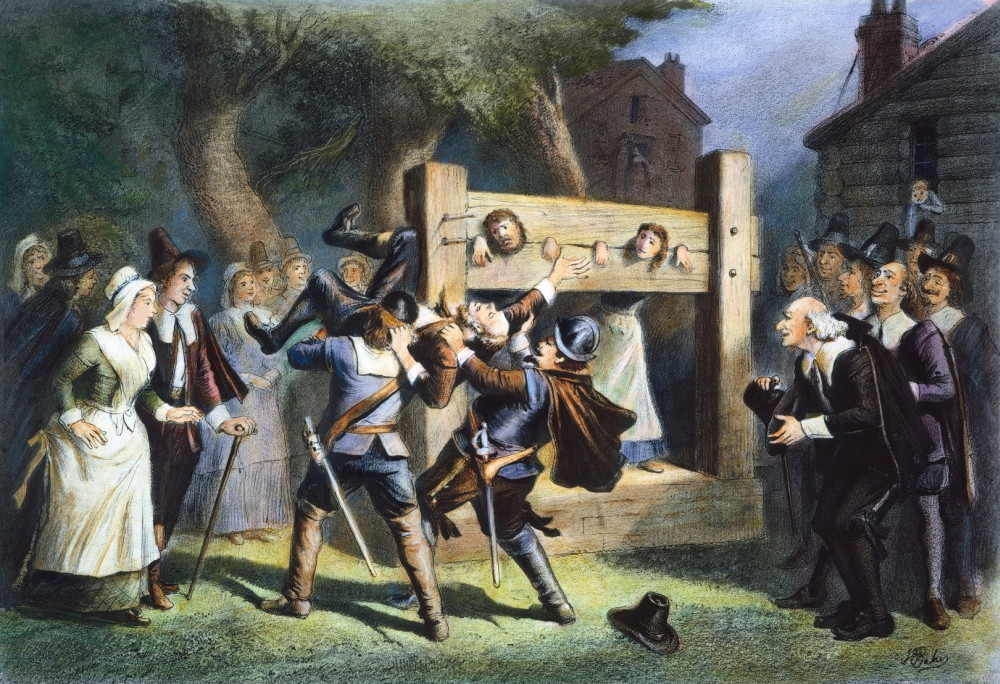
In its rebellion against the medieval church, the bourgeoisie did not, at first, become irreligious. On the contrary, it founded ecclesiastical establishments of its own—the evangelical churches—and through them and the recovered bible assailed the elder church in the name of a higher and purer religious life. But the leaven of free, critical inquiry, which was essential to and immanent in the bourgeois economy, operated steadily to impair the validity of religious dogma, the authority of religious teaching, and the warrant which religion had previously lent to moral observance. The bonds of faith were constantly weakened, the rewards and penalties of the future life, which had hitherto enforced moral conduct, grew shadowy and unreal, and, losing this spiritual sanction, Puritanism was obliged more and more to turn directly to public opinion for its coercive support. The sectaries became, accordingly, the censors of each other’s private conduct and personal affairs. A spirit of censoriousness, of gossipy meddlesomeness, of dictatorial interference with the personal habits, tastes and concerns of others, thus came to pervade the Puritan atmosphere and to mark the true Puritan temper. Moreover, as the religious sanction relaxed and was lost to Puritanism, strenuous efforts were made to substitute therefor the legal coercion of physical force—to enact morality into law. For this, there was some justification, as well as the inspiration of envy, in the civil jurisdiction wielded by the medieval church and in the fact that, through the intimate union of church and state, the former had been wont to invoke the civil power for the protection of its privileges, doctrines, and general spiritual ascendency. But neither the arrogance nor terror of the medieval church ever mothered such strange legislation as has the centuries-old itch of the Puritan to bring to his moral propaganda the dark aid of the jail, the whipping post and the stocks. That it should be criminal to dance on the village green, to eat mince pie or caress one’s wife on the sabbath, records, for Puritanism, the high-water mark of moral aspiration, achieved in the period of its supremest and most characteristic efflorescence. With the decadence of religious faith, morality began, too, to be divorced from religion in critical thought. Ethics and dogma were seen as separate and even as disconnected things, until, in time, was produced what to an earlier age would have seemed an incomprehensible anomaly, the moral infidel. This disseverance of faith and morals induced the search for some new and more rational foundation for moral obligation, the chief fruit of which was the utilitarianism of the nineteenth century, the last word of bourgeois intellectualism on the subject of ethics. In its desire to secure for itself a legal status and sanction, Puritanism ran counter to one of the most deep-seated traits of the bourgeoisie, the spirit of personal independence, always developed among small proprietors, and particularly nurtured by the competitive nature of immature capitalism. The endless conflict which morality, as the embodiment of group or class interest, must wage with individual desire, was thus intensified for Puritanism, the more zealous seeking to coerce by law while the more independent resisted in the name of personal liberty. But the exercise of personal independence in the realm of morals was curbed for the Puritan by a quality of character, the peculiar product of the historical setting and development of the bourgeoisie, which, by supplying the place of emotional stimulus once furnished by the superstitious fears of an earlier creed, gave to the Puritanical code a warrant and urgency which went far towards compensating for the loss of the cruder sanctions of faith and dread. This peculiar quality was the Puritan conscience. Fabricated in the crucible of persecution from without and pragmatical criticism from within, stimulated by a fervid idealism and a stern class necessity, the Puritan conscience became the finest, and, in some respects, the most irrational element of Puritan psychology. No more striking instance can be found of the moral triumph of class interest over individual egoism than the generation of this noble passion—the sense of duty, the service of the right for the right’s sake, the burden of the cause of righteousness to be borne, with no thought of self, in defiance of the sneers of the world, the seductions of the flesh, the wiles and torments of the Arch Fiend himself. For twelve hundred years, ever since the cessation of the propaganda of the primitive church, the world had known no revolutionary impulse; and while the self-abasing loyalty and fanatical devotion which nurtured the Puritan conscience belong equally to any revolutionary era, the growth of this trait of the Puritan character must be regarded, in view of this long lapse of time, as a novel development of human nature. Nor have the revolutionary movements of the present day ever adequately recognized their indebtedness in this regard to the Puritan discipline of life.
Yet while Puritan morality was thus powerfully enforced by the Puritan conscience, the deep and resistless current of bourgeois destiny, the historic mission of accumulation, contrived in many and fantastic ways to set at naught the admonitions of the still, small voice. From this resulted that Puritan hypocrisy which, in its way, is quite as characteristic of the Puritan mentality as is the Puritan conscience. All class systems of morality which are used in restraining or perverting the natural egoism of the workers must of necessity be grounded in hypocrisy. But the business of money getting upon which the trading class was bent, and the ruthless greed which was its actuating motive, served to broaden and intensify this hypocrisy till it not only pervaded the relation of the trading class to the workers but saturated all its other relations as well. All of the tenets of Puritanism, even those most peculiar and most sternly held, were subject at any time to modification or abrogation in furtherance of the fundamental purpose and function of accumulation. Thus, notwithstanding its laudation of chastity and horrified condemnation of sexual laxity, it was reserved for the bourgeoisie to capitalize the ancient evil of prostitution, to transform its unfortunate victims into true proletarians of vice whose pitiful exploitation could be made to yield luscious revenues to the trading class. Puritan hatred of vice likewise vanished when Puritan incomes could be augmented by forcing, at the cannon’s muzzle, the opium trade upon the Chinese. Puritan ideals of liberty were incontinently smirched, for the sake of dollars, in the African slave trade. The commercial integrity of the Puritan has proven no substitute for penal laws against the vending of adulterated and poisonous foods. Nor did Puritan detestation of the barbarities of slavery ever extend to the even more ghastly barbarities of child labor, of needless mutilation of workers, of underpaid unremitting toil of men and women, inflicted in Puritan mines and mills and factories out of which flowed the golden wealth of the bourgeoisie. Of course, many sincere and earnest Puritans have, as individuals, revolted against these apparent inconsistencies and have sought a conscientious application of Puritan principles to bourgeois affairs, even at the hazard of class interests. But their efforts have been ineffectual to mold the general tenor of the life and habit of the trading class, by which, rather than by the conduct of a protesting minority of exceptional individuals, must be determined the value which time and history will place upon the Puritan system.
The Charles H Kerr publishing house was responsible for some of the earliest translations and editions of Marx, Engels, and other leaders of the socialist movement in the United States. Publisher of the Socialist Party aligned International Socialist Review, the Charles H Kerr Co. was an exponent of the Party’s left wing and the most important left publisher of the pre-Communist US workers movement.
PDF of original book: https://archive.org/download/puritanism00meiluoft/puritanism00meiluoft.pdf
 Revolution's Newsstand