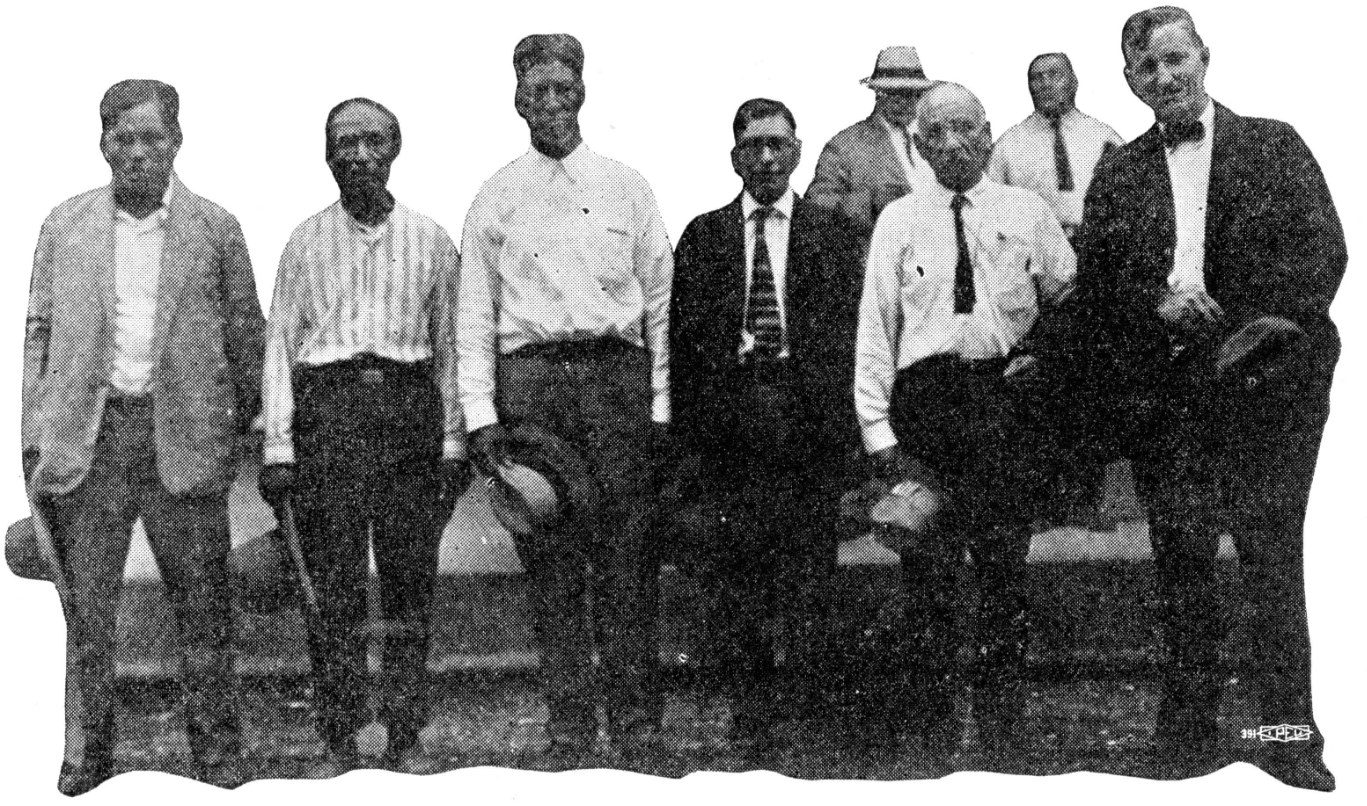
On their way across to Mexico as part of a cross-border organizing, many to join in revolutionary armies there, an armed band of twenty Texas Liberal Party members, wobblies, and Socialists (usually all three) were ambushed at Carrizo Springs by a sheriff and his deputies, who were captured and with one killed. A larger armed forces was sent after, and in the ensuing gun battle two insurrectos Juan Rincón and Silvestre Loma were killed while the rest captured. Among the six jailed were the revolutionaries’ leader Jesús M. Rangel and I.W.W. member Charles Cline. They would serve 13 long years in the hell of Texas prisons before being pardoned, as a consequence of the Mexican Revolution. Georgia Kotsch with the story.
‘The Significance of the Rangel-Cline Defense’ by Georgia Kotsch from Solidarity. Vol. 5 No. 233. June 27, 1914.
With a terrific onslaught more than two score years ago the beneficiaries of wage slavery sought to throttle the burgeoning spirit of working class rebellion. For the time being they had their will, and labor, weak in organization and poor in spirit, slunk to its tasks, contenting itself with a fine funeral for the fearless voices which had been strangled into silence.
Gradually throwing off the thrall of fear and reaching for its powers, years later it rallied around three of its noted leaders and defied this same triumphant capitalism to repeat its legal murder. Like an awakened dog it gripped the blood-fed monster by the heel and hung on with such tenacity and fury that Moyer, Haywood and Pettibone, for whose sacrifice the scene was ready, walked forth into freedom and renewed activity.
But these were noted leaders. In the reaction following even this outburst of conscious power humbler victims were immolated and only after seven unjust penal years is Preston vindicated.
More recently still labor spoke to the powers which would have, slain Ettor, Giovannitti and Caruso, and in such a determined way that it was heard and heeded.
“The blood of the martyrs is the seed of the church” is an overworked idea. It is a slogan for the coward and the lazy. If the indomitable spirit of the martyrs animated any large. proportion of the mass we would have no use for martyrs. In fact, we have no need of them anyway. A live rebel is worth a dozen dead ones. Unfortunately there is a degree of semblance to the complaint of some who, weary with the grime and the wear of the struggle, say that labor is sodden and deserves its chains; when we see even so-called radicals indolent and indifferent in the midst of menacing issues, contenting themselves and seeming to think they have done something when they have run to meetings and clapped their hands over phrases that tickle their ears.
Certainly seed is good in its time and place, but that is not when the harvest approaches.
Taking the whole field into view, however, there is cause for congratulations and not for pessimism. The spontaneity of manifestations, the violation of immutable theories, spell the filtering into the ordinary brain of a greater understanding, while rebellious natures strike at oppression wherever they find it. Students may calculate that the impetus and the fact of organized resistance must come out of the seething works of the east and that we can do nothing but wait for something to happen, but active men like Rangel and Cline and their companions have but to see the ugly head of injustice to strike at it.
And because labor’s far flung battle lines do not follow plans and specifications made even by the wisest, there is in Texas a situation which will mark a new advance in labor’s solidarity. Labor nationally rallying around members of its rank and file; around men who have not the advantage of official position or particular prominence in the movement, but men–the very salt of the labor earth–who, without expectation of fame or recognition, have done pioneer work among the pioneer’s dangers in the fallow ground of the southwest.
Even in their extremity these grimly earnest fighters for working class freedom make no bid for sympathy, no contribution to the sensation-craver. They have fought and taught and organized while they could. They have given all they had–themselves.
Listen to Charles Cline after seventeen weeks in solitary, suffering from an injury, in a cell so small he must lie with cramped limbs on his piece of canvass on the floor.
“What can we do for you, Cline?”
“If the boys outside could get together and get me a little chewing tobacco–“
That was all he asked for himself. But for the cause which has his devotion he said, “Go out and tell the whole country the situation down here.”
“The boys on the outside”–can they forget Charles Cline in his dungeon cell?
Several of these men have families, wives and children, who must suffer with them. It is human to try to spare our children suffering. For ourselves we may be willing to take risks, but we pause at thought of suffering for our children. What then of the two fathers in San Antonio jail whose devotion to freedom has swept their sons into the same maelstrom, threatened with the same fate as themselves!
There is only one thing worth while in the labor movement today and that is to get it together in purpose and in some method of action which will present a solid front to the enemy.
The mourning before the cindered pyre of the Rockefeller conscience is all very well for publicity of the pestilential social system he represents, but in fact we are weeping at the wrong sepulchre. Not Rockefeller, but the weakness of labor’s organization, was responsible for Ludlow.
It was for buttressing this weakness, for organizing, for teaching working class solidarity, that Rangel, Cline and their associates were apprehended and brought under the shadow of the gallows. What stupid Texas official dreamed that anyone would care? No thought of an investigation or an interest by any organization disturbed the brutal orgie of parading a murdered corpse through the town. No power save their own crude passions need be considered since they were in harmony with powers which rule Texas.
But the groping cohesion of those who toil–promise of a definite and conscious unity–is straining forward to a new manifestation. Labor has saved its great leaders. Shall it rest on its demonstrated power and let its faithful and loyal brothers in Texas be delivered over to its enemy and theirs?
No; it is reaching out to wrap protecting arms about them. The day of acquiescence in the judgment of the enemy is past. Labor indeed must be the judge in its own ranks. Resenting an injury to its humblest means, too, a lifting of the pressure of servility and fear which clogs activity and makes the mass such a leaden weight to move.
There is a great body of unorganized and poorly paid workers in the southwest, hordes of Mexicans just from the land and ignorant and helpless in the hands of the industrial masters. They are an encroaching menace to the American workman’s standard of living and will be used to break down our organizations which have been built up through such years of travail and hardship. Do you want to come down to $1.25 a day and have your family clothed by the Associated Charities? The Mexican must be taught and organized. You must be able to swing him in your strikes or he will paralyze them.
The need for men like these Texas prisoners is great–men who know the mind and habit of the Mexican and who have the will, the patience and the ability to work among them.
We must put Rangel and Cline and their co-workers back upon the firing line for many more active, useful years. We cannot afford to lose such men for our own sakes. “The boys on the outside” must “get together” and carry the banner of labor’s solidarity into Texas to replace the little red emblem stolen from the dead body of Lomas.
The most widely read of I.W.W. newspapers, Solidarity was published by the Industrial Workers of the World from 1909 until 1917. First produced in New Castle, Pennsylvania, and born during the McKees Rocks strike, Solidarity later moved to Cleveland, Ohio until 1917 then spent its last months in Chicago. With a circulation of around 12,000 and a readership many times that, Solidarity was instrumental in defining the Wobbly world-view at the height of their influence in the working class. It was edited over its life by A.M. Stirton, H.A. Goff, Ben H. Williams, Ralph Chaplin who also provided much of the paper’s color, and others. Like nearly all the left press it fell victim to federal repression in 1917.
PDF of full issue: https://www.marxists.org/history/usa/pubs/solidarity-iww/1914/v05-w233-jun-27-1914-solidarity.pdf
 Revolution's Newsstand