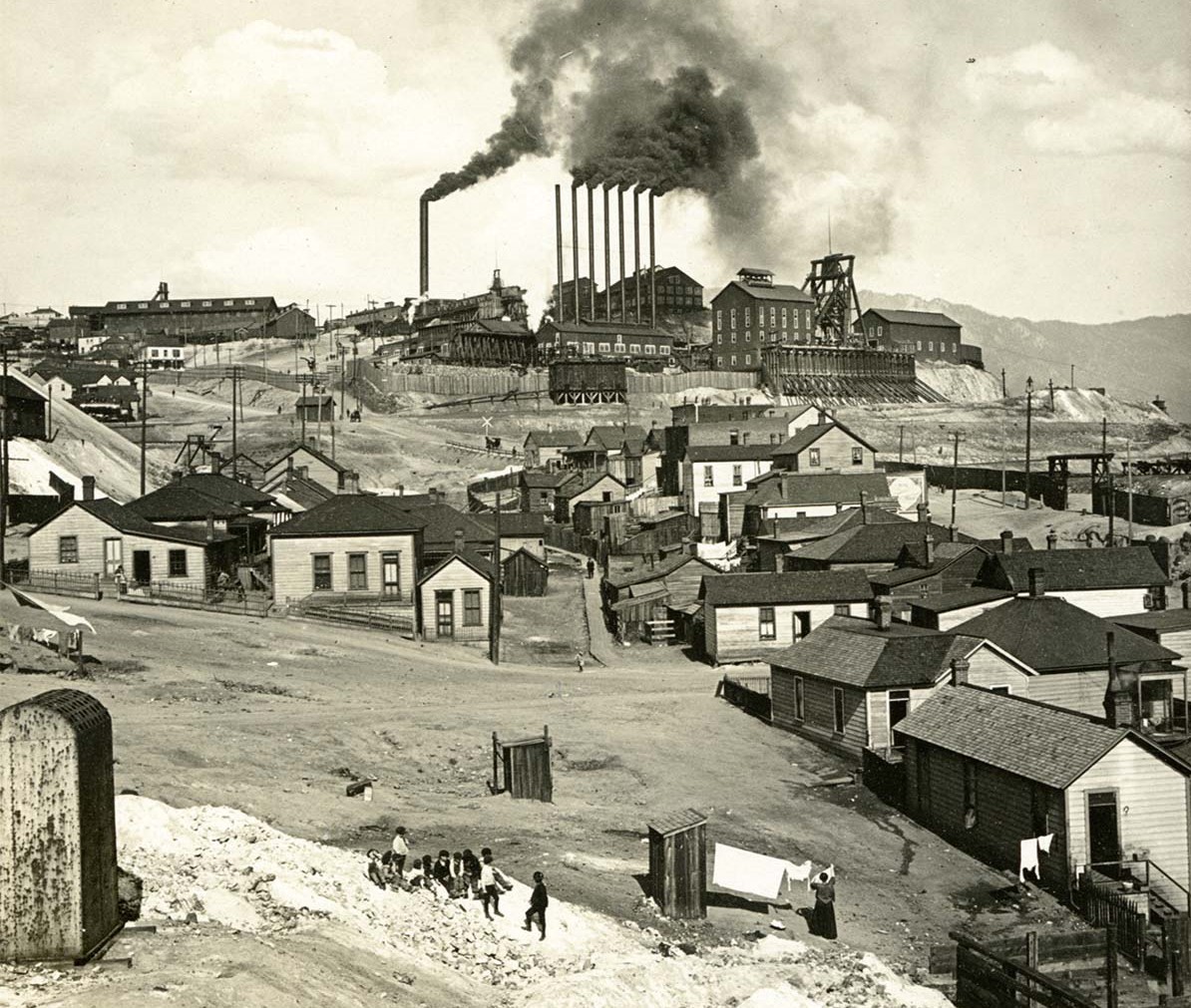
A superlative introduction to a major industry often overshadowed by coal mining. Dunne with a survey on a topic he was expert in; the history, economy, conditions, and organization of metal mining.
‘Organization of the Metal Mining Industry’ by William F. Dunne from Labor Herald. Vol. 2 No. 12. February, 1924.
THE metal mining industry is the infant giant of the industrial monopolies that exploit the American wage-earner.
The trustification of iron and steel, lumber, shipping and rail transportation had made great strides in the early nineties but it was not until 1906-07 that zinc, lead and copper–the unholy trinity of the metal mining industry–began to come under the control of highly centralized and well-financed groups of employers.
It was the echoes of the stern struggle for centralized control of the metal mining industry that was heard in the nation’s capital with the election of Senator Clark of Montana, and it was the later fight of the Anaconda Mining Company (then the Amalgamated) to secure the holdings of Augustus Heinze that again divided the working miners and the citizenry of Montana into two warring factions in a struggle in which no weapon, from dynamite with a short fuse in the underground workings of Butte, to the open purchase of district and supreme court judges in the state at large was barred.
Today the metal mining industry presents, from the standpoint of the employers, an almost ideal spectacle. In the whole industry–we speak now only of the copper, zinc and lead mines of which gold and silver are lucrative by-products–there are only four great groups; the Anaconda Mining Company, the Phelps-Dodge interests, the Guggenheims and the Lewisohns. Competition between these four groups has been eliminated by an arrangement, conducted under the beneficent auspices of the United States government, which allows them to combine “for the purpose of fixing the price of export copper.”
Just as in the wheat market, the exports determine largely the price of the product sold at home, so that for all practical and important purposes the four great metal mining groups mentioned are able to fix the price of their commodity.
In an article of this kind, intended only to deal with the necessity for and the obstacles to organization of the workers in the industry, it is necessary to do no more than point out that in accord with the contradictions of capitalism, monopoly control of the industry has resulted in a curtailment of demand for the metals–particularly copper–and that this failure to develop the possibilities of the industry actually puts money in the pockets of the monopolists.
It is not hard to see how this works out. It is cheaper to produce a million pounds of copper to sell at 15 cents per pound than it is to produce two million pounds to sell at 7 1⁄2 cents per pound. Any child in the grammar grades can understand this so there is no cause to wonder when we find the astute heads of the metal mining industry, making this a national policy for the industry. They enjoy a monopoly of a necessity and they see to it that their mines produce just enough to keep the price at a juicy figure. There can be no question that a lower price for copper and other metals would result in a greatly increased demand in the electrical industry alone. That the metals can be produced much below the present selling price is also a matter of public knowledge: the Anaconda Mining Company’s Butte mines, known as “high cost coppers” in the stock market, can, according to the company’s own figures, produce at 11 cents per pound.
The importance of this from the organization standpoint is in the fact that the metal mining monopoly rarely sells a pound of its product until a huge surplus has been stored, a surplus that, with the normal return in the shape of scrap, can probably take care of the domestic and foreign market for a year barring the abnormal demands of a world war.
The tactics that win for the miners in the coal industry cannot, therefore, win for the miners in the metal mining industry. There is little possibility of a strike in this industry seriously interfering with capitalist production in the country as a whole unless it is of long duration and general in its nature because of the fact that the metals can be stored for an indefinite period; even a shortage quite often, as has already been explained, makes added profit for the owners of the industry without the expense of operation.
No Effective Organizations
The strong position of the lords of metal can be appreciated better when it is discovered that in the whole industry there is, so far as effectiveness is concerned, no organization of the workers. This statement will bring vehement protests from the Industrial Workers of the World who have, from time to time, conducted an aggressive organizing campaign among the metal miners. In this article, however, I am dealing with actual conditions in the industry and not with what anyone would like them to be. The industrial branch of the Industrial Workers of the World having jurisdiction over the metal mining industry has approximately 4,000 members, according to statements made to me by an official of the organization in connection with a referendum for the election of officers.
(*The mining department of the I.W.W. had a membership during the year 1923, of 2,680, according to financial reports. This includes a few hundred coal miners, the bulk being in the metal mines.)
A similar protest will doubtless come from the International Union of Mine, Mill and Smeltermen–the new name of the remnant of the Western Federation of Miners–when I credit them with not more than 8,000 members in the entire industry. This estimate is likewise based on the statement made to me by one of their prominent officials and I think it is a very liberal figure; 6,000 would probably be more nearly correct. Outside of the Hoisting Engineers local in Butte, the smeltermen in Anaconda and Great Falls, a total membership of approximately 3,000 at best, the organization of the International Union of Mine, Mill and Smeltermen consists of scattered locals many of which exist only on paper.
Disorganization of the Western Federation of Miners coincident with the increasing centralization of metal mining industry culminated in Butte, in 1914, with the destruction of Butte Miners’ Local Number One of the Western Federation, the last stronghold of that once militant union. Stripped of the lies, charges and counter-charges and mutual recriminations which resulted. From this tragedy one fact stands out clearly. It is that in the destruction of the union three groups were involved–the Anaconda Mining Company and its agents, a crooked and ignorant union officialdom and the so-called radical element.
The Struggle in Butte
Long before its demise Butte Miners’ Union Number One had become with occasional exceptions when the progressives gained control–an auxiliary of the Anaconda Mining Company. To be elected to an office of any importance in the union meant that one’s fortune was made–the company saw to it that the officials from president down to sergeant-at-arms obtained rich leases (a lease is permission to work an ore body on a percentage basis); they were favored with political jobs and the union instead of protecting the miners became a blacklisting agency by means of which undesirables were driven from work in the camp.
With a membership variously estimated at from 6,000 to 10,000, Butte Miners’ Union Number One met in a hall that would hold but 600 when packed. The company stools and tools were generally on the job with the result that company mandates were carried out. It is charged that funds were misused in a scandalous fashion; for instance, a man who stood in with the machine might be allowed to draw sick benefits for an indefinite period while actually employed. It is interesting to note in this connection that in the early days of the Anaconda when the stock was being hammered on the stock market, John D. Ryan, now one of the heads of the A.C.M. and a multi-millionaire, induced the officers of the union to buy with the monies of the union $80,000 This sent the stock worth of Anaconda stock sky-rocketing and laid the foundation of the Ryan fortune.
In December 1913 the Anaconda Mining Company inaugurated its “rustling card” system. This is a very efficient method of blacklisting undesirables and despite the fact that the union voted to oppose the system–though by a small majority–the officials never took any action on the matter. The “rustling card” is a document that a miner must obtain before he can go around to the various mines and ask or “rustle” for a job. The card does not carry any promise of employment with it–it merely gives the miner an opportunity to find out if any foreman will hire him.
By 1914, with the rustling card system perfected, the company no longer needed the union. It was a source of expense to it so the decision was made to destroy it. It is doubtful if at this time more than fifty per cent of the men employed “on the hill” were in good standing in the union. The agreement was what is called a “union preference” arrangement. The company hired whom it cared to but the union was allowed to collect dues and solicit members at the mines. If a man refused to join or pay his dues theoretically he was not allowed to work after a certain period had elapsed. Actually, it meant that the union encountered considerable difficulty in enforcing the rule and much partiality was practiced.
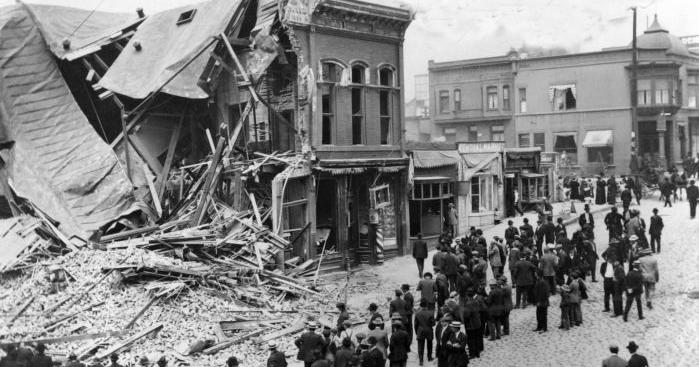
Under these conditions it was not hard to stir up sentiment against the old union. Charges were made that an assessment collected for the Michigan strike had been embezzled, the known corruption angered the honest miners until at one mine the workers refused to pay dues; this was followed by similar action at other mines, an uprising occurred, the officials were driven from office, the records destroyed and the hall blown up.
Charles Moyer, president of the Western Federation of Miners, came to Butte at the time and just escaped with his life. When the checkered history of Butte is recited by those who wish to discredit the radicals it ends here. The moral is drawn that radicals are purely destructive.
The Independent Union in Butte
As a matter of fact, however, the radicals, on the ruins of the old union, built a new one, much to the surprise and disappointment of the Anaconda Mining Company. It was the rise of this militant and honest but poorly-managed organization that upset the plans of the copper trust and forced it to adopt extraordinary measures. The miners and their union were in complete control of Butte and Silver Bow county. Their committee even censored the capitalist press and policed the town. It was probably the first soviet in the United States. A mayor and a sheriff elected on the socialist ticket were in sympathy with the miners as were most of the population but the governor of the state was Sam Stewart–a copper-collared tool of the Anaconda Mining Company. Enough signatures were obtained to petition the governor for the militia and they were sent in. It is said on the authority of the governor that Moyer himself asked for the militia but Moyer denies this. That he was in conference with the governor, however, cannot be denied. Martial law was declared, the miners’ leaders arrested, a judge was brought in from one of the cow counties, the mayor and sheriff removed from office and the new union was destroyed.
Bradley and McDonald, officials of the new union, were tried and sentenced to the penitentiary. Bradley died there–there is more than a suspicion that he was killed–and McDonald was released on parole after a year and a half only to be sent back again. He has since been freed.
With complete control of the industry in their hands the copper barons proceeded to make the most of it. Something like 2,700 known radicals were immediately blacklisted, a private army of gunmen strengthened the rustling card system, copper control of the city and county was regained. The population of the biggest mining camp in the world was reduced to the status of serfs by the extension of the blacklist system to lawyers, ministers, doctors, school-teachers and businessmen. It was dangerous even to whisper concerning company officials or company policy.
Conditions in the mines went from bad to worse. Miners’ consumption, “rock on the chest❞ from the inhalation of ore dust, accounted for seven of every ten deaths. Accidents increased due to the installation of the “rill system” by which the rock is allowed to cave and run down the chutes, making an enormous saving in timber used by the other method. The shift boss was the lord of all he surveyed.
Another Great Struggle
In June 1917 occurred the Speculator disaster that took 164 lives. Timbering in a shaft caught fire. The mine foreman ordered water turned into the collar of the shaft. This changed the current of air in the mine and drove the smoke and gas back on the miners, who, seeking emergency exits found them blocked by concrete bulkheads–in violation of the state mining law. Their bodies were found at the foot of these bulkheads with their fingers worn to the first knuckle from trying to scratch their way through.
A young miner named Manus Dugan saved twenty-three men by taking them into a blind drift and building a gas-tight bulkhead with scraps of timber calked with their clothes. They came out alive after twenty-four hours. Dugan went in search of other victims but ran into gas and died. It was his twenty-first shift after being blacklisted for three years. The company papers urged that a monument be raised to his memory but with the discovery of his radical record the matter was dropped and has never been heard of from that day to this.
Spurred on by the horror of the disaster the miners struck. They formed an independent union to carry on the strike. For six months they battled militia, gunmen and crooked labor officials. A fifty cent raise and a weekly payday, instead of the monthly one, were wrested from the company after crippled Frank Little had been taken from his bed at night and hung by company gunmen.
That the strike did not result in a permanent organization of the miners is due solely to the attitude of Davidson, executive board member of the International Union of Mine, Mill and Smelter Workers, the new name for the Western Federation of Miners. The strikers were willing to join the Smeltermen in a body but he laid down the condition that they could join only as individuals; that they must abandon their strike and go back to work for thirty days, after which the executive board would take up their grievances. This announcement was made the night before the vote on affiliation was to be taken and had the result it was supposed to have. From that moment the strike was lost and this action of the representative of the Moyer organization constitutes one of the great betrayals of labor history. It increased the bitterness among the miners and re-opened the old sores that had been slowly healing since 1914.
The Bisbee deportation took place the same year as the result of a strike in that camp; sporadic revolts of the miners accompanied by acts: of company terror such as the shooting of 22 strikers on Anaconda Road in Butte in April 1921, have occurred since but no effective organization has resulted. To be successful, an organization campaign in the metal mining industry, just as in other industries, must have the solid backing of the organized labor movement. The control of the mining camps by the companies is too iron-clad to admit of any other conclusion. New Conditions in the Industry
In the last three years a great change has taken place in the personnel of the metal miners. The strikes and shutdown–particularly the nation-wide closing of the mines in 1921–together with the bad working conditions, have driven most of the old-time miners from the industry. Even the copper trade publications cite and complain of this phenomenon. Their places have been largely taken by farmers and farmers’ sons who have been starved off the land. This new class of metal mine workers has not the skill–it is not needed so much with the improvement in mining methods–nor the militancy of the old-time metal miner. They are not easily organized but they have not inherited the prejudices and the feuds that have rent and torn the organization in the industry. Many of them still believe that their adventure into industry is a temporary one; they do not know that industry never relinquishes its grasp on its recruits from the soil.
The Silver Bow Trades and Labor Council of Butte has not only been sympathetic towards the organization of the miners but it has given what assistance it could once it freed itself from the tools of the copper companies. During the past summer it has held organization meetings and encouraged the small independent union to expand, taking the position that organization was the first step and that the matter of affiliation could be settled best after the preliminary work.
Two weeks ago the organization committee of the Council was instructed to go thoroughly into the situation, to meet with the independent miners’ union and report back to Council what, in the opinion of the committee, was the best steps to take to support the miners.
Re-organizing the Workers
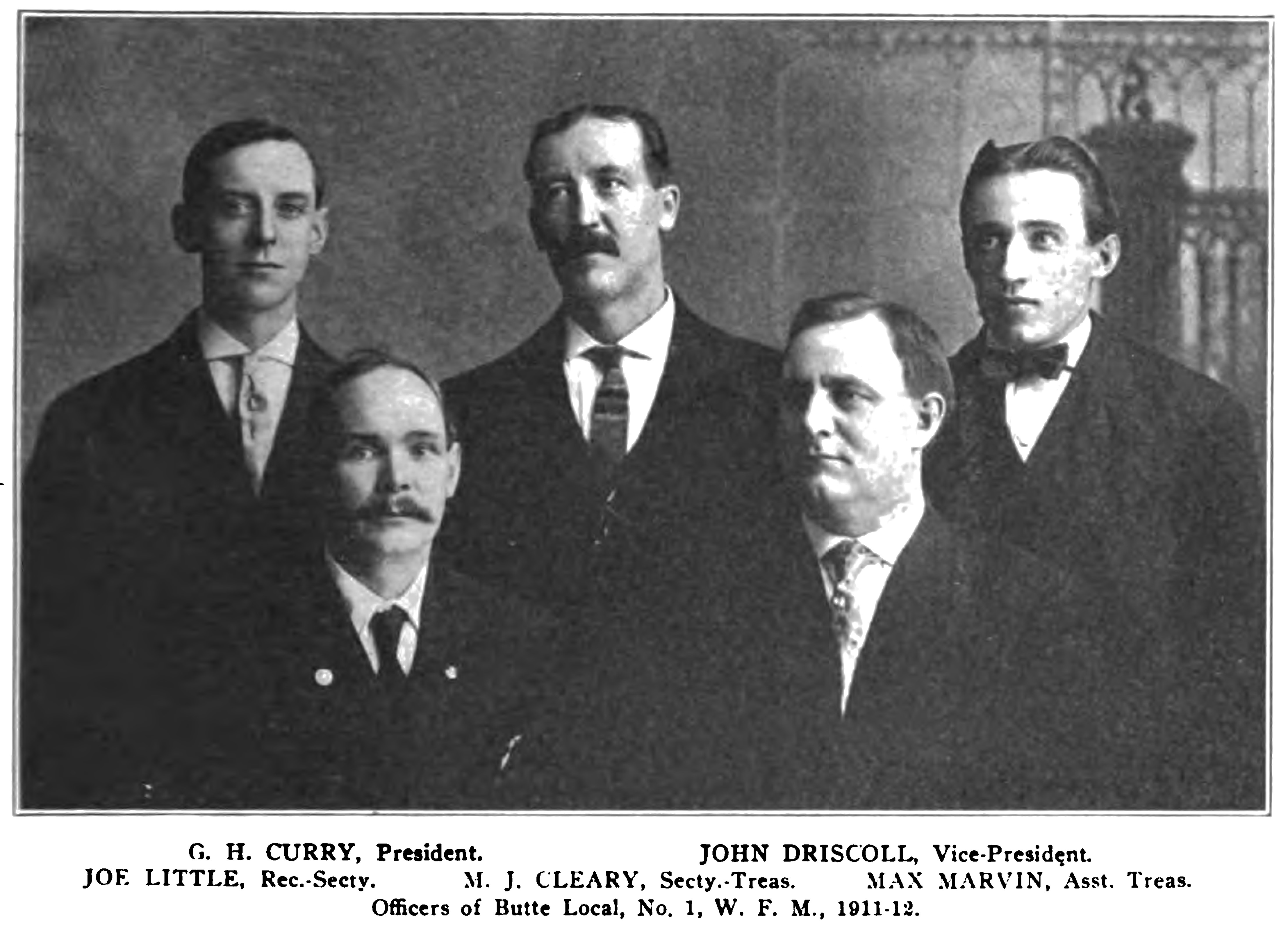
The organization committee, consisting of Gildea, Driscoll, Crabler and myself, appeared before the union and after citing the attempts made to organize the miners since 1914, urged them to take up the Butte charter of the International Union of Mine, Mill and Smelter Workers. The union voted practically unanimously to do this.
The organization committee then drafted a letter to all affiliated organizations which was endorsed by the Council and which urges them to energetically press for the organization of the miners; to require that all members of other unions go to work in the mines in the jurisdiction of the I.U.M.M.S. join the local of that organization on penalty of surrendering their membership in their craft union when they go back to work in its jurisdiction. The letter also asks the Butte Hoisting Engineers’ Union Number 83, affiliated with the I.U.M.M.S., to arrange as soon as possible to refuse to lower miners not belonging to their sister local.
These measures will result in building a nucleus of a miners’ organization backed by the rest of the trade union movement if it does nothing else. Employment is bad at present, forces are curtailed and the price of copper is low. About all that can be hoped for this winter is to strengthen the organization as much as possible and be in a position to resist wage cuts and take advantage of the first sign of an increase in production to enter into close relations with the smeltermen’s union in Great Falls and Anaconda, to reorganize the Metal Trades Council and build up a sort of district council in the metal mining industry of Montana.
If a fighting organization can be built in Butte it will have a tremendous effect on the industry as a whole and the metal mining companies can be depended upon to assist in organization work by continuing their present policy of treating their employees with less consideration than the machinery.
At the present time there are in the states of Montana, Colorado and Arizona, state administrations that are of a liberal character in contradistinction to the company-owned administrations that preceded them. It is probable that they would not sanction the use of militia in the event of a strike for organization and this is a tremendous asset in any organization campaign.
What is needed are a few workers with intelligence, clean records and courage who are willing to take responsibility and clear away the confusion that now prevails. The old-time miners must be won over to the campaign and the International Union of Mine, Mill and Smelter Workers must so conduct itself that it can regain the confidence of the old fighters and acquire the confidence of the new recruits in the mining industry. It has opened its charter in Butte and placed the initiation fee at $2.00, but in my opinion and I think the opinion of every honest miner familiar with the history of the Western Federation and its successor, the greatest stimulus to organization would be the resignation of Charles Moyer from the presidency.
If this does not occur–and there is no reason to believe that it will–it should not be made a major issue. With Butte only fifty per cent organized the control of the International Union of Mine, Mill and Smelter Workers would be in the hands of the miners of that camp. It is childish to believe that one individual can rule an organization wholly against the wish of the membership and I have a shrewd suspicion that the unpopularity of Moyer has been used as an excuse by hundreds of workers who are too ignorant to know anything about the history of the metal mining industry and too lazy and boss-loving to join any labor organization.
Whatever the obstacles are they must be overcome and they will be overcome if the best element among the miners considers the problem of organization from a realistic standpoint; the obstacles must be overcome or conditions in the metal mines will soon rival those in the steel industry.
Experiments Not Needed
It seems to me that there has been enough experimenting with ideal forms of unionism in the metal mining industry to satisfy the most assiduous seeker of new types of organization. The sum total of these efforts is the conditions I have described, the inevitable result of action based on the mistaken belief that a union of wage-workers can conduct itself in a revolutionary manner at all times, still retain job control and refrain from any compromise with the employers in the shape of agreements, etc. Of the fighting spirit of the group in the metal mining industry who hold to the idea, of their willingness to sacrifice in every conceivable manner there can be no doubt. They have had the field to themselves for almost ten years and I cite the results in a dispassionate manner. A mass organization of the workers in the metal mining industry can be built only by systematic planning, the enlisting of the support of every section of the labor movement connected with the industry coupled with a widespread publicity campaign. It cannot be done by giving the mine workers the problem of the overthrow of the capitalist system to consider while attempting to organize them around their job interests. For the minority of the class-conscious workers this is all right but it has no effect whatsoever upon the great mass of the miners (who at present are interested only in some relief from the oppressive conditions under which they work) except to frighten them.
An Industrial Union
The International Union of Mine, Mill and Smelter Workers is industrial in form and can be molded into a powerful weapon if from the ranks of the miners is developed the intelligent and honest leadership that such a union must have. If that sort of material is to be found among the metal miners–and if it is not found there it will be found nowhere–the militant record of the old Western Federation of Miners will be surpassed by its lusty offspring.
If treachery is encountered, certainly from the wealth of experience the metal miners have had in the last ten years they can find ways to expose it and means to combat it. It has been said, for instance, I have heard it myself from many sincere miners, that Charles Moyer does not want the miners organized. If this were true there is a fine opportunity, in Butte at least, to play a good joke on him. This is childish chatter, however, and while I know that Moyer is just as reactionary as most of the trade union officials, that in the event of the miners being organized he would do his best to run the radicals out of the organization and me out of Montana, I believe he wants to organize the metal mining industry and as far as the radicals are concerned they can look out for themselves.
I do not expect any letters of appreciation of my part in bringing the miners into the International Union of Mine, Mill and Smelter Workers and I will be entirely satisfied with seeing the industry organized once more. I feel that every honest and class-conscious worker should take the same attitude.
We militants have several eons ahead of us in which to collect any credit that may be due us, but not much time in which to help strengthen the labor movement where and while we live.
The Labor Herald was the monthly publication of the Trade Union Educational League (TUEL), in immensely important link between the IWW of the 1910s and the CIO of the 1930s. It was begun by veteran labor organizer and Communist leader William Z. Foster in 1920 as an attempt to unite militants within various unions while continuing the industrial unionism tradition of the IWW, though it was opposed to “dual unionism” and favored the formation of a Labor Party. Although it would become financially supported by the Communist International and Communist Party of America, it remained autonomous, was a network and not a membership organization, and included many radicals outside the Communist Party. In 1924 Labor Herald was folded into Workers Monthly, an explicitly Party organ and in 1927 ‘Labor Unity’ became the organ of a now CP dominated TUEL. In 1929 and the turn towards Red Unions in the Third Period, TUEL was wound up and replaced by the Trade Union Unity League, a section of the Red International of Labor Unions (Profitern) and continued to publish Labor Unity until 1935. Labor Herald remains an important labor-orientated journal by revolutionaries in US left history and would be referenced by activists, along with TUEL, along after it’s heyday.
Link to PDF of full issue: https://www.marxists.org/history/usa/pubs/laborherald/v2n12-feb-1924.pdf
 Revolution's Newsstand