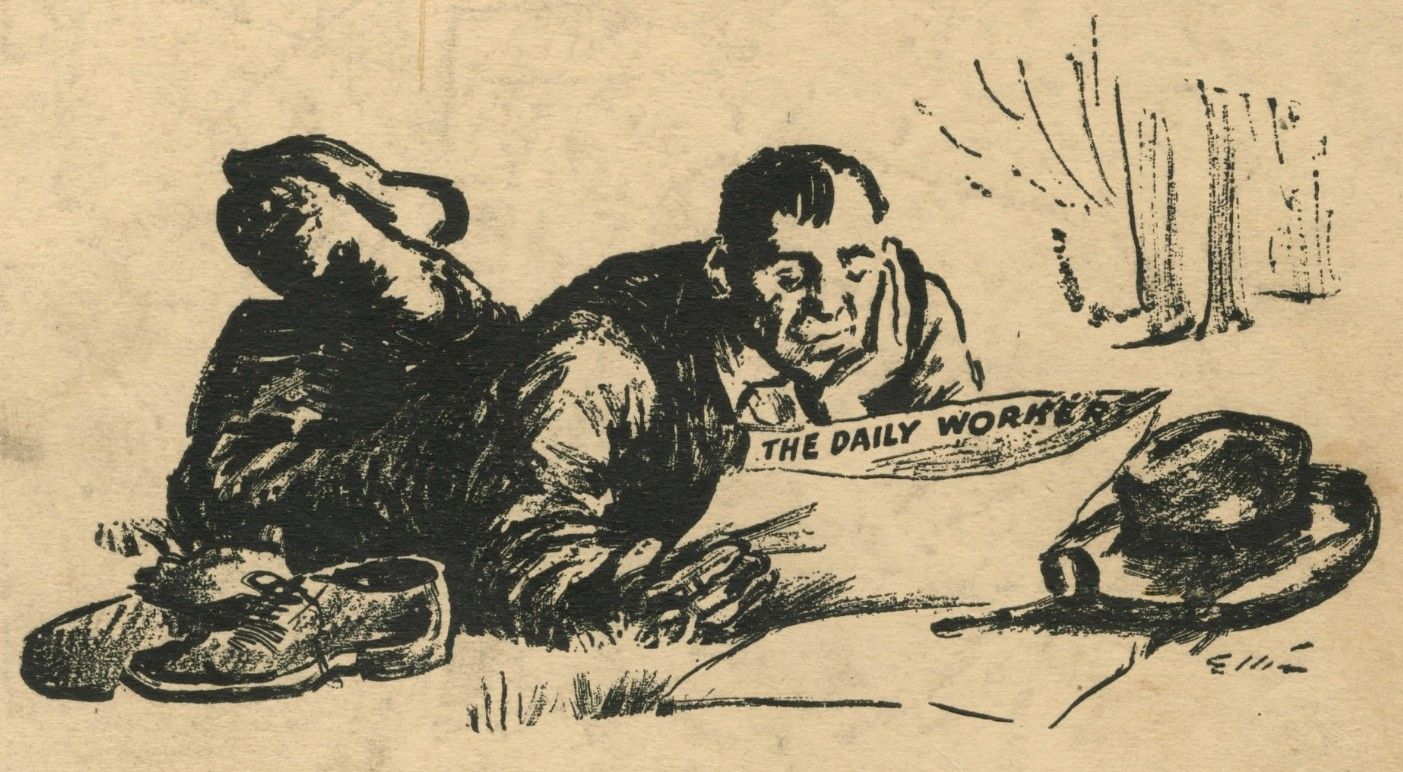
Resolution from the C.P.’s Fourth Convention in 1925.
‘Building a Communist Press in the United States’ from The Fourth National Convention of the Workers (Communist) Party of America. Daily Worker Publishing Company, Chicago. 1925.
BUILDING OF THE COMMUNIST PRESS IN THE U.S.
The Communist Press is not only the collective organizer of the Party of proletarian revolution but the collective organizer of the masses for the revolution under the leadership of the Party.
This was the view of Lenin of the role of the Communist Press and it is to make our press the collective organizer of the Party and the masses that we must strive.
Our Party has made some progress in this direction, but in the United States, where the propaganda agencies of capitalism have reached their highest point of development, the fact that the masses are almost all literate gives the press an extraordinary power both in the hands of the capitalists and in the hands of the revolutionary Party.
1. The multiplicity of languages (a score of language groups within the ranks of our own Party) in America is a special difficulty that we have to meet and overcome.
This in turn creates the need for the greatest centralization of our press but the form of organization of our Party (inherited from the Socialist Party) has made extremely difficult the task of bringing under a centralized control the entire Party press. The lack of complete centralized control has resulted in many organizational weaknesses and serious deviations from the correct Communist line.
2. It has been necessary also to work unceasingly to wipe out the traditions of bourgeois journalism with which many of our comrades were infected due to the lack of proper training in the manner and method of securing, recording and sending to our press the news of the daily struggles of the American working class.
3. Another problem our press has had to solve was the belief among wide circles of Party and non-Party workers that Communist journalism consisted in hectic and flamboyant phraseology having little if any relation to the actual feelings and struggles of the workers which satisfied the revolutionary ego of the writer, which sometimes served to conceal his lack of real revolutionary understanding but which has been characterized by the Communist International in its thesis on the Bolshevization of the press as follows:
“Two different things may be comprehended under revolutionary phrases in the Communist press. There are Communist papers which invariably follow the principle of employing the strongest and most urgent phraseology which they are capable of compiling and which give the impression that the writers must have been in a state of high fever.
“Viewed as agitation this falls to take any effect upon the masses, repels them, and has besides this disadvantage that when the newspaper has to deal with some special situation it finds its vocabulary exhausted.
“A second variety of the revolutionary phrase is the ceaseless employment of Communist slogans without any internal connection with the lives of the workers, facts is more effective than the artificial and wearisome repetition Frequently the simple narration of Communist slogans.
“More faith in the thinking powers of the readers.”
Lenin, on three different occasions, criticised this tendency:
“The revolutionary phrase consists of the repetition of revolutionary slogans, without taking into account the objective circumstances of the present curve of events and the present situation. Wonderfully captivating and intoxicating slogans, without any firm ground beneath them, are the essence of the revolutionary phrase.”
And again:
“Why is it not possible to speak in 10 to 20 lines, instead of 200 to 400, of simple, well known, obvious matters, already fairly well digested by the masses…?” (The Character of our Newspapers.)
Finally:
“Less intellectual talk, closer contact with life.”
4. There has been the difficulty of making the Party realize that its daily paper is the principal weapon of the Party, that in addition to waging the Party struggles in the various districts, there is the duty of informing the Party press of these struggles and their implications.
Too often in the past it has been necessary for our press to secure its news of the struggles in which our comrades are engaged and at some times were actually leading, from the columns of the enemy press.
5. There is finally the major problem of building and maintaining the circulation of our press. If the news of the struggles of the workers by the Communist press is not read by them, then much of the valuable results of our efforts has been lost. Our press must be a mass press–not published merely for the delight of those comrades who like to see their contribution in print.
6. Our press must be popular–but not in the social democratic sense. It must never cater to the perverted love of sensationalism that the working class has absorbed from its decadent rulers but it must not neglect those popular issues around which can be aroused and organized mass interest and the Communist viewpoint and program given to great numbers of workers while their minds are receptive.
7. There must be no confusion between “popularity” and a clear Communist character. The revolutionary political character of our press must never be sacrificed for the hollow reward of a large non-proletarian following. At all times the daily struggles of the workers must be linked first with the partial demands of our Party and then broadened to stimulate interest, understanding and sympathy in and action for the full Communist program.
8. Every Party campaign must be carried on with the fullest support of the Party press and during the period of the campaign all material in the press, so far as possible, should be selected with the view of mobilizing and coordinating its efforts for reaching the widest circles of workers and farmers.
In campaigns designed to reach specially selected groups, the same plan must be followed by all the Party editors.
There is among the language press, with a few exceptions, a deplorable lack of cooperation with the Party at present in this respect.
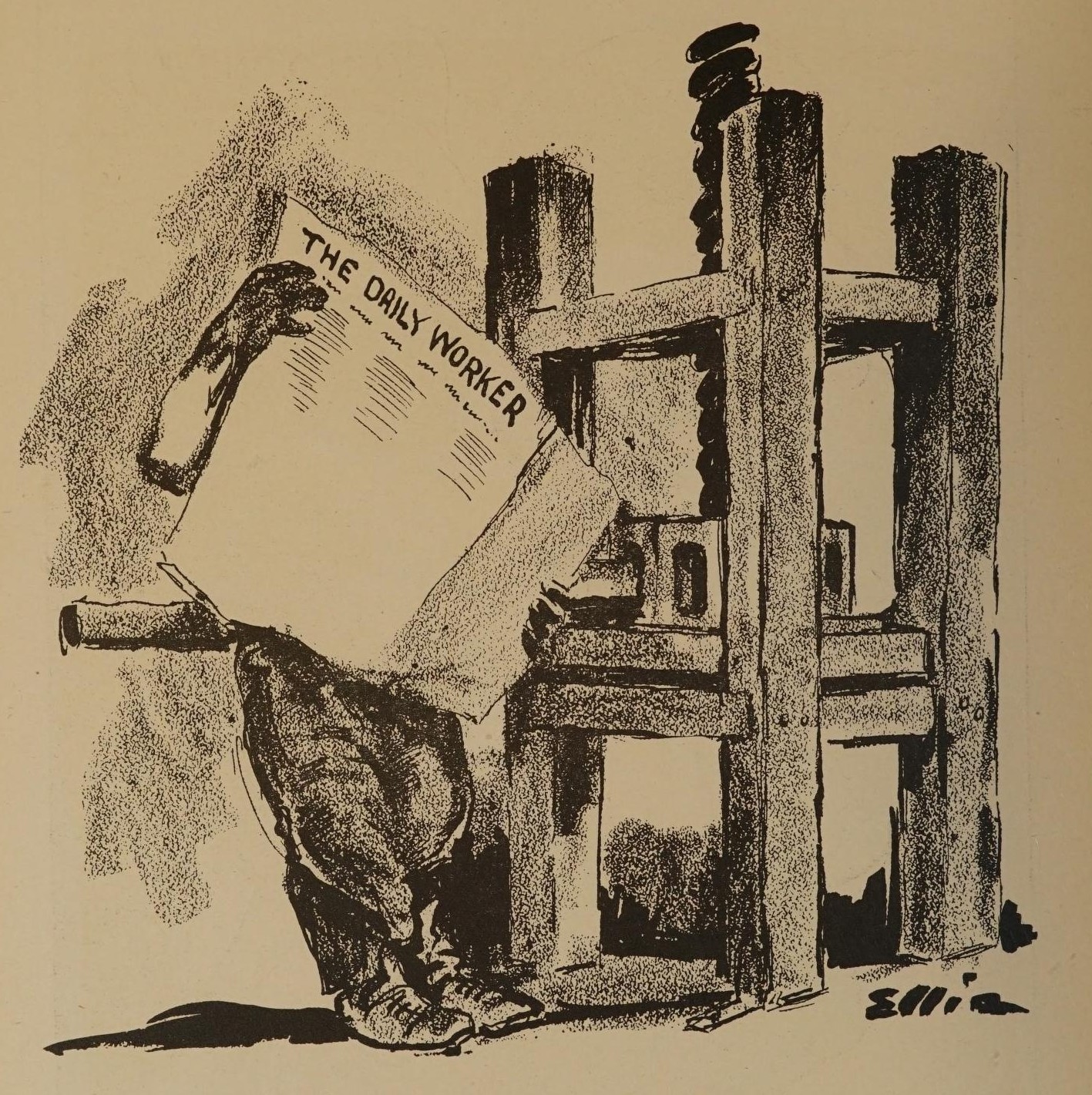
To deal effectively with the above problems of policy and organization, our Party must immediately:
1. Set up a permanent subcommittee (section of Agitprop) of the Central Executive Committee which shall be charged with:
(a) Bringing all Party papers under the complete control of the central committee.
(b) Establishing machinery for centralizing collection and distribution to all the Party press of Party material and for editorial control of all publications. This control to be actual and not nominal.
2. The present corps of approximately 75 worker correspondents must be enlarged within the next year to at least 250. The proletarianization of our official organ which has taken place in the last nine months since these correspondents have been organized and special efforts (articles, pamphlets, special personal correspondence and instruction) been made to acquaint them with their important role, is sufficient justification for an immense extension of this vitally important section of work in connection with the Bolshevization of our press.
These worker correspondents are making our official paper a real mass organ and although the work is just beginning it can be said that already they have contributed something new and virile to American working class journalism. Almost all the news of the daily struggles of the American workers carried by our official organ is furnished now by these worker correspondents. With greater numbers of them and better training our press will be able to record the class struggle in America with but little dependence upon the capitalist press services.
(a) The connection of the daily struggles of the workers with the partial demands and united front campaigns of the party can be made very directly thru the worker correspondents. The distribution of our press in the industries and to the workers about which the worker correspondents write is the most effective method of broadening the contact of our press and building its circulation. This method is the Communist one and its possibilities are inexhaustible if the work is properly conducted.
(b) The work of popularizing, circulating and maintaining the Communist press must under no circumstances be considered the work only of those comrades who are employed by our press an attitude towards our most effective weapon is a relic of social Such democracy and its bureaucratic conception of Party functioning that must be rooted out.
Wherever it exists, it must be replaced by a belief in and a loyalty to our press, arising as a result of the understanding of its mighty place in the struggle that will cause every comrade to never think of going to a gathering of workers without Communist papers for distribution.
To accomplish this, special lectures on the following subjects should be given in all Party units:
1. The role of the Communist press.
(a) in the Party.
(b) among the masses.
In every party unit those comrades who are in charge of the distribution of the press should be looked upon not as more or less necessary evils, as is sometimes now the case, but as comrades charged with some of the most responsible party work.
2. The coordination of all Party campaigns with the work of our mobilizing every unit of the Party back of the press can be secured by abolishing all tendencies towards departmentalization and bureaucracy on the part of both the responsible editors and heads of departments and auxiliary organizations. The tendency of various departments to measure achievements by the amount of space secured in the party press, regardless of whether the publicity matter is really connected with the lives of the workers or the campaigns of the Party, should be ruthlessly eliminated. One of the weaknesses of our press among the masses is the excessive amount of formal publicity matter carried. The correction of this condition will give our press much more space for live news of the workers and their struggles.
(a) Weekly conferences of editors and department heads should be held.
(b) Conflict between the business and editorial offices can be eliminated by the same method. These conferences should not be formal but in a comradely spirit so that at all times the effect of special campaigns, special articles, the general make-up of the paper and the influence of worker correspondent stories on the masses can be estimated with some degree of accuracy and the necessary improvements and corrections made.
3. The adherents of our press to the line of Leninism cannot be guaranteed by any mechanical methods of control can strengthen but cannot secure the Bolshevist character of our Centralization press.
It is therefore not permissible for editors of our party press to be divorced from the Party work among the masses or from extensive contact with them.
Neither is it permissible for the Party to regard them and for editors to regard themselves, as specialists who simply carry out instructions. Still more non-Communist is a tendency of some editors to regard themselves as framers of Party policy rather than as interpreters and teachers.
These mistakes can be avoided only by bringing the workers on the Party press into all branches of Party work and by means of extensive conferences with the leading committees of the Party at which all phases of the Party work among the masses, its relation with the Communist International, the line of the Communist International, and the political problems of the day are discussed.
Centralization.
An army of worker correspondents.
Leninist education of editors and contributors.
Close connection with the struggles of the workers.
Close connection with the leading committees of our party. Close connection of the press with the inner life of our party. Understanding by the party of the role of the Communist press. Thus will our press become a Bolshevik press, be able to aid in building a mass Communist Party, lead the American working class, and pave the way for the dictatorship of the proletariat.
THEORETICAL MAGAZINES AND RESEARCH WORK.
1. There shall be formed a special section of the Agitprop to supervise, stimulate and develop Communist research work and theoretical magazines and publications by the Party.
2. The Workers Monthly, which has already succeeded in establishing itself among wide sections of workers, shall be enlarged in size and enriched with more theoretical material on:
(a) Marxism and Leninism.
(b) Original scientific investigation of the structure and functioning of American capitalism and of the current phases of the class struggle.
3. A program of theoretical publications (books and pamphlets) for the current year shall be prepared by the propaganda section of the Agitprop which shall be carried out in cooperation with The. Daily Worker Publishing Co.
PDF of full issue: https://archive.org/download/TheFourthNationalConventionOfTheWorkerscommunistPartyOfAmerica/Fourthcongress_text.pdf
 Revolution's Newsstand