The fourth, and central, chapter of Meily’s 1911 materialist study of morality.
‘The Decadence of Puritanism’ by Clarence Meily from Puritanism. Charles H. Kerr Publishers, Chicago. 1911.
Ever and always man, the indolent yet uncomfortable animal, matches his ingenuity against the hardships, dangers and niggardliness of his surroundings in the endeavor to gain an increasing amplitude and security of economic resource with less and less of physical exertion. The principal business of all life is living, and the impulse and art of self-preservation are of necessity the mainsprings of all organic activities. But the effort to compass by intellectual subtility the problems of environment, to substitute for brute strength and endurance or fortunate accident, the calculated manipulation of cause and effect, the intelligent modification of adverse conditions in accordance with the suggestions of reason and reflection, marks the commencement of that triumph of mind over matter which it is the destiny of humanity to accomplish. This is not saying, however, that man responds to no other incentive than the desire for material safety and well-being. While material sustenance and satisfaction are perforce the main concerns of human as of all other organic existence, numerous other motives, such as love, anger, revenge, sympathy, ambition, curiosity, the love of beauty, the love of adventure, the instincts of play and of workmanship, the sense of duty, constantly supplement and in exceptional instances may entirely override the more basic economic motive. This is frequently and strikingly obvious in cases of individual conduct, so much so that it is impossible to predicate with any satisfactory degree of certainty the action of any single person upon the economic motive alone. And, though less common, it is none the less true that the movements of mankind in the mass are at times deflected from their true economic bent by alien sentiments and desires, while in all mass movements these more idealistic sentiments are at least present to give inspiration and sanction to the carrying out of economic ends. But when all proper allowance has been made for the operation of those emotional impulses which are not concerned with material well being, it yet remains true that the fundamental necessity of getting a living and the overweening desire to get it with as little labor as possible, form the relentless prod, the supreme dynamic urge, to human progress, and the great moving and directing force of history. The substitution which man constantly endeavors to make of intellectual ingenuity for mere physical labor in this imperative business of getting a livelihood, leads to the practice of scientific discovery and mechanical invention which in turn lead to the creation of novel tools and industrial processes. The javelin thrown from the hand becomes the arrow propelled from the bow; the crooked stick used to scratch the earth takes form as the plow; the primitive arts of spinning, weaving, pottery and later of the making of bronze and smelting of iron, afford instances of scientific and mechanical achievements which illustrate the general tenor of economic progress. The sum of the industrial processes and mechanical equipment possessed by any given epoch, constitutes the industrial technique of that epoch; and the stage of advancement reached in .general industrial technique determines the form of industrial association into which men will enter in carrying forward the general burden of industry. The particular industrial association or relation thus necessitated by the existing industrial technique becomes the industrial system which forms the foundation or skeleton of the social organization of the age. Thus, at a given period in the development of the technique of industry, specifically, the point at which systematic agriculture became established, the industrial relation naturally flowing therefrom was that of master and slave, the industrial system was that of chattel slavery, and this system became the foundation of the social order upon which, as a superstructure, all social institutions, including military establishments, forms of government, systems of jurisprudence and of morals, as well as the general customs, habits of thought and temper of the times, were reared. Human society was a slave society. Man lived, for the nonce, in an environment of slavery, in a slave world.
But it is of the very essence of our thesis that industrial technique is never stable, and by its slow advance invalidates at length the very industrial system which it once necessitated. As the industrial base of the social organization shifts the system of industry itself and the elaborate superstructure of social institutions raised upon it become decadent, become the shelter of strange abuses and perversions, the citadel of sinister interests, until, either peacefully through the acquiescence of the dominant class in society, or, more likely, in the turbulent clash of warring classes, the old order topples to its fall, and a new industrial system bringing with it new conceptions of government, of law, of morals, and the like, is erected upon and in conformity with the altered industrial basis of the social life. Thus, as the increasing populations of Central Asia found themselves unable, by reason of the primitive character of their industrial technique, to support longer their teeming hordes upon the restricted area within their possession, they began that human swarming which for thousands of years poured its barbarian floods across the face of Europe, in one epoch rearing the imperial structure of Roman domination, at another overwhelming the Roman state, obliterating the slave system of antiquity and for causes already enumerated replacing it by the unique device of serfdom and the feudal system. Again, the growth of commerce and industry wrought, as we have seen, the downfall of feudalism and the establishment of modern capitalism, though the change cannot be regarded as complete until the debris of the feudal order which still encumbers modern society be swept away. In similar fashion, even before the change from feudalism to capitalism has been fully accomplished, the unprecedented advance in industrial technique witnessed by the present age is already undermining capitalistic society and emphasizing the growing need of a new industrial system and social order which shall conform to the practical operation and give full play to the manifold potentialities of modern industry. In the light of this established course of social evolution, we have now to inquire how far Puritanism, as the ethical expression and output of the trading class, exhibits symptoms of decadence along with the capitalistic system of industry of which it is the by-product and support. It is true that while an industrial system remains the practical working form of organized society, its attendant system of morals can never become wholly invalid. They must sink, as they rise, together. But before the hour of doom has sounded, while the edifice of the established order still presents a fair and plausible exterior, soundly based and impressive with the serene majesty of the established fact, the critical eye may yet discern in fissured stone and crumbling mortar infallible signs of the approaching end.
The test of decadence in an industrial system is whether, instead of promoting production, its form has become a hamper upon the productive potentialities of the ever improving industrial technique, thus denying adequate support to the population; in other words, whether it has ceased to feed the people. The test of decadence in a moral system is whether its precepts longer solve the problems and enforce the vital requirements of the time. As the economic basis of society shifts, presenting new needs and new obligations of social or class conduct, the accepted moral precepts, losing connection with reality, cease to develop, and become indurated, formal, technical and inflexible, just in proportion as they are no longer revivified by practical application to the concerns of daily existence. This process of induration is the earmark of all decadent morality. Accompanying it is an over-careful interpretation, an involved and exacting casuistry, which substitutes for the obvious righteousness of common sense, the morbid refinements and endless niceties of a righteousness which exists only as a parody of life. When the learned dignitaries of the church gravely debated whether a bishop should bless with two fingers extended or with three, the end of feudal morality was in clear view. And similarly, when the Puritanism of today laboriously discusses the proper length of a girl’s bathing suit or is appalled at the sin of a Sunday baseball game, the fissures in the fair stonework of the facade are tolerably plain. As the process of induration proceeds along with the divorce of the precept from the actualities of daily living, its observance becomes more and more but a barren formality, an abracadabra the meaning of which has been lost in the mists of antiquity, but the traditional sanctity of which still obtains. And it is this remaining aroma of sanctity still lingering about the mummified body of ancient virtue which not unnaturally misleads the latter-day devotee into the self-indulgent belief that by continuing in the practice of it he fulfills all moral obligations, leaving him free to act in the new, vital and practical affairs of his own day in whatever unconscionable manner best serves his own selfish interests. Thus an all pervading hollowness and phariseeism comes to mark the passing of a decadent system of ethics. The feudal noble of the seventeenth century whose delicate honor could be cleansed only by the bloodshed of the duel, could nevertheless rack-rent his tenants or enclose the communal lands with no thought of shame. So, today, many a sober Puritan serves God by refusing to enter a theater, and himself by lavishly watering the stock of his favorite corporation. Nor is this sort of phariseeism necessarily self-confessed or malicious. It may very well be that no one is more thoroughly deceived by it than the pharisee himself.
Among the more obvious evidences of Puritan decadence is the modern decline in the practice of the pristine economic virtues of the Puritan code. In the evolution of capitalism, the unprecedented wealth acquired by the trading class through the exploitation of the workers, has long since rendered the observance of these virtues superfluous so far as the capitalists themselves are concerned. Accumulation, instead of depending on personal effort, now proceeds automatically, and at such. a rate that no amount of idleness, extravagance, fatuity or dissipation can materially impede it. Accordingly thrift, frugality, industry, temperance, prudence, simplicity and the rest of the Puritan tenets calculated immediately to further accumulation, are now succeeded by indolence, luxury, ostentation, waste, drunkenness, lechery and the general demoralization and cynical indifference to ethical obligation which limitless unearned wealth and easy security of life inevitably breed. Even the task of the superintendence of industry, the performance of which has ever been the buckler of the capitalist class against all sorts of criticism, is now generally delegated to hired managers whose superior abilities make any interference by the capitalist parasites themselves a blundering impertinence. Tasks of any kind have suffered a depletion of ethical merit just in proportion as they have become unnecessary to successful accumulation. But the economic virtues are as desirable as ever in the working class, since by their practice the workers increase the margin of possible exploitation to which they can be subjected. Hence, thrift, frugality, industry, temperance, and the like are still eloquently urged upon the proletariat, along with patience, humility, obedience, respect for law, contentment, and the other characteristic moralities of class servility. And as the heavenly guerdon formerly promised to the workers as compensation for moral conduct has at length become so dubious, and as the social and economic gulf between the capitalist class and the working class has become so broad and deep that no mere laborer can hope to bridge it, the modern prize held out as a reward for the cultivation of these and similar virtues is a position of superintendence, a prize which, from the necessities of the case, can be attained by only one in a thousand of the workers, and, of course, only by those who develop a stature and strength, both physical and mental, approximating the heroes of the Grecian myths. So, also, the improvement of the conditions of labor, “welfare work,” profit sharing, old age pension schemes, emulation of rival concerns, the fostering of an esprit de corps, are all resorted to, along with the parade of a possible superintendency, to stimulate loyalty in the workers, to inspire in them contentment and gratitude, and to render them more submissive and fruitful subjects of exploitation.
It is only the larger accumulators, however, whose increase in substance has freed them from the economic moralities of the elder Puritanism. The observance of these virtues is still of practical significance to the small accumulators, the petty bourgeoisie or so-called “middle class,” particularly that portion of it which, by village or rural residence, is preserved from the eroding, corrupting and modernizing influences of metropolitan existence. The snobbish imitation of superiors which, through the general acceptance of the fiction of political equality, has come to pervade all ranks and classes of our American society, has led the urban middle class to discard to a large degree the Puritan restraints in the hope of being mistaken by the uninitiated for the very rich. Extravagance, ostentation, dissoluteness and feminine idleness have thus come to supplant, with the middle class of the cities, the early Puritan formulas only to a less extent than with the masters of capital themselves. But with the bourgeoisie of the smaller cities and villages, which has lagged behind in the general course of capitalistic evolution, Puritanism, mellowed, indeed, by time and quietude, retains something of its pristine rigor and authority. Here, the more meager resources, the provincialism, the narrower outlook on life, the feebler impact of the currents of change, conspire to nurture and preserve the Puritan tradition and the temper of its earlier faith. Thrift, prudence, frugality, industry, simplicity are still of service and the normal habit of daily life. The horror of vice and dissipation as implying both moral turpitude and economic waste is still fresh and keen. And the enthusiasm for legislation which shall constrain to virtue, if less unanimous than formerly, is still active enough to give a comfortable sense of civic righteousness. And it is from this haven of the Puritan spirit that the sectaries of the modern city, through the steady shift of population to the great urban centers, find their strength renewed in their precarious conflict with an alien culture, a rationalizing criticism, and the enhancement of personal freedom which the city gives.
All ethical systems prescribe the conduct of the individual, but they may be divided, roughly, into two classes, the individualistic and the social, accordingly as the conduct regulated has to do with the person’s private affairs or with his relations toward the group at large. Of these two classes, Puritanism dealt almost exclusively with the individual’s conduct of his own personal concerns, remaining quite oblivious to the conception of a direct social obligation. This peculiarity of Puritan ethics arose from the special character of bourgeois accumulation. It began, not as a collective property belonging to the class as a whole, but as an innumerable quantity of separate, private hoards; and it was only indirectly, through the increase of these personal and private savings, that the general class business of accumulation was carried out. The competitive antagonisms is trade and industry of these petty private garnerings of capital, which belonged to the immaturity of the capitalist system and which have now disappeared in monopolistic organization, greatly strengthened the individualistic tendency in morals, as well as in politics and other social institutions. The industrial system, indeed, made society as anti-social as it could well be and remain society at all. All public activities were, and to some extent still are, viewed with mistrust, and that government was deemed the best which governed least. Nor has the ultimate social significance of the capitalistic era, the historic mission which the bourgeoisie was to discharge in the larger drama of racial progress in providing the material equipment for man’s mastery over nature, ever been perceived by the capitalist class itself. Only now, in fact, is it becoming vaguely apparent to the critical opponents of the system. Ignorant, therefore, of the existence of such things as social problems, purposes or obligations, Puritanism blindly yet effectively strove to accomplish an essentially social end, namely, the accumulation of capital, through the regulation of the personal habits and private affairs of the individual members of the trading class. The individualistic point of view thus imposed upon Puritanism, expressed religiously in the doctrines of direct, personal responsibility to God and of personal salvation, a point of view sanctified by centuries of devoted enthusiasm and inwrought into the very fiber of Puritan psychology, becomes the explanation of that ineptitude and pathetic futility with which Puritanism faces the modern world. It can conceive nothing of the individual’s responsibility to the public, and on being confronted by a social problem is always hopelessly at sea. It has never had the least understanding of sociology, or of those profound and irresistible economic forces which direct and determine human progress. In the presence of the terrific struggle of contending classes which rends its own social scheme it can only look on aghast, with the pitiful banalities of individual propriety trembling upon its lips. To this ignorance, and to the unsocial character of Puritan morality, must be attributed the impotence of the evangelical churches in attempting to deal with the vital questions of today. These churches still preach the effete gospel of individual regeneration to a world corrupted to the core by social injustice and clamoring for social reconstruction. And they wonder that the world is not saved! The ritualistic churches, trained in the compact social organization of feudalism, are in a better condition to grapple with social problems, as their larger social activities amply testify. As the turmoil of business competition has lapsed into the calm of monopolistic production, and as bourgeois property, with the prevalence of the corporate form of business enterprise, has taken on more and more a collective character, it might naturally be expected that the moral code of the trading class would show an increasing appreciation of social values. To some extent this expectation has been realized. Some of the more flagrant commercial abuses have received a moral condemnation, and a higher standard of business integrity and a keener sense of civic duty have been insisted upon. But, for the most part, the limitations of the individualistic point of view, so deeply ingrained in Puritan thought, have proven too strong to permit of any substantial alteration in the Puritan outlook, and the change in the economic structure of bourgeois production has been reflected in Puritan morality, not as a definite recognition of the ethical import of social relations, so much as a dimly perceived lack and vacuity in the Puritan system which its intellectual custodians have not had sufficient ingenuity to fill.
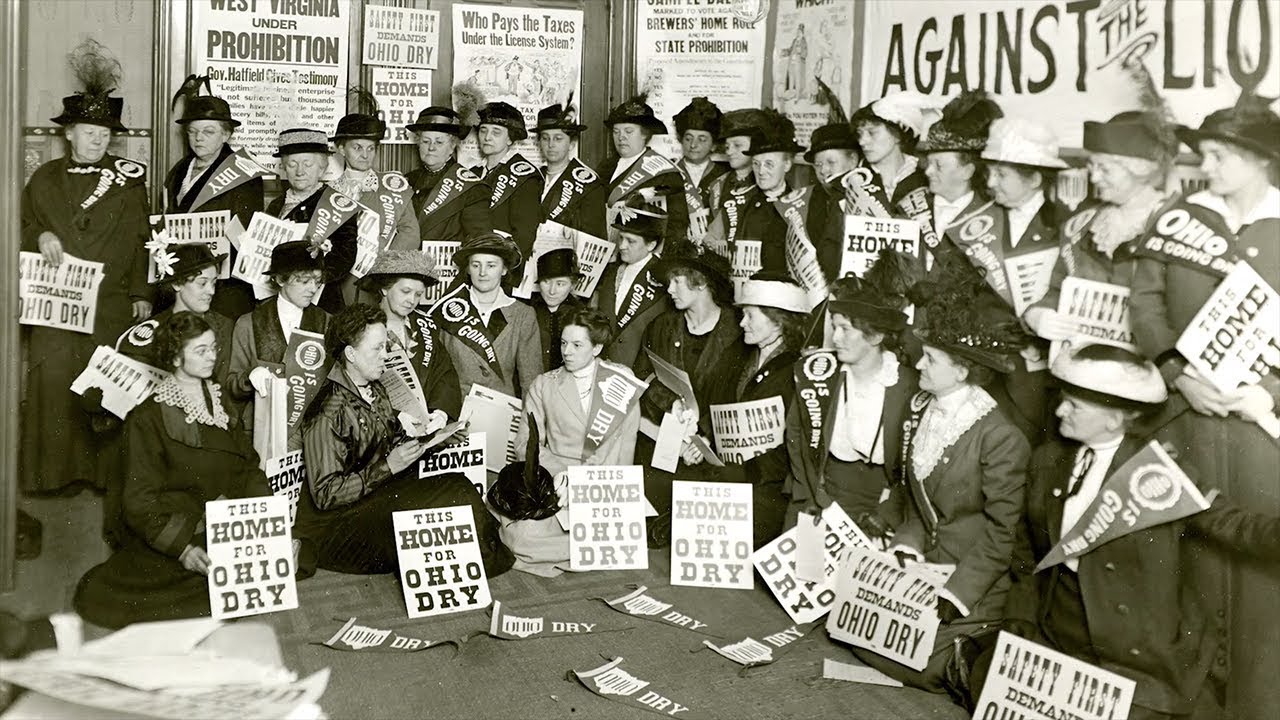
But while the failure of Puritanism to “solve the problems and enforce the vital requirements” of today sufficiently testifies to its decadence, it has not been without at least one heroic effort to deal with a modern social problem, an effort, however, which has only illustrated its inherent incapacity for such a task. The advent of machine industry with its persistent and exhausting drain upon the vitality of the workers stimulated to an unusual degree the consumption of spirituous liquors. At the same time the exigencies of capitalistic exploitation required a high and ever-increasing degree of personal efficiency among the members of the proletariat. Working-class inebriety became a serious menace to capitalistic profits. To combat the drink evil amongst the poor was a prime necessity for the exploiting rich. To this so congenial service Puritanism responded with gusto. The original injunction of temperance, which meant merely moderation in the use of all creature comforts, proving to be not sufficiently drastic for the new reform, was altered, so far as intoxicants were concerned, to the novel virtue of total abstinence. True to its individualistic temper, Puritanism began its labors by the attempt to reform the individual drunkard. The unfortunate victims of the drink habit were importuned to take the total abstinence pledge, and on doing so were decorated with a blue ribbon. Great movements to this end were inaugurated, eloquent advocates preached the new sumptuary precept, widespread enthusiasm greeted the new “temperance” crusade. In process of time, however, the absence of permanent results constrained the Puritan cohorts to the conviction that the method of reforming the individual drunkard was inadequate. Old drunkards lapsed again with regrettable promptness into bad habits, while the constant manufacture of new inebriates nullified such success as was achieved. Having definitely grappled with a social problem, the impotence of individualistic ethics became disconcertingly apparent. Dimly recognizing the social character of the evil, Puritanism now transferred its attack from the individual inebriate to the liquor traffic, from the drunkard to the saloon. The “temperance crusade” gave way to the “prohibition movement.” But still remaining ignorant of what constitute the terms of a social problem, still preserving with undiminished fatuity its individualistic outlook, Puritanism merely transmuted the personal prohibition against drinking by the drunkard, to the personal prohibition against selling liquor by the saloon keeper. And the old lust for the legal sanction, the enforcement of morality by physical force, reasserting itself, Puritanism clamored for the destruction of the liquor traffic by law. But in this demand Puritanism” came into conflict with its own economic base, the business interests of the bourgeoisie. And notwithstanding a disposition on the part of other lines of capitalistic enterprise to make the liquor business serve as a scapegoat for the manifold iniquities of the system, the vast investments involved in the production of intoxicants have successfully resisted the Puritan onslaught and brought it to an impasse. The habit of wild carousals is, indeed, disappearing; but habitual drinking and the per capita consumption of liquor steadily increase, and must continue to do so until the unbearable strain which modern industry and business put upon human endurance is relieved. To study a social question as such, to inquire into the environment which leads men to drink to excess, to lessen the long hours of exhausting toil which weaken vitality, to supplement the insufficiency of food and clothing which makes artificial stimulation a practical necessity, to bring color and ease and gaiety into lives corroded with care and drab with the monotony of impoverished misery—none of these things have yet occurred to the anxious minds of the Puritan zealots who assail the drink evil.
But though we may stigmatize Puritanism as a decadent system, unadapted to modern conditions and incapable of meeting the issues of the present, there remain certain superficial symptoms of persisting vitality which should receive examination. One of the most notable of these is the extent to which Puritanism has succeeded in impressing itself upon legislation, at least in the United States. Unlike the feudal nobility, the capitalist class is in the main far too deeply immersed in private affairs to take personal part in the actual administration of government. Yet for its own protection and preservation it must control the machinery of government, to the practical exclusion of the working class. Add to this the fact that bourgeois governments are more or less popular in form, and the problem of governmental control is not so easy of solution. It is met, in the first instance, by restriction of the suffrage by educational, residential and property qualifications ; by the systematic deluding of the electorate through the manipulation of the sources of popular information, the creating of meaningless party labels and enthusiasms, and the solemn warnings and adjurations of the intellectual retainers of capitalism; by fomenting national and racial animosities; and, latterly, by direct economic coercion of the voter. In the second place, resort is had to bribery of legislators and governmental officials. Bribery thus becomes an integral feature of our system of government. But bribery cannot be avowed, on the contrary must always remain clandestine, because of the fear of popular indignation. The most elementary prudence requires that it be ostensibly condemned and an appropriate punishment fixed for it. Now, nothing furnishes a more available cloak for legislative corruption than the simultaneous passage of Puritanical laws. No scandalous “deal” with the “business interests” but can best be masked by an anti-saloon or Sabbath observance law. No venal legislator but is thirsting for a vindication through his vote in support of an anti-cigarette measure or a bill making “crap-shooting” a felony. In this way the statute books become loaded with Puritanical legislation which there is no attempt or expectation of enforcing, but which enables the Senator Sorghums of our state capitals to proudly defy criticism of their records. “Surely, that bribery story must be false. Did not the good man vote to close all the moving-picture shows on Sunday?” Indeed, no “Praise-God Barebones” of the Cromwellian revolution can have surpassed in fulsome devotion to Puritan ideals the American legislator in whose capacious pocket slumbers the pecuniary reward of the betrayal of the people’s trust.
The show of life lent to Puritan morality as a covering for or a reaction from the corruption of legislation is, of course, spurious and misleading. But within the last decade or two there has taken place in American life a real recrudescence of true Puritan sentiment due to the momentary eruption into politics of the petty bourgeoisie or middle class, under the guise of various “insurgent,” “good government” and “reform” movements. This political activity of the middle class has been compelled by the ever increasing pressure upon it of adverse economic conditions. Fundamentally, its tribulation arises from the fact that it still employs an archaic industrial technique, adheres to obsolete business methods, is, in a word, the pensioner of a dying industry. The nice economies and high efficiency of the vast, intensely modern, perfectly equipped industries and enterprises of the larger capitalism are impossible to it, and competition with these giant instrumentalities of production is for the middle class merely a lingering process of extinction. Add to this the increasing resistance to unlimited exploitation manifested by the working class, and the middle-class producer not inappropriately prefigures himself as macerated between the upper millstone of the trusts and the nether millstone of the labor unions. Moreover, as private monopolies attain to an effective control of the market, they put in practice a monopolistic over-charge which operates as a true exploitation of the petty bourgeois, and which directly depletes his already too meager capital whenever his needs compel the purchase of the monopolized product; as, for instance, when in the capacity of a shipper he must buy transportation of the great railroad consolidations. A steady syphoning of his resources from his pockets to the coffers of the larger capitalism, the consequent persistent loss of economic position, the impairment of his standard of living, the dark portent of bankruptcy, the dread of sinking into the unwholesome waters of proletarian misery—all these conspire to inflame the little capitalist with a desperate resolve to dare and do, even though he have no very definite idea of what is to be done. In this frame of mind, with a true bourgeois confidence in the omnipotence of law, he betakes himself into the political arena. Feeling that the political issue is, for the moment, of even greater urgency than the personal conduct of his business, he enters politics in person rather than through a political agent. Here he finds opposed to him the political agents of the larger capitalism, who as old party politicians and office holders, as members of a political ring or machine, or as lobbiests and legislative corruptionists, serve the interests of the great overlords of capitalistic enterprise. Bribery, at times coarse and open, more often subtle and indirect, he discovers to be the approved method by which his large competitors, now become his exploiters, retain their mastery of government. At this point, he becomes a purifer of politics, a smasher of political machines, an advocate of “good” government, a relentless prosecutor of bribe givers as well as of bribe takers. Later, having gained some temporary success, he seeks by various reactionary laws to smash the trusts, to restore competition, to modernize, in short, by legal enactment his archaic and obsolete industrial processes. Also, he propounds various ultra-democratic measures, such as direct legislation, the recall, and so on, with the object of restoring government to the “people,” meaning thereby his own section of the capitalist class. Steeped in the ideology of capitalism, believing in it and its economics, morals, laws, with a faith far more implicit than that which he accords his religious creed, himself an archeological remnant of the infancy of the capitalist world, and yet appallingly and even willfully ignorant of the true structure, development and destiny of the capitalistic system, the petty bourgeois can no more conceive of a social reconstruction in which private capital (and with it all temptation to bribery) should disappear, in which his own problems should vanish, in which humanity, emancipated and exalted, should stand supreme master of its material habitat, than can the fish in the depths of the salt sea conceive of the world of forest boughs musical with the cries of a thousand birds.
The small capitalist, or middle, class is, as we have seen, peculiarly the repository, at this time, of Puritan morality, as well as the exponent of the Puritan temperament. With the advent of this element in politics comes, perforce, a stream of Puritan legislation and regulation, through which the “reformer,” with perfect sincerity and a childlike ingenuousness, seeks to improve society. Believing that the course of human progress can be turned back by law, it is not unnatural that he should believe that people can be made virtuous by law. And, not daring to assail the vices of his “betters,” it is also natural, as well as vividly illustrative of the Puritan habit of mind, that the ban should fall most relentlessly upon the lean and meager pleasures of the poor. The revival of Puritanism incidental to the intrusion of the petty bourgeoisie into politics can last no longer than the phenomenon itself is attended with some measure of practical success. And that its success must necessarily be ephemeral is decreed by the very conditions which called the movement into being. The ceaseless absorption of the property of the middle class and smaller capitalists by the larger capitalism, persistently impairs the political power and prestige of the victims and renders them politically impotent. Property is power, and loss of property spells the inevitable ruin of political hopes. It would be an unheard of anomaly, did an economically dying faction progress to political supremacy. With the recession of middle-class insurgency will end the brief episode of Puritan reanimation. Two vast and somber hosts, the larger capitalism and the working class, will then confront each other, the first of which has lost its Puritan heritage, the second of which has never assimilated Puritan standards or ideals. A further temporary reinforcement of Puritanism comes with the entry of women into politics and public affairs. In the early days of the bourgeoisie, woman was still, as under feudalism, the home and housekeeper, was still engaged in the labor of those household arts which, by since gravitating to the factory in obedience to the improvement of industrial technique, have compelled women to follow them into wage industry. As a member of the family of which the male was the head, woman received her support through him, and, notwithstanding the great desert of her labor, was thus placed in a position of dependency upon the male, with whose fortunes her own livelihood was bound up. In this position her entire economic interest was embodied in the observance of Puritan standards by the male, as she was thus assured of kindness, fidelity and, above all, adequate economic support. Under the tutelage of this situation, the feminine mind became an immense and inexhaustible reservoir of Puritan preconceptions. That men should be industrious, prudent, frugal, thrifty, and so on, and that they should shun those vices and dissipations which impaired their economic efficiency, became the Alpha and Omega of feminine morality. Women thus became the moral monitors of the male sex, from which fact has arisen the popular illusion of their superior virtue. As women have followed their jobs from the kitchen into the factory and have thus gained economic independence of the male (though substituting therefor the general class dependence of the workers upon the proprietors) they have borne with them all of their Puritan prepossessions, and, as their new found part in industry leads them inevitably to press into politics and demand the full panoply of citizenship, they still carry along this Puritan morality, which now becomes their guide in their fulfillment of the novel civic functions and obligations they insist upon undertaking. It is only as the new industrial circumstances in which woman finds herself gradually school her to a recognition of the paramount importance to her of her interests as a wage worker, over her lost and abandoned interests as a feminine dependent of the male, that her Puritanism may be expected to become subordinate to the larger, more fundamental and more, urgent social and economic issues upon the successful solution of which her own fate has at length come to depend.
As the test of the decadence of a moral system is whether it longer solves the problems and enforces the vital requirements of the time, so an evidence of continuing vitality is found in the ability to recognize and compel obedience to new duties which develop in the course of social growth. Besides the invention of the virtue of total abstinence from intoxicants, there is one other instance in which the trading class has devised a new virtue, or, rather, has attempted to revive a very old one, in the endeavor to buttress its position and prolong the exploitation of the working class. This revamped virtue is that of patriotism, the labor of inculcating which Puritanism has cheerfully undertaken. Patriotism is not a distinctively Puritan virtue. On the contrary, the early record of the trading class was one of persistent and eventually triumphant rebellion against constituted authority both in church and state. But the seizure of political power by the bourgeoisie has, in modern times, transformed that class into the due object of patriotic devotion, while the overmastering need of foreign markets and the increasing solidarity and growing discontent of the working class have made a revival of militarism, which always attends on patriotic fervor, of the utmost importance to capitalistic profits. The irresistible advance of the capitalist system of industry has transformed the civilized world into a vast factory, in which national distinctions have been all but obliterated. The seemingly interminable combats for territorial acquisition which disturbed the middle ages have at length ended in what is a relatively fixed delimitation of national boundaries. The easy and rapid methods of communication of our day have facilitated acquaintance, understanding and sympathy between the most diverse peoples. Group antagonisms grow daily less and less. On the other hand, with the spread of capitalist industry, the antagonism between capitalist and proletarian, between proprietor and worker, between employer and employe, which is inherent in the system, becomes of ever-increasing moment, sweeps over national boundaries, brushes aside racial distinctions, and assumes a world character. Capitalists and proletarians alike have effected international organizations. As national and racial animosities pale before the rapidly intensifying issues of the international class struggle, the desirability of keeping them artificially alive in the interest of the proprietors has become clear to the astute minds of the intellectual retainers of the capitalist class. By reviving the dead or dying sentiments of national and racial hostility, by preaching a flatulent, jingo patriotism, the workers of the world may still be divided and disorganized, may be set to the barren labor of destroying each other in armed strife, may be fired by a spirit of loyalty to flag and country which are, for all practical purposes, the oligarchs of capital themselves. That this attempted resurrection of militarism and the aimless slaughter of innocent millions which it implies are utterly antithetical both to the letter and spirit of the gospel of Jesus, has not prevented the Puritan sectaries from touting it enthusiastically. Even the corrupting, of the minds of children is complacently undertaken. Laws are enacted requiring the national colors to be displayed over school houses; churches organize their little ones into military cadets; the fires of racial jealousies are energetically fanned; conservative newspapers contain dark hints of coming wars; nations vie with each other in the scandalous waste of useless armaments; military establishments are diligently fostered. In this last item the capitalist class reaps, also, an incidental but very real and practical advantage. Large and efficient military establishments are of use in stamping out the flames of proletarian rebellion at home. Soldiers are valuable in case of strikes.
On the whole, therefore, while there are unmistakable proofs of ineptitude and decay in the texture of the Puritan system, we cannot say of it that it is wholly moribund. It still seems fairly clear that the last degeneracy, the putrescence which follows dissolution, has not yet been reached by Puritan morality. This closing stage in the annals of any ethical code is arrived at when the general corruption which attends a period of social decadence rises till it engulfs the very custodians of morality themselves, who, becoming wholly and confessedly venal, proceed to barter righteousness to the desiring purchaser as any marketable commodity might be sold. The basic function of morality, that of restraining the individual in the interest of social or class welfare, is thus abandoned for the sordid lure of a price. The individual may buy his moral justification as he buys his clothes. Such a point was reached in the history of feudal morality when the sale of indulgences roused the flaming denunciations of Luther and ushered in the protestant reformation in Germany. Such a point had previously been reached in classic history when the predictions of the Roman augurs became a matter of purchase and of jest. Much of Puritan morality has been discarded by the haut noblesse of capitalism. The individualistic point of view of Puritanism has been antiquated by the increasingly co-operative character of industry and the social problems it presents. There is a widespread indifference to all matters of religious and moral significance which makes it doubtful if the approbation of the custodians of the accepted morality would even be deemed worth purchasing. But there is no very cogent evidence that it has yet become the subject of individual sale. And still, in view of the sober assertion that seven men in the United States control the industrial and commercial activities of ninety millions of people, the inquiry how long Puritanism can resist the insidious yet overwhelming potency of concentrated wealth may well give concern to those who are interested in preserving its integrity.
The Charles H Kerr publishing house was responsible for some of the earliest translations and editions of Marx, Engels, and other leaders of the socialist movement in the United States. Publisher of the Socialist Party aligned International Socialist Review, the Charles H Kerr Co. was an exponent of the Party’s left wing and the most important left publisher of the pre-Communist US workers movement.
PDF of original book: https://archive.org/download/puritanism00meiluoft/puritanism00meiluoft.pdf
 Revolution's Newsstand