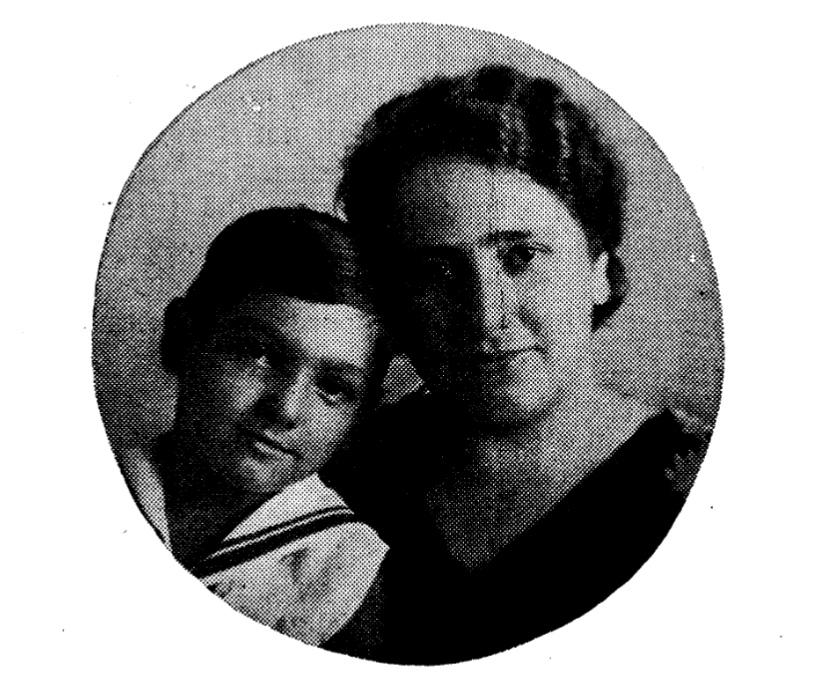
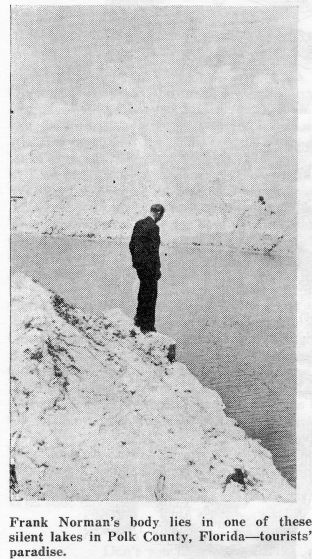
Art Shields travels to Florida to meet Ethel Norman, widow and comrade of Frank Norman who was ‘disappeared’ by the Klan for his anti-racist organizing. Norman was a working class white man from Chicago, but long a resident of Florida known locally for building a common organization of Black and white agricultural laborers. He was also a member of the Communist Party, organizer with the I.L.D. and Citrus Workers Union. Norman was taken by the Klan from his Lakeland home on April 11, 1934 and murdered. His body has never been recovered.
‘The Ghost of Frank Norman Haunts the Klan’ by Art Shields from Labor Defender. Vol. 12 No. 7. July, 1936.
A talk with his widow–the story of his death–the finger of guilt is pointed.
The case of Frank Norman, murdered citrus leader and International Labor Defense organizer, is worrying Florida government circles more than it did last year.
The case won’t die as the officials hoped it would when Norman was taken for a ride and murdered one night in Lakeland more than two years ago.
Florida’s state A.F. of L. convention recently denounced the kidnap murder in a stinging resolution, and more and more people are asking the authorities why the murderers are not run to earth.
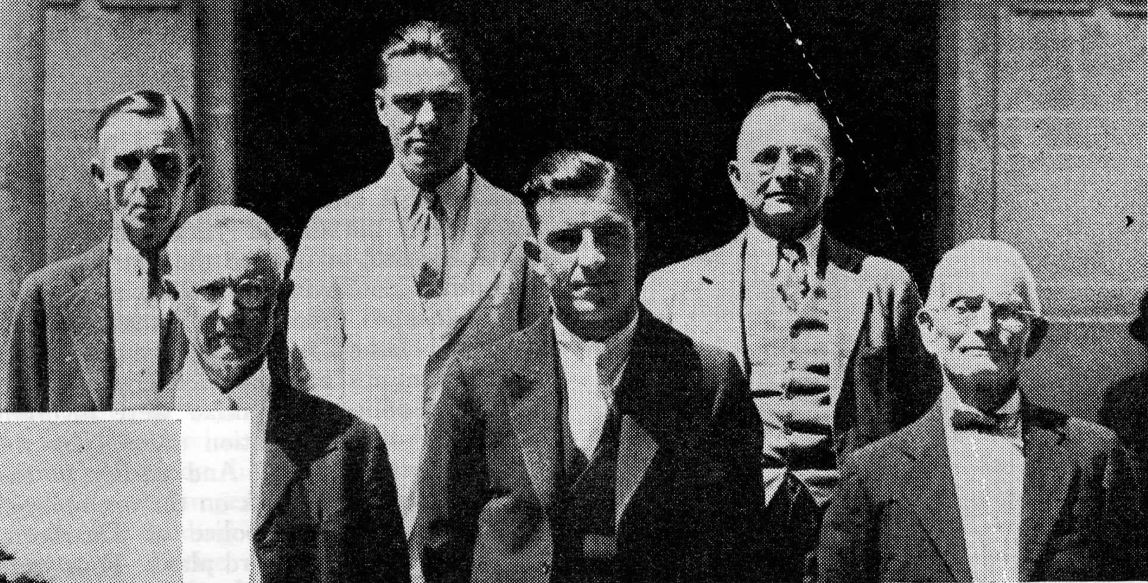
“A lot of folks are talking about the Norman case,” fretted Judge Dewell at Bartow, where five police Klansmen were convicted by a courageous jury on the charge of kidnaping Eugene Poulnot, chairman of the Workers Alliance of Florida. Poulnot was kidnaped out of the Tampa police station with Dr. Sam Rogers and Joseph Shoemaker, two other leaders of the “Modern Democrats”, a local reformist organization, and taken to the woods and flogged. Shoemaker died from the beating.
The Norman case brings added wrinkles to the citrus town judge…He’s from Haines City, citrus center…He parries questions about the murder of the orange grove organizer.
“You’d better see Sheriff Chase about it,” he advises.
Sheriff Chase shifts uneasily. Suggests it’s late to do anything now. You see it’s hard to find what actually happened. You can’t do—
This ex-cashier of the Lakeland bank that carried down workers’ savings when it broke; this Polk County sheriff, who filled the Bartow jail with citrus strikers two years ago–he never did do anything in the Norman case but cover up the crime. We go to see Mrs. Norman herself.
A half hour’s ride brings us to Lakeland, “fastest growing city in Florida”, famed for its tourist-thronged lakes and its giant citrus industry. “Hello Frankie”, calls my friend. A barefoot boy of seven playing in the street returns the greeting joyously, and we climb a flight of outside stairs to the rear of the room of the widow and her orphaned son.
Mrs. Norman comes straight to the point.
“It’s not too late to seize the murderers,” she tells us. “I will never rest until they are run down and punished.”
“My husband was a good man, devoted to the workers’ cause. I remember so well the night he spoke to the citrus strikers at Highland City. It was just four nights before the murderers took him away. He spoke to the strikers as they stood in front of their camp fires and told them to keep up the fight.”
That was Saturday night, April 7, 1934.
“Next Wednesday night the three murderers came. One was a big man. He pretended to be Sheriff Chase. Said he wanted Frank to come in the car to identify a Negro who had been lynched. Frank always fought for the Negro workers. He went in the car and Ben Surrency, our roomer, went with him. Then Ben came back. It was hard for him to talk. He told how the killers made him get out of the car. Told him to keep going and not look back. Ben heard a shot. The car dashed away, and Frank was gone.”
The Lakeland News, a vicious foe of the citrus workers, admitted in its issue of April 12, the day after the crime, that Surrency reported:
“As the car left I heard them beating Norman, and a shot was fired and they darted away.”
Mrs. Norman loved Frank not only as a wife, but as a fighter. She worked side by side with her husband in the citrus union. A cannery worker herself, she was the first secretary of the Lakeland local union.
“I know what it means to work from six to six, sometimes all evening too, till eleven o’clock at night and get a dollar a day,” she said. “In the old days a good worker made up to ten dollars a week. I was fast. I made that. But now the average is only six dollars.” She held out her hands.
“Look at those finger nails,” she said. “See how the nails are wrinkled from citrus poisoning. Every one gets it who works in citrus acid. My nails used to come off. My fingers throbbed at night. Hurt so I couldn’t sleep.”
She told of being wet from head to heel, all day. Of the terrible speed-up. The belt will not wait. Steaming, peeling, cooling, sectionizing, the fruit, examining it, topping the cans–nimble fingered girls and men rush as the belt moves past while the clock goes all the way around day after day during the short winter-spring season.
“I guess that’s a side of Florida the tourists never see,” said Mrs. Norman.
“This season I had no work,” she continued. “Thousands of other citrus workers had none either. But the citrus packers do pretty well, for prices are higher this year.”
“You are a citrus worker in a citrus state,” I remarked. “Are you eating any citrus fruit this year?”
“Of course not,” replied Mrs. Norman. “But I can’t buy oranges and grapefruit often even when I work. I figured it out once. I couldn’t buy back one can of grapefruit out of the wages I got for a whole trayful. For a tray of 18 cans I got 4 cents–it used to be 8 cents.”
Grape fruit would help Frankie. (If you don’t believe it read the ads.) Frankie fainted in school the other day.
“I told the relief official when she cut me off relief,” said Mrs. Norman, “I told her ‘My boy fainted in school.’ She told me: “There’s nothing you can do.’ ‘I said: ‘We’ll see about that’.”
“What does Frankie eat?” I asked Mrs. Norman.
“Sometimes we have to live on a dollar a week,” she replied. “That means we live mainly on grits-hominy grits. We can’t afford much bread. I get two loaves a week for Frankie’s lunches, with a little jelly to go with it. I get some eggs too. No fruit and vegetables. I know he needs them. I know what vitamins are (Mrs. Norman used to be a school teacher), but I can’t buy them. I can’t even afford beans.”
“Can’t you walk out to a grove and get a little fruit?” I asked, “would they care?”
She smiled grimly: “One big grove owner said he’d shoot any one who did that,” she answered. “Others would have you arrested and fined heavily.”
“My relief has been cut off,” she said. “I used to get a dollar a week in groceries. That’s gone. The women’s WPA project was stopped. That used to pay eleven dollars every two weeks. That’s gone. My widow’s pension, they gave me for awhile after Frank was murdered, has been taken away. The only regular little income I get is what comes from the Prisoners Relief Department of the I.L.D.
“Other women are hungry too. One lady told me last week she hadn’t eaten for more than a day. Another hadn’t eaten since supper the night before I saw her. They are getting ready to fight for relief. One lady said to me: I’m going to take my kids on a march through the streets.
Mrs. Norman still has a home.
“But I don’t know how long I’ll have it,” she said. “These rooms cost seven dollars a month and I’m behind with the rent.”
Needing food and facing eviction, Mrs. Norman does not despair. She was Frank Norman’s comrade and she knows what is happening to the world. She may pass out from hunger but she knows that the workers’ movement is gathering force in the world for the march to victory. But she’s a southern woman and she wants to see the southern workers marching in the van…the citrus workers with the rest.
That’s why she fights to organize the orange and grape fruit workers and works among the unemployed.
And as part of the fight she wants to see the slayers of her husband punished. She wants the trio of murderers, whom she believes the authorities can find, brought to justice, and with them the big shots who sent them out that April night, to get the citrus workers’ leader.
In this fight Mrs. Norman does not fight alone. She fights with the International Labor Defense, which her husband represented, and she will have the aid of such organizations as the Committee for Defense of Civil Rights in Tampa, with which the I.L.D. is affiliated. It was this broad united front committee, which includes Socialists, trade unionists, and liberal professionals, that helped to bring the Tampa floggers to trial and which can force Lakeland authorities to act against Norman’s lynchers.
Labor Defender was published monthly from 1926 until 1937 by the International Labor Defense (ILD), a Workers Party of America, and later Communist Party-led, non-partisan defense organization founded by James Cannon and William Haywood while in Moscow, 1925 to support prisoners of the class war, victims of racism and imperialism, and the struggle against fascism. It included, poetry, letters from prisoners, and was heavily illustrated with photos, images, and cartoons. Labor Defender was the central organ of the Scottsboro and Sacco and Vanzetti defense campaigns. Editors included T. J. O’ Flaherty, Max Shactman, Karl Reeve, J. Louis Engdahl, William L. Patterson, Sasha Small, and Sender Garlin.
PDF of full issue: https://www.marxists.org/history/usa/pubs/labordefender/1936/v12-%5B10%5Dn07-jul-1936-orig-LD.pdf
 Revolution's Newsstand