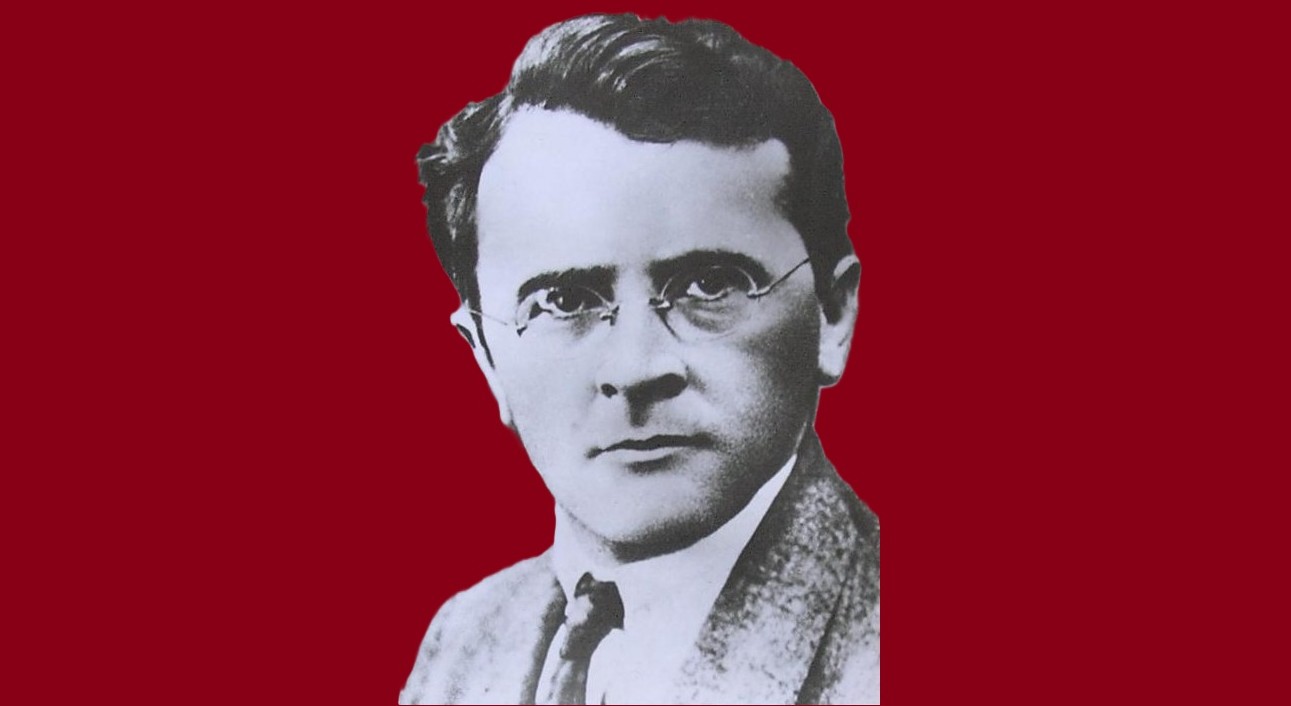
Kreibich gives us a rich picture of political life in the new state as ‘the Czecho-Slovakian national revolution’ came to fruition in an atmosphere satiated corruption, incompetence, and repression.
‘Corruption, Communist Persecution and Struggle for Power in Czecho-Slovakia’ by Karl Kreibich from International Press Correspondence. Vol. 4 No. 23. April 3, 1924.
The last wish of the Czech patriots is now fulfilled and they can be quite happy. Their sole grief, after the fulfillment of all their wishes by the founding and “consolidating” of the state, might be expressed in the sob “The world does not know us yet.” Letters still came from England, France and other countries with the address “Prague, Austria”, and Czechs on their travels were still plagued by Parisian ladies with the question, whether life on the “Pusta” was really so romantic. That has now ceased and every patriot can now repeat the words, which formed the title of a variety Revue which made a great hit in Prague, “The World speaks of us”: In spite of the centenary of Smetana, the world speaks now much more of Czech spirits than of Czech music.
But the spirit affair is already a symbol. There is a whole mass of corruption affairs, and their enumeration would look like the statistics of some big business, grouped according to various articles. The spirit affair has only become a symbol of the whole cesspool of corruption, because it was the first big affair to be discovered, and because it is of an expressly political character. The associations of agricultural and industrial spirit producers of Czecho-Slovakia have received a monopoly from the government, and use this to rake in huge profits. To make sure of this source of gold, the association has founded its own corruption fund, to buy over the leading politicians of the Government coalition, with huge bribes of millions for the retention of their monopoly. It was ascertained that Prasek, an agrarian, President of the Senate of the national assembly, administered such a fund to the amount of 30 million Czech crowns, by means of which he corrupted the socialist coalition parties. So far three millions have been traced, which the Czech national socialists have received, and on account of which the Postal Minister, Tucny, a national socialist, had to resign. But also Prasek, for the rest an old scamp, who drew a special salary from the privy purse of the Austrian Emperor, had to resign from his presidential seat, it is true not until Masaryk had snubbed him at the New Year’s reception. One could not do more to him, for he threatened he would then tell everything. The agrarians revenged themselves upon Masaryk for his treatment of their Prasek: they chose their partisan Donat, whom our central organ exposed as the founder of the spirit corruption fund, as President of the first chamber and forced Masaryk on his birthday to receive this honourable man as the bearer of congratulations. So now the government coalition have taught their beloved Masaryk, that one cannot be a humanist, one cannot be a pacifist, one cannot even allow oneself the luxury of an exaggerated moral sense of purity, if one wishes to remain President of a bourgeois Republic.
When one passes in review the whole series of corruption affairs, and judges matters by the standard of capitalistic conditions and civic morality, one has to confess, that the whole rascally business in no way exceeds what is usual in the decaying period of Capitalism. It would be quite a mistake to suppose that corruption in Czecho-Slovakia is worse than in the rest of the capitalistic world. Only it bears the stamp of haste, precipitancy and clumsiness and therefore collapses more easily. It must be borne in mind, that the Czech bourgeoisie only emerged very late in the decaying period of capitalism, that is with a long unappeased voracious appetite to the state feeding trough, and therefore the over-eagerness to steal exceeds the dexterity needed therefore. But if the sensation, which the Czech corruption affairs make in other countries, is greater than the (for capitalist conditions) normal extent of the corruption would warrant, it is only because the excitement over the corruption at home, among the Czech people is greater than elsewhere. The Czechs are, in their overwhelming majority, a nation of workers, small farmers and petty bourgeois, who since the beginning of the bourgeois era, that is since 1848, have fought against the State and against Capitalism, because both bore a character inimical to the nation. In all these decades, the national, political and social awakening of these classes was accomplished in a struggle against the State and capitalism. From this time there has remained with the great mass of the Czech proletariat, small farmers and citizens, a very strong antipathy towards Capitalism generally and its control of the State.
And the greater the enthusiasm of these classes was for the establishment of their own state, so much the more fearful is their disappointment, when they have to see, how the old story is now repeated in this state, and that Capitalism not only controls it, but also robs and corrupts it. The weekly paper “Cas” (now the daily “Cesko-slovenska Samostatnost”) which represents the opinions of the national petty bourgeois strata but who are not favourable to the present government coalition, as well as the intellectuals and legionaries who are related to them, wrote already in December with bitterness: “Formerly Austria corrupted us, now we see to it ourselves”. In these classes there still lives much healthy opposition to Capitalism, and when recently, even the central organ of the Czech national socialists brought out articles against the threatened growth of Czechish big capital, it gives expression not only to the touching naivety of the economic “babies” who wonder at the growth of capital in a capitalist society, but also to the anti-capitalist spirit of the petty bourgeois and petty bourgeois minded strata. In these classes also, the horror of the corruption, the stormy indignation against a system in which such things are possible, has become so loud, that a public scandal has grown out of it, which makes the campaign of the Communists, above all of our Central organ, the “Rude Pravo”, against the corruption of the ruling parties seem so dangerous.
In this situation, the government coalition has done the stupidest thing it possibly could: instead of introducing at least a Parliamentary inquiry into the political corruption, after the English and French pattern, it has decided to undertake a counter-attack against the Communists as exposers of the corruption, and to proceed by means of an exceptional law against the press. For nothing else can be the meaning of the announced alteration in the law regarding slander in the press, for which until now trial by jury was competent. The whole campaign, as one foresees already, after a very eventful week, is doomed to fail. The severe reprimand by the Prime Minister Svehla against the Communists making the exposures was without effect, because the only possible ground for it was lacking: the announcement of an inquiry into the corruption scandal exposed by the Communists. The word given by Svehla: “Nothing further may be said on these matters!”, has still further shaken the moral credit of the government coalition, and the journalists’ organisations have already taken up their position against the threatening fresh worsening of the press law. Also the Moravian wing of the national democrats is attacking the government because of this campaign. The attempt undertaken by the central organ of the social democrats with a publication marked by much meanness and mendacity, to accuse the communists of corruption, has failed miserably. It appears, however, that the agrarian Minister for National Defense has stirred up a stench far surpassing all others hitherto, in that he has ruthlessly exposed the Benzine affair as et only one of the corruption affairs, and has had those guilty prosecuted. Here it is a question of enormous corruption of officials of the ministry, to get the supplying of benzine for the army into the hands of one firm. The legal prosecutions already cover such a wide circle that it is becoming uncomfortable for those who have to deal with the matter; but it is just because of the colossal extent of the affair, that it is impossible to check it. One must let it run its course and the result will be shattering for the whole present day system of government.
We can be very well satisfied with the little bit, that the central organ of the national socialists, the “Ceske Slovo” has done. It came quite suddenly with a general attack on Comrade Smeral, accusing him of having followed during the world war, not only an opportunist, pro-Austrian policy, a matter which has long since been closed but also of having been a spy of the Austrian parties. This sensation which was also nothing new, an old long exploded lie dug up again, lasted only a few days. Comrade Smeral, who till now has confined himself to the open confession of his war-policy and the taking upon himself the full responsibility for his share in the policy of the Czech Social Democrats and the Czech bourgeois parties, and had refused, in spite of all the incidental mean attacks, to disclose the events of those years, has now decided, to come out with his memoirs and documents. The lie of his having been “in the confidence of the Austrian government” has been so dispelled by two articles from him, that all his opponents have clearly withdrawn it, But the masks have been torn from a few patriots, who would very much like to pose as heroes in the fight against Austria– Social democrats, Agrarians, and National Democrats, so that they have been seized with general panic. Thus the attack upon Smeral has had the result that, in addition to the exposure of the present moral depravity of the present day system of government, there comes the unmasking of the pasts of its representatives.
But it would be a mistake, only to see this moral depravity of the government coalition, and the struggle of the Communists against it. Of course, our Party alone carries on this struggle earnestly and inexorably and with the definite object of opening the eyes of the working people to the moral character of the bourgeois-social-patriotic coalition. But the first the first exposures, which caused a general stir, came from the ranks of the coalition itself, and the exposures following from them would have been impossible without the active help of now one, now another of the governing parties or governing cliques. The political interest of the whole corruption campaign lies in this, that hidden behind it is a fierce, implacable struggle for power within the government coalition. Financial capital and Industrial Capital, Agrarian Capital and Banking Concerns are fighting one another, and each of these powers has its exponents in the coalition. The petty bourgeoisie and the sections of the proletariat which wish to avoid a decisive struggle with Capital, have turned to the Benes-Masaryk ideology, and desire something like a reformed, approved Capitalism without the “excrescences of big capital”, with harmless “reasonable” Socialism, and of course with democracy and freedom. It becomes continually more difficult to hold this motley society together. The struggle for power in these groups is carried on behind the scenes, as at struggle over the question of Masaryk’s successor, a question which according to the laws of nature and of human life will become acute at no very remote time. Who shall become President after Masaryk? That is the form of the question of future relationships of power. The representatives of the possessing classes, the National Democrats and Agrarians, are, of course, already tired of the whole business Humanity, Pacifism, Socialism and the rest of the Masaryk Ideology and Tradition; they do not want it any longer even as an outer decoration, and consider themselves already strong enough to hold the masses in leash without all this already pretty rotten hocus pocus. The only thing is they are not yet agreed on Kramar or Svehla, a ruthless dictatorship of Financial Capital, or an industrial-capitalist-agrarian regime. Both of the two groups hope by means of concessions to win the clericals. The leaders of the petty bourgeoisie and the sections of the proletariat filled with petty bourgeois ideas do not wish to part with the old illusions. Benes hopes, perhaps, on the grounds of a Masaryk testament, and supported by the tradition of national revolution, by the Intellectuals and by the Legionaries, who form the backbone of those petty bourgeois classes, to be able to step into the shoes of his master. The Social Democrats would have to work with them, since they are not in a position to set up any policy of their own.
These fights behind the scenes render it clear, that the National Democrats first broached the spirit affairs, in order to hit the agrarians and the Social patriots of both camps; it is equally clear that the Social Democrats eagerly helped in the exposures, so long as it looked as if only the National Socialists had “taken”. In confidential circles, it is said that the Benzine swindle in the War Office has been known a long time, the “Tribuna” months ago, gave hints of it, but that the Minister for Defence, who is an Agrarian, first lanced, this boil, when the government Socialists and Benes came down too heavily on corrupt agrarians. The firm which insured itself the military supplies by means of wholesale corruption, the “Naphta Company”, is a concern of the “Legiobanka” (Bank of the Czecho-Slovakian Legions) and several functionaries of this Legionary concern were already arrested. So those circles are affected which stand close to M. Benes and which are looked upon as the representatives of the pure ideas of the Czecho-Slovakian national revolution. The National Democrats, as a matter of course, pounce upon this fat morsel, for the “Legiobanka” is a thorn in the flesh of the “Zivnostenska Banka”. But also the surprising and mean attack of the “Ceske Slovo”, the organ of the National Socialists, that is of Minister Benes’ party, upon Comrade Smeral may be connected with these inner struggles of the coalition. M. Benes is said to have the ardent desire, that Smeral should expose the followers of an Austrian policy in the camp of the bourgeois parties. But whether the things which Comrade Smeral has related and still has to relate will help M. Benes, is rather doubtful.
In any case, however, just as the exposures over corruption, it will help to dissolve the whole government coalition, and expose the whole system before the eyes of the masses. All of which is of course only a part of our struggle against this system and of our preparation for its overthrow.
International Press Correspondence, widely known as”Inprecorr” was published by the Executive Committee of the Communist International (ECCI) regularly in German and English, occasionally in many other languages, beginning in 1921 and lasting in English until 1938. Inprecorr’s role was to supply translated articles to the English-speaking press of the International from the Comintern’s different sections, as well as news and statements from the ECCI. Many ‘Daily Worker’ and ‘Communist’ articles originated in Inprecorr, and it also published articles by American comrades for use in other countries. It was published at least weekly, and often thrice weekly.
PDF of full issue: https://www.marxists.org/history/international/comintern/inprecor/1924/v04n23-apr-03-1924-inprecor.pdf
 Revolution's Newsstand