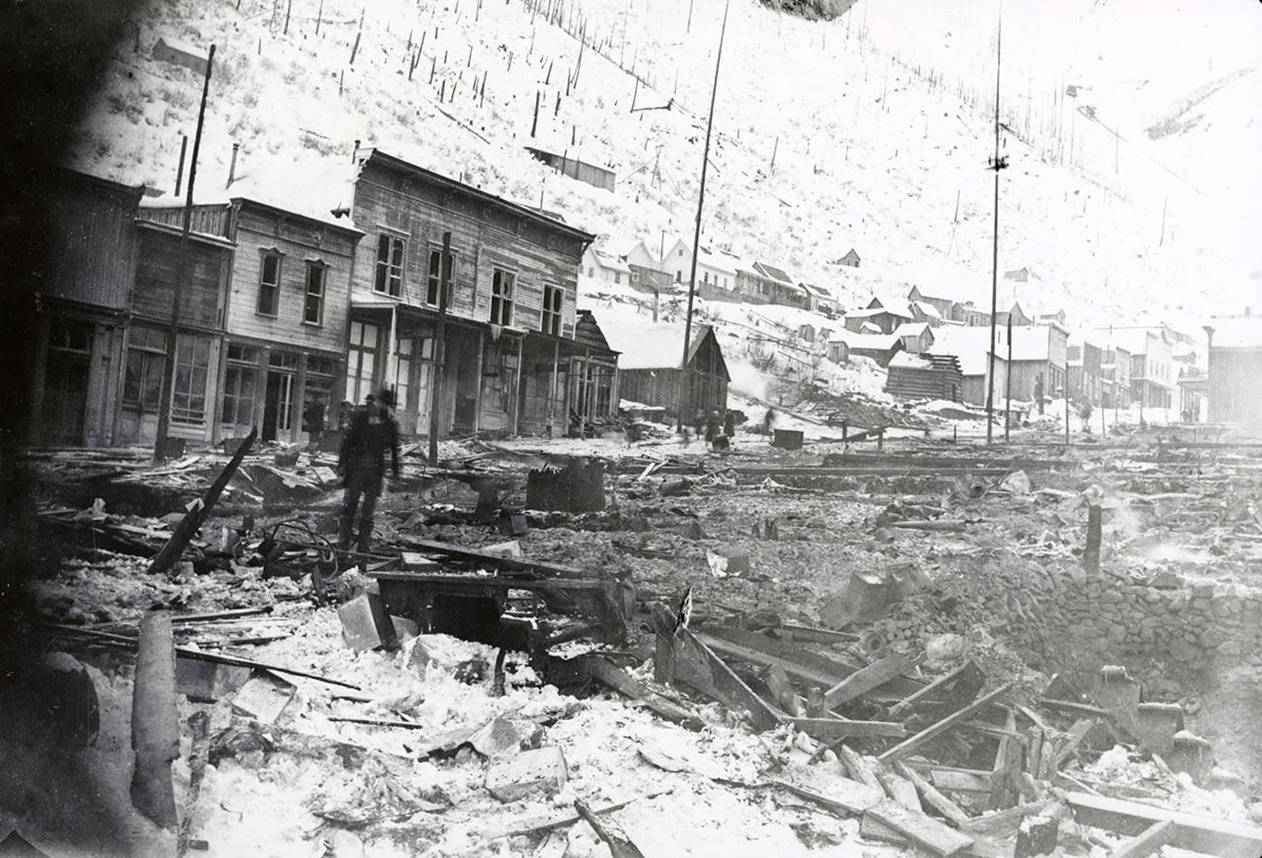
Fighting wildfires for the government in Idaho could cost you your life, but not earn you pay.
‘Fire Fighters Find That Uncle Sam is Poor Pay’ by Frank Kruse from Industrial Worker. Vol. 2 No. 23. August 27, 1910.
The fighting of forest fires as at present carried on by the United States government is exceedingly tragical to the working men. In short, it is all a farce. No one can tell the story better than the poor fellows who face the inferno now existing in the forests to save Uncle Sam’s property for the small pittance of two bits an hour.
The working men are shipped from all parts of the country and hire out under different conditions. Some pay the employment sharks $1.50 for their jobs, and their railroad fare to and from the places where the fires rage; others sign contracts with the government hell hounds, which say, you shall receive no pay unless you work four days, but shall have your transportation both to and from. Under the latter contract 80 of us left Missoula on August 20 for Avery, Ida. Among these were 15. I.W.W. boys. We arrived Saturday noon, after being detained on the railroad 18 hours, and our hungry bodies were nourished by sandwiches and coffee as directed by Forest Ranger Debbit of that district. After that 16 of us were directed to go to Assistant Ranger Allen’s camp, 18 miles distance as the crow flies. The remainder went to another camp, 45 miles away. The sandwiches had to last.
In camp we found the men in confusion. All Saturday night they had to fight the fire and move camp without food. The most of them when exhausted had to sleep on the cold ground without blankets, although the agents of our glorious country promised them blankets. Plenty of tools were furnished.
On Sunday the fire forced us to move again. This time our efficient assistant ranger set up camp on the St. Joe river. In the meantime our food had run out, although at this period sufficient food has been gotten to us. Biscuits from flour and water (Fellow Worker Grant preserved one, now in I.W.W. hall for inspection), and beans, together with some coffee were our principal rations.
On Monday morning the desirable citizens of Avery became anxious over their property and backfired from the town. Under a strong wind this fire soon spread in all directions. The men in all of the six camps were in a terrible predicament. They were surrounded by fire and far from their bases of supplies at the center, Avery. The fire was raging toward us. We could see it coming over the mountain top. Allen became anxious for our safety. In the evening he went to Bartlett’s camp, a mile and a half from ours, and telephoned in to the half-way station. Here he was directed to at once send in the men to the station and clear the trail for the pack train to get to Avery. (The mules meant property to Uncle Sam. See?) We went 3 a.m. Tuesday and did as directed. Luckily the fire died down sufficiently so that we got through by following the river bank and wading through hot ashes.
On Sutter creek, under Foreman Shehu, eight miles west of Avery, 20 men were caught in the fire and perished. The foreman saved his own life and his 30-30 caliber revolver by deserting his men before danger approached. The men in the other camps became scattered and came into Avery in groups. Tales were told of the lost comrades and reports came in ever and anon, after the search for lost bodies began, of the finding of three or four bodies. Some were within a mile and a half from Avery. Not one ranger was injured, although, there were men with eyes burned out, terrible burns, and infliction: which they will carry to their graves.
Not one of our of Bartlett’s camps were lost, owing to the genuine spirit of our boss. We arrived in Avery Wednesday noon, tired and hungry. Here fresh troubles began. We were taken to the camp of Uncle Sam’s black butchers and given a dinner of boiled pork, coffee and more beans. The town is under martial law.
After dinner we were informed by our boss that Uncle Sam could not pay us for some time. Why? A thousand silly excuses were given. We listened to this in silence for a time. The working males who love their country stood and gazed like sheep, taking in all the dope handed out to them by their bosses. They even traded out in the clothing store the entire amount of their wages, paying four prices for goods. The storekeeper was a brother of the ranger and accepted an order from the boss. We received nothing to show for our work. After earnest talking by the I.W.W. boys we were promised transportation to Spokane, eight railroad bridges between Avery and Missoula having burned down. In the evening we were ordered to take a gravel train, but we immediately took possession of the caboose. Although 80 of us were packed in it, we were glad to get away from the scissorbills and soldiers. Besides the evening before 100 men were forced at the point of the bayonet to hike out of town. They intended to ditch us at St. Joe, but we held possession until St. Mary’s. Here the con. came in and ordered us out, saying: “There will be a passenger train along soon.” A few of our worst enemies got out, but the remainder, inspired by the I.W.W. men present, held possession of the caboose, replying when he would show them a pass to Rosalia they would get out. We got the pass.
In Rosalia we were well treated. We chose a spokesman, Fellow Worker Kelly, who visited the necessary officials of the city and pleaded our cause. Mr. M. Paulin, a whole-hearted merchant of the city, gave us our breakfast and did everything within his power to assist us. Fellow workers, remember him. The city gave us our dinner. The N.P. refused to give us transportation. We took possession of the freight and rode it into Marshall. From Marshall we hiked into Spokane. We are here now, waiting for the $1,50.00 which our (?) country is trying to keep from our grasp by ways and means to intangible for us to understand. Remember, however, we are I.W.W. and we know what united action will bring.
The Industrial Union Bulletin, and the Industrial Worker were newspapers published by the Industrial Workers of the World (IWW) from 1907 until 1913. First printed in Joliet, Illinois, IUB incorporated The Voice of Labor, the newspaper of the American Labor Union which had joined the IWW, and another IWW affiliate, International Metal Worker.The Trautmann-DeLeon faction issued its weekly from March 1907. Soon after, De Leon would be expelled and Trautmann would continue IUB until March 1909. It was edited by A. S. Edwards. 1909, production moved to Spokane, Washington and became The Industrial Worker, “the voice of revolutionary industrial unionism.”
PDF of full issue:
 Revolution's Newsstand