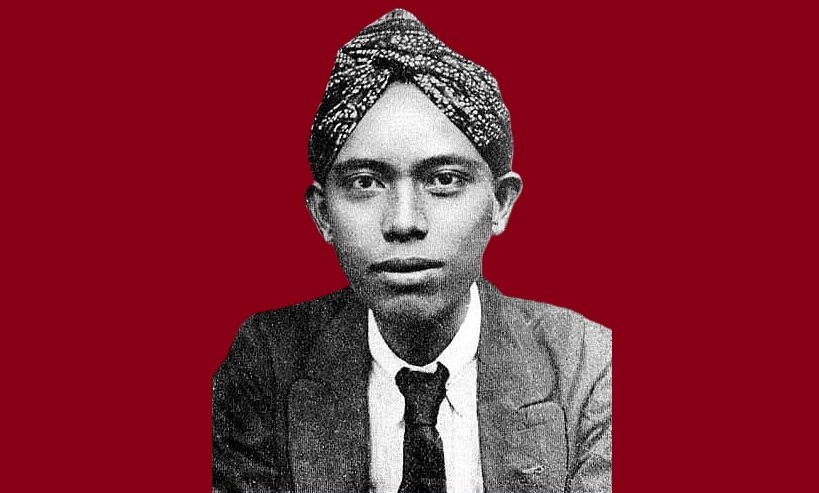
Details on Indonesian workers’ organizations from Semoaen as the rising tide of labor and the anti-imperialist movement would culminate in a failed revolt the following year.
‘Labor in Indonesia’ by Semoaen from The Daily Worker. Vol. 2 Nos. 292-295. December 22-24, 26, 1925.
INTRODUCTION
Both the leaders of imperialism and of proletarian revolution have more than once emphasized the importance of attention to the Far East. Even William Green, president of the American Federation of Labor, at the Atlantic City convention, said that “labor”–which means to him the bureaucracy of the trade union movement must turn its eyes to the problems of the workers in the Far East. But revolutionary workers know that the leaders of class collaboration will approach the eastern workers only to betray them. It is well to know, then, that In Indonesia there exists a center affiliated to the Red International of Labor Unions, and that on the R.I.L.U. Executive Bureau there sits Comrade Semaoen of Java, the writer of a short series of articles, which are furnished to The DAILY WORKER by the Trade Union Educational League. The first of this series appears below.
I.
NOTWITHSTANDING the continual terror upon the labor movement in general since the big railway strike in May, 1923, the Dutch government does not succeed in suppressing the resistance of our young working class in Indonesia.
The strike law from that time, the deportation of many comrades, the imprisonment of hundreds and hundreds of workers, do not prevent the progress of the trade on movements.
Now, September, 1925, only two and one-half years after the railway organization was destroyed by force, the Vereeniging Pegawai Spoor Dan Tram is again as strong as before the sup pressed strike of 1923. Its membership is again 14,000 its organ Si Tetap is one and one-half times the circulation of 1923.
THE Union of Seamen and Harbor Workers, organized by one deported Javanese comrade from Holland in September, 1923, has 4,000 members at present. It appears that the capitalists concentrate oppression upon this organization, because it is not only dangerous for the economic life of the foreign trade, but also because it is a means for connection between the revolutionary movement in Indonesia abroad.
During existence not less than 100 comrades, seamen in the steamers sailing between Indonesia and Holland, were discharged on account of propaganda. Not less than 30 comrades were arrested and put into prison from one month to three months, being discovered in so-called “smuggling” of Profintern and Comintern literature, etc., from abroad to Indonesia. At present in every steamer sailing between Holland and Indonesia is put one or two spies…
Many other comrades were discharged from the steamers of the Koninglijke Paketvaart Maatschappij, sailing between the various islands of our archipelago. Then we have the victims who were discharged from the harbor In Tandjung Priok (Batavia).
No wonder that under such circumstances this young trade union has only 4,000 members after two year’s work, mostly workers in the harbors, and the minority are illegal members in the various steamers. Its organ, the Djangkar (anchor) is a popular paper among the seamen and harbor workers. Nevertheless, when we count the difficulties, we can say that here also, we get success in spite of the capitalists.
THE Sarekat Postel, union of the post, telegraph and telephone workers, having its headquarters in Surabays, printing regular its monthly organ, Soeara Kita, continues its progress and is 2,500 members strong now. Its editor, Comrade Muso, is persecuted on account of revolutionary propaganda in that organ in the month of May. (Comrade Muso, member of the executive committee of the Communist Party, section Sarabaya, is one of the most active propagandists of the trade union movement in that Industrial town.)
In its congress June 7, the Frederasi Sarekat Boeroeh Tak, the trade union of printing works, it was said that this federation has 15 sections with a total membership of 3,000. The open meeting of that congress was destroyed by the police by force, because one of the speakers had too “loud” a voice. (Every revolutionist has a “too loud” voice, so think the police in our country,)
NEARLY at the same time the congress of the Frederasi Sarekat Boeroeh Bingkil, the union of workers in machine-repair factories, having ten sections with a total of $2,000 members, took place in the same town (Semerang). It is its first congress after its existence from September, 1924. It is a very new union, this. Its monthly organ is published at Malang.
Also in the first week of June in Semarang was held the congress of the auto-transport workers. The various local organizations, formerly united in a federation, decided there to reorganize into one union, the Chauffeur Band Indonesia. It has managed to organize some 2.,00 members all over the archipelago. Active propaganda on behalf of this union began in June, 1924, when the old union catering for the chauffeurs had altogether only 1,000 members.
THE Sarekat Boeroh Goela, the union of workers in the sugar industry, is not yet able to work openly. This illegal union, organized from the remnants of the old one, finally destroyed by the capitalists in 1921, has become active since August, 1924. Here we have only 1,000 members, due to the difficult circumstances under which propaganda has to be carried on among these workers.
The same applies to the union catering for the workers in the mining industry, (coal, gold, oil, [petrol], etc.) Here we have only 700 members. From about the middle of May this new illegal union began to publish its organ Soeara Tambang (The Voice of the Mine Worker).
BETTER progress is being made by the union catering for hospital workers. This union has succeeded in increasing its membership from 500 to 2,009 from the beginning of 1924 up to date. In 1925, it began the regular publication of its organ, at present a monopoly. The above mentioned unions are led by Communists.
II.
THERE is a Red Labor secretariat In Indonesia acting as the central body regulating the general propaganda of these unions and linking them up with the movement abroad. This does not, however, mean that these organizations have left the General Federation of Trade Unions, the chairman of which is a so-called “neutral” leader (neither Communist nor nationalist, but only a trade unionist). The executive committee of the General Federation is made up of Communists and nationalists.
To this federation there are also affiliated the reformist teachers’ unions (6,000 members, among whom there are of course Communists to be found); the Union of Government and Public Workers (4,000 members); the Union of Pawnshop employes (3,000 members), for the most part opposed to their so-called “leader,” Surjopranoto, a reformist-nationalist, opposed to the Communists); and other small reformist unions like that of the opium sellers (who are in government service, the opium trade being a state monopoly, as is also the ease In regard to the pawnshops!) These small unions have a total membership of about 3,000. The quality of those unions Is low because inside there is a constant internecine struggle between the many national leaders, the “neutral” leaders, and the Communists.
LET us take for example, the pawnshop employes’ union. Its 1924 congress decided to elect Sosrokardono a revolutionary as chairman, as well as many Communists to the central committee. Thereupon the retiring chairman, Surjopranoto, stayed in to nominate himself chairman, and, together with the minority, he “nationalized” the printing office, the bureau, administration and the name. The police and the courts, refused, of course, to intervene in favor of the Communist majority. The question still remains unsettled and the brazen-faced Surjo held a “pawnshop congress” last June, visited of course, only by the minority, the majority not having been allowed to attend. It is, therefore, small cause for wonder that these organizations have of late shown no increased activity.
Only when the Communists succeed in capturing these unions will they play an active part in a progressive movement. The history of the pawnshop employes union, shows, however, that the task of capturing it will be a difficult one indeed.
III.
THAT the trade union movement in Indonesia is only active under the leadership of the Communists is proven by the events which took place in earlier days. The small strikes which have occurred from the beginning of this year prove that our working class is willing to undertake an offensive movement for increased wages, guarantees for more certain work, etc. From last May till the and of August the following strikes ted by the Red Trade Unions above mentioned were registered by the Communist organ Apy. All the strikes were of an offensive character:
1. May 5, general strike of coachmen (800 strikers) at the town of Solo.
2. May 7, strike of 150 workers of the sugar factory Petjangaan. Police persecutions: strike could not be extended into a general strike.
3. May 9, strike of 50 porters at the railway depot at Tikampek. Police compelled the strikers to work but the latter refused. People of the district sympathized with the strikers. Railway management unable to get scabs. Porters were recruited from other districts but refused to work when they knew they were to break the strike. Strike ended with victory for the workers.
4. May 11, strike of 61 women in the Djombang rubber factory at Batavia. Ended in a compromise.
5. May 12, strike of 32 workers in the lime-kiln at Batavia. Victory for the workers.
6. May 13, strike in the H. Bunning printery at Djokdja and in the Indonesische Drukkery (prints the unofficial propaganda organ of the government in Malayan, Hindia Baroe, editor Hadji Salin, leader of the Sarekat Islam (opposed to Communists) in Batavia. Strikebreakers recruited refused to work. All told 300 printers involved.
7. May 16, strike of 50 printers in the De Echo printing office at Djember and 40 artists in the Tjabja Semarang theater in the town of Semarang.
8. May 28, partial strike in the Pakis sugar factory at Paty. Strong oppression by police. On June 7 the strike was extended and then involved 250 workers. Continual police oppression.
9. May 20, strike of 50 workers in the hospital of Sawahlunt (Sumatra), police persecutions.
10. June 2, strike of 50 workers in the Angtjiwie Hien rice factory at Babat. The strike ended in victory for the workers.
11. June 4, strike of 30 workers in the military engineers’ service at Kupang on Timor Island, where many deported revolutionaries are living. In spite of persecutions strike continues.
12. June 10, partial strike of 25 porters in the Atjeh tramway service at Langsa. Police persecutions unsuccessful. Strikers won.
13. June 1, strike of 50 printers in a small printing office at Djokdja.
14. June 15, strike of 100 coolies at the public works in Banjoemas. Strikers won.
15. July 3, strike of 40 workers in the Weltevreden steam laundry.
IT may be added that I have no copies of Apy later than July 3, but from other papers I read of the following:
From the Algemeen Handelsblad, Amsterdam, Aug. 26: Armed police dispersed a demonstration of 100 workers employed at the central hospital at Batavia on July 27. Twenty of the demonstrators have been discharged. Thirty-six workers then went strike, 7 arrested.
Twelve of the 86 strikers employed at the Semarang hospital, discharged. One of the strike leaders is Darsono. A later telegram tells of this comrade’s arrest. He is one of the cleverest leaders the Communist Party has. Attended the 1920 R.I.L.U. congress. I think he will be deported to a small island somewhere in the archipelago.
THE harbor strike at Semarang (where Comrade Darsono is working) is general, 1,200 men involved; 400 more join in later. Harbor service completely stopped. Strikebreakers from other places refused to work. A law forbidding the holding of meetings in Semarang province is being enforced.
A general strike of 1,000 printers then broke out. The printing firms forthwith consented to the economic demands of the strikers so that here again a victory for the workers has to be recorded. At the same time there was a strike of printers at Makkasar in the Celebes.
The harbor strike has gone down, but the port fleet is at a complete standstill on account of the sabotage that is taking place. The Koninklijke Pakketvaart Maatschappij has therefore established a new service with its own fleet and better working conditions. The new staffs include some of the strikers.
THE law prohibiting meetings will be a stumbling block to the railway union congress due to be held at Semarang. Of late there has been a great deal of talk about a fresh railway strike. Regarding the congress I have as yet no news. Perhaps it has been postponed or held up for some other reason.
IV.
THE events enumerated in my last article clearly show that the Indonesian working class is again in the mood for taking up the offensive. It is clear that in connection with the Chinese events, which infects all Asia, causing big sympathy demonstrations of workers and peasants in many places, the dispersal of meetings on the Chinese situation, the arrest of Communist speakers, etc., and in connection with the discovery of intensive propaganda work among the soldiers and the police (many soldiers have now been discharged) and also in connection with the revolutionization of the intellectuals by the Javanese students in Holland, the reaction is not only continuing but growing and increasing its persecutions.
During the period from May till August alone, not less than 200 comrades were arrested. Many hundreds of workers have been dismissed on account of their trade union membership, or for being members of the Communist Party or the Sarekat Rajat and all this had to be gone thru after the terror of February last when many comrades were killed and more than 100 wounded.
THE reaction is learning now that oppression alone is not enough and that other means are required. Its Sarekat Hidjo terroristic groups paid with the money of the reaction, costs a great deal in expenditure. It is furthermore very unpopular among certain of the Dutch rulers themselves, because the Sareket Hidjo has its counterpart in the illegal Red terror groups (Anty Ribut Bund).
As soon as the Sarekat Hidjo members were not paid they openly declared that they had been misled by government officials and now preferred to be members of the Anty Ribut Bund without payment. Thus the reaction made a lot of propaganda for the reformist leaders.
For example, a pseudo-trade union leader like Soerjopranoto declared last August (the Soerjo-history in connection with the pawnshop union mentioned above) that “it is not good for the workers to go on strike…and the capitalists are not so bad after all,” etc.
SUCH a statement is given wide publicity by the reaction. This makes Soerjo feel that he is a man of very great importance and leads him to fight madly against the Communists. He will have to look out for the jealousy of such reformist “national” leaders as Tjokroaminoto and others. The reaction, however, appears to doubt the possible success of any such move because it knows that our working class is able to see through such intrigues.
The reaction is therefore drawing up a “plan” to reorganize the state to a “democratic system” with a so-called “extended election law” and to increase the budget for the “economic welfare of the people” during 1926. But the people will recognize the humbug of such a concession and it will not be so easy to hoodwink them.
“CONTINUE your terror! You will thereby render our working class prouder of its revolutionary traditions and more class conscious.” That is what we can say to the reaction. It is fully within our power to make the trade unions, by legal or illegal methods, more progressive, since the working conditions of the masses are so terrible.
The continual political terror wielded against our trade union movement. throughout the whole of its history is our sure and certain guarantee that the next big mass strike will not be of a merely economic character, but will also be one for political demands, and we can rest assured that Comrade Zinoviev’s prophesy: “Now, China, later Java..!” will be fulfilled.
The Daily Worker began in 1924 and was published in New York City by the Communist Party US and its predecessor organizations. Among the most long-lasting and important left publications in US history, it had a circulation of 35,000 at its peak. The Daily Worker came from The Ohio Socialist, published by the Left Wing-dominated Socialist Party of Ohio in Cleveland from 1917 to November 1919, when it became became The Toiler, paper of the Communist Labor Party. In December 1921 the above-ground Workers Party of America merged the Toiler with the paper Workers Council to found The Worker, which became The Daily Worker beginning January 13, 1924.
 Revolution's Newsstand