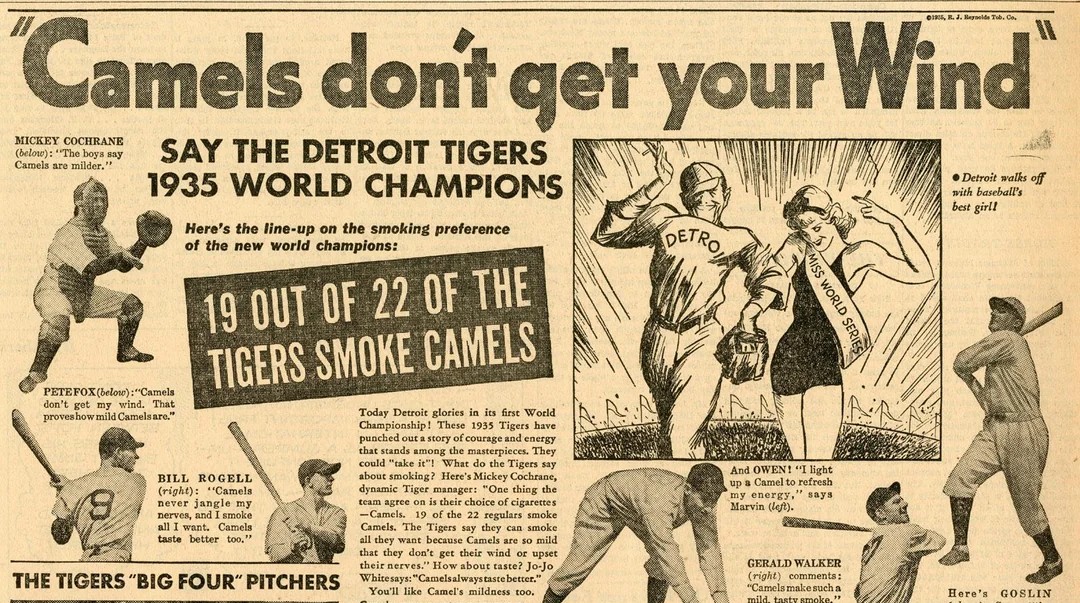
Everything capital touches turns to shit. A beautiful game blighted by business. Walt Carmon greets Opening Day, 1927.
‘The Baseball Business’ by Walt Carmon from The Daily Worker Magazine. Vol. 4 No. 68. April 2, 1927.
Baseball is logically the Great American Game. There’s good money in it. Who’ll win the pennant this year? The owners of the leading clubs in the American and National Leagues. The profit will be handsome. The attendance at the ball parks during the year will increase with a winning team. The World Series is a little gold mine. Last year’s seven games had an attendance, of 328,051 fans who paid a total admission of $1,207,864. That’s money. Baseball is no small cock-roach business!
BEING a business, professional baseball is run by “business ethics.” This does not mean that pro baseball is necessarily crooked. It does get badly bent. In fact, gambling and general dishonesty have been part of baseball since its birth. From 1843, when the Washington Club of New York first organized a baseball team, until 1867, the game rapidly gained in popularity. But at the same time its bad features were already evident. One authority tells us: “In spite of its popularity the game acquired certain undesirable adjuncts. The betting and pool-selling evils became prominent and before long the game was in thorough disrepute. It was not only generally believed that matches were not played on their merits, but it was known the players themselves were not above selling contests. At that time many of the journals of the day foretold the speedy downfall of the sport.”
That was over 60 years ago. Today we have bigger and better gamblers. The scandal of a few months ago and the scandal of the “Black Sox” of 1919, got more attention from the average worker than the scandal of Nicaragua or the scandal of American interference in China.
THE National League was organized in 1876. In 1900 the American League was born. Today hundreds of professional and semi-pro organizations dot the country. Baseball is a flourishing business paying generous dividends. Recently the owners of the franchise of the New York Club refused an offer of 5 million for their interest.
Babe Ruth (who lends his name to prison-made goods despite the protests of organized labor) is paid a salary of $210,000 for three years–greater than that received by the president of the United States. Ty Cobb and Tris Speaker, each will draw over $50,000 for this season in which they will likely play less than a hundred games.
Being a big business now, baseball is put on a big business basis. Labor-hating Judge Landis is guiding its destiny. The ball parks are scab built and scab operated. Judge Landis, whose salary has just been raised to $65,000 a year, will see that they continue that way. Rowdyism on the playing field is being ruled out–it’s bad business. The newspapers speak of the higher plane on which the game is run today. This year 75 college men are in the big leagues. As a mark of its higher intellectual plane (and higher admission prices) the newspapers tell us of a roughneck who quit a team, because, unlike in the old days, he could not borrow a chew of tobacco from any of his teammates! Baseball has become a high-priced, high-paying, high-toned business indeed. It is skillfully advertised. It is cleverly kept before the public and is now as securely established a commercial product as a Ford or Wrigley’s chewing gum.
BASEBALL is rightly called the National Game. It is thoroughly woven into American life. The American youth plays it on the streets and in the schools. The boy who doesn’t know who discovered America can tell you who led the American League. The man in the shop who does not know the name of the president, knows the names of all the leading major league ball players. High schools with good baseball teams attract pupils. The colleges that graduate successful major league ball players are regarded as real seats of learning.
Patriotic exercises at ball games on numerous occasions make baseball mighty good for the government and the politicians. So well has it worked in America, that in the imperialist invasion of our neighbors, the baseball bat has followed the bayonet and the bible. In the Philippines, Panama, Mexico and Cuba, baseball is supplanting bull-fighting. Cubans have become so proficient at the game, a number of leading major leaguers are from Cuba.
The centuries-wise old church also knows the value of baseball. Church leagues are a feature of baseball interest in all cities.
If organized labor has overlooked baseball, the boss has not. Every factory, where welfare fares well in lowering wages, has its ball club. A spirit is built up to support “our boys.” A “family spirit” that breeds loyalty to the boss is bred through the workers’ interest in the sport. Wage slaves turn out in thousands (on their own time) on Saturday afternoons and Sundays to cheer for “our “Our team” helps us to forget our wages team.” and our hours. Every city has its industrial leagues. Professional and semi-pro players are put on soft jobs so they can add to the glory of the company club. Baseball is good for the boss.
It’s high time for organized labor to make baseball good for the workers. After all, it’s a great game. Thousands play it, read about it and speak of it daily. Interest in the game, participation in the sport, these can be used to stimulate interest in the problems of labor. Labor leagues can be Control organized among workers’ sports clubs. of the bosses’ teams can be secured to ally them with workers’ sports organizations. The interest of workers can be secured to support their own sports to the benefit of labor. Until now baseball has been the monopoly of the enemies of labor. The recent organization of a Workers’ National Sports Alliance, involving thousands of workers, is a good first step to break this anti-labor sports monopoly. It is worthy of labor’s support.
As to professional baseball–who will win the pennant this year? Ask me another. The answer is–baseball business.
The Daily Worker began in 1924 and was published in New York City by the Communist Party US and its predecessor organizations. Among the most long-lasting and important left publications in US history, it had a circulation of 35,000 at its peak. The Daily Worker came from The Ohio Socialist, published by the Left Wing-dominated Socialist Party of Ohio in Cleveland from 1917 to November 1919, when it became became The Toiler, paper of the Communist Labor Party. In December 1921 the above-ground Workers Party of America merged the Toiler with the paper Workers Council to found The Worker, which became The Daily Worker beginning January 13, 1924.
PDF of full issue 1: https://www.marxists.org/history/usa/pubs/dailyworker/1927/1927-ny/v04-n068-new-magazine-apr-02-1927-DW-LOC.pdf
 Revolution's Newsstand