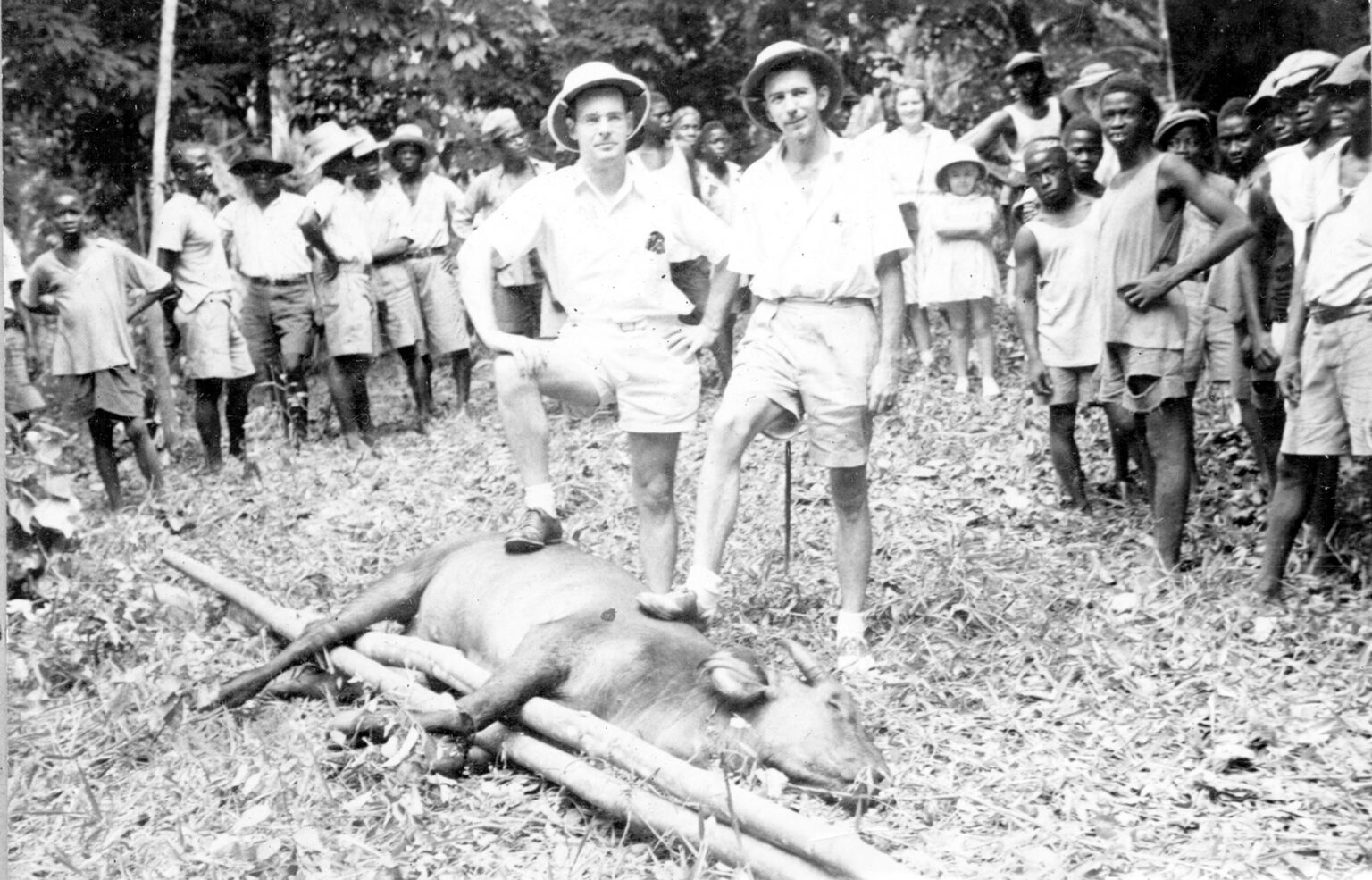
Liberia, long the U.S.’s only African base, became a full slave-plantation colony of the growing United States Empire with the arrival of Harvey Firestone’s rubber corporation taking one million acres and indenturing and enslaving 100s of thousands of workers.
‘Firestone’s Slavery in Liberia’ by Robert W. Dunn from Labor Defender. Vol. 6 No. 2. February, 1931.
There Are No Less Than 5,000,000 Chattel Slaves in the World in 1931
SLAVERY exists in some 20 countries. It exists in Africa, Asia, and in Latin America. It exists, in effect, in many Southern states. It exists in a little country called Liberia on the west coast of Africa. This country which now has about a million and a half population was founded in 1822 as a “haven” for Negroes escaping from American slavery. The motto of its founders was “the love of liberty brought us here.” It has been nominally a “free and independent” republic since 1847.
Today Liberia might better be called Firestonia. For it is practically the annexed territory of the Akron rubber magnate who has a million acre concession there on which he is developing rubber plantations. He got the concession in 1925 with the help of Mr. Hoover who was then engaged in his loud campaign to break the British rubber monopoly.
Firestone is the one big capitalist in Liberia. And he has, according to competent observers, been exploiting the Negro workers there by one of the worst forms of colonial slavery. He pays money to chiefs of native tribes who in turn force their people to work for him. He pays the government and chiefs about a cent a man per day. The chiefs and the government do the rest.
American workers may have been a little confused when they read in the paper the other day that Secretary of State Stimson had sent a “strong note” to Liberia about slavery. Stimson, the friend of Firestone, raising a howl about slavery. How come?
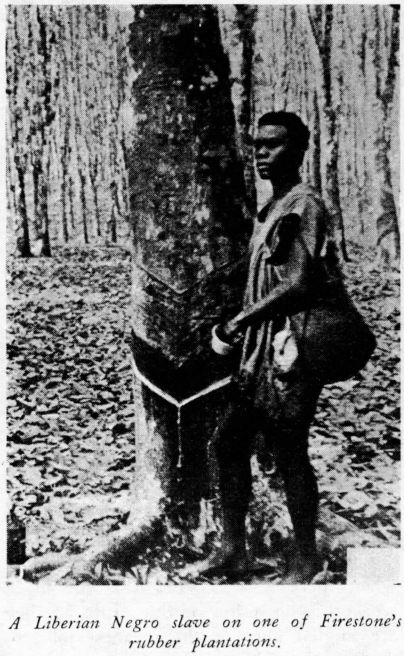
One explanation was not far to seek. It seems that some rival powers, chiefly Britain and France, both admitted and notorious owners of slave colonies in Africa, had brought pressure to bear on the League of Nations to have an investigating commission look into slavery in the Hoover-Firestone protectorate. The committee of inquiry went and found that the most atrocious forms of slavery exist in Liberia. They were about to expose the system.
With this storm approaching, and knowing what was in the report, Stimson shot his noble note to Liberia. This made Stimson, in the eyes of headline readers, appear to be a great humanist, interested in combatting slavery. Then came the report of the commission: “Horrors of Slavery and Conscript Labor in Liberia Bared.” It looked on the surface as though Liberia was an independent state and that Stimson first, and then the League: of Nations, was interested in reforming her.
But the fact is that Liberia was run on the orders of the Washington-Wall Street government in the very days when its slavery system was in full flower. It was the Coolidge-Hoover regime that helped Firestone grab his fat concession, was the same set of polished hypocrites who picked the expensive financial advisors who, since 1927, has been dictating the public expenditures and regulating the military establishment of the country. And it was only after the rubber deal had been put through, with stout State Department pressure, that the Finance Corporation of America (a Firestone firm) in 1927 granted a $5,000,000 loan at 7% to the Liberian government. It was the now-discredited President King of Liberia who was the willing agent in these deals. All of which were so shady that the State Department refused to give out the text of the agreements entered into between Firestone, the National City Bank and the Liberian puppets. And King in 1928 issued a statement through the U.S. State Department that there was no forced labor in Liberia!
Stimson who has always countenanced virtual slavery in other American imperialist possessions has known of slavery in Liberia ever since Firestone first set foot on African soil. He kept his mouth shut, of course, till rival imperialist powers, interested in thwarting his rubber dictatorship there, forced the investigation which, incidentally, is but a thin whitewash for Firestone. For the official report says Firestone now does not “consciously” employ labor “which has been forcibly impressed.” In plain words this means that he hires labor from native chiefs and asks no questions. Nothing on the books, you see, to show that Firestone traffics in slavery!
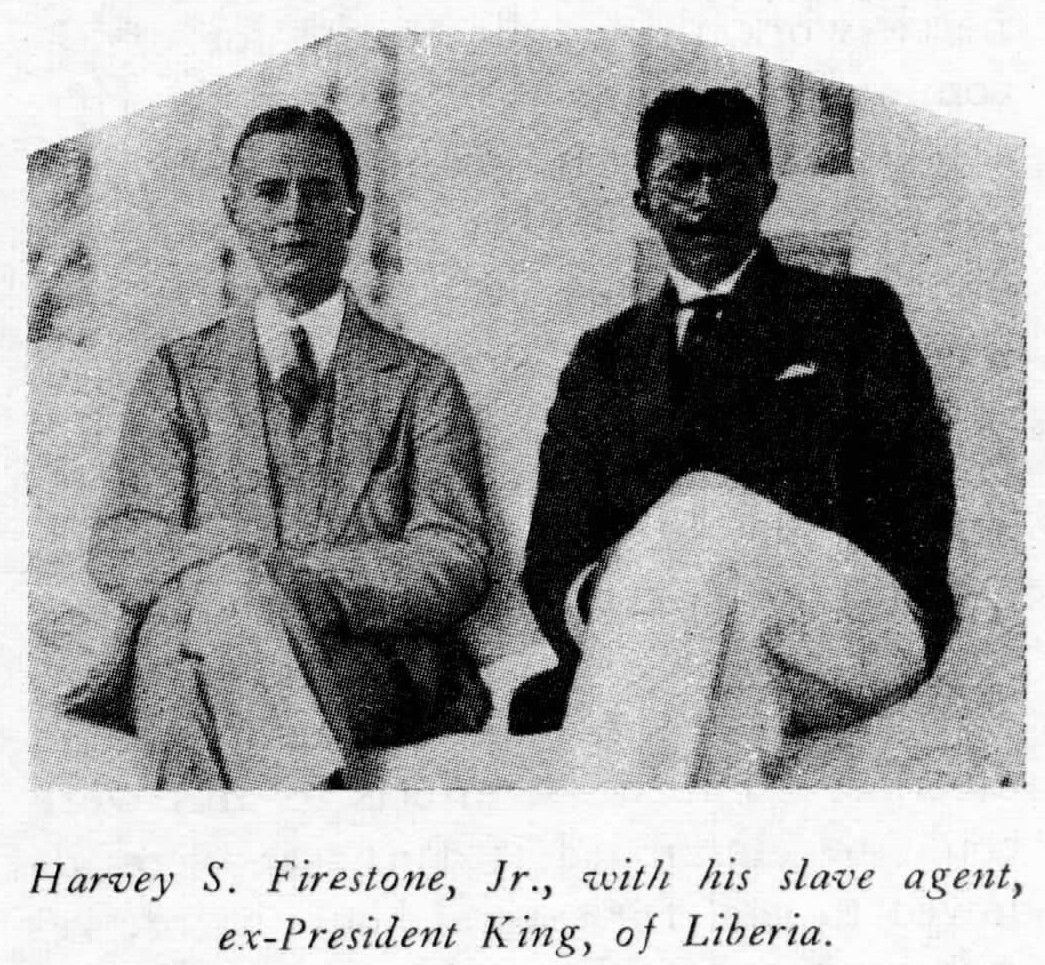
But President King is the goat and is held responsible for the mess, while the vice-president of the country is shown to be neck deep in the slavery business. They resigned. Incidentally, it was this same President King whose picture appeared in the Negro reformist magazine, Opportunity, (November 28, 1928) sitting comfortably “on the Veranda of the Executive Mansion” of Liberia beside the handsome Harvey S. Firestone, Jr. And this same Negro magazine then carried a pretty story by a certain J.C. Young, press agent for Firestone, which told the Negro uplifters of the National Urban League that “a new world is in the making at the western edge of Africa.” Mr. Young wrote that “Mr. Firestone is optimistic about the future of western Africa.”
Workers must remember that the imperialist system everywhere is founded on slavery in some places chattel slavery, in other places wage slavery. Colonial workers and farmers in imperialist lands must unite against slavery in all its forms.
Labor Defender was published monthly from 1926 until 1937 by the International Labor Defense (ILD), a Workers Party of America, and later Communist Party-led, non-partisan defense organization founded by James Cannon and William Haywood while in Moscow, 1925 to support prisoners of the class war, victims of racism and imperialism, and the struggle against fascism. It included, poetry, letters from prisoners, and was heavily illustrated with photos, images, and cartoons. Labor Defender was the central organ of the Scottsboro and Sacco and Vanzetti defense campaigns. Editors included T. J. O’ Flaherty, Max Shactman, Karl Reeve, J. Louis Engdahl, William L. Patterson, Sasha Small, and Sender Garlin.
PDF of full issue: https://www.marxists.org/history/usa/pubs/labordefender/1931/v06n02-feb-1931-LD.pdf
 Revolution's Newsstand