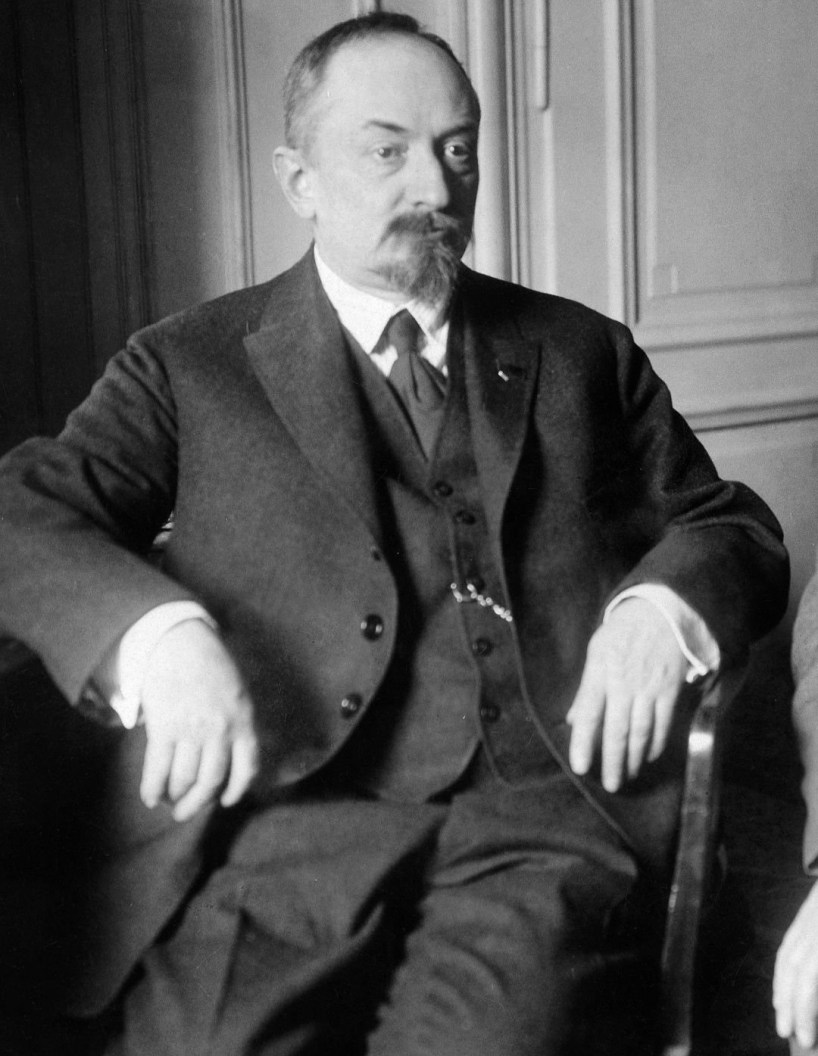
What can be the diplomacy of a revolution? What kind of revolutionary is a diplomat? And what diplomat is a revolutionary? With perhaps the most difficult job of any Bolshevik was the enigma, Georgy Chicherin, Commissariat of Foreign Affairs. Tasked with an impossibility; peace between the Soviets and imperialism, chief in his arsenal was the, infuriatingly diplomatic, contrast of Bolshevik directness with imperialist hypocrisy.
‘The Disarmament Hypocrisy of the League of Nations’ Georgy Chicherin from International Press Correspondence. Vol. 6 Nos. 29. April 15, 1926.
Moscow, 6th of April 1926. In an interview with some Moscow journalists Chicherin stated:
“The Soviet government has repeatedly and emphatically declared that in no circumstances can it participate in a Conference held on Swiss soil. The Soviet government, which already at Genoa came forward as the champion of general disarmament, has repeatedly declared its readiness to take part in any discussion for the purpose of restricting armaments, no matter by whom it may be convened. Nevertheless, in view of the obstinate refusal of the Swiss government to meet the minimum legal demands of the Soviet government in connection with the murder of Comrade Vorovsky, it is absolutely impossible to send Soviet representatives to Switzerland.
“The decision of the League of Nations’ Council to convene a meeting of the Commission in Geneva proves that the leading Powers in the League of Nations, who are fully aware of the Soviet standpoint, do not desire the Soviet Union to participate either in the preparatory commission or in the Disarmament Conference to be held later. This fact alone shows that these Powers have not the slightest intention to carry out actual disarmament. The session of the Geneva Commission will be an empty comedy and a fresh proof of the impotency of the League of Nations to contribute anything towards establishing peace.
“Last year Great Britain attempted to make use of the League of Nations as an element in its complicated game of isolating the Soviet Union by bringing together all the leading governments against the Soviet Republics. This intention was openly admitted in a number of official declarations. The Locarno combination was intended to isolate the Soviet Union and to serve as a means for conducting a common fight not only against the Soviet Union, but also against the colonial peoples who are fighting for their emancipation.
“The League of Nations was given the role of an auxiliary organisation for carrying out the Locarno combination: similar role to that which was given to the “Holy Alliance” a century ago. In his speech in the House of Commons before the Geneva Conference Chamberlain compared the present policy of the English government with that of England at the time of Lord Castlereagh, that is to say with the policy of the “Holy Alliance”.
“Whilst the masses of the people who are suffering from the economic crisis and the international antagonisms hoped to obtain from the League of Nations and Locarno an amelioration of their miserable conditions, for the English government Locarno meant a new “Holy Alliance”.
“The discrediting of the League of Nations in Geneva proved that the antagonisms between the Powers are stronger than the diplomatic attempts to come together in a united organisation, that is to say to set up a united front. The Geneva fiasco is a very significant defeat of Chamberlain’s continental policy.
“It may be assumed that England’s tendency towards approaching the Dominions will increase at the cost of the weakening of her participation in the affairs of the Continent. I remember a conversation I had with Lloyd George after the failure of the Conference of Geneva in which he declared: If the attempts to lead the Continent out of chaos should fail, then England will have to give up participation in the affairs of the Continent and seek approachment to the Dominions.
“The immediate cause of the collapse of Geneva is to be found in the inner contradictions of Chamberlain’s policy. In his endeavours to cause Poland to adopt a Western orientation and to participate in the anti-Soviet united front, Chamberlain failed to take into consideration the antagonistic interests of Germany and Poland. He involved himself in contradictions in his own policy by attempting on the one hand, to oppose Germany against France, while the other hand, however, he wanted to compensate Poland for her defeat at Locarno and to use her as a counter-weight against Germany. The final aim of “Chamberlain’s policy, the setting up of a united front against the Soviet Union, was based upon insurmountable inner contradictions, by failing to observe which Chamberlain himself brought about the collapse of the united front in Geneva.
“The collapse of the Locarno system opened up the way for an immediate approchement between Germany and France, to which Briand showed himself to be inclined before Geneva. With regard to the declaration of Briand in the French Chamber on 28th of February (in which, when emphasising the importance of Locarno for the security of France, he pointed out that prominent politicians were staying in Berlin who were attempting to induce the German government to refuse a discussion with France on the Security Pact) in order to reassure Briand I must call, attention to my repeated declarations that the Soviet government views with the greatest sympathy an immediate Franco-German approchement as a means for securing peace on the Continent on the basis which would not result in the domination of outside Powers. In view of the proposals which were made after the Geneva meeting of the League of Nations, regarding the abolition of the compulsory unanimity of the decisions of the League of Nations’ Council,”
Chicherin declared that the introduction of the principle that decisions should be determined by majority vote would render the influence of Germany in the League of Nations quite illusory, and on the other hand would deprive Germany of every guarantee that unacceptable decisions would not be forced upon her.
“The collapse in Geneva of the whole policy of the German government in recent times can serve for Germany as a clear indication wither the predominance of the so-called Western orientation is tending with regard to the further development of friendly relations with the Soviet Union.
“If the governments from whom Germany hoped to be granted admission into the League of Nations’ Council were powerless to carry out this formality, what can Germany expect when it comes to more serious matters?
“With regard to the policy of the United States, America is interested on the one hand in the pacification of Europe as the pre-condition of Europe’s capacity to meet her liabilities, but On the other hand the United States fear the closer coming together of the European States as being a hindrance to the further strengthening of the political and economic influence of America in Europe. Whatever formula the American statesmen may set up for their European policy, the final effect continues to be the subjugation of Europe to the rule of American capital.”
International Press Correspondence, widely known as”Inprecorr” was published by the Executive Committee of the Communist International (ECCI) regularly in German and English, occasionally in many other languages, beginning in 1921 and lasting in English until 1938. Inprecorr’s role was to supply translated articles to the English-speaking press of the International from the Comintern’s different sections, as well as news and statements from the ECCI. Many ‘Daily Worker’ and ‘Communist’ articles originated in Inprecorr, and it also published articles by American comrades for use in other countries. It was published at least weekly, and often thrice weekly.
PDF of full issue: https://www.marxists.org/history/international/comintern/inprecor/1926/v06n29-apr-15-1926-Inprecor.pdf
 Revolution's Newsstand