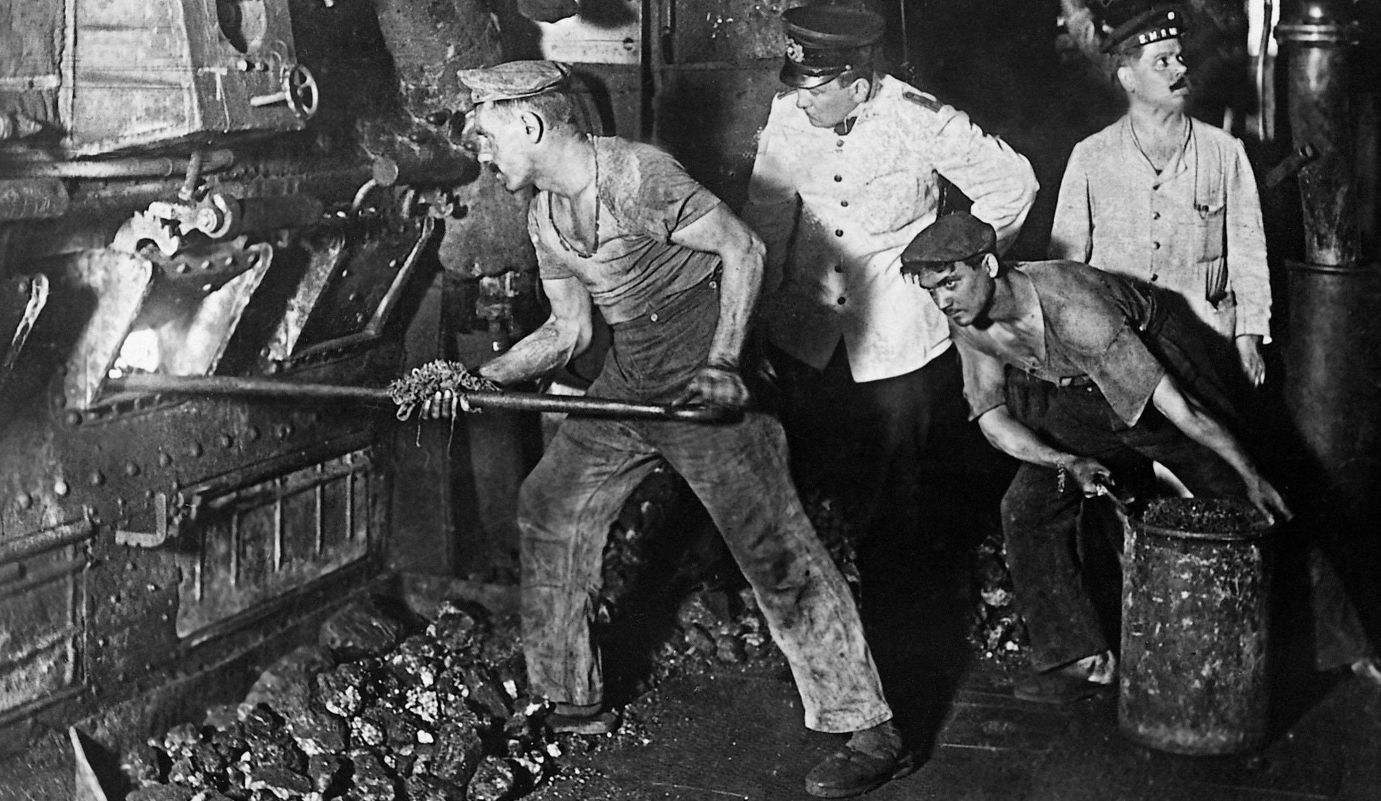
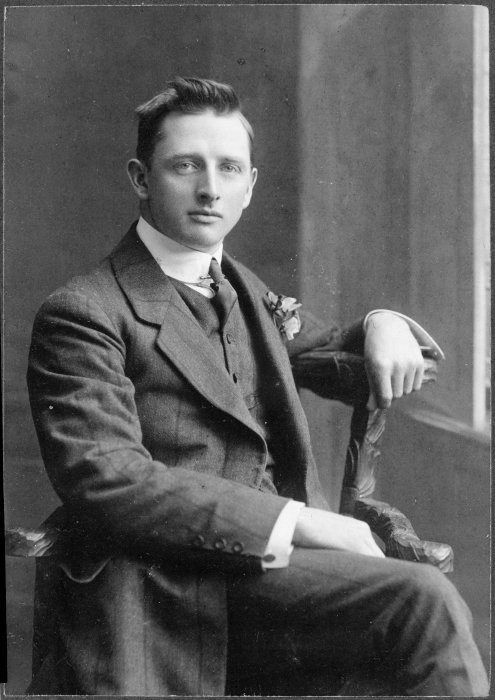
An industry he had worked in for years and whose political economy he knew from bow to stern, Tom Barker reports to the Executive of the Comintern on changes wrought by the First World War in anticipation of the coming Congress of revolutionary Marine Workers to coincide with the First R.I.L.U. Congress.
‘The Marine Transport Industry’ by Tom Barker from Communist International. Vol. 1 No. 16-17. April-May, 1921.
Its Organisation, Problems and Possibilities.
Delegate Marine Transport Workers, Buenos Aires and New York. Port Workers Federation of Argentina. Federation Obrera Regional Argentina.
IN the days before the European War, the shipping industry was largely in the hands of the British Empire. England was the great carrying country, and after her ranked Germany, which was speedily penetrating the domain of the ship-owners of the United Kingdom.
With the end of the war came the entire reshuffling of the positions of the great maritime nations. The peace treaty deprived Germany of by far the greater part of her fleet, leaving her, for the most part, vessels of less than 1,000 tons register, and the Austrian-Hungarian fleet of a million and a half of tons was seized entirely and placed under the Italian or the Inter-Allied flags.
The submarine warfare on the part of the Central Powers more than counteracted the feverish building in British ship-yards for we find that merchant tonnage of the United Kingdom had declined from 18,892,000 tons in June, 1914, to 18,11,000 tons in June, 1920, a loss of 781,000 tons. Included in the post-war figures are many seized German liners and cargo steamers. The United States on the other hand made tremendous strides in ship-building during the years 1916-1920. United States tonnage increased from 2,027,000 tons in June, 1914, to 12,406,000 tons in June, 1920, an increase of more than 10,379,000 tons. According to an article by Gustavus Myers in the New York Times “Current History” for January, 1921, the United States Shipping Board hopes to have “18,000,000 tons of shipping flying the Stars and Stripes.” Although the Japanese were participants in the world war, their remoteness saved them from the more destructive side of the submarine warfare. Their ship-building yards were also busy, and their tonnage advanced enormously, so they were left in the latter days of the war with an almost unchallenged monopoly of the Eastern carrying trade. “The Rising Sun” of the Japanese bourgeoisie became a familiar sight in every port of any importance.
World tonnage has increased in the years 1914-1920 from 49 million tons to 57 million tons in 1920. In 1914 The United Kingdom owned 41.8 per cent of the world’s ships while the United States possessed at that time less than 5 per cent of the ocean-going traffic. In 1920, the United Kingdom’s proportion had fallen to 34 per cent, while that of the United States had increased to nearly 30 per cent. That includes nearly one fifth of deep-water shipping. The British Empire drove the German commercial fleets from the sea during the war, but ended it with a greater and more powerful rival in the field than they had in the first bloody days of August, 1914.
The United States Shipping Board.
The two greatest marine organisations in the world are the Chamber of Shipping of the United Kingdom and the United States Shipping Board. The former was tremendously powerful in the pre-war days and are still exercising great power in the trade routes of the world today. It is a combination of great shipping companies whose interests lock and interlock. They are not merely interested in carrying cargo and passengers, but in ship construction and repairs, oil undertakings, steel, iron and coal, cable companies, bondholders associations, canal boards, tea companies and other innumerable concerns in all the corners on the earth.
The United States Shipping Board was established by act of Congress on September 7, 1916. It was not designed as a war measure although war conditions were largely responsible for its creation. With the advent of America into the World War in April, 1917, the aims of the Shipping Board were stimulated by the imperative need for the conveyance of millions of soldiers from one side of the Atlantic to the other, and the transportation of their food, arms and munitions. Congress set aside the sum of 3,671,000,000 for the building of 3,164 ships of 17,515,000 deadweight tons. In less than 18 months the number of American shipbuilding yards increased from 61 to 341, the number of workers in the yards from 75,000 workers to 350,000. In 1918, more than 3,000,000 gross tons of oceangoing ships were constructed in American yards, which was 25 per cent. more than the total construction of all other countries combined for the same period.
The United States Shipping Board is now, by far, the biggest single corporation in the United States, and by far the greatest power in the world of shipping and ocean transport. It is almost three times the size of the Steel Corporation and six times the size of the Pennsylvania Railroad.
A trade war is now imminent between the countries engaged in International Transport. The main struggle will come between the Shipping Board and the British Chamber of Shipping. The rising coal, export trade of the U.S. is increasing During the year 1914, the United States exported to 22 countries less than 940,000 tons of coal, but during the year 1920 the exports had risen to more than 7,690,000 tons. In fact during that year, 27,000 tons of American coal was landed in the United Kingdom.
American shipping and coal interests are woven tightly together, and the steady increase of cargo coal will increase the earning capacity of American ships, which will carry coal instead of ballast, which will be the lot of the British ships who are losing their grip on the coal trade. The British ships are going to make many trips in ballast, when their earning capacity will be nil. This struggle will involve all the smaller nationalities.
Many forces have been operating to complicate this important industry of late. The opening of the canal at Panama has saved already millions of ship miles, and increased the advantageous economic position of the United States. It has decreased by over 50 per cent the distance between the Chilean nitrate ports and the Eastern ports of the North Atlantic Coast. It has abolished nearly all the dangers of the low latitude of Cape Horn. It has shortened the distance between Buenos Aires and San Francisco, between New Orleans and Yokohama. Kiel Canal is also operating now on a commercial basis having ceased to be one of the strategic points of aggressive German capitalism.
Oil fuel is cheaper than coal. Sixty-five per cent of American war-time built ships burh oil. At the end of this year this percentage will amount to over 75 per cent. Oil burning ships carry more cargo than coal-burners, and need a far less number of men it the engine-room department. British ships are mostly old, and the motive power on the greater number of the ships is coal. The United States shipping will have a great advantage over the English shipping. Great Britain is now building oil-burners and refitting many ships with oil-bunkers and scrapping the old methods. The procuring of oil fuel in sufficient quantities for commercial purposes, is a great problem both for American and British capitalists. The presence of British troops in the Caucasus and Mesopotamia in the past year only showed how anxious the British Government is to aid its capitalists in the coming competitive struggle between the shipping amalgamations of the two countries. The transition to oil must create a catastrophic unemployment in the coal industry.
The British marine workers get at present about two-thirds of the wages which are paid in American ships. The British sailor also works twelve hours a day at sea while the American only works eight. The British shipowner seeing the attempts of their American competitors to reduce wages to enable them, in this direction, to meet the foreign competition, are already commencing a campaign to reduce the wages of their workers from £14 to £10 a month. All other nationalities are doing the same thing.
Since the war period there have been great improvements in the loading and unloading of cargo. In September, 1920, the steamer “Lewis Luckenbach” loaded at Baltimore 12,516 tons of coal, contained in 274 railroad cars in six and a quarter hours.
As an example of the decreased staff necessary for manning ships I recall last year while being in the port of Kristiania the arrival of the largest motor ship in the world, the “Afrika” of Copenhagen. When she arrived the crew struck and they were sent back to Denmark. She was boycotted by the workers in Kristiania, and the officers and engineers, without the help of a single motorman, oiler, or seaman, took her from Norway to the port of Lisbon in Portugal. Eight men ran the ship, which if she had been a coal burner would have required at least 40 men. Thus we see the day coming when the largest ships will be almost purely mechanical. Besides the United States have had very little experience in passenger traffic. On the Western Ocean they can be counted on the fingers of one hand. There are only two ships on the important New York-West Coast service, and one on the run from the Atlantic Coast to the cities of the River Plate. To Australia from San Francisco they have only three passenger ships, while New Zealand alone has as many as five engaged in the regular carriage of passengers. But the alliance with the Hamburg-American line places into the credit account of the Americans a vast experience of passenger carrying.
The war ended in November, 1918, but for fully a year and a half the ocean routes were very busy. There were millions of soldiers to be repatriated from the battlefields to the United States, Great Britain and her Dominions and also foodstuffs for starving Europe. The marine unions took advantage of their position to demand higher wages and better conditions. The ship-owners were making enormous profits and did not seriously oppose the marine unions for better standards of life.
In the middle of 1920 tonnage began to find freights slackening down. Ships began to tie up and discharge their crews. The price of freights fell very quickly indeed. Coal freights out from American ports declined very rapidly. Freights from the Atlantic ports to the harbours of France fell from £25 in November, 1919, to £13 in October, 1920. From the same ports to Rotterdam the freights declined during the same period from £23 to £9, while those to the Italian ports have been lowered from £27 to £14. By the end of 1920, millions of tons of shipping stood idle. In an out-of-the-way port like Wellington, New Zealand, no less than 200,000 tons of overseas shipping is laid up. In all the ports of the United States there are many ships idle while their crews are discharged and being fed from soup kitchens in the public streets of great ports. The men who faced the submarine warfare, and risked their lives a thousand times for the exploiters are now sleeping, on park-benches, and eating wherever they can obtain food. The ruling classes do not worry about them, as the police force have that work to do. The gaol-cells are full of these men.
Marine transport is now the vulnerable point in the armour of the capitalist class, it is the strategic point where the advanced workers must organise to construct the world upon a Communist basis. With an intense discontent prevailing in all ports and ships among the workers it is now easy to create a new form of industrial organisation that can meet, with enthusiasm and self-sacrifice on the part of the leading sections, alt the requirements of the Communist Republics of the World. The good times that the marine workers enjoyed–such as they were–during the days of the war have permanently gone.
The Masters of Ocean Transport have strengthened enormously their power and holdings in the past ten years. In conjunction with their shipping interests, they have a stranglehold on the more economically backward countries of the East, and of South America. The port and ships workers organisations declined in influence and prestige. There has hardly been one forward movement made in marine union circles since the beginning of the war. The Yellow International Seafarers Federation has federated no one. It is a paper organisation, and belongs to the employers and their institution, the League of Nations. The port workers are affiliated to the International Transport Workers Federation. Both of these institutions are part of the Amsterdam Federation of Trade Unions.
With the coming of a great maritime struggle between the ship-owners of the various countries the workers are going to be driven into a much more precarious position than they are in even now in these black days of unemployment and poverty. The corporations that win the struggle will be those who can dispense with the use of the most labour power, and who are the most strongly entrenched. The use of oil displaces vast numbers of men. Automatic loaders and cranes do away with the necessity for dock workers and coal workers. Deisel motor ships do not need boilers, nor do they need boilermakers, nor boiler-repairers. The existing unions and their precious Federations have not the slightest idea how they are to get over widespread changes in the industrial field. The only thing that they have to suggest to their members is to demand unemployed doles from their respective governments. These Federations encourage international scabbery, and have not a single act to point to where they have acted as the thing that they claim to be. Wherever there have been acts of solidarity it has been the action of the rank and file of the membership taking into their own hands the determination of some necessary action. No efforts have been made to standardise conditions or remuneration aboard ships, and no action has been taken to give a foreign ship status or standing in overseas ports. The action of the Jolly George for instance, was one good action amongst many had ones and was the result of the enthusiasm of members of the workers, who took action in spite of their Federation.
In England we have recently the case of seamen and the dockers of the Bristol Channel fighting one another for certain work and striking against each other, although they are both affiliated to the same Transport Workers Federation. We saw in the strike of last year of the Danish marine workers that blackleg Dahish ships were handled in overseas ports by organisations who belonged both to the Seafarers and the I.T.E. These International Banqueting Societies for they are nothing else are only excuses for squandering money collected from their starving and unemployed members. They are a scandal to the Labour movement and it is the duty of the Provisional Council of Red Trade Unions to fight them and their inefficiency to the last ditch. There can be no compromise. It is not merely the outlook of these organisations that we have to fight, but the entire lack of social structure, their entire uselessness in the struggle of a revolutionary epoch.
They promote nationalism. Their leaders have no hopes beyond the champagne glass and the trussed turkey. When we read of the nine course banquet of the Amsterdam International at the Holborn Restaurant in London and the dinner given by Mr. Havelock Wilson, Member of Parliament and Commander of the Order of the British Empire, and the National Seamens and Firemens Union of Great Britain and the invitations issued by Mr. Damm, secretary of the International Seafarers Federation, whereat many of the great lights of the International Plutocracy, and Mr. Cuthbert Laws, secretary of the Master’s Shipping Federation, were present, we know that there is no room in the proletarian movement for such organisations.
The complication of statistics of tonnage, of clearances of shipmiles is not a question for the days after the revolution. It is an imperative need now, for Capitalism is becoming unworkable, as is demonstrated by the enormous armies of unemployed in each country.
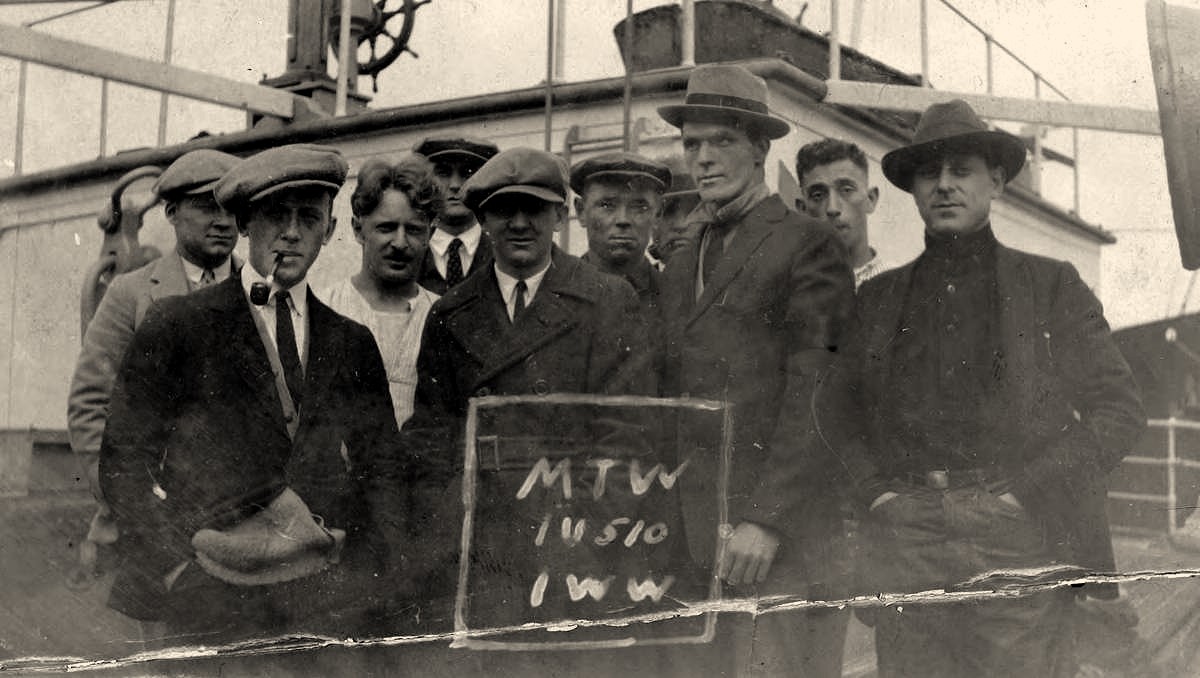
Marine Transport is a different problem than the other industries. The sea is the point where all nationalities converge. The men who work there are the most cosmopolitan section of the working class. National organisations and yellow federationism cannot help these men. You have sometimes ten different occupations on the same ship, which are usually divided into five organisations, for seamen, firemen, engineers, mates, wireless operators and cooks and stewards. Then there are possibly as many as six to fourteen nationalities on each ship. In the port zones there are always many overseas workers employed in the handling of cargo and the transference of coal. They are therefore usually union members from several countries aboard the same ship. Yellow federationism does not bind these workers together. They need to be in one organisation. This organisation must have offices in every port. It must be a centralised affair, with far-reaching powers for international crisis, boycotts and avoidance of wars. It must be more than a Union, it must be an educational institution. It must aim to take power to build up a new Control of the Ocean routes. In must seek to build a greater power than the American Shipping Board, and to build it from the disorganised and panic-stricken elements which today form the basis of the Yellow Federations.
Such an organisation is now a possibility. The minds of marine workers are receptive to it. On every hand you hear the men talking of the need for an International Union for all the industry. I have had much experience of these men, of their ideas and of their hopes. They are not so fond of their existing Unions as some Communist leaders think. Their industry and their mode of life, the migratory character of their work, and the many and varied countries which they visit, all these things colour their requirements. And to flirt with the discredited and hopeless tools of the League of Nations is only wasting valuable time. This is the strategic hour for the creation of a fighting Marine International on a revolutionary basis. It is the only form of organisation that can bring the marine workers any hope in the future. They are tired of burial and coffin societies masquerading under the names of “Unions” and “Federations”.
The main obstacle to progress, of course, comes from Great Britain. Great Britain at the present moment owns 34 per cent. of the world’s shipping. Her marine unions dominate the world situation as far as the workers are concerned. The National Seamen’s and Firemen’s Union in Great Britain is by far the largest of the existing national unions. It is the most reactionary in the world, and is constituted in such a way that it is almost impressible to alter it by working on the inside. The rank and file have no power and no jurisdiction. Advantage is taken of the fact that there is always, at least, forty per cent. of the membership on the high seas in all parts of the world. Not only are the British marine workers held back by their so-called, Union, but also all the workers on the European continent. Wilson, his Union, and the precious International Seafarers Federation–of which he is president and dictator–are hated right through the whole transport industry. He has maneuvered the Genoa, London and Brussels congresses to the advantage of the ship-owners. On his return from Genoa, he delivered a speech before the French seamen in the port of Marseilles and promised them all kinds of wonderful things in the future. None of them have eventuated. Nor will they as long as he, his Union and his Federation stand in the way.
The employers are now left to take full advantage of the present economic crisis. The existing Union cannot prevent them. Wilson has left the Shipping Federation with all the winning cards in their own hands. But now, in Great Britain, the insurgent movement is becoming stronger every day. In every port there is a section in open conflict with the hoary traitor. The supreme need of the day is to connect and co-ordinate all those insurgent forces and to declare war upon this useless and outgrown form of Unionism. The marine unions of Denmark, Sweden, Italy, Norway, Germany, Belgium, France and Holland will hail the day of the disappearance from the scene of the swindling autocracy that stinks in the nostrils of every virile and militant marine worker. This type of organisation has to be broken and not mended. Life is too short to doctor it by detaching a dead branch from a rotten tree. If there is not enough energy, knowledge and sincerity to put the thing on a right basis, then we are only advertising our own bankruptcy.
The basis of ship-board organisation must be Ship’s Committees. These must be representative of the three departments: Deck, Engineers, and Stewards. Each department shall have its own delegates, and they in turn shall appoint a Ship’s delegate, who shall represent the workers aboard in every port that the ships visits, where he shall render a report to the Shore Office, of the status and morale of the ship, as well as the standing of the men. Ile shall be wherever possible a Communist. On the creation of the Marine International, open war shall be carried on against the remains of the Seafarers Federation and the small autonomous Unions who are opposed to the fight against Capitalism. In every port offices shall be opened and shall be utilised to combine in two sections the organisation of both port and ship-workers. All ships flying the pennant of the Marine International shall have the same status in any port regardless of their flag or the nationality of their crews. It shall be an objective to establish the fact that no ship shall be loaded or discharged, coaled or cleaned until the crew’s delegate reports that the ships is cleared.
It would be necessary that the organisations affiliated to the Marine International shall pay visits to the workers in the ship-building yards in order to discuss their requirements as to living accommodation. It would he impressed upon the minds of the workers in the ship-yards that they are not merely building ships to carry passengers and goods but also for men to live in. By these discussions the workers would compel the ship-building companies to introduce commodious accommodation with separate cabins, dining and social rooms and also hot and cold water baths for the use particularly of the firemen when they come on deck after their hard and strenuous work in the stoke-hole. Last year I visited the great shipyards in the vicinity of Glasgow and as a practical sailor I spoke to the ship-yard workers on this very important matter. They had not thought of their work from that standpoint before, and they said that they would see that the Committees had the opportunity to impress upon the shipping magnates that they would refuse to build ships where adequate housing accommodation was not provided for the crews. Propaganda of this nature teaches the workers to think collectively, and gives them the class outlook, without which small rebellions may be possible, but revolution of a fundamental character would be quite impossible.
The Marine International is now in the making. Old forms of organisation are breaking down because they cannot survive in the struggle. In Great Britain this is now very much the case. Liverpool, Glasgow, Hull, Grimsby and London, the dockers and shipworkers are in open conflict with their Unions. Havelock Wilson excuses his absences from meetings by saying that he is ill, but at the same time he is fit enough to banquet with the ship-owners at the annual dinner of the Shipowners Federation. The leader of the Docker’s union is Ben Tillett, M.P. This gentleman who looks more like a retired actor than a man who handles the docker’s hook, is a visitor at Buckingham Palace, and evidently one of the minor acquaintances of the British Royal Family. It will need more than a coat of red paint to convert this gentleman into a fighter for the class that gave him plenty of money, a good house to live in and nice clothes to wear, as well as the means of obtaining ample face massages when he is recovering from the effects of the high-priced beverages that he absorbs. Havelock Wilson receives altogether the sum of £1,400 a year or 27 a week. And then there is always the stray gifts that an alert politician knows how to discover.
The Marine International seeks to forge a network of working class organisations round the world. It seeks to assume the control on the seas. It understands the gigantic nature of the task, but such a problem does not alter the fact that it has to be done. It takes into calculation all the power that the other side possesses. It understands only too well the weakness of the existing organisations and their hopelessness. But it sees clearly the road to be travelled. It understands the type of men who are employed, their needs, their modes of thought and their psychology. They do not think in the heavy phrases so current among our academicians. They think in the terms of ships, hours of labour, wages, food winches, wharves, ropes, masts, lights, shovels, pumps, engines, telescopes, holds, cargo, coal, oil, sextants, ports and all the things with which he comes in contact. It is possible that not one in a hundred shipworkers have even heard of Karl Marx, but that does not alter the fact that they are wonderful material from the revolutionary standpoint. They know their own industry, and know it well. And what landsman knows their work or their life? How many landsmen can speak the language that makes the sea-workers of the most varied nationalities understand each other. As a matter of fact these workers are producing men who have the initiative to do things, to start things. Without these men, there can be no international labour movement, no Federation of Communist Republics. And from a long experience of them in overseas ports, I can say that they are big enough, with a little constructive work on new lines, to send the lords of great shipping corporations to work on the ships that they used to own.
The marine workers do not think in political terms, nor are they affected by political watchwords or slogans. But they know in their own minds that they cannot get out of the vile position that they are in, by any other way than the mastery of control of the shipping. And give the Marine International a little time to create the one organisation of dockers and seamen in every port and on every ship in the world, and where does the supreme power of capitalism come in?
Any organisation that does not stand for placing the fullest power in the hands of the workers is no use in these days. We want the militant minorities everywhere. In Germany, Argentine, Italy, Holland, Finland, Australia and Russia we will get the official organisations. We have great possibilities of success among the existing unions in Scandinavia, Belgium, France, Greece and Spain. We will get the fighting minorities from Great Britain, North America, Brazil and Peru. We will get the dockworkers of Argentine, Chile, some ports of North America, Australia, New Zealand, and most of the European ports.
We appreciate the thing that we are fighting. We see its enormous strength, and we realise its weaknesses. We know that time is on our side. We know that the world must pass to our hands. We cannot afford to wait for bottom to fall out of capitalism. Then we shall have unofficial communication with every country. Every ship will be a International propaganda centre, a distributing centre for the literature, illegal work can be carried on under the easiest conditions.
The Marine International is an urgent necessity of the present time. And in Petrograd in the month of August will be the first Congress of the revolutionary Marine Workers to create the most vital and necessary organisation in the World. And in it both the Council of Red Trade and industrial Unions and the Third Communist International will have a sturdy and helpful partner in the work of destroying Capitalism and breaking down the Yellow Unions of Amsterdam.
Moscow, 26 April, 1921.
The ECCI published the magazine ‘Communist International’ edited by Zinoviev and Karl Radek from 1919 until 1926 irregularly in German, French, Russian, and English. Restarting in 1927 until 1934. Unlike, Inprecorr, CI contained long-form articles by the leading figures of the International as well as proceedings, statements, and notices of the Comintern. No complete run of Communist International is available in English. Both were largely published outside of Soviet territory, with Communist International printed in London, to facilitate distribution and both were major contributors to the Communist press in the U.S. Communist International and Inprecorr are an invaluable English-language source on the history of the Communist International and its sections.
PDF of full issue: https://www.marxists.org/history/international/comintern/ci/old_series/v01-n16-n17-apr-may%201921-grn-goog-r3.pdf
 Revolution's Newsstand