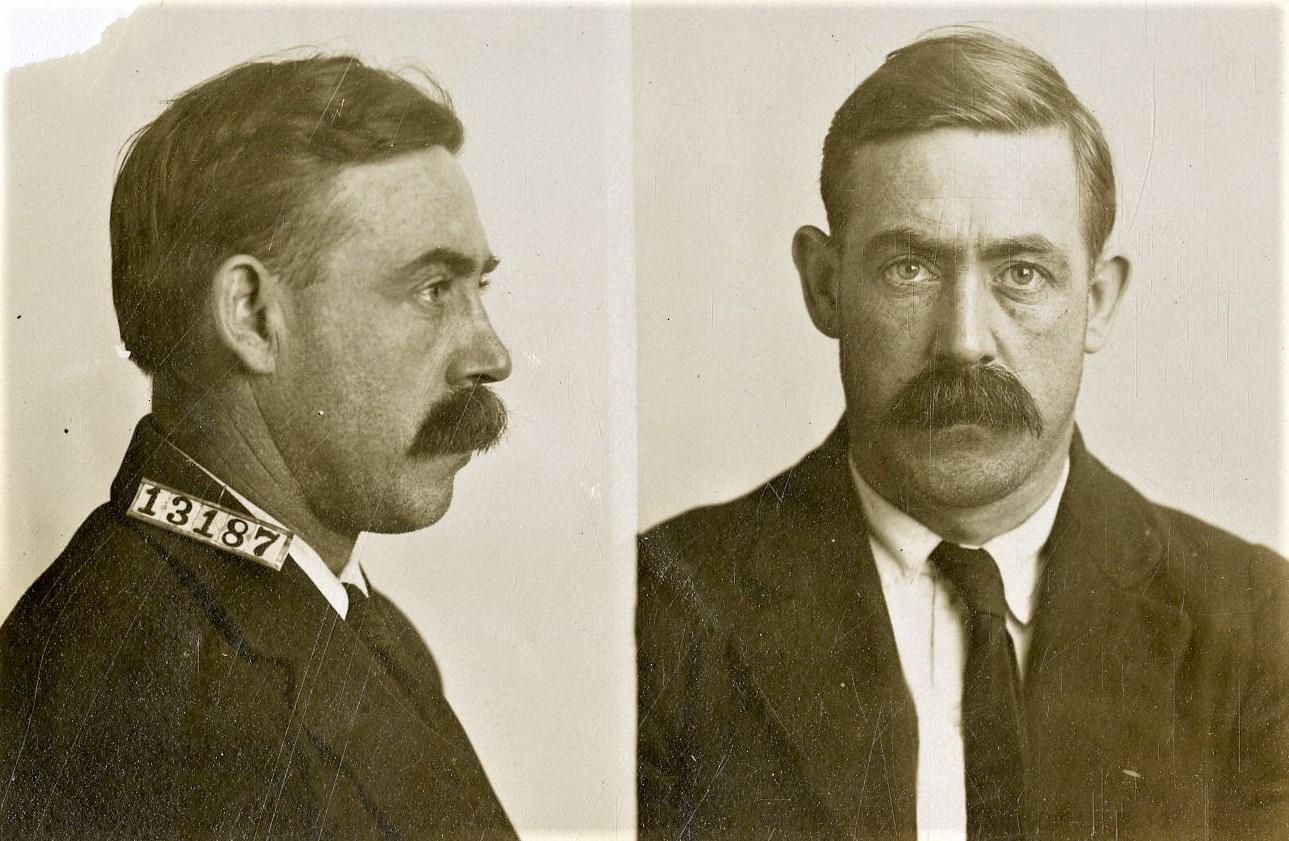
Exactly 100 years ago and it was clear that crisis in Britain was headed to a serious confrontation. Britain’s National Minority Movement, the R.I.L.U. group and kin to the Trade Union Educational League in the U.S., meets in an emergency conference. Hundreds of delegates representing a genuine shift to the left in the mass of workers and elements of the Labour movement’s leadership; one month later, and the General Strike would be called. George Hardy was born in England, active in Australia, New Zealand, and a leading U.S. wobbly, serving as I.W.W. General Secretary in 1920-1921, who became a Communist, joining the Profintern in 1921, then serving as General Secretary of the N.M.M. in his native Britain.
‘Conference of Action of the English National Minority Movement’ by George Hardy from International Press Correspondence. Vol. 6 No. 27. April 8, 1926.
Minority Increases its Representation.
That the Conference of Action called by the National Minority Movement was a huge success, everyone agrees. It was timely, for it followed a series of industrial crises. A few weeks prior to the Conference the Railwaymen had been coerced into accepting the National Wages Board Award. The National Award is an agreement between the Unions and the Companies that will result in lower living standards. It provides for a reduction of from 1/- to 8/- per week for all new entrants on the railways, and thus creates two rates of pay for workers doing the same work, and is therefore bound to produce antagonisms. The steel houses known as “Weir” houses are to be built at Metalworkers’ rates of pay, if Lord Weir and the employers have their way. This is an attempt to violate the agreements in the building industry, where wages are substantially higher. In London, 900 engineers, employed at Hoe’s Printing Machine Works were locked-out for protesting against the employment of nine non-unionists. The miners are now faced with strike action if they refuse to accept the recommendations of the Coal Commission. The worst of these recommendations are, reductions in wages, district agreements in place of national agreements, and an attempt to induce the miners to accept more than seven hours in one shift, by offering a five-day week of 42 hours, in the hope of dividing the miners by tempting them to work a sixth day in order to increase their starvation wages.
Baldwin Preparations.
The defeat of the Government and the mineowners last July came as a surprise to the employers. The threatened refusal of the transport unions to remove coal if the miners were attacked, found them unprepared.
Immediately preparations were made to meet any future and similar crises. The O.M.S. (Organisation for the Maintenance of Supplies) was organised with the full support of the Government. A Special Constabularly was created and the registration of all available vehicles and men for strike-breaking purposes was ordered by the Home Secretary: it is almost needless to say that the Fascists immediately enrolled in the Special Constabulary. The country has been organised into ten divisions, each under the control of a Cabinet Minister who will act as a Dictator should a national stoppage occur.
Our Conference of Action was necessary, to meet all these measures and to unify our own divided forces.
Conference of Action.
Under the Chairmanship of Comrade Tom Mann the Conference of 883 delegates represented 547 organisations and 957,000 workers, including 84 delegates from 52 Trades Councils. The Defence of Trade Union Rights, The Capitalist Offensive and International Trade Union Unity were dealt with.
The Chairman drew attention to our last Annual Conference decision which predicted a growth of the capitalist offensive and launched an attack upon the reactionary leaders and the Government. He pointed out that the decision of the Board of Trade to allow vessels to put to sea without wireless operators was an act to be deprecated but anticipated by the revolutionary workers. The act showed that Government orders, regulations and even their own laws, would be ignored when profits were in jeopardy in cases where the workers struck against reductions, as in the case of the wireless operators.
Speaking of the Samuel Commission Report he quoted Vernon Hartshorn, who had said “The Report does nothing but make the blackness more intense. It is simply a pronouncement that we have reached a stage where nothing but a dead-lock can ensue; a settlement on the basis of the Report is impossible”. Comrade Mann pointed out that not one workers’ representative was on the Commission; that the Report suggested the carrying out of the Baldwin policy by recommending that “wages must come down”. The miners’ only hope of preventing further and more disastrous attacks is to take the offensive.
Turning to the Feltham strike, where the military had been introduced to take on the work done by civilian and union men he said: “the real object aimed at by the authorities is to encourage antagonisms between civilian workers and soldiers, to widen the gulf between soldiers and the workers”.
He said, we declare emphatically, if the officers and generals have a right to influence parliament, we as workers claim, and will take the same right to ask workers who are soldiers to exercise their judgment and to belong to a workers’ political party. We demand the right to say “Don’t shoot” if the workers who are soldiers are ordered to do so during industrial disputes.
After making an eloquent reference to the imprisoned miners of South Wales and the twelve Communist leaders, the Chairman called upon the Conference to stand in silence as a tribute to those killed in the class-war and those rotting in capitalist prisons.
Revolutionary aim of Minority.
In conclusion he declared: “We are out for the abolition of capitalism and all its institutions. That is our ultimate objective and we unhesitatingly declare it. Our immediate objective is a substantial increase in actual control of working conditions”.
Maintenance of Trade Union Rights.
The first resolution was the Defence of Trade Union Rights, moved by Comrade Alex Gossip, General Secretary of the National Amalgamated Furnishing Trades Association. The resolution, after calling attention to the attacks of the capitalist class and the Government upon, the rights and liberties of trade unionists, Co-operators and leaders of working class political parties alike, the free scope given to the enemies of the working class to develop strike-breaking organisations for interfering during disputes, such as the O.M.S., supported by the State with its ten Commissioners, Special Constabulary, Fascist organisations, and the threat to use the forces of the State, regardless of the causes compelling the organised workers to take strike action, pledged the Conference “to demand, and by all the means in its power to enforce, the right in all factories, railways, mines and mills:
a) To organise the workers on the job into factory and pit committees; the workshop committees ultimately to become the organisational unit of the industrial organisation, under the auspices of the Trades Councils; and to set up Trades Councils where none now exist.
b) To form (through and under the supervision of the Trades Councils) Workers’ Defence Corps, in order to protect working class speakers from bourgeois terrorism, to protect trade union headquarters from Fascist incendiarism, to defend strike pickets against police interference, and finally, build up a powerful working class force, capable of defending the political and industrial rights and liberties of the workers.
c) To demand the repeal of ‘Sedition’ and anti-Labour laws.
d) To resist strenuously any attempts by local authorities either voluntary or at the instigation of the Government to prevent free association and public expression.
e) To demand the right of soldiers and naval ratings to refuse strike services.”
In moving the resolution, which was carried unanimously, Comrade Gossip said he remembered when bodyguards had to be employed to protect J.R. MacDonald and others, and he for one had had experience of mobilising protection for his own members during disputes. He urged that it was our duty to protect our speakers, pickets, meetings and Trade Union property that we must not allow our meetings to be broken up or our speakers abused or maltreated. He condemned the General Council for not taking action to put the Scarborough decisions into operation, and the reactionaries in the Labour Movement for their splitting tactics. However, he said, the political levy should not be withheld, for the rank and file would be able to exert the necessary pressure by persistent and determined work in the Trade Unions, such as we are doing now.
The Capitalist Offensive.
Comrade Arthur Horner (Executive Member of the South Wales Miners’ Federation), a member of the E.C. of the National Minority Movement then moved the resolution on the Capitalist Offensive, which was agreed to unanimously.
In moving the resolution Comrade Horner vividly outlined the preparations made by the Government and the employers. Capitalism, he said, was rapidly reaching the end of its existence and British Imperialism was therefore on the decline. He pointed out that the continuation of the coal subsidy would only accelerate this decline, for one industry cannot continue to exist at the expense of others for very long. There was only one way out for the workers, and that was to take the offensive against the employers with all the forces at our command.
International Trade Union Unity.
The Resolution on International Trade Union Unity was moved by Comrade George Hardy, Acting General Secretary of the National Minority Movement, who pointed out that, the R.I.L.U. and the Unions of the U.S.S.R. called for a united front against war and Fascism in December 1922, but this was refused. In 1923 when the Ruhr was occupied, they again called for united action, with the same result. In every strike important enough to warrant international action the R.I.L.U. always called for united assistance, but on each occasion received a negative or no answer at all from the I.F.T.U. He further declared that, the Russian and British unions, tired of division and defeat, formed the Anglo-Russian Advisory Committee, to fight for unity, and support has been offered them by Scandinavian and Finnish National Unions. Alarmed at the growth of opinion in favour of unity, the reactionary officials of Amsterdam, Oudegeest, Sassenback, etc., turned to the most reactionary union in the world, the American Federation of Labour, with the view of making them an ally to fight our Trades Union Congress and the unions of U.S.S.R. They are doing as Chamberlain and other capitalist diplomats have done trying to accomplish a “Labour Locarno” against the militants in the International Labour Movement.
Emergency resolutions were passed supporting the Chinese workers and calling for more frequent meetings of the Joint Advisory Board made up of representatives of the Unemployed Organisation and members of the General Council.
Fraternal delegates came from the Workers’ Welfare League of India the organisation in Britain representing the Indian Trades Union Congress and the Trade Union Education League of America. A deputation was also received from the Indian Seamens’ Union from two vessels in the London Docks.
An official welcome was given to the delegates by the President of the Battersea Trades & Labour Council, while Comrade Saklatvalva member of Parliament for Batterssa, also welcomed the delegates to the Conference.
FOR THE UNITY OF THE TRADE UNION MOVEMENT
Resolution of National Minority Conference on International Trade Union Unity.
The following is the text of the Resolution on International Trade Union Unity which was unanimously carried at the recent Special Conference of the National Minority Movement:
This Special Conference of Action of the National Minority Movement views with alarm the apparent deadlock in the negotiations for International Trade Union Unity, caused by reactionary members of the International Federation of Trade Unions. It condemns the maintenance of the trade union divisions in the various countries and the attempts to create reactionary blocs against the Anglo-Russian the Anglo-Russian Joint Advisory Committee.
We realise that the attempts being made to lower wages, lengthen hours and take away trade union rights in every country are parts of the bosses’ scheme for the stabilisation of capitalism at the expense of the workers.
In order to resist these capitalist methods of passing economic burdens on to the shoulders of the workers; to fight Fascism in all its forms; to stop ruthless exploitation of the native peoples and the repression of their organisations, in all Eastern and African countries; and to establish the legal right to organise trade unions in every country, this Conference pledges its full support to the Trade Union Congress and the Anglo-Russian Joint Advisory Committee in their endeavours to bring about an unconditional International Conference of all trade unions including those of Asia and Africa.
The immediate object of the campaigns is the holding of a free conference without preliminary conditions between Amsterdam and the Russian unions. But this Conference declares that there can be no question of expecting the Russian unions to abandon their comrades of the Red International of Labour Unions and merely capitulating to Amsterdam. On the contrary, the only way to world unity was clearly indicated by the Scarborough Trades Union Congress, namely, through the medium of an all-inclusive International Federation of Trade Unions.
Therefore, this Conference declares that the campaign for a World Congress for unity of the Amsterdam International, the R.I.L.U. and all trade union organisations affiliated to either International remains the most practical means of fighting for an effective working class trade union International.
Further, last week’s events at Geneva prove that the League of Nations and the Locarno Pact were promoted for the purpose of dominating the smaller nations, of taking away their economic and political freedom, and of creating a bloc against the US.S.R. and other States which refuse to be dominated by the Imperialist policy of the Great Powers. Therefore, we urge the General Council of the Trades Union Congress to fight against any further collaboration with the bourgeoisie or the League of Nations, by officials of the International Federation of Trade Unions or its affiliated organisations.
In view of the offensive of the capitalists against all sections of the British working class and also because of their expressed intention of smashing the Trade Union Movement, we call upon the Trades Union Congress to initiate a campaign for the summoning of an International Trade Union Conference of Action to prevent international blacklegging, and to enable a boycott to be instituted against British employers should they precipitate industrial conflicts by their attempts to reduce existing standards.
We further believe that the Anglo-Russian Joint Advisory Committee should utilise to the full the support of all those national organisations, at present outside of the committee, which are willing to work for complete International Trade Union Unity.
In order to further the above objects, we call upon the Trades Union Congress to take special measures to gather support in Britain by the following methods;
1. Advising all National Unions and Trades Councils of the important happenings in connection with the negotiations for International Trade Union Unity by the issue of an Information Bulletin.
2. By working for a closer association of all workers’ organisations with the trade unions of the U.S.S.R.
3. By the despatch of representative trade union delegations to the Continent in order to place before the Continental trade unions and the workers generally the British standpoint on world unity as laid down by the Scarborough Congress.
4. The encouragement of workers’ delegations to Russia in order to examine trade union, social and economic conditions, and to investigate the political situation.
5. Requesting trade union branches, district committees and Trades Councils to arrange demonstrations in their localities and to invite members of the General Council and others, actually engaged in the work of trade union unity, to immediately place the position before the British working class.
International Press Correspondence, widely known as”Inprecorr” was published by the Executive Committee of the Communist International (ECCI) regularly in German and English, occasionally in many other languages, beginning in 1921 and lasting in English until 1938. Inprecorr’s role was to supply translated articles to the English-speaking press of the International from the Comintern’s different sections, as well as news and statements from the ECCI. Many ‘Daily Worker’ and ‘Communist’ articles originated in Inprecorr, and it also published articles by American comrades for use in other countries. It was published at least weekly, and often thrice weekly.
PDF of full issue: https://www.marxists.org/history/international/comintern/inprecor/1926/v06n27-apr-08-1926-inprecor.pdf
 Revolution's Newsstand