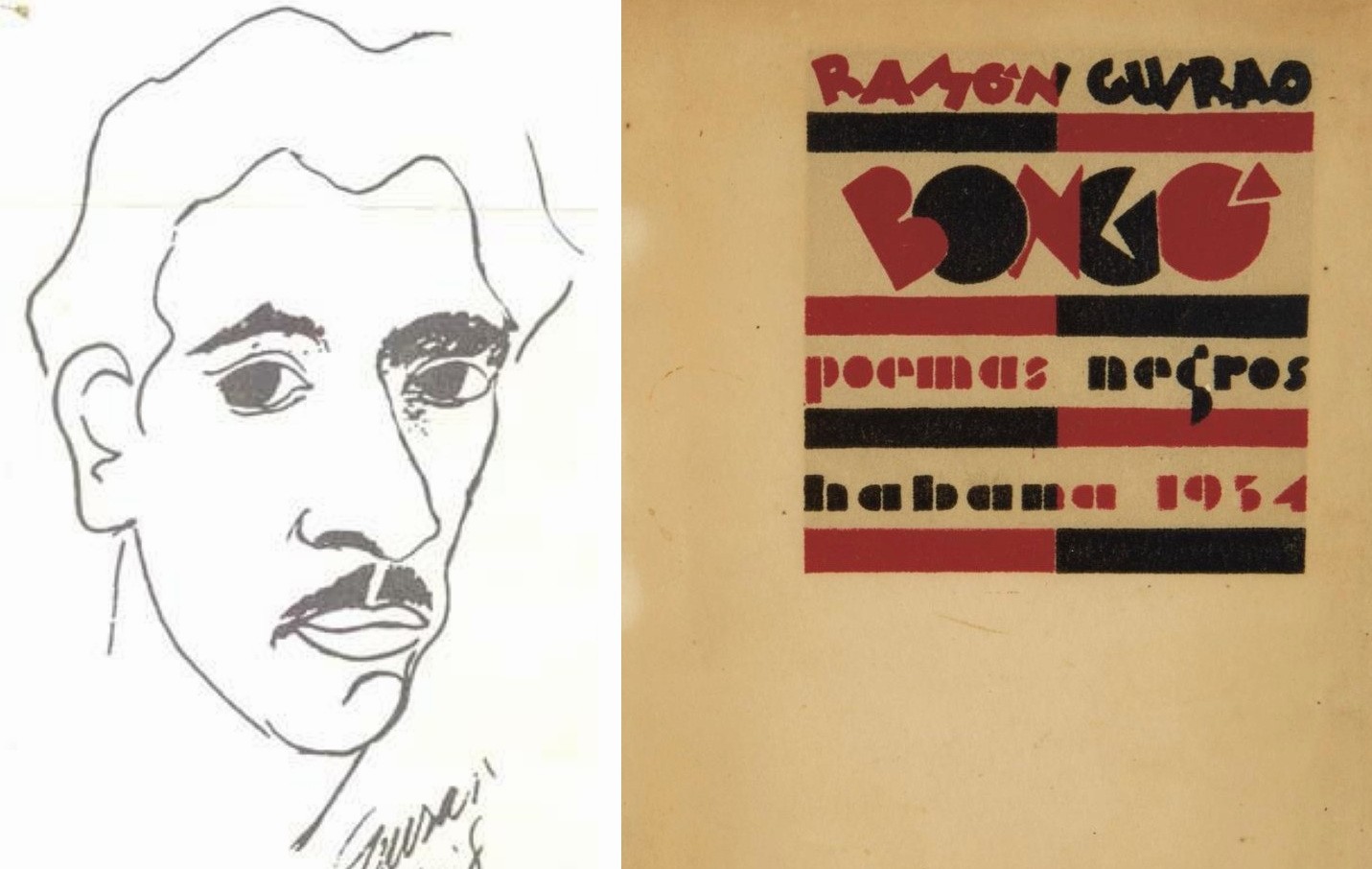
Valdés-Rodríguez, one of 20th century Cuba’s foremost radical journalists, active before and after 1959, an early promoter of Cuban film, and long a figure of the island’s popular and workers’ literary circles, speaks to a rising generation of poets including writers such as Regino Pedroso, Emilio Ballagas, and Ramon Guirao who developed as the country went through years of revolutionary turmoil in the 1930s.
‘Revolutionary Poetry in Cuba’ by José Manuel Valdés-Rodríguez from International Literature. No. 6. 1934.
The year 1933 marks one of the important moments in the history of Cuba. The agrarian and anti-imperialist revolution was taking its first firm steps. Repeated strike movements, particularly aggressive in the central sugar plantations from January to May, culminated later in the famous general strike which hurled Machado from power. The workers and peasants seized many central sugar plantations, factories and even small towns.
From this, movement–and from its lessons, which have already been carefully studied by the worker and peasant class in the Trade Union Unity Conference of the National Workers’ Confederation of Cuba (Section of the Red Trade, Union International), the agrarian, anti-imperialist movement later developed.
During these same first months of 1933 there was recorded an event of unusual importance in the poetry and in the culture of Cuba: the publication of Nosotros (We), first book of poems of the first genuine proletarian poet of Cuba, Regino Pedroso.
Regino Pedroso was born in 1903, half Negro and half Chinese. He wrote his first poems on social themes as far back as 1927 and belongs to the group called “The New” (see J.A.F. de Castro and Felix Lizaso, Modern Poetry in Cuba). This group began to publish their works in periodicals and reviews in 1920-21.
Pedroso’s book is a milestone in the history of Cuban poetry because his poems have not only a strong revolutionary content but also a high artistic quality.
From 1920 to 1930, “The New” poets, essayists, and story writers were divided into two principal groups. There were those who with Pedroso and others ascribed to art 4 class content, insisted that it be functional, affirmatively realistic and consequently dialectic and revolutionary. Among these were Jose Tallet, Maria and Aurora Villar Buceta, Juan Marinello, Raul Ros, Manuel Marsal, Pablo de la Torriente Brau, Luis Felipe Rodriguez, Ofelia Rodriguez Acosta, Gustavo Aldereguia, Emilio Roig de Leuchsenring, Jose Manuel Acosta, Horacio, Vincente Martinez Gonzalez, Ramon Guirao and many others.
The other group developed in Revista de Avance which existed from 1927 to 1930, which in the literary movement of Cuba, represents “art for art’s sake,” the ivory tower, the refinement of the decadent spirit of post-war France.
Of its members, the only really honest one, Juan Marinello, has come to the ranks of the revolutionaries.
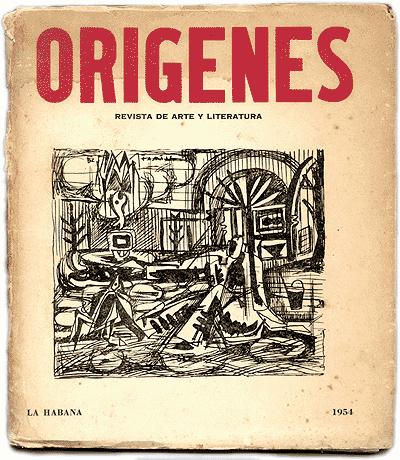
Jorge Manach and Francisco Ichaso are among the leaders of the ABC, that nucleus of tropical fascism, no less violent and criminal than the Italian and German. Weighted with an idealistic philosophy, their social outlook is essentially counter-revolutionary.
The Economic Basis
Both groups represent the conflict between materialism and idealism which holds the same significance in the history of Cuban thought and literature—discounting specific characteristics—as in other countries. Throughout the 19th century, idealism, embodied in the autonomists, defended the metropolis, the ruling classes, Spain, and denied the necessity and the possibility of revolution. The rationalists and materialists supported the struggle against Spain. Today the idealist group is very close to imperialism and the native bourgeoisie and landowners.
But neither the one group nor the other, however different their artistic, political and literary manifestations, was generated spontaneously. They are rooted in the social process and have a class basis. Judgement and characterization of these men and these facts must wait until we have a Marxian interpretation of the history of Cuba, and especially of the 30 years of pseudo republic. This is a work which needs to be undertaken immediately. To begin with, Jose Carlos Mariategui’s book, Siete Ensayos de la Realidad Peruana, once its errors are corrected, may serve as a pattern.
The Cuban social process pivots around certain events which I need not take up in detail here: the war of 1895, called The War of Independence, which ended with the Spanish-Yankee War in 1898, the Treaty of Versailles, the Platt Amendment and the Permanent Treaty between Cuba and Spain. This treaty gave concrete form to the politico-economic aspirations of the North American statesmen for the whole of the 19th century and laid a basis for the activity of Yankee finance capital which immediately started operations. Yankee investments in Cuba in 1896 were 50 millions; in 1907-08 they had jumped to 300 millions. The European war with the consequent rise in the price of sugar and the transfer of the land to the Yankees following the crash of 1920 finished the process: American investments soared to 1,500 millions and the whole economy was left in foreign hands. Since then the intensification of the economic crisis has continued without interruption.
The present decade is marked by events of an extraordinary importance. There were two strong student movements (1923, 1927), uniting purely academic ends with public and political proposals. The Communist Party of Cuba was founded in 1926. In the same year the Anti-Imperialist League and the Jose Marti Popular University were organized. Into the struggle were drawn such men as Julio Antonio Mella, and Ruben Martinez Villena, student and intellectual, and poet of the proletariat.
There has been a rapid and profound radicalization of the proletarian class, which has grown in number with the 100 per cent increase in the production of sugar (1914, 2,700 thousand tons; 1923-24, 5,200 thousand tons) and the rationalization of production processes. The peasantry has been led—especially during 1931-32—toward a revolutionary way out of the crisis. The petty bourgeoisie, following the example of a small group of intellectuals and artists called “The Minority,” which meets regularly on Saturdays, continues to agitate and protest.
All this corresponds in Cuba to the Russian revolution of 1917, to the suppressed revolutions of Germany, Austria and Hungary, to the revolutionary ferment in Mexico and India.
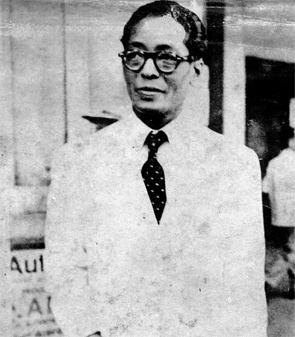
Without these and other factors, the Cuban revolution would never have reached the state of maturity it has now attained. Nor would we have the group of revolutionary writers and artists gathered around the Masas, organ of the Anti-Imperialist League; nor Regino Pedroso and Nosotros.
The Path of Pedroso
Pedroso’s book contains some poems reflecting his former attitude, and in showing the biological and ideological orbit traversed by the poet, also shows that of the class to which he belongs. This is one of its greatest merits from the social and political point of view. Some years ago, from 1920 to 1926, when the earlier and second part of the book were written, he was a manual laborer, expressing the pain whose real origin he did not know, sporadic revolt without direction, attacks of pessimism, scepticism. All that in sonorous Parnassian verse, pure and exquisite. These are his first poems, of old far-off routes, beautiful constellations of words, to use the poet’s own expression. He makes no allusion whatever to his condition as an exploited member of a given social group. He speaks of humanity in general. He does not think of himself—possible influence of the democratic-liberal myth—that he, like his class brothers, is—a mere producer of surplus value.
The Cuban proletariat did not have a clearly defined class consciousness. The struggle against the bourgeoisie and finance capital, against native and foreign exploiters, was confused. “Bourgeoisie,” “Proletariat,” “finance capital,” “imperialism,” were obscure, indefinite concepts.
In his later poems, beginning with 1927 and found in the first part of the book, the man who speaks, the poet who sings has a dialectic materialist conception—perhaps still a little confused, of the social process and life. He possesses a clear class consciousness, understands the origin of his own sufferings and those of his class. What is more important still, since it shows collective affirmation as opposed to the individualism of the earlier poems, he understands the sole purpose of his rebellions and the sole channel through which they must be motivated and guided.
Pedroso’s book had immediate consequences. Counter-revolutionary criticism hastened to the attack, signaling out particularly the Marxian conception of art, or rather what certain individuals imagined it was. It gave an opportunity to clear up this question and the occasion was used to advantage.
On the other hand, the publication of Nosotros encouraged a group of young poets to publish their own poems of a social character. Some of them, such as the “Prayer to Comrade Basurero,” by Vincente Martinez Gonzalez, were of real value.
Pedroso in his verses of a social character has not achieved any new form. That he is working, striving for it, is shown by the fact that the form of his poetry has changed as fundamentally as its content. But in Nosotros he is still far from achieving it. He approaches his objective in his latest poems, “September” and “1934 Grind,” the first dealing with the September 29 massacre and published for the interment of Mella’s ashes; and the second, inspired by the events which followed the fall of Grau and the bloody sugar season of 1934. Both have much of cinematography and vibrant reporting. They are moving because of the graphic quality of certain images. The form of the poem is in strict accord with the motif. It is as if such events could be sung only in the form which Pedroso uses.
In our judgement, Pedroso approaches the new form to which, moreover, all modern art aspires and which it has undoubtedly been farther from achieving in poetry than in other arts.1
New Forces
Shortly after the appearance of Nosotros, Vicente Martinez Gonzalez published his first proletarian poem, the “Prayer to Comrade Basurero,” which is outstanding in the flood of poems on social themes because of the strength of some of its images. The idea, sincerely and cleanly expressed, will reach the depths of intellectual comprehension of worker and peasant.
A year later, in the first part of 1934, Bongo, a volume of Negro poems by Ramon Guirao appeared. Bongo brings to the proletarian revolutionary lyric the pain, the revolt and the hope of the social group that has suffered most—the Negro. Guirao gives to the typical, which at times degenerates into picturesqueness and adjectives, a political class content. In this quality of Guirao’s book lies its greatest merit.
Bongo has other qualities which make it worthy of careful criticism. Despite the white blood of the author it is an important contribution to Afro-Cuban art, which is after all, a Cuban contribution to universal art. In Bongo there are lines of a superb poetic feeling.
There is also the most recent addition to the ranks of the proletarian poets, one who occupies a high and well deserved position in Cuban lyricism, the young primary school teacher, Emilio Ballegas.
His transition from pure poetry to proletarian verse, his entrance into the Anti-Imperialist League, to whose review he has been contributing for months, has been awaited with impatience for several years. In a letter I wrote to him in 1931 regarding the publication of his last book, I asked him to study, to make a social, economic and political analysis, in order to understand the reason for many of the questions which I knew were tormenting him.
Ballegas has a great heart and feels in the depths of his bowels the pain and injustice under which the masses of Cuba live, but his idealistic conception of life and of art prevented him from seeing clearly. His friendship and his exaggerated opinion of some of the people connected with the Revista de Avance which I have mentioned, had much to do with his indecision and confusion.
When Pedroso‘s book was published and I replied to the counter-revolutionary critics, I remember that Ballegas did not agree with me. He did not yet understand the Marxian conception of art, or perhaps it would be better to say, he was not fully convinced of it.
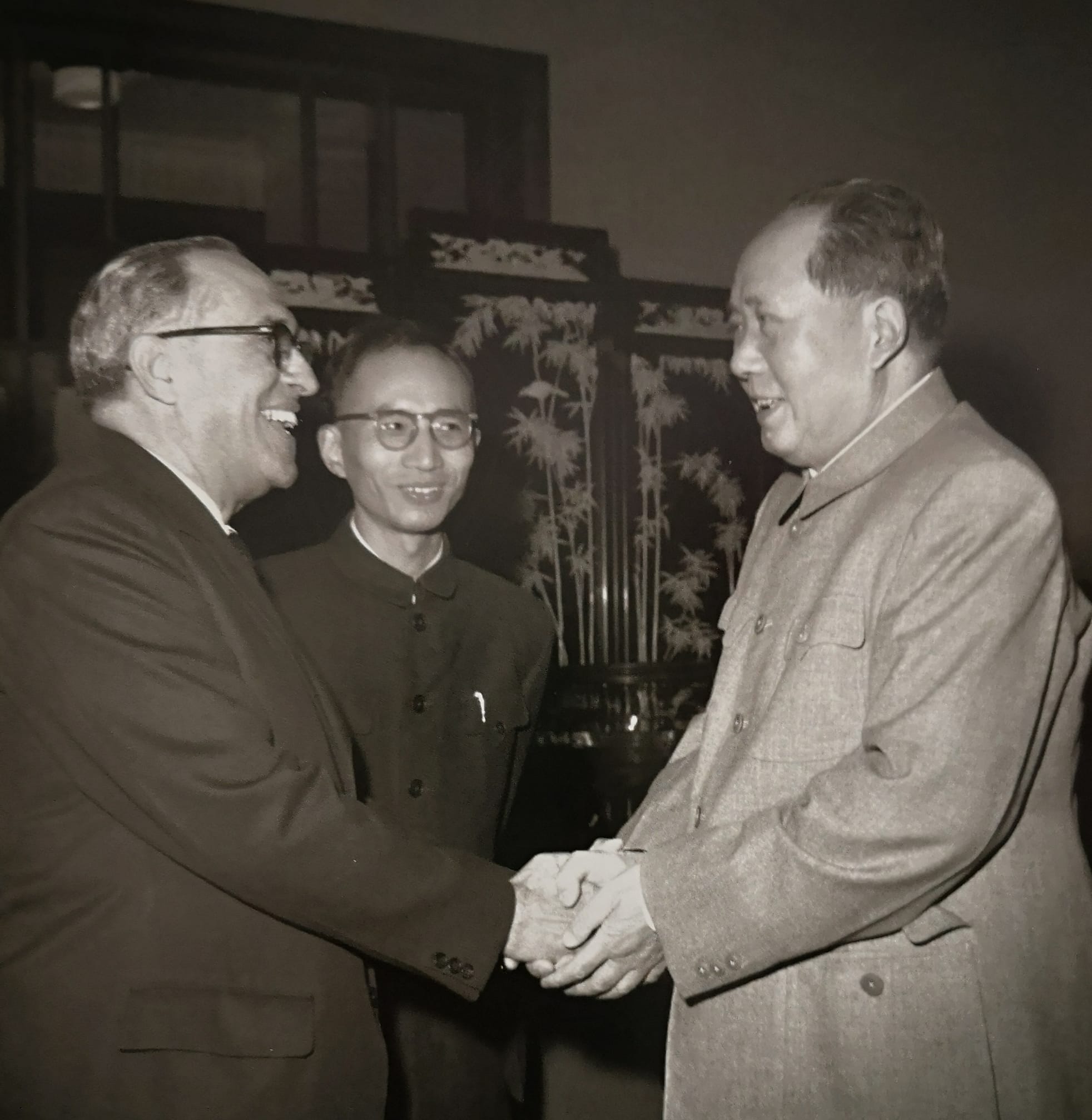
Finally he has come over to our side. Now he figures among the contributors of Masas. His poems have won the attention and enthusiastic comment of Rafael Alberti, leading Spanish revolutionary poet.
Ballegas is a most valuable addition to revolutionary ranks. Others are sure to follow in his footsteps.
These brief notes are by no means a comprehensive review of Cuban poetry. They may serve, however, to point to the growing revolutionary cultural movement of Cuba.
1. The first poems by Regino Pedroso published in the United States appeared in the monthly New Masses in 1931. They were translated by Langston Hughes, who met the poet in Havana at that time—Editor
Literature of the World Revolution/International Literature was the journal of the International Union of Revolutionary Writers, founded in 1927, that began publishing in the aftermath of 1931’s international conference of revolutionary writers held in Kharkov, Ukraine. Produced in Moscow in Russian, German, English, and French, the name changed to International Literature in 1932. In 1935 and the Popular Front, the Writers for the Defense of Culture became the sponsoring organization. It published until 1945 and hosted the most important Communist writers and critics of the time.
PDF of full issue: https://www.marxists.org/subject/art/literature/international-literature/1934-n06-last-IL.pdf
 Revolution's Newsstand