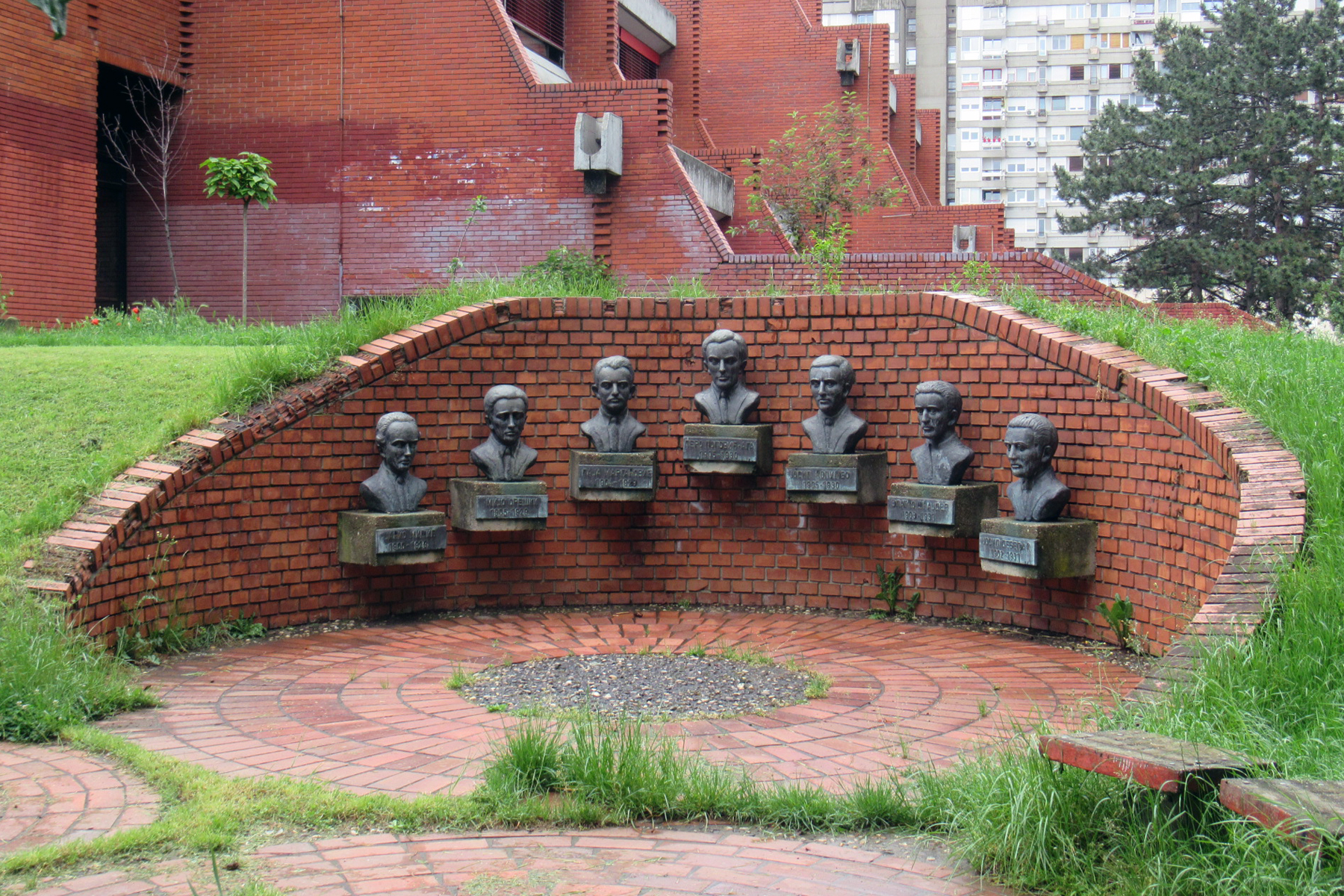
The January 6 Dictatorship of 1929 saw King Alexander I dispense with the parliament and constitution of the ‘Kingdom of Serbs, Croats and Slovenes’ to create a new ‘Kingdom of Yugoslavia’ centered on his Serbian dynasty. A fierce crackdown against nationalist and Communist oppositions saw the country become a prison-house dotted with secret graves. The already persecuted Communist Party of Yugoslavia would, almost unbelievably, survive the persecution to defeat Nazi Germany and indigenous reaction, becoming the rulers of a new, multi-national Yugoslav republic 15 years later. This look at the first months of repression importantly includes the names and brief biographies of some of the comrades lost, including some of the Seven Secretaries of the country’s Young Communist League that would die in the period.
‘Jugo-Slavia under the Lash’ from Communist International. Vol. 6 No. 22. October 1, 1929.
EVERY day brings the most appalling news from Jugo-Slavia of further brutal murders, monstrous tortures in the darkness of police cells, and arrests of hundreds of workers and peasants suspected of Communism. Among the countries where the White Terror is rampant, in the ring of openly Fascist governments which encircle the South and East of capitalist Europe, Jugo-Slavia stands out as the foremost in brutal cruelty and in the widespread application of bloody repression. Military bands under General Jivkovich—the hero of the notorious “White Hand,” put in power by the “will” of the autocrat of the “United Kingdom”—Alexander Karageorgievich—in the interests of the big bourgeoisie and with the active support of “democratic” France and England—rule the country on the basis of a preventive civil war. For among all the Fascist dictatorships the Jugo-Slav dictatorship is the most unstable and is the most urgently menaced by a revolutionary upheaval.
The change to a dictatorship, proclaimed on January 6th, was to carry out three functions: the economic “sanitation” of the country, the creation of national unity through the fusion of all races in a single nation, and the strengthening of Jugo-Slavia’s international position. The balance sheet drawn up after eight months’ existence of the dictatorship shows clear and catastrophic failure on each of these three lines.
THE fundamental measure to achieve economic “sanitation” was to have been a large foreign loan—that golden rain, which none of the twenty-eight parliamentary governments, unitedly at the helm of constitutional Jugo-Slavia had been able to bring to the capitalist enterprises of the country and to its consumptive treasury, was to play the role of a dowry for the young vigorous dictatorship. But in spite of all pilgrimages to the holy places of Western banking it was impossible to find sufficiently usurious terms on which the foreign banks might have decided to grant a loan to the Jivkovich Government. The interest of British capital in the timber industry, the most important branch of production in Jugo-Slavia, did not improve the position. The trade balance remains as before, very much on the wrong side. The introduction of the Young Plan brings with it a substantial lowering of the reparation payments received by Jugo-Slavia, while its pre-war debts, according to The Hague Tribunal decision, must be paid in gold. The attempts to issue an internal loan ended in a complete fiasco; the tax revenue is falling, and the number of bankruptcies is steadily mounting.
THE programme of uniting the “races” in a single nation, of nullifying the separatist or autonomist tendencies of the Croats, and surmounting the hostility between Zagreb and Belgrade, suffered complete defeat. More than ever before, the barracks called the Serbia-Croat-Slovene kingdom is creaking at every joint. The leaders of the Croat peasant party, who in January welcomed the change to a dictatorship and the king of the “united” country in the name of the “Croat nation,” have either been left isolated or have themselves fallen into disgrace; never before has the hate of the Croat masses for Serbian centralism burned with so fierce a flame as now. In spite of the most stringent prohibitions, the anniversary of the murder of three peasant leaders was kept as a day of national mourning with eighty public demonstrations.
The promised visit of the king to Zagreb, the “second capital,” has been several times postponed—the bridges of Zagreb are as dangerous for Alexander as the bridges of Serajevo were in 1914 for Francis-Ferdinand. The only remnants of the mirage of national unity are two or three renegades in the ministry who represent the Croat big bourgeoisie, and who were sent from Belgrade to Zagreb as executioner police-chiefs of Croat descent when the recent decree was issued for the introduction of a single orthography in the schools.
THE strengthening of the international position of Jugo-Slavia, turned into a Fascist State on the model of her great rival, Italy, was to have been achieved by the long drawn-out frontier conflict with Bulgaria, feverish activity on the Albanian frontier, and especially the association of Jugo-Slavia with Rumania and Czecho-Slovakia in secret military agreements directed against Hungary and the U.S.S.R., and a close military alliance with Poland. The result of this international “strengthening” and the surrounding of Jugo-Slavia on every side with enemies has been the unrestrained growth of her military expenditure, and the impossibility, in spite of all attempts, to secure a foreign loan.
THE means adopted for the internal “consolidation” of the country, and against the rising revolt of the worker and peasant masses, has been a raging terror, becoming everywhere more intense, and taking the form of a permanent war carried out by the militarised State apparatus against the population and against the Communist Party, which marches at the head of the rebellious masses. The first wave of mass arrests swept over the country immediately after the change in the form of the State and the establishment of the dictatorship. The second wave was connected with the First of May demonstrations. According to the data of the Central Committee of the Communist Party of Jugo-Slavia the number of arrested workers was 500 in Zagreb and 150 in the provinces, bringing the total number of arrested workers in Croatia alone up to 1,500. This number includes the workers imprisoned at Saraev, Broda, Belgrade, Nisha, Kumanov, Spleta, and Osiek. The overwhelming majority of the prisoners are workers, but there are also doctors, engineers, journalists and other sections of the intelligentsia.
The third wave of mass arrests was directed against the August 1st demonstrations. According to details published in the press, 300 workers were arrested at Saraev and 200 at Mostar. In connection with the mass distribution of Communist leaflets at one town, Vechnerek, and the districts around it, about 1,000 workers and peasants were arrested. Mass arrests of workers and students were also carried out in Osiek and in Dalmatia, where twelve selected workers were sent to the Zagreb torture-chambers. According to the bourgeois press (Frankfurter Zeitung, August 31st) the total number of arrests in Zagreb alone since the 6th of January numbers 3,000. According to the official police report, on the eve of the 1st of August, 102 arrests were made (in fact over 400 persons were arrested); thieves and other “minor” offenders had to be released from the prisons to make room for all the political prisoners arrested.
THE repression directed in the first place against the workers and peasants, against the Communists, has also reached the bourgeois “opposition.” Newspaper editors, Zagreb lawyers (who refused to vote for the address to the Throne) have been arrested; the leader of the “independent democrats,” Pribichevich, was sent into exile. A Croatian nationalist, the worker Shunich, who had killed a Serbian journalist who was the instigator of the murder of Radich, was sentenced to twenty years’ penal servitude. The hangmen, by means of the foulest tortures, force from the arrested workers who are suspected of being connected with Communist or Young Communist Party organisations depositions denouncing comrades, revealing Party depots, printing presses and secret rooms. The letters from comrades who have undergone these tortures contain details which freeze the blood—the driving of nails into the feet, systematic beating on the stomach with sandbags, etc. We cite the names of only a few who have undergone tortures and survived (we shall speak later of those who have been murdered): Mtar Trifuncvich, of Tuzl, an ex-member of parliament, secretary of the Bosnian Miners’ Union, who as a result of his tortures is unable to stand upright; I. Krindel, of Zagreb, a well-known trade union worker in Croatia, formerly a man of outstanding strength and health, but now so worn that he is unrecognisable and is unable to walk without crutches; G. Bukovich, of Mostar, an ex-member of parliament and a known Communist—it is doubtful whether he will live; A. Butorach, a woman, of Zagreb, an E.C. member of the Textile Workers’ Union: her hair was torn out by the roots, and it is not known whether she is still alive; V. Jokanovich, a lawyer of Saraevo: his father, a priest, went to a banquet of Czecho-Slovakian members of parliament who were visiting Jugo-Slavia and made a protest there against the tortures which were being inflicted on his son in prison—after which he too was arrested; A. Bergman, a clerk; Kate Govorushich and her daughter Zora; M. Petrovich; B. Nikat; G. Didier; D. Dmitrovich; Shalomon—these are the name of a few of the more well-known comrades who have been subjected to continuous tortures.
THE hangmen, of course, do not confine themselves to tortures. The most characeristic form of the Jugo-Slav terror is the systematic murder of the revolutionaries who have fallen into the hands of the Fascist Government.
Here is a list, which falls far short of being complete, of the comrades who have been foully murdered by the agents of the Jugo-Slav Premier and Minister for Home Affairs, General Jivkovich, on his instructions:
Djuro Diakovich, organising secretary of the E.C. of the Communist Party of Jugo-Slavia, and a substitute member of E.C.C.I.
Nicolai Gechimovich, secretary of the Jugo-Slavian section of the International Red Aid.
Both of these were arrested at the time of the wave of arrests in Zagreb, cruelly tortured, and then taken to the neighbourhood of a village on the Austrian frontier and murdered. The official finding of a Jugo-Slav Commission was that they had both been tortured so brutally before their murder that they could not have lived even if they had not been shot.
Marian Barun, a member of the District Committee of the Party at Saraev (Bosnia). She was arrested on July 30, before the August 1st demonstrations, and on the following day she was shot “while attempting to escape.”
Benjamin Fintzi, a member of the Jugo-Slav Y.C.L., was arrested on the eve of August 1st at Mostar, for printing leaflets. He died under torture, after which his body was placed on the railway, so that a passing train would mutilate it beyond recognition.
Pavel Marganovich, member of the Y.C.L. and working for the E.C. of the Y.C.L. Seized during the mass arrests at Zagreb, he was subjected to months of torture, and died from his mutilations in the police prison at Zagreb in the middle of August. A medical commission found that he had suffered seven deathly mutilations, carried out with a blunt weapon.
Janko Mishich, organising secretary of the Y.C.L. E.C.
Mio Oreshki, politicl secretary of the Y.C.L. E.C.
N. Oreshki, member of the Y.C.L.
These three were surprised in their rooms on the night of August 26th, at Samobor, near Zagreb, and were shot by the police for showing resistance. Oreshki’s wife was wounded and arrested, and thrown from a window, but she survived.
Neshich, a doctor, general secretary of the Government Red Cross, was arrested on August 25th in Belgrade, and charged with allowing his rooms to be used by Communists for meetings and the production of leaflets. After arrest he was thrown from the fifth floor of the police prison.
Gusnia Chengich, a journalist, arrested before August 1st on suspicion of having written Communist leaflets, was thrown from a window of the police prison.
At the end of August three political prisoners, whose names have not yet been established, were murdered in Zagreb prison.
There is evidence that in addition to the murders whose traces the police have not been able to conceal in spite of all efforts to provide a satisfactory setting for them, a large number of other still more brutal crimes have been carried out. Before and after the first of May certain comrades were arrested, and then disappeared without leaving any traces. In the middle of May a number of packets were found in the Belgrade Post Office and in a railway depot, containing mutilated bodies without heads, arms or legs. The names of the victims and the murderers were not established, and the police court authorities made no investigations. At the same time in Zagreb also some dismembered bodies were recovered from the river, but their identity was not established, nor that of the criminals responsible. A still greater number of murders was carried out in more recent months on the Serbian and Bulgarian frontier.
THE Russian White Guards who have overrun Jugo-Slavia are some of the most reliable elements in the Fascist bands and participate actively in their crimes. All the most “sensitive” posts in the Government apparatus are filled by the White Guards. The Court Guards are organised by the experienced hands of St. Petersburg masters of such matters; the railway and frontier guards and the military espionage system are overrun by Russian emigrants. In the time of the decisive struggle with the working and peasant masses the Russian White Guards will play the most brutal part in the ranks of the Fascist pretorian guard. It is not without reason that, along with Mukden, Belgrade is the chief nest of the militant white guard emigrants; it is not without reason that Wrangel’s body was brought from Brussels and buried in Belgrade with regal honours.
IN all these attacks of the Jugo-Slav Government, in all the persecutions carried out by the bloody Jivkovich on the working and peasant masses and on their revolutionary advance guard, the most abominable part is played by the Jugo-Slav social-fascists.
Their official journal, published without hindrance in Belgrade, carries on a raging campaign against the Communists, justifying all the crimes of the Fascist hangmen.
The trade unions under their control, which have fallen into insignificance now that all honest elements have left them, not only enjoy full freedom, but are active supporters of the government. Their officials get well paid posts in the government “labour exchanges,” etc. Their representatives participate in all government commissions for worsening labour legislation, together with the employers’ representatives. They defend all the government’s measures directed against the workers, telling them that “it would be a mistake to expect the government to offer everything of the best to the workers.” And they do not refrain from openly defending the murders carried out by the police hangmen.
One of the most abominable acts, not only of the Jugo-Slavian but of the international social-fascists, was the obituary notice— which bore the signature of I. Jakshovich, one of the Jugo-Slav social-democratic leaders—in the social-democratic journal Glas Slobode of May 16th, when the brutally mutilated body of our comrade Djuro Diakovich had been found. It was headed “A Symbolical End.” The article concluded with the following words:—”Djuro Diakovich met his end at a time when in our working class movement the type of hero and knight of ruffianism suddenly disappeared and gave place to those who work with reason and calculation; at a time when many perished because they did not understand how to adapt themselves. Djuro Diakovich was one of the foremost among these. His gaze was directed not on the conditions and the people around him, but on a fixed point ahead.”
Thus the social-democrats express their cynical satisfaction that police murders can achieve the “sudden disappearance” of revolutionary heroes, and by such means clear a place for them, people who can “calculate” and “adapt themselves.”
THE leading organs of international social-fascism, and especially the Berlin Vorwaerts, are silent on even the most abominable exploits of their Jugo-Slavian brothers. From time to time they shed a few crocodile tears over the victims of the Jugo-Slavian police, but in fact they support the ruffian governent of Jugo-Slavian dictatorship. Hermann Windel, specialist in Jugo-Slav affairs and paid stenographer of all the Jugo-Slavian governments, continues to defend the interests of the Jugo-Slav fascist government in the pages of Vorwaerts; while Siegfried Jakobi, also on the Vorwaerts staff, appealing to the “left” social-democrats, visited Jugo-Slavia on behalf of the “Socialist International and German Social-Democracy,” and plunged into the chauvinist and official Belgrade paper Times (August 22) with an ardent defence of the Jugo-Slav Government, praising its “cultural” work in Macedonia.
The hopeless position of the Jugo-Slav fascist dictatorship presses it on, on the one hand, to intensify its most brutal terror, rousing against it ever wider sections of the working population, and on the other hand, to seek salvation in provocative military adventures. Fascist Jugo-Slavia, whose relations with all its neighbours are acutely hostile, and which has entered into anti-Soviet military treaties with the States of the Little Entente, is at the present moment one of the chief danger-points for war in Europe.
OUR Communist Party of Jugo-Slavia, persecuted and driven deep underground, covered with heavy wounds, carrying on a death struggle with the enemy which is aiming at the physical annihilation of its leading cadres—the pride and flower of the Jugo-Slav proletariat—has been able, in spite of everything, to maintain its connections with the wide proletarian masses, to lead them into the struggle, to spread its influence through wide sections of the peasantry, to win undisputed leadership in the whole national liberation movement against the detestable military-fascist dictatorship. In the recent period, especially in connection with August 1st, its agitation has succeeded in reaching the ranks of the army and in undermining this last prop of the oppressive tyranny. Its most urgent task is now, more than ever before, to offer resistance to the attacks on its ranks, to organise mass self-defence against the murderers, not for a moment to lose its close and strong links with the masses, in order that when the time comes it can strike a deadly blow against the bloody fascist monsters.
IN this unprecedentedly heavy struggle of our brother Party the whole Jugo-Slav proletariat is entitled to reckon on the most active support from the whole Communist International, from all its sections, and from the whole revolutionary proletariat.
The campaign in defence of the Jugo-Slav proletariat, in defence of the Jugo-Slav Communist Party, an active campaign with all available forces against the orgy of white terror in Jugo-Slavia—must be developed on the widest possible front by all sections of the Comintern. It must be directed not only against those directly responsible for this white terror, against the government of bloody Jugo-Slav dictatorship, but against all those who are guilty of supporting this dictatorship. Again all capitalist governments—with the pseudo-Labour Government of MacDonald at the head—with whose support the fascist government of Jugo-Slavia is kept alive. Against the Russian White Guards, the pillars of the Jugo-Slav police. Against the social-fascist “international,” the Jugo-Slav section of which offers victims to the murderers, and which as a whole, preparing, everywhere the way for the fascist régime, Supports it where it has already been enthroned.
Let there be not a single factory which does not raise the revolutionary protest of the proletariat against the brutalities of the Jugo-Slav terror! Let no opportunity be missed to strike a blow at the fascist Jugo-Slav dictatorship!
The ECCI published the magazine ‘Communist International’ edited by Zinoviev and Karl Radek from 1919 until 1926 irregularly in German, French, Russian, and English. Restarting in 1927 until 1934. Unlike, Inprecorr, CI contained long-form articles by the leading figures of the International as well as proceedings, statements, and notices of the Comintern. No complete run of Communist International is available in English. Both were largely published outside of Soviet territory, with Communist International printed in London, to facilitate distribution and both were major contributors to the Communist press in the U.S. Communist International and Inprecorr are an invaluable English-language source on the history of the Communist International and its sections.
PDF of full issue: https://www.marxists.org/history/international/comintern/ci/vol-6/v06-n22-oct-01-1929-CI-grn-riaz.pdf
 Revolution's Newsstand