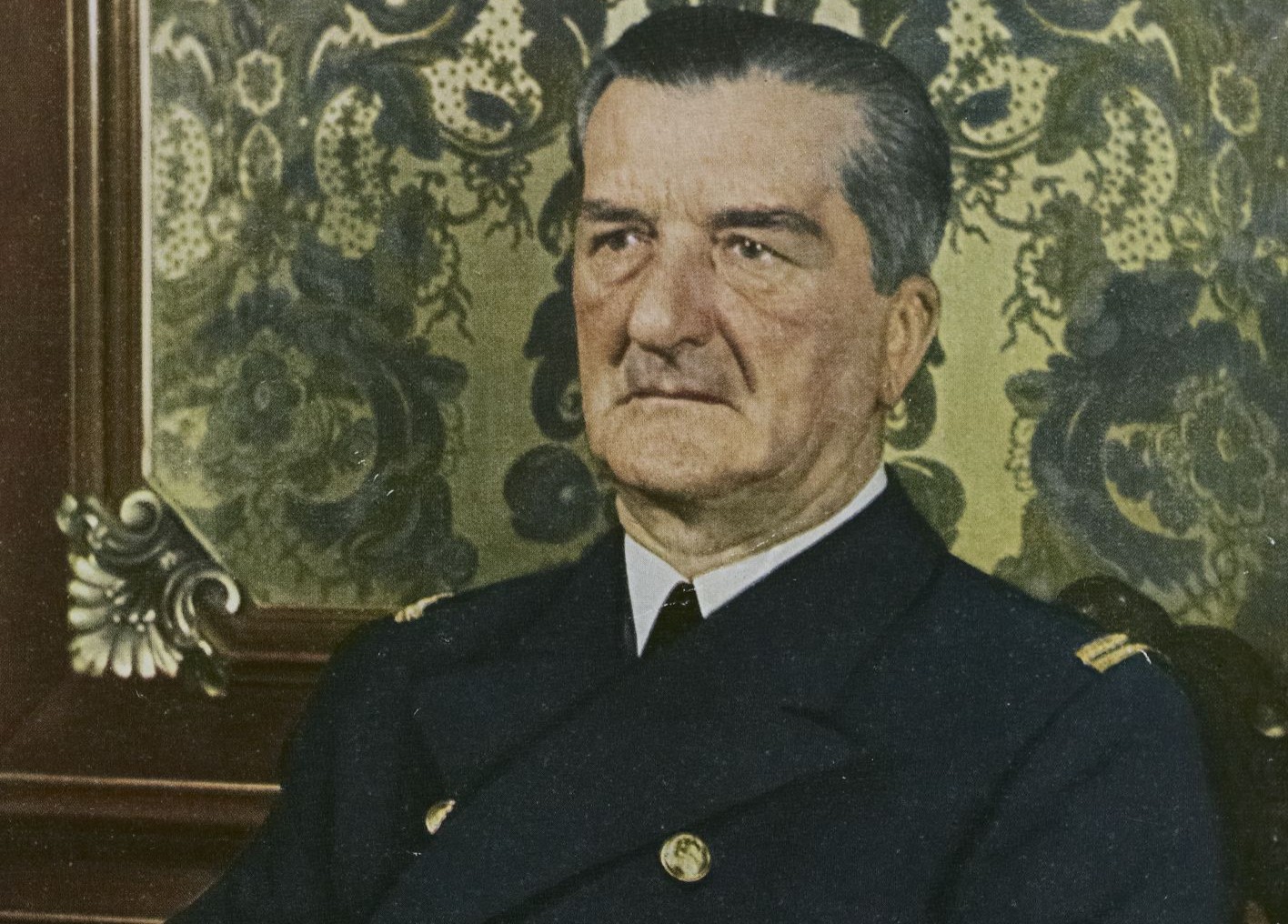
Different class forces operate within a revamped electoral system created to ensure the dominance of the Hungarian anti-Communist dictatorship, led by Regent and Supreme Warlord Miklós Horthy. Hungary’s 1922 parliamentary elections were the first to see the Social Democrats participate in since the fall of the Hungarian Soviet Republic in the summer of 1919. The formerly ruling Communists were outlawed.
‘The Elections in Hungary’ by George from International Press Correspondence. Vol. 2 No. 51. June 20, 1922.
The results of the Hungarian elections must be considered in two separate and distinct parts: the results of the elections in the provinces, and those in the capital, as well as in the big industrial and commercial centres. The new election act, on the basis of which the elections were held, renders this distinction necessary. The real struggle took place in the fight over the franchise. After the suffrage had been greatly curtailed by the raising of the age of those entitled to vote, the abolition of woman suffrage and other reactionary measures, the struggle turned on the question of the open or secret ballot. The terrorist government was well aware that in the event of its not being able to carry out any direct election terror, it would receive a very severe setback. From the discussions on this question it was apparent that the Opposition Parties in the event of an open ballot would seriously consider not taking part in the election.
Upon the question of the secret ballot a concession was made to the Opposition which apparently assured their participation in the election. In the electoral districts of the capital, and in some of the larger industrial and commercial centres, the secret ballot was retained. On the other hand in the country and in the villages and small provincial towns, the ballot was open. In making this concession, the Government was influenced by the consideration that in the constituencies in the big towns the Opposition was so strong, especially among the workers, that its suppression even by the most brutal methods would not be possible.
In those districts with the open ballot where the Government terror raged undisguised, the Government candidates secured their return in almost every case. On the other hand in those districts with the secret ballot, the Government Parties, suffered a decided defeat. According to the final returns, the Government got 167 and the Opposition 77 seats. Of these 80 Opposition seats 25 went to the Social Democrats.
The Government appealed to the country as the so-called “United Party”. This electoral partnership, however, can be characterized as anything but “united”. There raged the most embittered conflicts over the setting up of the list of candidates and the Government failed to set up an actual united list. In many districts there were various candidates of this “United Party” opposing each other. Some of them are still awaiting the second ballot. It is a conglomeration of such divergent groups of interests that already before the election the break up of this bloc was repeatedly threatened and will continue to threaten in the new Parliament. If one should enquire the program of this united party, only negative items can be enumerated, such as: against the bourgeois-democratic and radical Opposition, against the legitimist feudal wings of the aristocracy. The interests of the partners in this alliance extended and diverged beyond these negative election slogans, only agreeing upon one point, that for the time being they considered Horthy and his officers a sufficient guarantee to safeguard their interests. But generally speaking even this cannot be maintained. Already before the election it was clear that the terrorist anti-Semitic wing of the bloc, supported by armed officers and student bands of the “Awakening Hungary ” movement had lost ground. The elements of the old Tisza Party who entered the united party through the election compromise– representatives of modern financial and agrarian capital–attempted to push aside the candidates of this city petty-bourgeois terrorist wing. But the agrarian petty-bourgeois wing of the bloc–the so-called Small Farmers’ Party–the leaders of which supported the great landlords were also pushed aside by the new elements. So it comes about that the governmental party in the place of the city and agrarian petty-bourgeois, represents in its overwhelming majority the financial and agrarian capitalists. Horthy and his Prime Minister have succeeded in making use of the terrorist formations which rendered them allegiance to secure the victory at the elections and have now cast them aside in order to base their rule upon the support of a part of the great bourgeoisie.
The proposed election coalition of the Opposition Parties has fallen through owing to different reasons. In this connection the part played by the Social Democratic party must also be described.
The Hungarian Social Democratic Party is, as is well known, one of the most beautiful ornaments of the Second International. The leaders of this Social Democratic Party were sitting with White Terrorists in a Coalition Government and when the hangman had no further use for them they were compelled to go into the Opposition. This opposition consisted for a long time in maintaining complete passivity and in secret and open pacts with the government of the White Terror. After the working class had recovered from its apathy the Social Democrats were compelled, if they did not wish to lose their influence completely, to enter upon an active policy. This consisted at first in an open pact with the Horthy Government. The indignation of the working masses however compelled them to withdraw from this pact, at least publicly. Before the elections they had neither a definite line of tactics, nor a program, nor an effective election slogan. The Opposition within the Party–a “Left Wing” consisting of Independents and Communists–repeatedly threatened a party split. The Social Democrats themselves would have welcomed this split. The pressure of the Government against the radical bourgeois parties was much stronger than against the Social Democrats. In the first place, the election slogans of the radical bourgeois opposition were much more ” radical” than those of the Social Democrats; secondly, the Government had no need to fear any great loss of prestige from the possible election passivity of this bourgeois party. The Social Democrats profited by this opportunity to gain successes” without any struggle. They made a weak protest against the setting in of a White Terror from which they enjoyed a certain amount of immunity. They did not even dare openly to acknowledge the October revolution and the republic in their election slogans. Just before the election they concluded an election pact with the Agrarian Democratic Party. The Hungarian Social Democrats have never succeeded in winning the great mass of the agricultural proletariat. For this purpose it would have been necessary to carry on a revolutionary propaganda activity and to have a revolutionary agrarian program which they however always fought shy of. At this time also the Social Democrats restricted themselves to registering the spontaneous utterances of the city proletariat as their “success”. The agrarian proletariat–with the exception of a few villages where the fire of the revolution still smouldered under the ashes were quite disregarded. The Social Democrats only put up candidates in those districts where victory appeared “certain.” To carry on extensive propaganda and organization work, especially among the agricultural proletariat, in connection with the election campaign never occurred to their minds. They merely aimed at gaining seats. Where this did not appear certain without a struggle, they left the field to the radical bourgeois Agrarian Party.
The question arises, “How was it possible that the Social Democrats in spite of this supine and treacherous election policy, were able to get so many votes that they became the strongest Opposition fraction in Parliament?” The answer is perfectly simple. The active working masses, awakened from their torpor, demanded an active policy. An obvious method of activity appeared to be participation in the elections. The working masses who were opposed to the Social Democrats were not yet sufficiently well organized to set up their own candidates. Legal Communist propaganda is quite out of the question. The official Social Democrats have in their hands the whole machinery of organization. A further reason for the great election successes is to be found in the fact that a left wing bloc was formed involuntarily. Where the Opposition bourgeois parties had no prospects of electing their own candidates, they supported by their votes the Social Democratic candidates against the Government candidates. In this they made use of their previous experience from which they have learnt that in critical moments the best guardians of their interests are the Social Democrats.
That part of the feudal aristocracy which is opposed to the Government clique and which feels its interests bound up with the fate of the Habsburgs came through the election very badly. The cause of their defeat is to be found in the fact that, apart from the Terror employed by the Government, the pacifist minded voters have had about enough of the continual putsch attempts and they consider the existing state of affairs a necessary evil.
The Horthy Government has succeeded in giving the new Parliament the appearance of a modern “democratic” Parliament with a great agrarian capitalist majority. This modern Parliament will even have a “Social Democratic” Opposition–an unmistakable hallmark of “democracy”. The Hungarian working class however will soon learn from the Parliamentary activity of their “representatives” that they have been duped; they will sweep away their reformist illusions and proceed the way of the inexorable class war.
International Press Correspondence, widely known as”Inprecorr” was published by the Executive Committee of the Communist International (ECCI) regularly in German and English, occasionally in many other languages, beginning in 1921 and lasting in English until 1938. Inprecorr’s role was to supply translated articles to the English-speaking press of the International from the Comintern’s different sections, as well as news and statements from the ECCI. Many ‘Daily Worker’ and ‘Communist’ articles originated in Inprecorr, and it also published articles by American comrades for use in other countries. It was published at least weekly, and often thrice weekly.
PDF of full issue: https://www.marxists.org/history/international/comintern/inprecor/1922/v02n051-jun-20-1922-Inprecor.pdf
 Revolution's Newsstand