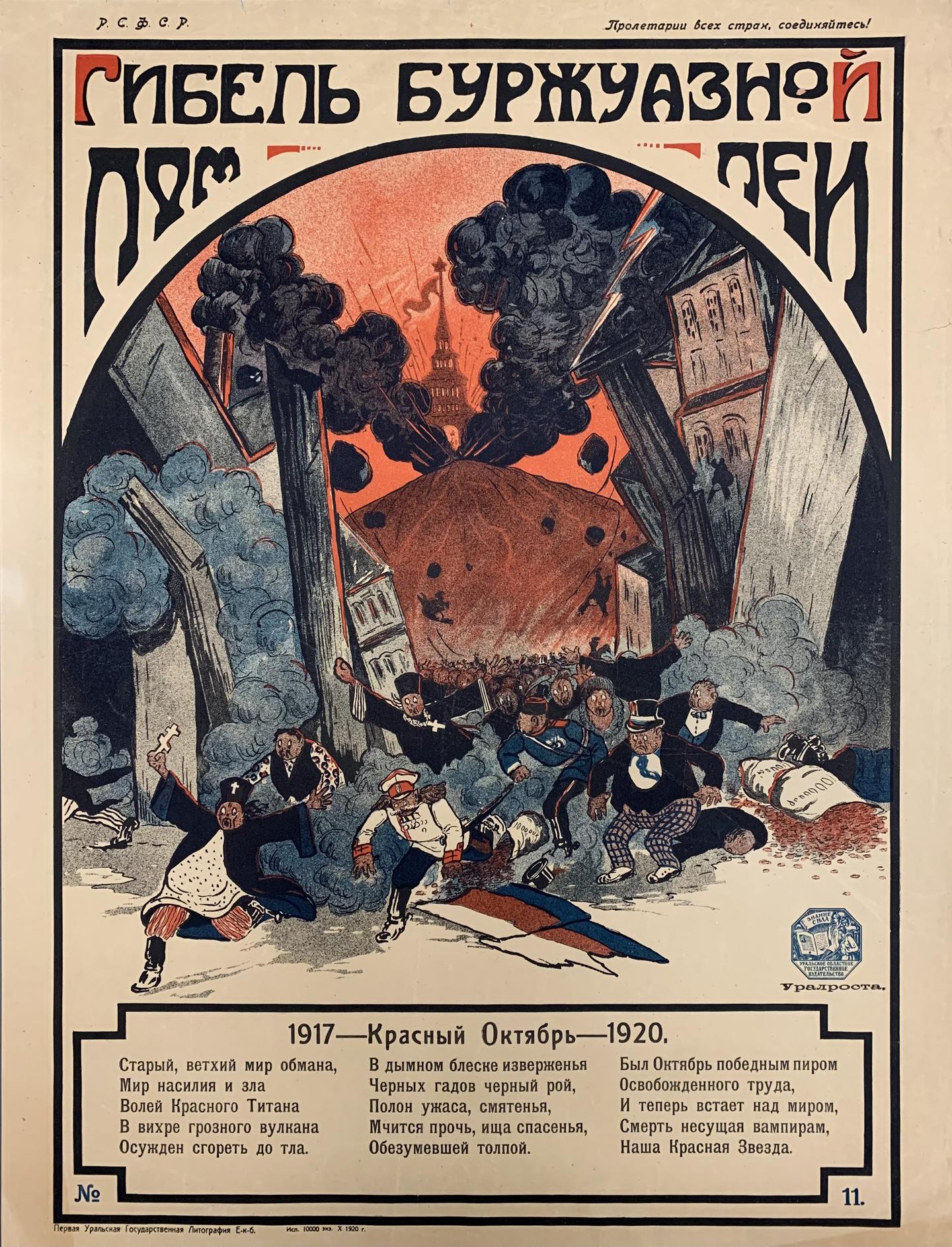
In an attempt to meet and undermine the rising post-war working class wave as well as the growing authority of the Bolsheviks, a Charter of International Labor was added to the founding documents of the League of Nations, formed not long after the Comintern in 1919. Pankhurst, as you might expect, was not impressed. Here, she looks at what was on offer and its context–blockade and war against Russia’s working class attempting to free itself from feudalism, capitalism, and imperialism.
‘Labor and the League of Nations’ by Sylvia Pankhurst from Revolutionary Age. Vol. 2 No. 5. August 2, 1919.
THE League of Nations Commission on International Labor, appointed by the Council of Ten in Paris, has devised a “Charter of International Labor Legislation,” which it is proposed to insert in the Peace Treaty. The Charter bears a striking resemblance to that adopted by the Government Socialists at Berne. We should not be surprised by that fact; it is not a chance coincidence. The approved policy of all Government Socialists, and of the weaker reformist Liberals, is always to find out what the Government means to give and then to ask for that. The Peace Conference Charter contains many of the out-of-date resolutions of the oldest of ancient conferences on Labor. Most of the things it offers have either been obtained here already or are about to be obtained; the most notable exception being “a reasonable standard of life” for the workers, and of course opinions differ acutely as to what is reasonable! The provisions include:
Children not to be gainfully employed under 14 years of age.
Persons between 14 and 18 not to do work harmful to their physical development, and to continue their education.
Every worker to have a wage adequate to maintain a reasonable standard of life having regard to the civilization of his time and country.
Equal pay for equal work. A weekly day of rest. 48-hour week, subject to an exception for countries where climatic conditions, industrial development, or other circumstances render the industrial efficiency of, the workers substantially different.
(That we suppose means that Africans, Indians, and others whose power of protest is but feebly developed, will have to work longer hours.)
Foreign workers to have the same treatment as nationals.
State inspection of factories and workshops. A poor programme, but all that the League of Nations has to offer the workers, to prevent them turning to Bolshevik Socialism, which will make the workers the rulers of the world and its destiny. Wilson Harris, in The London Daily News on March 21st, quoted some personage at the Peace Conference:
“Now Bolshevism, whatever else may be said about it, is a tremendous idealistic force–unquestionably the greatest idealistic force, in my opinion, since the birth of Christ. You may vilify it. You may spread reports of its excesses. You may advocate military measures against it. But there it remains a tremendous idealistic force. There is only one way to fight an ideal. That is by opposing another ideal to it. And there is only one practical ideal in the world today that can oppose Bolshevism–the League of Nations.”
And then the prophet came tumbling down from the heights and forgot all about idealism, saying: “The first weapon of the League must be food. You must have some force–police or military to guard your lines of transport, but a loaf in your left hand is going to be more important than a sword in your right.”
On March 31st this same Paris correspondent states that an investigator, employed by the British Government to make inquiries in Germany, has just returned and has reported that there will be a change of Government in Germany, but that a mere change of Government will not satisfy the country:
“The masses of the people would demand some control over administration, and this, it is submitted, could be obtained by the constitution of a national form of workmen’s and soldiers’ council as the first Chamber. It is argued that such a compromise between the Soviet and Parliamentary systems is necessary to conciliate the masses.
There is another admission. Firstly, we are told that Bolshevism is the strongest idealistic force since Christ, and, secondly, it is admitted that the parliamentary system does not give the masses of the people control over the government, but that the Soviet system does. The League of Nations is put forward as the one force that can stave off Bolshevism! And this is the Charter which the League of Nations offers to the workers as an alternative to Socialism!
The machinery of the International Labor Office which the Council of Ten (“moved,” they say, “by sentiments of justice and humanity”), are about to set up, is as unsatisfactory as the Charter. It consists of a General Conference of four representatives from each of the countries represented; two of these four are to be representatives of the Government, one of employers of labor, and one of the workers. Labor is thus placed in a safe minority of one to three! Each delegate may be accompanied by two advisers, and where women’s questions are concerned “one at least of the advisers should be a woman.” This is to placate the middle-class suffrage societies. Some of them will no doubt feel highly flattered by the idea that the Governments have consented to allow the women to appear occasionally, in the proportion of one to eleven, and that sex barriers in the general League of Nations’ machinery are verbally removed. The workers’ and employers’ delegates are to be selected in agreement with the most representative body of employers and workpeople, and the Conference, by a two-thirds majority of the votes cast, may refuse to admit any delegate not so appointed-Bolshevik views can thus easily be excluded by a vote of the Government and employers’ representatives!
The governing body of the International Labor Office is to consist of 24 members: 12 representing the workers’ delegates. Thus Labor is placed in a minority of one to four!
The International Labor Office will collect and distribute information concerning international Labor, and will publish a periodical in English and French.
If any country fails to fall in with the agreements made concerning Labor, a commission of inquiry shall be chosen by the Secretary-General of the League of Nations, from a panel consisting of three representatives of the Governments, three representatives of the employers, and three workers’ representatives. Any of these representatives, “not deemed to be fully qualified,” may be rejected by a two-thirds vote of the governing body. Thus, again, the Government and employers’ representatives may together veto any of the workers’ representatives to whom they may object. The offending State may appeal from the Commission of Inquiry to the “Permanent Court of International Justice” to be created by the League of Nations, the findings of which will be final! The offending State may have passed upon it “an economic sentence.” We suppose this means that it may be blockaded and boycotted, and that its people may be starved. The London Times states that “the British Dominions and India will have the same rights and obligations as if they were separate high colony of any signatory which the Executive contracting parties, and this will apply to any Council of the League of Nations admits to be fully self-governing.” But how can this be? India is not “fully self-governing.” She has not even a semblance of self-government; the mass of the Indian people are absolutely without political rights. We wonder whom the British Government will choose to represent Indian Labor, indeed, we can hardly believe that they will allow the masses of the workers and peasants to choose their own representatives, though they might safely do so, since Labor in all countries is to be placed in a hopeless minority.
Labor in all countries should refuse to have anything to do with this scheme. It places Labor in an insulting minority. It brings Labor into the international machinery set up by the capitalist Governments to fight Socialism. It is the coping to the national machinery by which the Governments are seeking to divert Labor from the direct, independent action, in which it is daily growing more powerful and successful. In direct action the wire-pullers and negotiators take second place, and the rank and file are the rulers. By direct action the Russian working classes, the industrial workers, the peasants, the soldiers and sailors, established a government and abolished landlordism and Capitalism. By direct action the miners won the minimum wage and the eight-hour day; by the threat of direct action they have won the promise of a seven-hour day; by direct action the Glasgow women won the Rent Act.
In the political field Labor’s gains are infinitesimal; any concessions made to Labor during the war, and for years before that, were made in fear of strikes outside. The pleadings of Labor men in Parliament fell on deaf ears.
In the committee room at the conference table Labor, always carefully placed in a minority there, is denied that which it is entitled to demand; and what is more, its spokesmen are too often bamboozled into accepting the denial with thanks, as “an instalment of justice,” urging the rank and file to accept it, in order to avoid conflict.
In the international Labor machinery Labor will always be kept in a minority of one to three, or even one to four; and the Council of Ten, by giving to the employers’ and governments’ representatives the power to reject any of the Labor nominees of whom they may disapprove, will secure that even this representation shall consist of thoroughly tame and subservient people. Evidently there will be secrets to be learnt at the International Labor Committee with which Capitalism can only trust selected individuals who are warranted not to tell! Moreover, Labor must be held in complete subjection on this body, because this is the international body which is to act as a drag on all the Whitely Councils set up in the various trades; a drag on the National Industrial Councils in the various countries; this International Council will be like the Local Government Board, which surcharges Poor Law Guardians who relieve too generously, and either refuses to approve, or continually delays, the various housing schemes and schemes for municipal trading put forward by local bodies. Even on the Whitely Councils, Labor will be in a minority, for the Chairman appointed by the Government can always cast his vote on the other side. Moreover, when it comes to legislation, the Governments will only adopt the recommendations of these various councils as, and when, it chooses. In the case of the coal inquiry one report was signed by three employers’ representatives, one by two employers’ representatives and the Chairman, one by six workers’ representatives. majority report was therefore the report of the workers’ representatives; but the Government has chosen to act on the report submitted by the Chairman chosen by itself. So, too, with the International Industrial Council. If any combination of circumstances should produce a majority recommendation objectionable to international Capitalism, we believe the League of Nations would step in and arrange matters to suit itself. But such a contingency can scarcely arise since the workers are placed in so small a minority.
If the workers were to be diverted from their struggle to better their industrial conditions by the hope that this network of councils would do it for them, their emancipation would indeed be indefinitely postponed. But this will not happen. The toiling masses are just waking to the need for rank-and-file control of the industrial machine; they have just devised and are perfecting the organization of that control; they are just beginning to see that by travelling resolutely onward in that direction, they can take into their own hands the entire machinery of production and can govern society itself. It is impossible that they should leave behind that broad, inspiring prospect and revert to a still greater dependence upon official leaders. Above all, it is impossible that the workers should revert to dependence upon leaders who, failing to see the vision of rank and file co-operation, and the triumph of the workers, have entered into partnership with the capitalists by accepting seats upon the Joint Industrial Councils. When Arthur Henderson joined the Coalition Government he gave his support to Conscription, the Defence of the Realm Act, [Generally called Dora. The English equivalent of the American Espionage Law. It was supposed to be aimed at German spies but, like the Espionage Act, operated almost exclusively against Socialists and radical labor agitators.] and the Munitions Act, all of which were used to coerce the workers. He surrendered his freedom of independent protest; he accepted responsibility for the majority decision of the Cabinet; his lips were sealed. He has since declared that there were doings by the Coalition Government which, in his view, were detrimental to the interests of the workers whose representative he was, and to society as a whole. He has said that he could embarrass the Government by disclosing these matters. But he reveals them to no one, because, having joined the Government, he holds himself bound to keep its secrets. We strongly disagree with this view; we think it is Henderson’s duty to make these matters public; we think he should have done so as soon as they came to his notice. At the same time we know that every artifice will be used to induce the members of the various so-called Labor Councils to consider themselves bound to help in enforcing the decisions of the Councils. Only those Labor representatives who are prepared to accept the Henderson standard of honor will be acceptable to the Governments and the employers as members of these Councils.
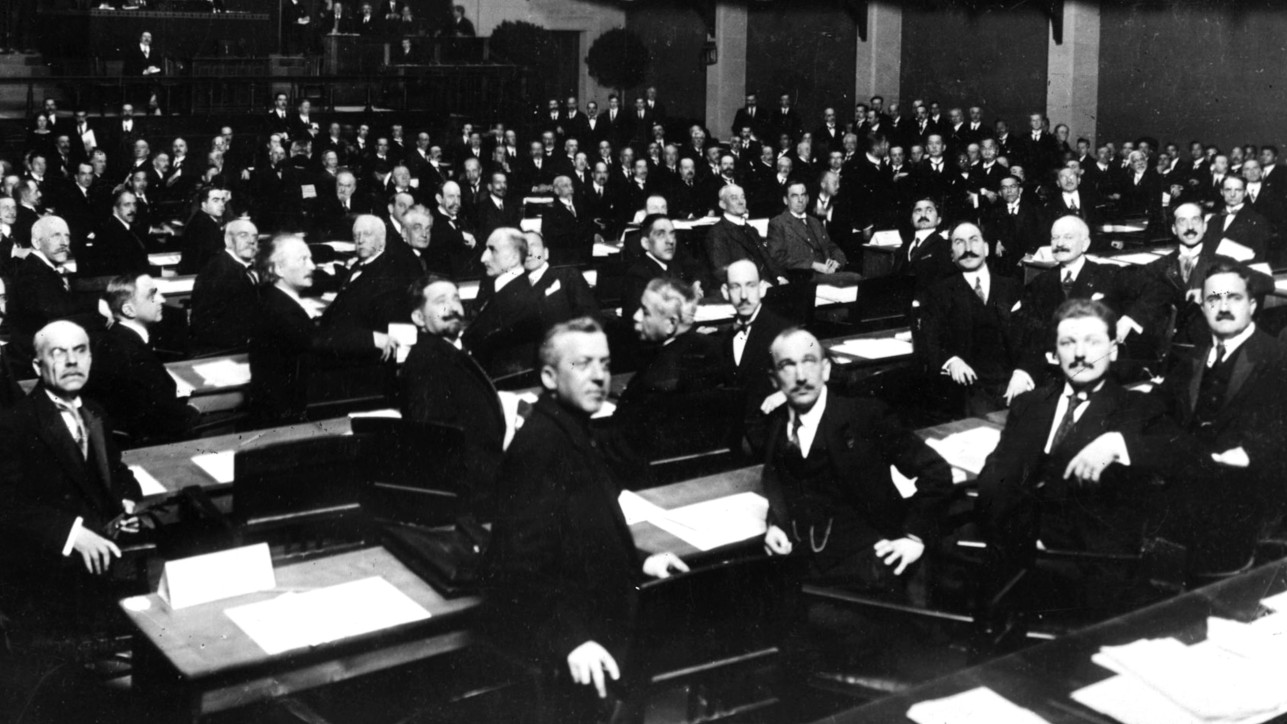
The powers that be are complacently preparing this network of Councils, which will take many months to arrive at even the simplest decisions, and which on big controversial matters cannot decide at all. Perhaps it is hoped that the workers will take years to discover that the Councils are ineffective.
Henderson and Huysmans, so often publicly snubbed by the Allied Governments, yet still playing the part of eager messenger boys to them, are busy in all these intrigues. The London Daily Herald reports that Henderson, Ramsay MacDonald, Stuart Bunning, Branting, Renaudel, Longuet, and Huysmans are conferring in Paris on the Berne resolutions, the organization of the International and the International Labor News Agency; Henderson is also conferring with the British peace delegation, including Lord Robert Cecil, in regard to these matters. Ah, this wire-pulling and conferring with the guardians of Capitalism! Organized on this basis it was no wonder that the Berne Conference condemned the Bolshevik Revolution. The International Labor News Agency will be equally safe, equally useful from the capitalist point of view. Mr. Henderson will be able sincerely to assure Lord Robert that its effort will be to act as an antidote to Bolshevism. We have the capitalist press, the Ministry of Propaganda, and now we are to have the news bulletins of the Joint Councils of employers and trade union officials and the International Labor News Agency! And there is The London Herald telling us a most curious story of the European situation:
“President Wilson and his friends; Lloyd George and his friends are doing what they can. Lord Robert Cecil and Colonel House are wholehearted supporters of the League…Mr. Lloyd George and the American delegates have vainly tried to speed up the work of the Conference. Mr. Lloyd George has again and again declared that the settlement must be one that leaves no bitterness, and that we must not create other Alsaces and Lorraines by robbing Germany of either part of the territory on the Rhine or in West Prussia.”
All the delay, all the mercenary grabbing, by the blockade, the intervention in Russia–all the cruel starvation of defenesless peoples are all these supposed to be due to France and Italy? It is absurd to suggest it. America and Britain are more powerful, more able to impose their will than France and Italy. Moreover, every day brings further news showing that Britain and America are playing an active part in all that is going forward.
Our Government is blockading the starving peoples of Europe. We are sending war equipment to those who are fighting the Bolsheviki, beside taking a hand in the fighting ourselves. We are sliding gradually into a great international war. The new Army Annual Bill authorises a military force of 2,650,000 men, exclusive of those serving in India. It extends the penalties to those who encourage or assist deserters, to those who do the same for absentees. It provides penalties up to two years’ imprisonment for those who spread reports imprisonment for those who spread reports prejudicial to recruiting. The Navy is appealing for volunteers for Russia, to sign on for nine months. Boatswains and motormen are to get $13 10s. a month, A.B.s and firemen $12 a month, free kit or an allowance, and, in addition, “river transport allowance” of $2.25 a week to start on April 12th. The American Government is asking for 50,000 volunteers for three years’ service in Europe–for Italy, France, or Russia. The French Foreign Minister on March 26th gave the following figures of troops in Russia:
Archangel: 13,100 British; 4,820 Americans; 2,349 French; 1,340 Italians; 1,280 Serbians, and 11,770 Russians.
Siberia: Czecho-Slovaks, 55,000; Poles, 12,000; Serbians; 4,000; Italians, 2,000; British, 1,600; French 760; Japanese, 28,000; Americans,7,500; Canadians, 4,000; making a total of 118,000 men to forces which Pichon says must be added 92,000 Russian
East Russia: French, 140,000; Rumanians,190,000; British, 140,000; Italians, 40,000; Serbians, 140,000; Greeks, 200,000.
It is by no means certain that these are all the Allied troops in Russia. Regarding the military situation, the Allies seem to be losing ground in the north and south, whilst Kolchak is said to be gaining in the Urals.
It is useless to shut our eyes to the fact that strong forces are driving the Allied countries further and further into the war against Socialism. It is not only The London Morning Post which declares: “Bolshevism must be fought” and “in Russia.” The London Daily Chronicle also says: “The Associated Powers…are at war with Russian Bolshevism and we see no easy prospect of their making peace with it.”
Now that Hungarian Bolshevism has joined Russia, it is important to notice that the General Assembly of Berlin Workers’ and Soldiers’ Councils, by 1,470 votes to 20, sent a telegram of congratulation to Soviet Hungary, pledging itself not to rest “until the final victory of Socialism is assured.” But a short time ago the Berlin Workers’ and Soldiers’ Council declared for parliamentary Government with a Coalition, and against the Soviet form of government with immediate Socialism; the change is significant and will shortly result in action. Even official Germany is growing more independent in its attitude towards Allied demands, and seeing it the Allies grow less truculent. Whilst the workers of Central and Eastern Europe turn towards the Soviets, the Allies prepare to fight Hungary as well as Russia. Reuter reports that Foch has consulted with the Council of Four regarding the military aspect. Le Populaire, March 26th, announces that two British monitors have arrived in Budapest.
The Revolutionary Age (not to be confused with the 1930s Lovestone group paper of the same name) was a weekly first for the Socialist Party’s Boston Local begun in November, 1918. Under the editorship of early US Communist Louis C. Fraina, and writers like Scott Nearing and John Reed, the paper became the national organ of the SP’s Left Wing Section, embracing the Bolshevik Revolution and a new International. In June 1919, the paper moved to New York City and became the most important publication of the developing communist movement. In August, 1919, it changed its name to ‘The Communist’ (one of a dozen or more so-named papers at the time) as a paper of the newly formed Communist Party of America and ran until 1921.
PDF of full issue: https://www.marxists.org/history/usa/pubs/revolutionaryage/v2n05-aug-02-1919.pdf#page=8
 Revolution's Newsstand