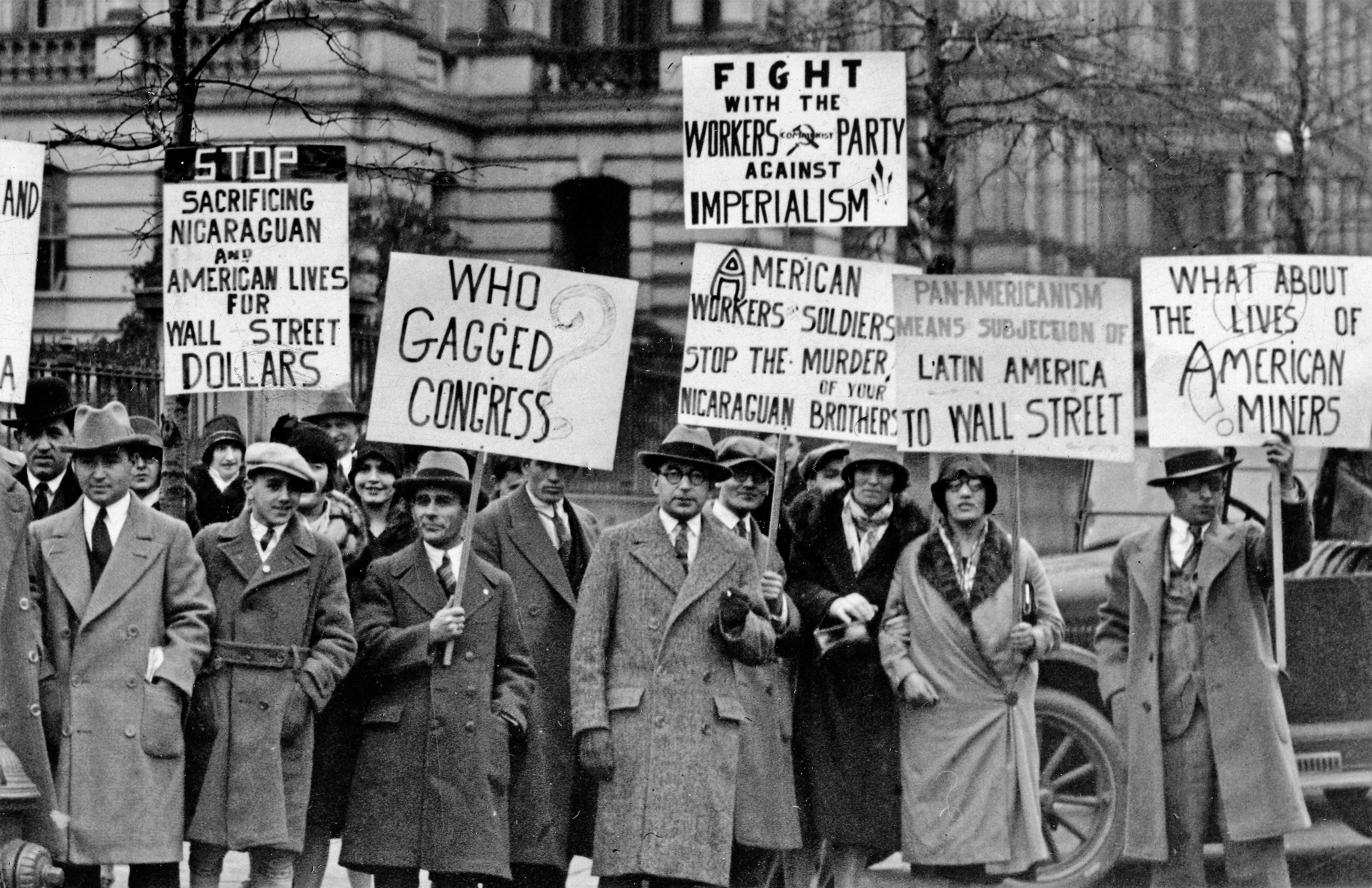
The prolific Harrison George, best known as editor of the west coast Peoples World, was formerly a wobbly organizer that became a founding member of the Communist Labor Party while serving in Leavenworth Prison in 1919. In the party he would become a leading member of the Foster faction, and penned an early (1947) important Anti-Revisionist polemic. He early grew into a focus on imperialism and worked for the Comintern in the 20s and 30s as its representative to the Philippines as well as head of the Pan-Pacific Trade Union Secretariat’s San Francisco offices. Here, with U.S. imperialism’s (re)invasion of Nicaragua, Harrison urges T.U.E.L. activists in the labor movement to take their professed anti-imperialism seriously, seeking to both overcome the patriotism and xenophobia of U.S. workers with practical service to insurgent colonial peoples in a common struggle against a common enemy, the American ruling class.
‘For a Real Fight on Imperialism’ by Harrison George from Labor Unity. Vol. 2 No. 11. December, 1928.
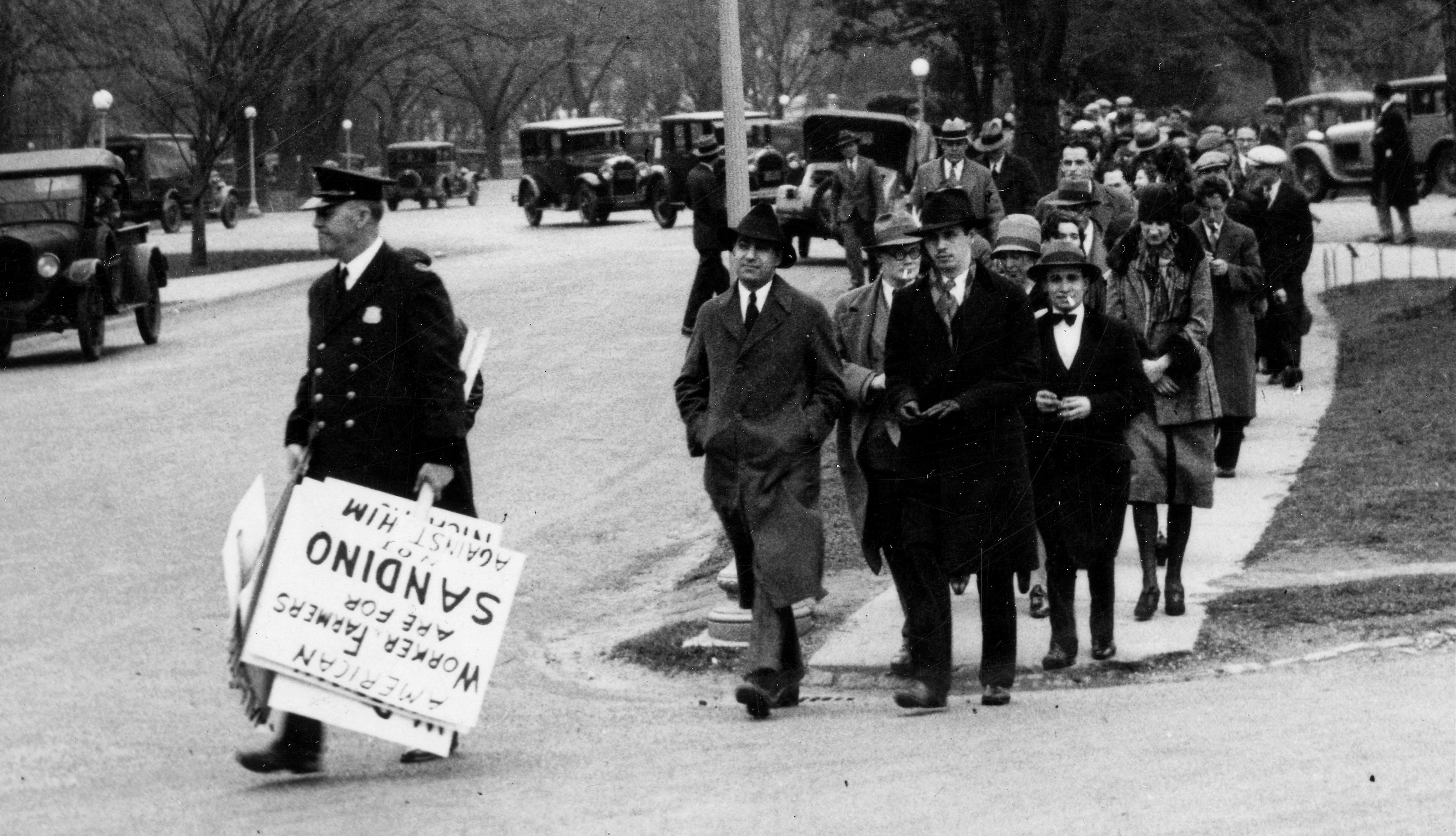
THE expansion of United States imperialism, particularly to the south, engulfing all Latin America with its influence, corrupting or smashing with brute force when necessary the governments of Central America, the Antilles and South America, its armed forces massacring ruthlessly the workers and peasants who resist, as in Nicaragua, places before the revolutionary trade unionists of the United States who adhere to the Trade Union Educational League, definite tasks in defense of their own interests as well as those of the Latin-American workers.
We must be continually on guard here in the United States against that tendency originating in the imperialist bourgeoisie, which allows the working class in the imperialist countries to fall into an apathetic and passive attitude toward joint actions of ourselves and the workers and peasants of Latin-America against our imperialists.
There is a tendency for which we have been criticised that leads us to accept the struggle against imperialism as something we approve of but do not carry out; that tends to limit our opposition to imperialism to a literary struggle, to manifestos, declarations and statements. Obviously, this is not enough; and it tends to justify another tendency in Latin-American countries which holds that the whole working class of the United States is corrupted and bribed by imperialism, is useless as an ally in real fighting, and that the elements which are to be sought as allies are such bourgeois liberals and demagogs as the school led by Senator Borah.
All One Struggle
Neither should our opposition to imperialism be founded on the idea that the Latin-American workers and peasants are deserving of our patronage as noble beings whose sufferings pain our humanitarian hearts, and therefore we are bound to shed a few tears over them as an interlude to “our own” more important affairs. This is a Philistine sentimentalism whose political basis is reformism.
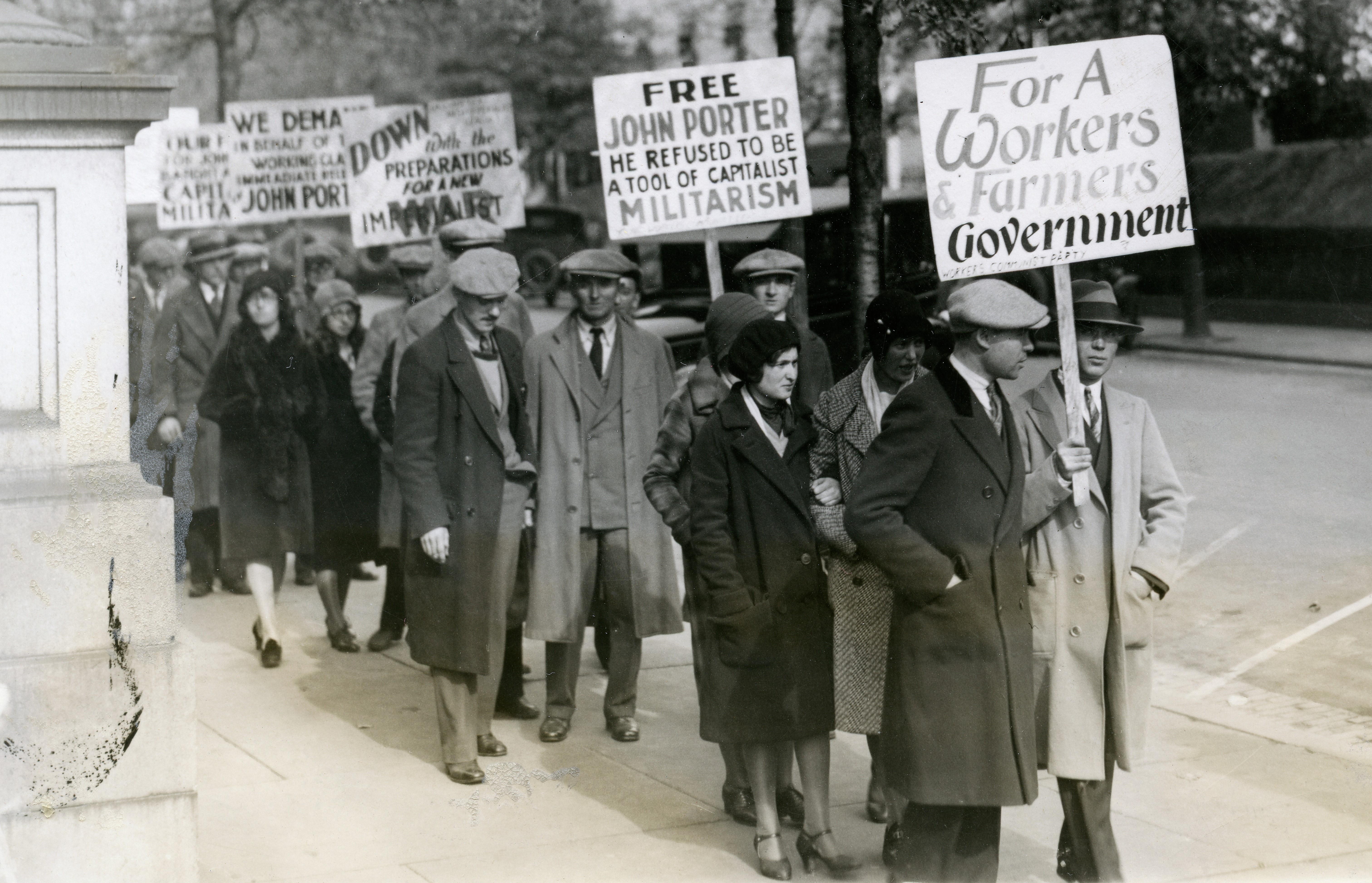
Our mass demonstrations, to be effective, must be a demonstration of power, of masses imbued with class feeling, not merely before masses of idle individuals imbued with curiosity, but with participating masses ready to fight for the slogan under which they march. A demonstration is potentially an approach to physical conflict with the forces of the ruling class, something which surely should not be undertaken by individuals or even a small group of individuals. At times, of course, the propaganda of a small group’s demonstration is not without value; but we must not forget that the historic period of propaganda alone is passed with the beginning of the imperialist epoch in which organization and action of a mass nature is the all-important thing. We must have masses, organised and conscious of the issues, and if we haven’t got them, then we must win them, not by commanding them to stand forth, but by working with them and for them in their daily, visible interests, in their shops and trade unions. Everything, finally, goes back to that as the basis of our activities.
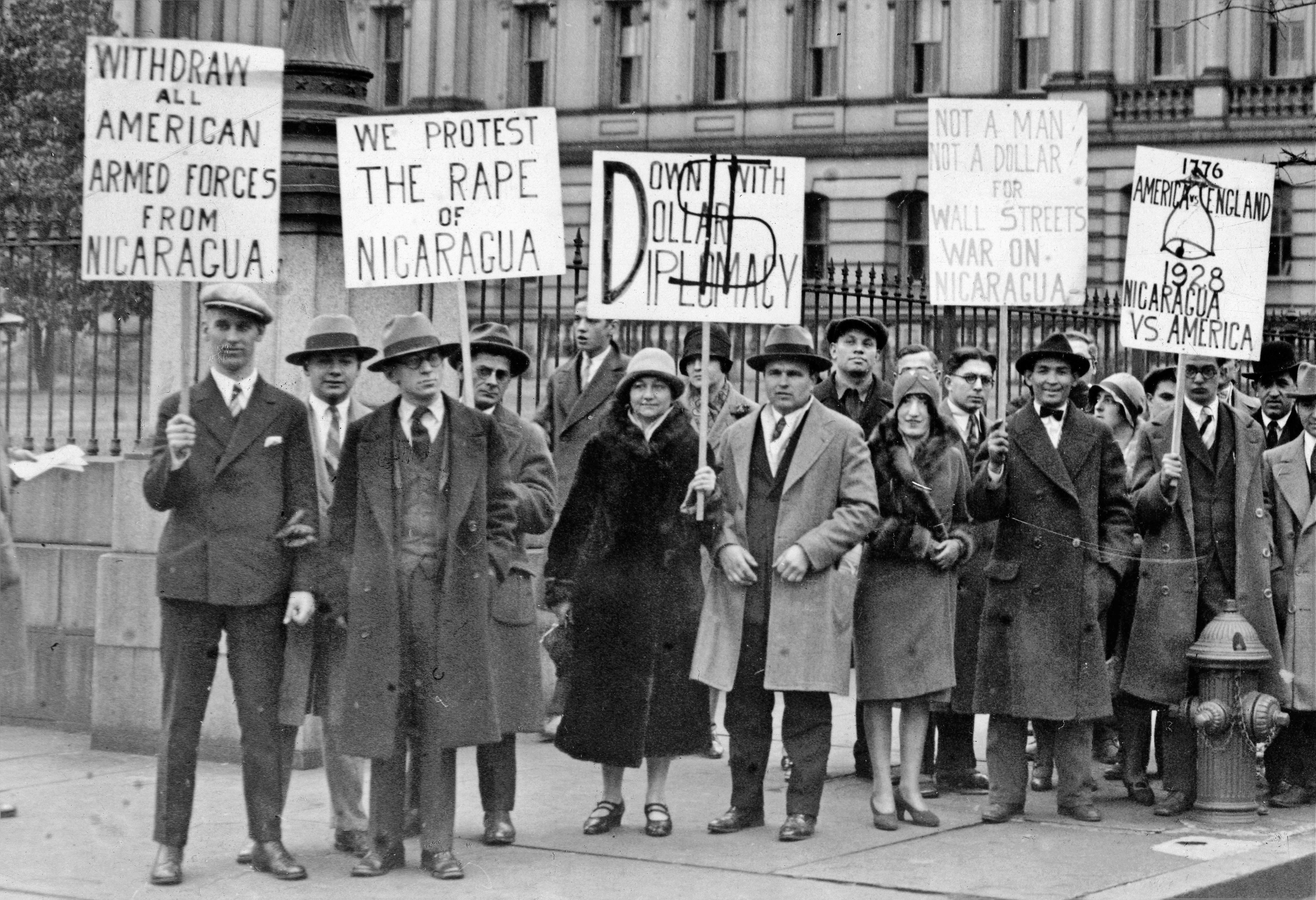
We must understand, clearly and act unequivocally, on the fact that “our own” struggles are only a part of one greater struggle involving the exploited classes of Latin-America in defense of the common daily, material interests of the toilers of both North and South.
The fact must be forcefully brought home to us, and realities will awaken us if we remain unaware, that there are a number of Latin-American workers, estimated at 4,000,000, within the United States itself, underpaid, overworked and almost totally unorganised, and as long as we allow them to remain, so it is our fault if they are used against native-born and other foreign-born workers in wage struggles. Most of these Latins are immigrants from Mexico.
Again, can it be denied that “our own” interests are identical with the workers of Latin- America when we see that the Copper Trust, owning properties here in Chile and Peru, increase production there, murdering hundreds of Chilean workers to break the unions, while at the same time it closes down mines and smelters in the United States? The metal workers here also should have an interest in all this.
All Workers Together
What better allies can the workers of Ford, the General Motors and the General Electric have, as they enter upon a fight against the tremendous power of these combinations of capital, than the workers who produce copper and rubber and petroleum under conditions even more insupportable in Peru, Bolivia, Brazil and Venezuela? Do we need long articles expressing our abhorrence of imperialism, or do we need solidarity strikes and mutual financial support in such cases? Do the marine transport workers, struggling against the stream of International Seamen’s Union and International Longshoremen’s Association reaction combined with the powerful shipping trust, want pamphlets full of strips of .statistics proving incontrovertibly that imperialism is invading Latin-America, or do they need assurance that when scabs load a boat in Philadelphia no dockworker in Rio de Janeiro or Buenos Aires will touch its cargo? Instead of bothering with this very article, the writer would much rather send a telegram to the Cuban trade unions saying: “Transport and refinery workers refuse to handle Cuban sugar until Machado government withdraws troops sent against strikers in sugar centers.” We must enter the road which leads to precisely this sort of fight against imperialism.
In this connection let us quote from “The Latin-American Worker,” now being issued by the Committee for the formation of a Latin-American Trade Union Confederation at a conference to be held next May at Montevideo. In an article entitled “Against the Yankee Bourgeoisie, With the North American Proletariat,” it is said in part:
“Are we alone in this fight?… Are the proletarians of Latin-America the only ones who struggle against the imperialist monsters? No! They have within their reach a great and loyal ally in the shape of the revolutionary proletariat of the United States itself.”
Yet…”there appears at times among the working class elements less advanced in understanding, a certain desperation — that leads to mistaken conclusions and prejudices that by right belong to our petty bourgeoisie, concerning the role played by the North American proletariat in our anti-imperialist crusade. We refer to the false conception of grouping in one and indivisible whole the Yankee bourgeoisie and the workers of that country as common enemies of the workers of Latin-America.”
Class Struggle Everywhere
Pointing out that “in the United States there exists a class differentiation as profoundly marked and with interests as antagonistic as in the rest of the world,” the article proceeds:
“While it is quite true that the revolutionary movement among the workers of the United States is not as powerful as could be desired, yet it is also true that there exists already a considerable nucleus of class conscious workers who fight heroically against their own bourgeoisie and for the unification of the world proletariat.”
The revolutionary trade unionists of the United States, led by the T.U.E.L., better organised in the future than in the past for real conflicts, must measure up to the need of the joint struggle of both North and South, must assist themselves by assisting the formation of the Latin-American Trade Union Confederation, must fight the imperialist lackeys of the Pan-American Federation of Labor in their own back-yard, and set up genuine connections with all Latin-American unions such as will result in action, in a real fight against imperialism.
In 1924 Labor Herald was folded into Workers Monthly, an explicitly Party organ and in 1927 ‘Labor Unity’ became the organ of a now CP dominated TUEL. In 1929 and the turn towards Red Unions in the Third Period, TUEL was wound up and replaced by the Trade Union Unity League, a section of the Red International of Labor Unions (Profitern) and continued to publish Labor Unity until 1935. Labor Herald remains an important labor-orientated journal by revolutionaries in US left history and would be referenced by activists, along with TUEL, along after its heyday.
Link to a PDF: https://www.marxists.org/history/usa/pubs/labor-unity/v2n11-w30-dec-1928-TUUL-labor-unity.pdf

