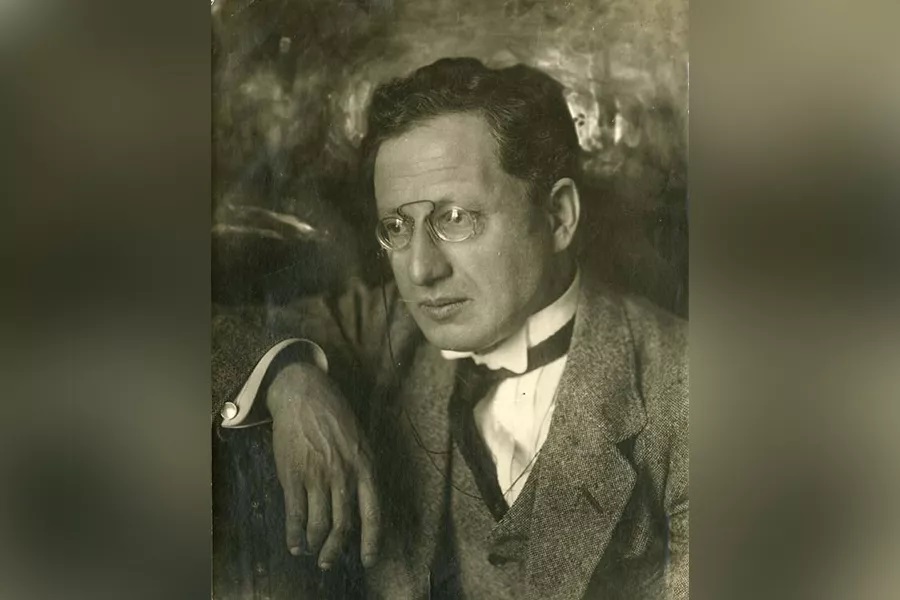
Wonderful recollections of Moisei Uritsky from his long-time comrade on the first anniversary of his assassination. Uritsky was a member of the Mezhraiontsy at the time of the Revolution when he led the joining of the Bolsheviks and was elected to their Central Committee and to the Military Revolutionary Committee which oversaw the seizure of power in October. In charge of the defense of Petrograd and leader of the Cheka in the city, he led the war against the counter-revolution there until his murder by a Cadet former officer in August, 1918.
‘Personal Reminiscences of Moisei Uritzky’ by Anatoly Lunacharsky from Communist International. No. 4. August, 1919.
I made his acquaintance in 1901.
Shortly before my deportation from prison Ito exile I was given leave to see my people at Kiev.
At the request of the local Red Cross Association I delivered a lecture in the benefit of the Society. Both lecturer and hearers including E. Tasic and V. Vodevosov were taken under cossack escort to the Lukianov prison.
When we looked round, we found that it was a peculiar kind of prison: the doors of the cells were never locked. Walks in common were taken daily, during which the tie was occupied alternately in sport and in lectures on scientific socialism. At night we all sat near the window and entertained ourselves with singing and recitation. There was a commune in the prison so that even official rations and all that was sent by tie families of the imprisoned went into the common kettle. The commune also arranged the purchases in the market at common expense; it also managed the kitchen with the entire staff of nonpolitical prisoners. The attitude of the non-politicals towards the commune was one of adoration, as the latter was responsible for putting an end to fighting and quarrelling and even cursing.
How did the miracle of the transformation of the Lukianovka into a commune come about? The fact of the matter was that the prison was administered not so much by its authorised governor as by the elder of the political prisoners — Moisei Solomonevitch Uritzky.
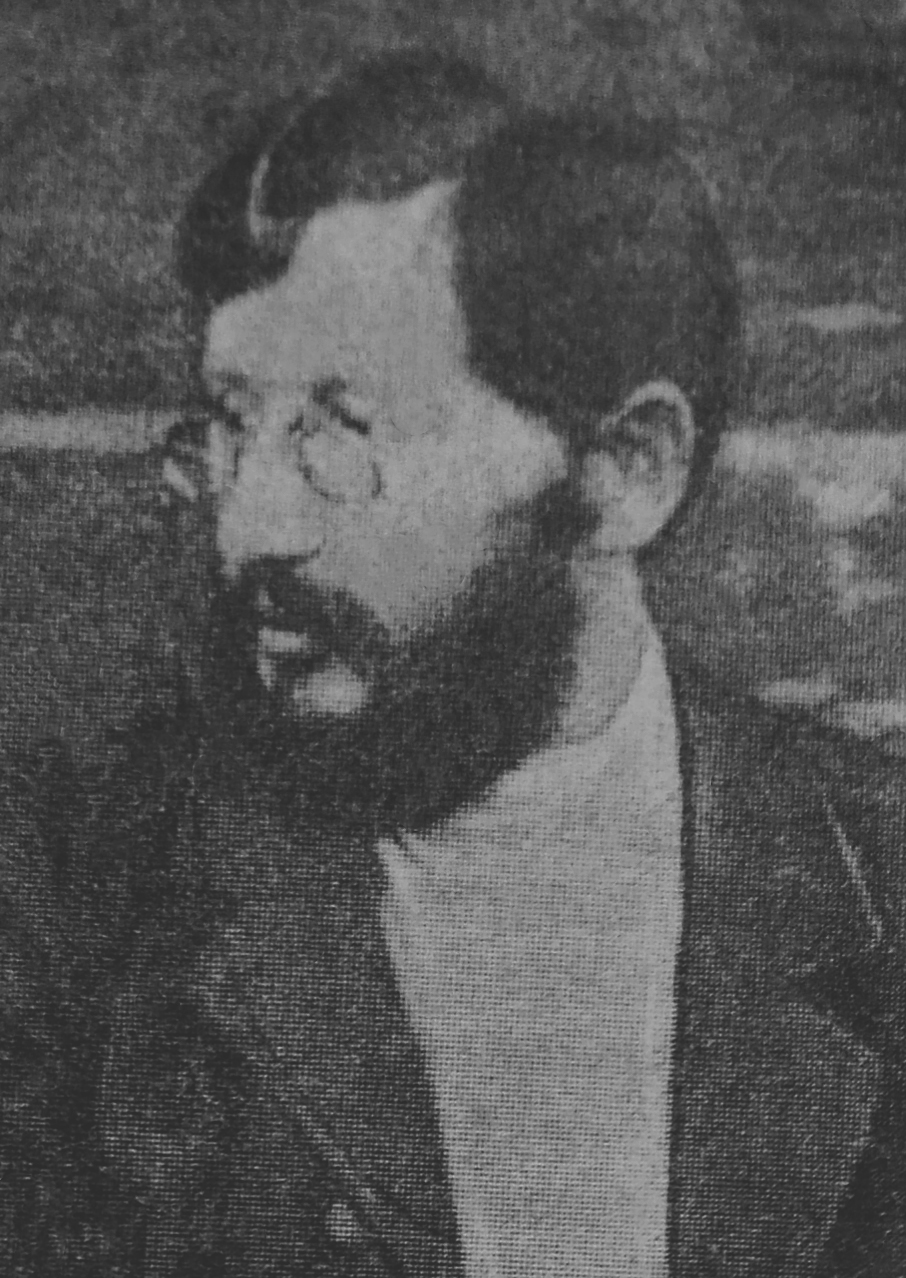
At that time he wore a large black beard, and was in the habit of constantly sucking a ta little pipe: Phlegmatic, imperturbable, greatly resembling a boatswain, he walked about the prison with his characteristic clumsy gait of a young bear; he knew everything, managed everything, overawed everybody, patronised some and was an unpleasant but indisputable authority to others.
He domineered the prison officials by his quiet force and the exercise of his spiritual greatness.
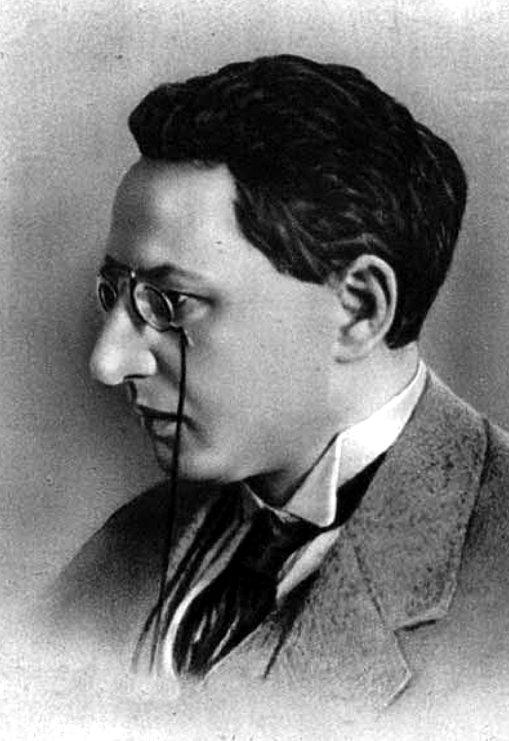
Years passed by. During this time we were both in exile, both of us became emigrants.
A left menshevik, comrade Uritzky was a sincere and ardent revolutionary and socialist. Under his seeming coolness there was concealed a giant faith in the cause of the working class.
He was apt to sneer at all kinds of pathos and eloquence on the sublime and beautiful; he prided himself upon his sobriety and even liked to display it with tinge of cynicism, as it were. But in reality he himself was an idealist of the purest water. Life outside the labour movement did not exist for him. The only reason why his great political passion did not overflow was that this passion was directed to one single aim in a systematised orderly manner; thanks to this his passion was manifested only in activity and in an extraordinary useful activity at that.
His logic was inexorable. With the war of 1914 he took the reed of Internationalism, and he sought no middle course; like Trotzky and Tchitcherine and Yoffe he quickly understood and felt the utter impossibility of retaining even the least shred of a connection with the pre-war mensheviks, and he therefore broke with the Martoff group who failed to see this.
Even before the war, together with his political nearest friend, L.D. Trotzky, he stood nearer to bolsheviks than to the mensheviks.
After a long parting we met once more at Berlin in 1913; the same story was repeated here all over again. I had absolutely no luck with my lecture. The Russian Colony at Berlin invited me to read couple of lectures before them, but the Berlin police arrested me, detained me for a short period in prison, and sent me out of Prussia, deprived of rights of re-entry. Once again Uritzky proved a genius. He not only had a perfect command of language, but he had connections everywhere which he set in motion in order to create a government scandal over my arrest. Once more I admired his calm ironic sneer with which he spoke to the examining magistrate, to the bourgeois journalist who “gave direction” to our company in the consultation with Karl Liebknecht who was always interested the above petty but characteristic fact.
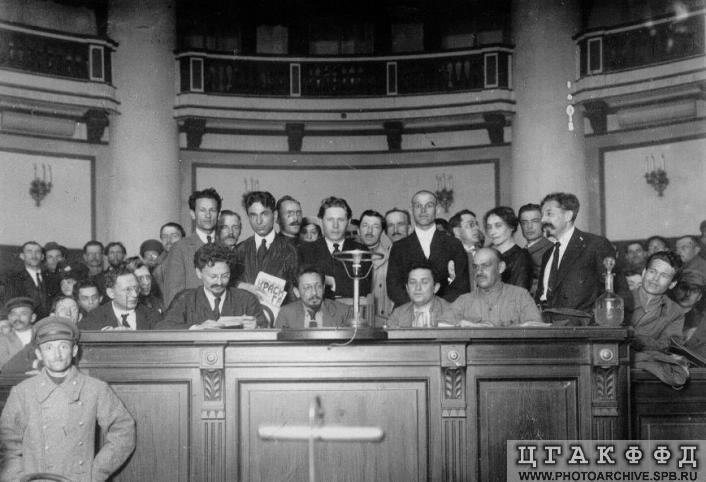
All the time he maintained the same quiet confidence and wonderful organising ability. During the war Uritzky lived in Copenhagen where he played an important role, but he developed his great and calm organising ability to still greater dimensions during our glorious revolution in Russia.
At first, he joined the so-called inter-regional organization. Here he introduced order; and the complete amalgamation of this organisation with the bolsheviks, was entirely due to him. With the approach of the 25th of October, Uritzky’s influence grew ever greater at the bolshevist headquarters.
Few people know the truly gigantic role that was played by the Revolutionary Military Committee at Petrograd approximately from October the 20th until the middle of November. The culminating point of this superhuman work of organisation were the days and nights from the 24th to the end of the month. During all these days and nights comrade Uritzky never slept. He was surrounded by a group of people also possessed of great force and endurance. Yet these people were overcome by fatigue, were put on part duty, and were substituted by other men, whilst Uritzky, his eyes red with sleeplessness, yet calm and smiling as ever, remained at his post in his armchair, where all threads met, and from whence directions issued to the as yet unorganised but mighty revolutionary organisation.
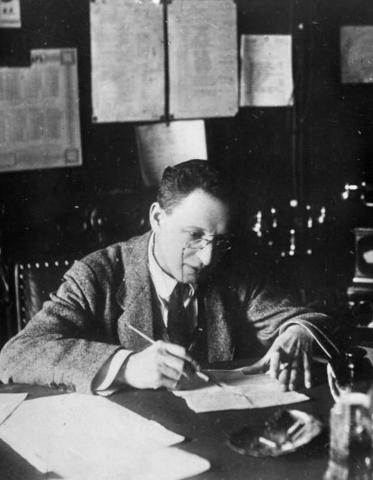
At that time I considered comrade Uritzky’s ‘activity a marvel of working capacity, self-command and penetration. And even now I still consider this page of his life something in the nature of a miracle, but this page was not the last; and even its exclusive brilliance was not overshadowed by the following pages. One of the most alarming moments following the victory of the 25th October and the subsequent victories all over Russia was that in which the question of the attitude of the Soviet Government to the approaching convention of the Constituent Assembly had to be decided. A first class diplomat was requested to solve this question, one able to combine an iron will with the required diplomatic skill. Only one name was mentioned; Uritzky was appointed candidate unanimously.
It was indeed an interesting sight to see our “Commissary for the Constituent Assembly” in these stormy days. I quite understand the keen hatred of all those “democrats “, who had eloquent phrases ever ready on their lips concerning right and freedom, etc. towards this stout little man who looked upon them from out the little black rims of his glasses with ironic coolness, and who was able with his sober smile alone to disperse all their illusions; whose every gesture embodied the domination of revolutionary force over revolutionary phrase.
When during the first and also the last days of the Constituent Assembly at the stormy socialist revolutionary meetings Chernoff made solemn speeches and the “noble assembly” attempted to prove that they represent the real power of the country,—Uritzky, with the same clumsy gait of a young bear, just as at Lukianovka, with the smiling imperturbability, walked about the Taurida Palace and once mote he was everywhere, knew everything, and inspired some with calm confidence and others with complete hopelessness.
“There is something fatalistic in Uritzky”, said one of the right socialists revolutionaries to me on meeting me in a passage on that memorable day.
The Constituent Assembly was liquidated, but a new and more stormy and difficult event arose,—Brest.
Uritzky was a hot opponent of peace with Germany. The embodiment of coolness, he spoke with his customary smile: — “Is it not better to die with honour?”
Uritzky met the nervousness of some of the left communists by calmly repeating: “Party discipline first of all.” And that was no empty phrase for him.
The German February offensive began.
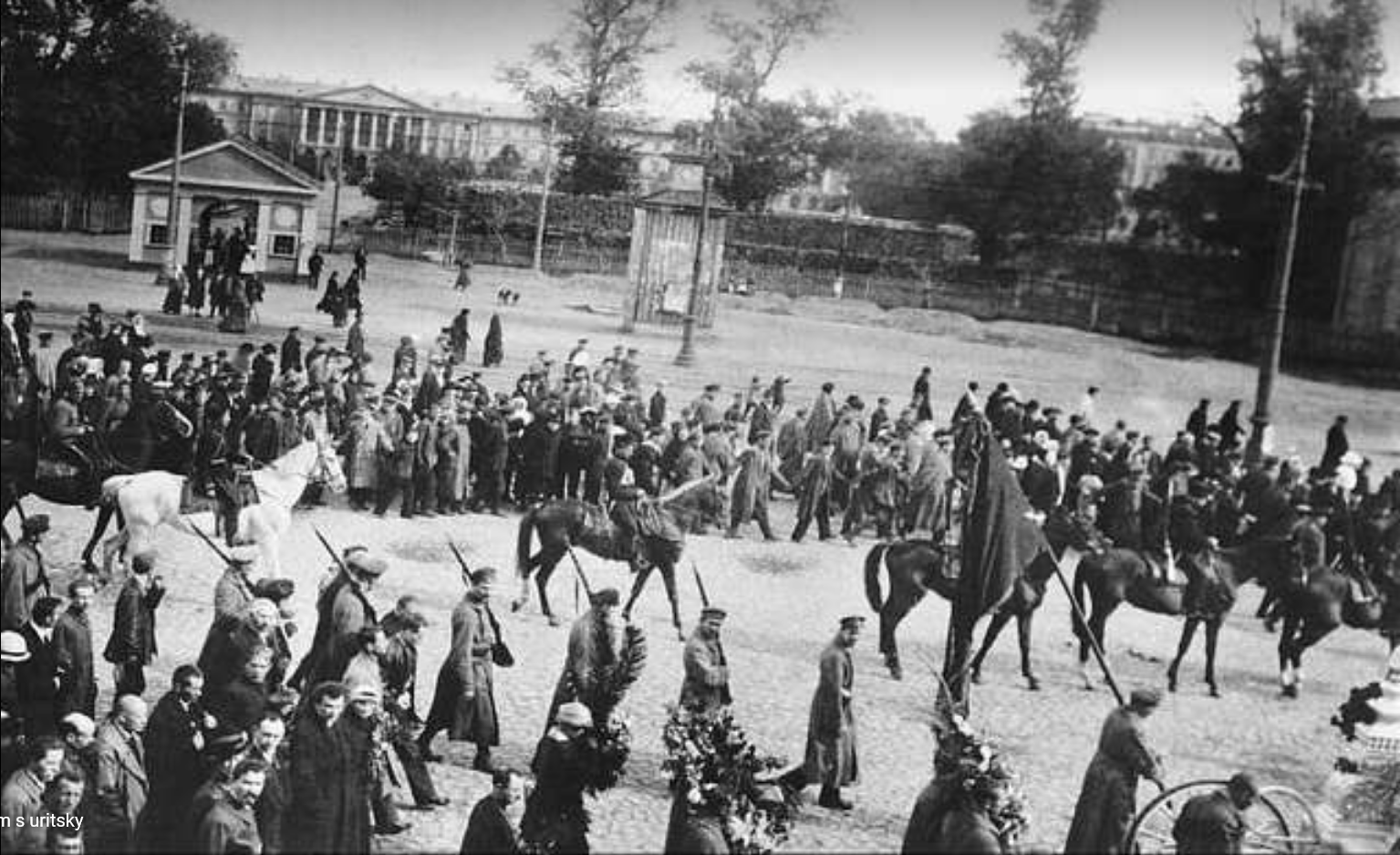
The Council of People’s Commissaries, compelled to leave, entrusted comrade Zinoviev with the responsibility of taking charge of Petrograd, which was then in a critical position.
“You will find it very difficult”; said Lenin to those who remained, “but you have Uritzky with you“. And this, of course, was a great consolation.
From that moment began a clever and heroic struggle between comrade Uritzky and the Petrograd counter revolution and speculation.
What a number of imprecations, what accusations fell upon his head at that time. He was terrible. He instilled terror into people’s hearts not only by his inexorableness but also by his vigilance. Uniting in his hands both the Extraordinary Commission, and the Commissariat for the Interior and taking a leading part in foreign affairs, he was the greatest enemy at Petrograd of Imperialist thieves and robbers of all kind and description. They knew very well what a great enemy he was to them. He was also greatly hated by the petty bourgeoisie to whom at that time he represented the embodiment of bolshevik terror.
But we who stood near him knew how magnanimous he was and how well he could combine indispensable ruthlessness with kindness. Without being in the least sentimental, his kindness could yet be said to be limitless. We know that his labour was not only hard and thankless but also painful.
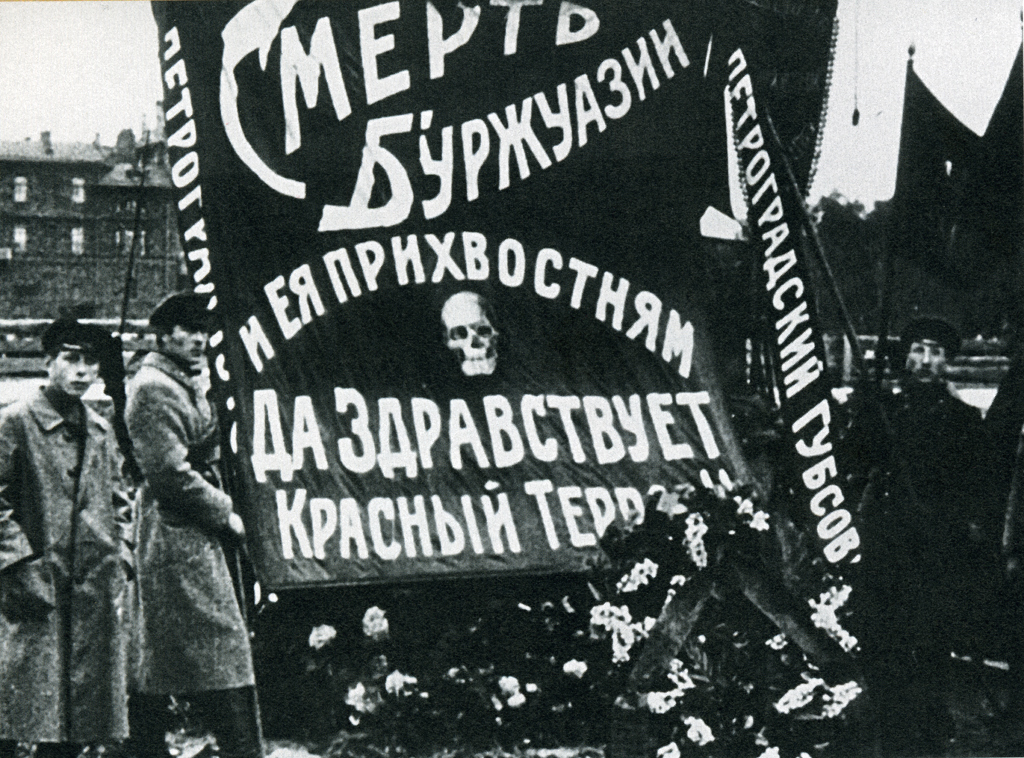
Comrade Uritzky suffered much at his post, but we never heard a complaint from this strong man. He was the embodiment of discipline and revolutionary duty.
They have killed him. They have indeed dealt us a well-aimed blow. They have selected one of the cleverest and strongest of their enemies, one of the cleverest and strongest friends of the working class.
To kill Lenin and Uritzky would signify much more than to gain the greatest victory at the front.
The death of comrade Uritzky has made a breach in our ranks that it is difficult to fill. But Lenin is recovering, and we shall endeavour to replace our irreplaceable comrade Uritzky by a tenfold increase of our efforts.
The ECCI published the magazine ‘Communist International’ edited by Zinoviev and Karl Radek from 1919 until 1926 irregularly in German, French, Russian, and English. Unlike, Inprecorr, CI contained long-form articles by the leading figures of the International as well as proceedings, statements, and notices of the Comintern. No complete run of Communist International is available in English. Both were largely published outside of Soviet territory, with Communist International printed in London, to facilitate distribution and both were major contributors to the Communist press in the U.S. Communist International and Inprecorr are an invaluable English-language source on the history of the Communist International and its sections.
PDF of full issue: https://archive.org/download/communist-international-no.-1-17-1919-may-1921/Communist%20international%20no%2001-6%201919.pdf

