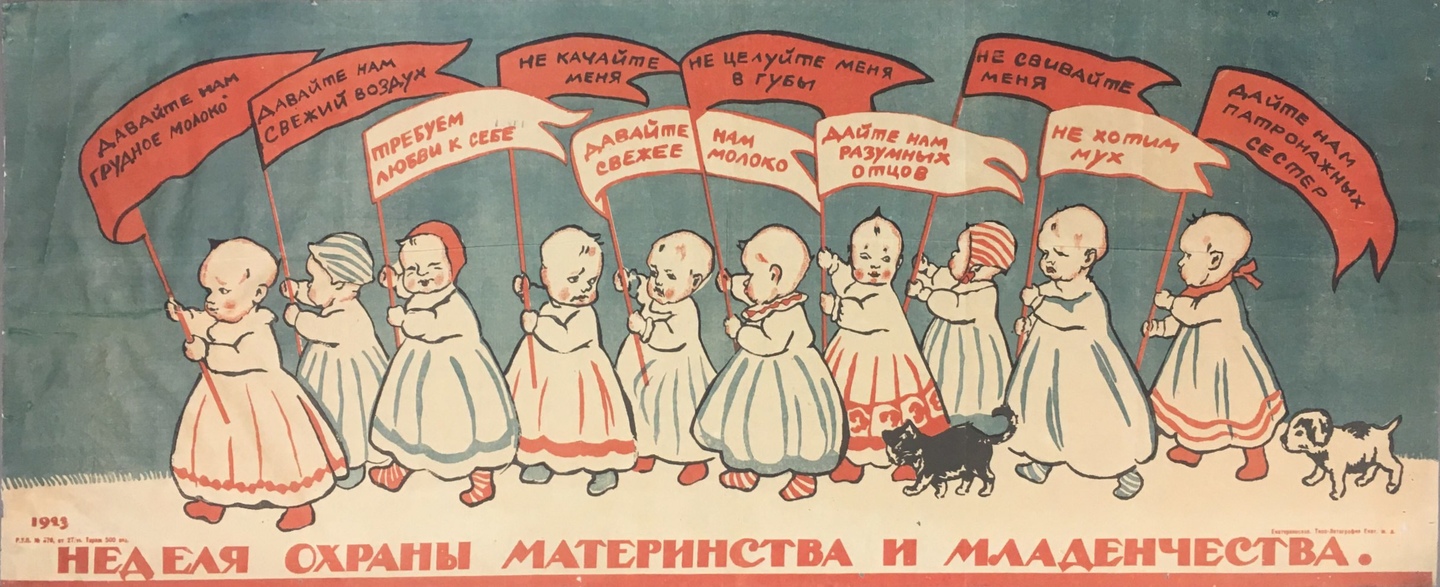
Tasked in 1918 as People’s Commissar of Health, Doctor Nikolai Semashko directed the pioneering public health care carried about by the Soviets in the first decade of the Revolution. Serving as Health Commissar until 1930, the preventative, child-focused, dispersed, and research driven system devised by him, the ‘Semashko System,’ would later be taken up in the Cuban Revolution where it remains the basis of their health programs today. Here, comrade Semashko reports on some of the Soviet’s early campaigns on natal care.
‘Protection of Mother, Baby and Child in Soviet Russia’ by N. Semashko from Soviet Russia (New York). Vol. 4 No. 5. January 29, 1921.
BEFORE the November Revolution, Russia was the classical country of child mortality. One fourth of all newborn babies died even before they reached their first year. Every year about two millions of babies were buried in Russia. Child mortality was especially great in the villages among the peasant population.
There were two fundamental causes which contributed to this extraordinary mortality of babies. In the cities, it was the terrific exploitation of the labor of mothers and of pregnant women. It happened frequently, that women went on with their work till the very last day of their pregnancy, and sometimes it even happened that women were delivered of their children within the walls of the factory. Thus children have been crippled even while in their mothers’ wombs. When the child was born, the mother could not nurse it; she had to leave it at home and feed it with substitutes for food.
In the villages, to these main causes—poverty and exploitation—was added the frightful ignorance of the peasant women, who have no idea of the most elementary rules of hygienic nursing.
The Republic of the toilers first of all concerned itself with the protection of the labor of pregnant and nursing women. A decree was issued to the effect that women cannot be allowed to work eight weeks before and eight weeks after confinement. During all this time the mother receives her regular wages and her full food-ration. Pregnant women receive, besides, better food and a number of privileges in daily life. When the child is born, the mother receives linen and warm clothes for the baby. Nursing mothers are relieved from work several times during the day. Special products, as milk, eggs, sugar, etc., are given for children on their special children’s food-cards.
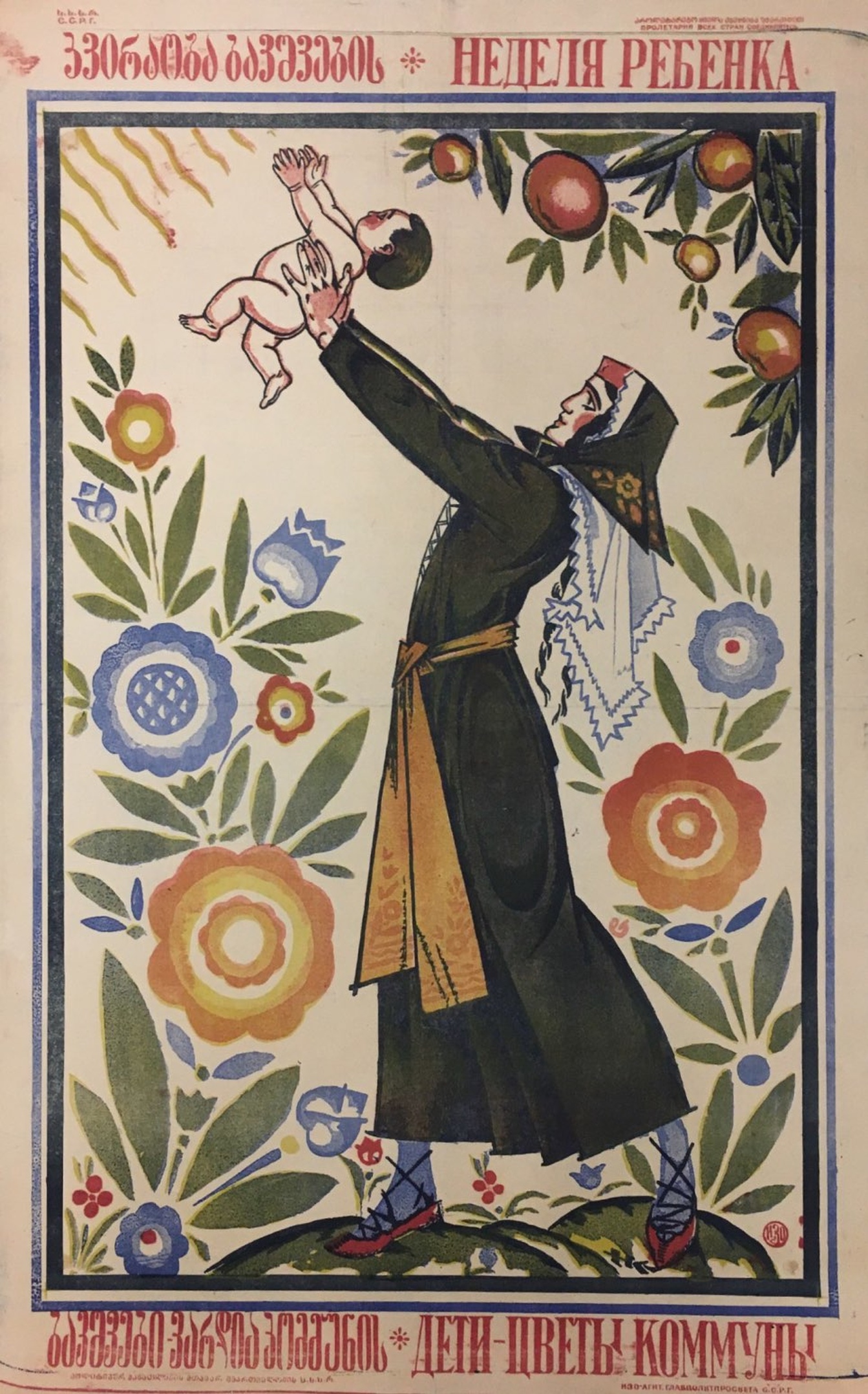
The greatest attention was given by the Soviet Government to the work of creating a sufficient number of establishments for the protection of mother and child: Great model “Homes of Mother and Child”, confinement homes, milk dispensaries, nurseries, children’s homes, etc. There are at present thousands of such institutions all over Russia, in the cities, at factories and even in many villages. We have already passed through the period when it was necessary to explain to the population the use of these establishments. At present, we are unable to keep up with the constantly growing demand for such institutions, because of the shortage of medicines, food products for the nourishment of children, and various necessary appliances.
Children of a more advanced age have also been an object of constant care on the part of the Soviet Government. Children’s homes exist not only in the cities but even in many villages. Children’s colonies have been established in many of the best residences of the landlords. During the past summer, about 59,000 children lived in the colonies in the vicinity of Moscow alone. In the schools, the pupils receive hot breakfasts. It is quite touching to see how the population of the cities, frequently suffering from hunger and feeding on substitutes, is giving away the last food supplies for the children. Hired labor of children up to the age of 14 years is prohibited altogether. For children of the age of 14-16 years, the working day is limited to four hours. No child labor is allowed in harmful productions. The trade unions paying special attention to the protection of the labor of women and young persons. Their interests are considered also in the carrying out of labor duties.
For weak and sick children there are special establishments, so-called “Forest Schools”, which are situated in healthy forest localities. At present there are 33 such schools. Besides, there are 34 sanatorium-schools and sanatorium-colonies for children inclined to consumption, and 37 sanatoria for consumptive children.
Further, children under the age of 18 years, who have committed some offence, are not considered as criminals. On the contrary, we look upon them as victims of capitalist society, who require proper education and cure. Such child offenders are not liable to the general courts, but there are special committees consisting of physicians and pedagogues, to decide whether they are to be placed in institutions of the Public Health Commissariat or of the Commissariat of Public Education. The Public Health Department has 134 such institutions for mentally and physically defective children. There are also 41 schools for deaf and dumb, and 15 schools for blind children.
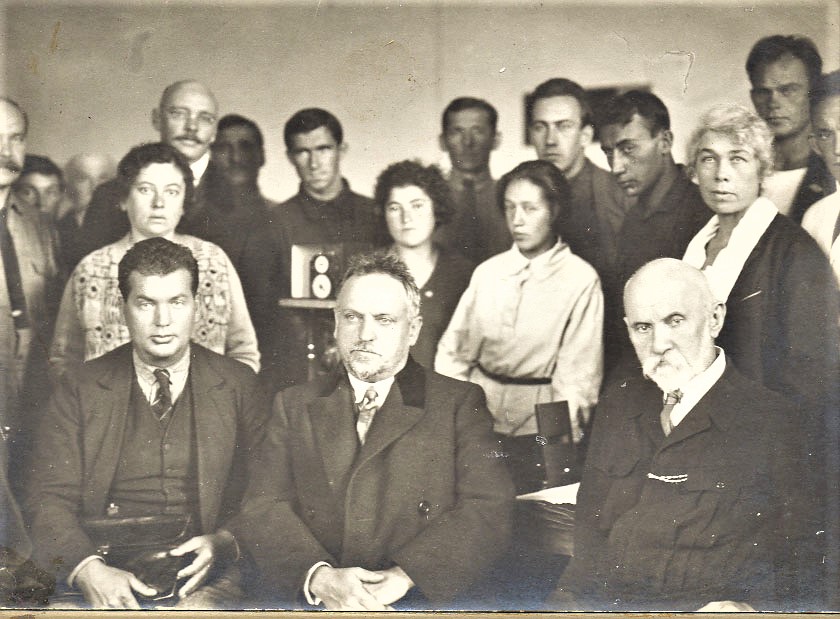
The difficult conditions, in which the Republic was put by the war and blockade had their destructive effects upon the organizations for the children. But the toiling population of the suffering Republic gave away its last piece of bread and the last yard of cloth for the children, because the toilers of the Soviet Republic are conscious that the children represent our better future, that upon their health depends the success of our Socialist construction work. And as soon as the pressure which is exerted upon us by our numerous enemies, is made somewhat easier by the efforts of our Red Army, and as soon as our economic and food situation is somewhat improved, the first to feel the benefits of these improvements will be our children, our hope and future.
Soviet Russia began in the summer of 1919, published by the Bureau of Information of Soviet Russia and replaced The Weekly Bulletin of the Bureau of Information of Soviet Russia. In lieu of an Embassy the Russian Soviet Government Bureau was the official voice of the Soviets in the US. Soviet Russia was published as the official organ of the RSGB until February 1922 when Soviet Russia became to the official organ of The Friends of Soviet Russia, becoming Soviet Russia Pictorial in 1923. There is no better US-published source for information on the Soviet state at this time, and includes official statements, articles by prominent Bolsheviks, data on the Soviet economy, weekly reports on the wars for survival the Soviets were engaged in, as well as efforts to in the US to lift the blockade and begin trade with the emerging Soviet Union.
PDF of full issue: https://www.marxists.org/history/usa/pubs/srp/v4-5-soviet-russia%20Jan-Dec%201921.pdf

