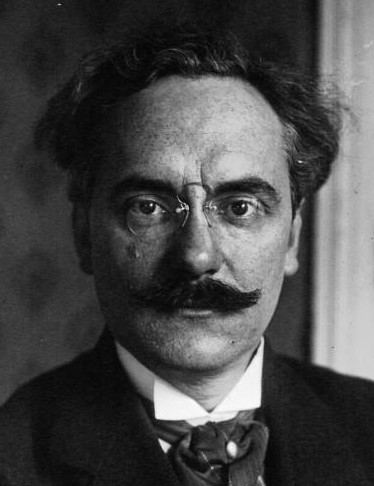
A valuable history of the struggle of French internationalist during World War On on its 10th anniversary. Written by a participant in that struggle and central figure of French Communism for much of its first decade, the former syndicalist Amédée Dunois. Dunois would be expelled as an Oppositionist in 1927 and later arrested by the Nazis for his partisan activity, where died in Bergen-Belsen in 1945.
‘The French Proletariat and Imperialist War’ by Amédée Dunois from Communist International. Vol. 2 No. 5. September-October, 1924.
I.
IN the life of parties, as in the lives of men, there are sad and distressing pages which one would gladly eliminate. The page on which the shameful surrender of French Socialism and Syndicalism to the imperialist war was written is such a one. French Socialism and Syndicalism no doubt were not alone in their surrender without a struggle in the gloomy days of 1914. The Party which incontestably occupied the first place in the Second International, the German Social-Democratic Party, was guilty of the same treason when it permitted its 110 deputies in the Reichstag to vote for the war credits. Yet, without trying to find any extenuating circumstances for social-democracy, still its treason was less unexpected and less scandalous than that of the French Socialists and Syndicalists; since social-democracy had not made declarations which amounted to solemn pledges; it had not launched the famous slogan: “Insurrection rather than war!” The French Socialists, however, together with the “revolutionary Syndicalists. had put themselves at the head of the anti-militarist and pacifist movement…During the trouble over Morocco, they could see the imminence of war, hence the struggle against militarism became one of their essential tasks. Therefore, they should have given the lead to resistance by street demonstrations, or at least, vigorous action in parliament. Anything might have been expected except what actually happened.
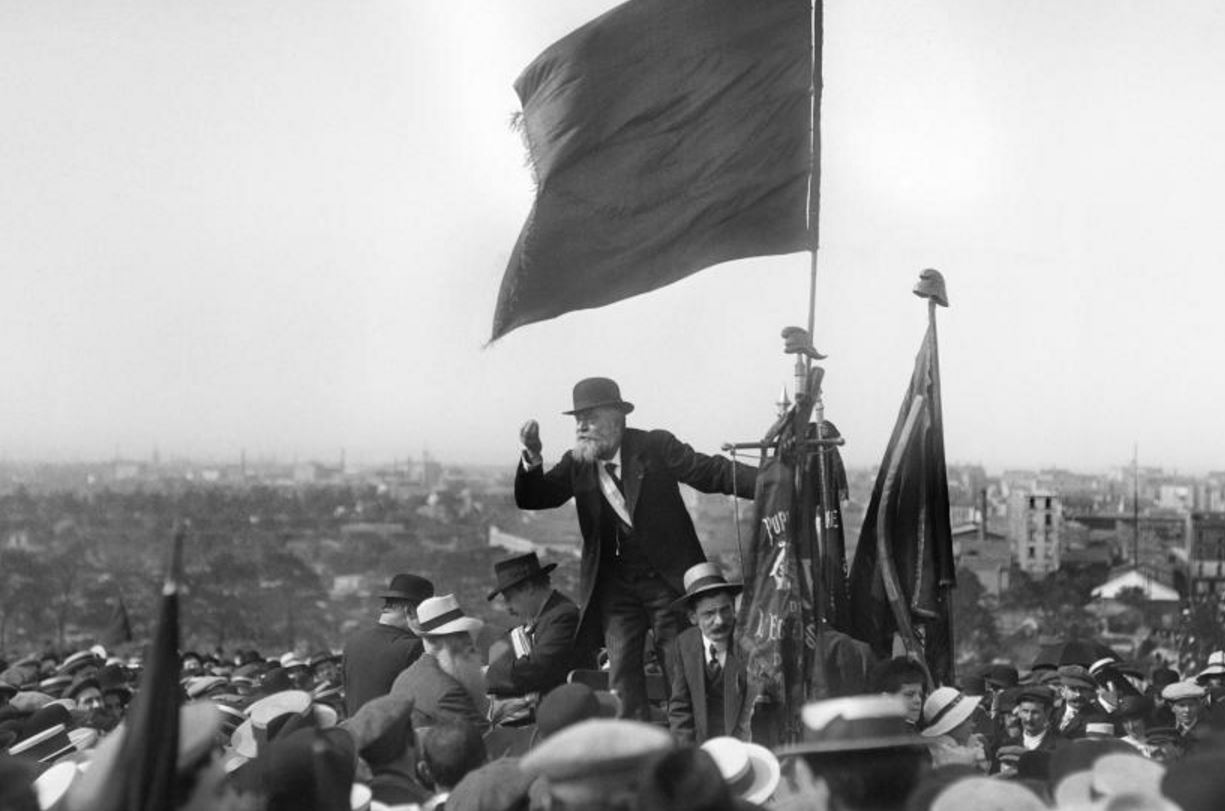
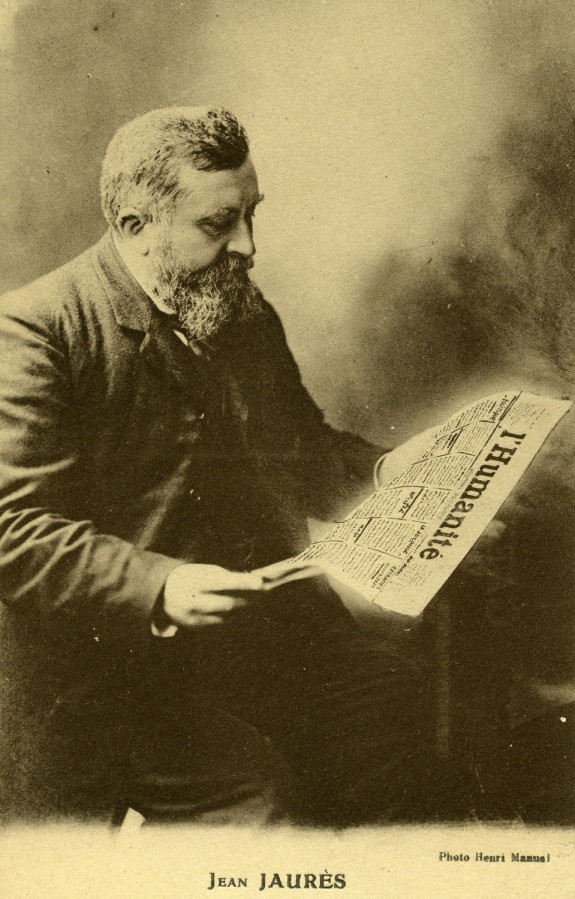
The assassination of Jaures on the evening of July 31st, eighteen hours before the general mobilisation order was issued, came as a thunderbolt to the Socialist leaders, but did it lessen their war enthusiasm? “Oh, if Jaures were alive on the 4th of August.” How many times did we repeat this phrase, and yet we soon dismissed the memory of that lamentable day. Jaures was certainly more reformist than revolutionary in politics, but he possessed the strength of invincible steadfastness of principle. For 18 years he fought against the menace of war incessantly and to the very last moment did everything that was politically and humanly possible to banish that dreadful spectre. Those who armed his assassins were quite aware of this, for it was not the mad whim of some semi-idiot which made Jaures “the first victim of the war,” His enemies feared his attitude in the Chamber on the question of war credits; they feared his article attacking Russia and Czarism at which he was then working, and which would probably have been published on the very day when he was assassinated. His death deprived the Socialist Party of its real leader, it left the field free for cowards, for traitors, for fools or knaves, for conscious or unconscious slaves of imperialism. Thus it happened that unanimously and without a single protest, without a word of scorn from the venerable Villant which people expected, the hundred Socialist deputies voted for the war credits as well as the Bonapartist laws which transformed the French Republic into a kingdom under martial law and military censorship.
The holy alliance was sealed. The proletariat was delivered up defenceless by its own leaders, to the Moloch of imperialism; mobilisation was carried out everywhere, even in the proletarian centres, without the slightest resist– “It will be a short war,” was the insinuation of the government agents, while the entire press circulated the insidious legend about “German aggression,” to convince the deceived masses that the war was a crusade of justice and right.
In examining the causes which led to the collapse of Socialism and Syndicalism, we must probe well underneath the surface. There is no doubt that the leaders betrayed the cause, but the germ of treason was not so much in them as in the Menshevist ideology of the Second International. The Second International, not daring to carry on the class war to its ultimate consequences, had formally relinquished the principle of national defence, despite the motion made at Stuttgart. The very fact of admitting that the bourgeois Fatherland may in certain cases be defended by the working class, and that the class struggle may for the time being be shifted into the background, the party becomes exposed to all the vacillations and compromises of opportunism. You say that “in certain cases” the bourgeois Fatherland, in other words, the bourgeois State may be defended, under certain circumstances the permanence of the class struggle may be questioned. This lack of firm doctrine, this wavering between the national interests and the interests of the class struggle, hurled the Second International into the abyss.
The surrender of the 4th of August was but the first step. Three weeks later, after the defeat at Charleroi and the rout at Mortange, two Socialist deputies–Jules Guesde, the former doctrinaire anti-internationalist, and Marcel Sembat, the former left-wing Socialist-joined the government of Viviani. The holy alliance was logically transformed into ministerial collaboration. In its manifesto issued towards the end of August, the Socialist Party meekly placed itself at the service of war. The tendency to social-patriotism became an actual fact. A little later, it was to be converted into a principle and a dogma.
Guesde and Vaillant were the definite representatives of revolutionary ideology in the French Socialist Party. They used to cloak their opportunism of action with most rigorous theoretical formulæ. The Jauresists evidently had no reason to show themselves more revolutionary than the revolutionaries themselves. The Syndicalist champions of anti-patriotism and of “general strike in case of war,” executed such a precipitate retreat that they lost all sense of shame. “In the name of those who departed, in the name of those who are going to depart, to whom I belong,” exclaimed Jouhaux on the 4th of August (at the Jaures funeral). On the day previous the same Jouhaux scanned the railway time-tables and asked everybody he met whether the Spanish frontier was already guarded. And what happened in the meantime? Will it ever become known that at the Elysée and the Rue de la Grange, a Viviani government was formed with which the General Confederation of Labour surreptitiously negotiated for the abandonment of the general strike and of the insurrection for the abolition of the “B” List (the list of dangerous revolutionaries who were to be arrested in case of mobilisation)? Still Jouhaux, in spite of all his protestations, never went away. Hervé on his part, performed a sensational conversion, and without observing the rules of gradual transition, gave vent to his first manifestations of nationalist hysteria. As to the anarchists, they cautiously remained silent. Jean Grave suspended his Temps Nouveaux (New Times, an anarchist newspaper) on the very first day of the outbreak of the war, and washed his hands of the blood that was being shed; the septuagenarian Kropotkin, from his armchair, preached war to the bitter end.

The holy alliance went on apace during these months. All the while the Socialist Party existed only on paper, and three-fourths of its members had been mobilised. But it still continued its old slogans and propaganda. In the Humanité, Compere-Morel and the aged Vaillant distinguished themselves by the intemperance of their newborn patriotism. On the other hand, Renaudel did not show his hand, still thinking that the war was going to be a short one he condemned behind the scenes the excessive zeal of his friends. It was only in the spring of 1914, after Italy had joined the war, that Renaudel began to identify himself with the “war to the end” group. In the course of this honeymoon of the holy alliance, the Socialist group in parliament and the officials in the syndicates placed at the service of the government, of the bourgeoisie and of imperialism, their knowledge of the moods and psychology of the masses: they did their utmost to prevent any labour conflicts and to nip in the bud any outbursts of discontent, insidiously spreading the impudent fable about the “last war” which was going to stamp out Prussian militarism and to establish a permanent peace.
The Minister of the Interior, Malvy, concentrated on the same task of deception and corruption, by taming the arch-revolutionaries of the General Confederation of Labour with marvellous success. The bourgeoisie disregarded afterwards the eminent services which he had rendered in the hours of trial in 1914-1915, and condemned him to five years banishment the right hand of the bourgeoisie ignores what its left hand does!
Nevertheless, it was thanks to the ability of Malvy, aided by the advice of Renaudel and Jouhaux that the conscience of the most notorious Syndicalists, was so easily stilled. In the history of the labour movement in France, Malvyism will take its place by the side of Millerandism as one of the most ingenious attempts made by a bourgeois government to paralyse the movement by getting some well-chosen man entirely under their control.
Malvyism succeeded in converting the headquarters of the General Confederation of Labour into a branch of the Ministry of the Interior and in converting the ex-anarchist Jouhaux into the colleague of Archbishop Amette and a phalanx of academicians, financiers, and bankers on the War Service League (Secours National). This was far removed from the application of the “B” List, and the internment of Jouhaux and his friends in concentration camps! On the eve of the Battle of the Marne, the government did not wish. to separate itself from the Labour leaders, and the latter were carried to Bordeaux together with their baggage. I saw with my own eyes the transportation order delivered to Jouhaux by the military authorities at the instigation of Malvy. What a marvellous holy alliance which is not afraid of introducing the wolf into the flock of sheep! But then, it was only a wolf made of cardboard.
II.
The work of deception was carried on steadily and consistently, meeting with no visible signs of resistance. Malvy, having won over the leaders, believed that he had got the masses. This petty bourgeois radical was entirely ignored by the Labour movement; he did not know that its force was hidden and not on the surface. What were the secret thoughts of the masses? Disorganised by the mobilisation, helpless by the treason of their trusted leaders, the masses maintained a sullen silence. But the simple fighting elements were reading and re-reading the Stuttgart motion: “In the case of the outbreak of war, it shall be the duty of Socialist parties to intervene and put a prompt end to the war, while utilising the crisis provoked by the war to hasten the overthrow of capitalist domination.” And they asked themselves how the ultra-Chauvinist rhetoric of Compere Morel, the patriotic outbursts of Vaillant and the voting of war credits could be reconciled with the definite revolutionary decisions adopted at Stuttgart. Of course, there was German aggression,” but the German aggression-no one questioned it-was it not the consequence of the anti-German policy inaugurated by France and England in 1904? Of course, social democracy turned bankrupt in the Reichstag on the 4th of August, but did the bankruptcy of the one, justify the bankruptcy of the others? Besides, the bankruptcy in the Reichstag and the bankruptcy in the Palais Bourbon took place nearly at the same hour, and they could not explain one another. These were the thoughts which passed through the minds of the rank and file of the Labour movement, and which were intensified by the echo of the distant murmurs which reached their ears from the battlefront.
These people needed time to collect their thoughts and to organise themselves. Their first rallying point was a provincial Socialist newspaper, the Eclaireur. The comrades on that paper addressed their doubts and misgivings to Vaillant. Was a just war conceivable under the capitalist regime? Was it permissible, on the pretext of fighting against Prussian militarism, to become the allies of French militarism and of the more abominable Russian militarism, and so on. The veteran Vaillant made a most guarded and vague reply to this letter. On the other hand, the Eclaireur received sympathetic letters from certain Parisian militant comrades (Monatte, Dunois) which made it feel that it was not fighting alone. In the Humanité, not yet entirely captured by the militarist party, I reprinted the pathetic appeals of Romain Rolland, accompanying them by suitable comments. Little circles of pacifists gathered around each of us.
The admirable stand taken by Karl Liebknecht in the Reichstag (December 2nd) stimulated our efforts. While the social-patriots tried to make capital out of his protest, we took good care to explain that the vigorous protest of Karl Liebknecht was directed not only against German militarism, but against all militarism, all imperialism and all wars. At one time (January-March) we thought ourselves sufficiently strong to plan the publication of a small weekly or fortnightly journal under the title of L’Internationale. (* This newspaper was never published; its promoters were mobilised. It intended to fight for the convocation of the International.) A few days after the Liebknecht declaration, Pierre Monatte quitted the Committee of the General Confederation of Labour, slamming the door behind him. The bourgeois Press kept silent about this resignation, as though it understood that a breach was made in the front of the holy alliance.
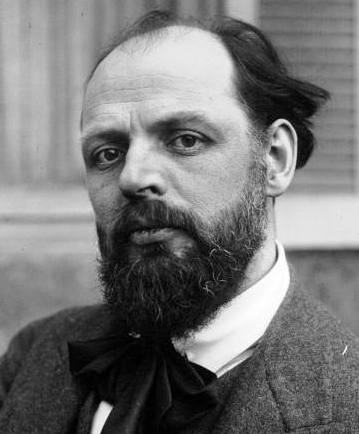
It is by no means my intention to write the history, however brief, of the minority movement in France. I am merely tracing a few reminiscences, intending on a future occasion to write more fully and adding documentary evidence. Yet I would like to recall here one incident worthy of particular mention. It relates to the arrival in Paris of our Swiss Comrade Robert Grimm, on the day after the inter-allied Socialist conference of London (in the middle of February). Grimm paid a visit to the Chamber, interviewed a few deputies, and thoroughly disillusioned, he wanted to get into contact with the militant minority. A confidential meeting was held at the offices of La vie Ouvriere, which was attended by Grimm, Monatte, Rosmer, Merrheim, Trotsky, a Polish comrade, Martov (if I am not mistaken), and myself. Grimm gave us precise information on the situation in the German Social-Democracy, where three currents were already becoming noticeable. It was agreed to carry on mutual relations between the Swiss and ourselves, and through them to try and get in touch with Liebknecht and his friends. Thus, in February, 1915, the first step was taken in preparation for the Zimmerwald Conference.
Shortly after, in March, an anti-war current arose among the Centrists. The news of a secret treaty just signed, by which, in case of victory, Constantinople was to be given to Russia, caused intense excitement among the Socialist group in Parliament. How could they go on talking about a war of justice? Had it not become quite evident that this so-called war for justice was merely an infamous and hypocritical enterprise for imperialist aggrandizement? The Socialist group held three agitated and turbulent meetings on this question. Sembat pitifully pleaded extenuating circumstances, alleging that it had been impossible to resist the insistent demands of the Czarist government. Nearly all those who opposed the treaty went over to the minority. I say “nearly” because Renaudel was among the opponents of the treaty, nevertheless he soon became the leader of the majority. But at that time he still hesitated as to what course he should take. One evening he said to me, quite discouraged and in a manner quite unusual for him: “This war is not what we expected it to be. And I wonder if we shall not have to withdraw our ministers after all.” A month or two later, there were three Socialist ministers instead of two, and Renaudel became one of the most ardent ministerialists.
The principal spokesmen of the Centrist opposition from that time on were: Jean Longuet, Parliamentary deputy for the Paris district, the deputies of Haute-Vienne (Presseman, etc.), and of the Isere (Raffin-d’Ugens and Mistral). They acquired a daily newspaper, Populaire du Centre, published at Limoges, and edited by Paul Faure. In May, 1915, the Socialists of Haute-Vienne, disregarding the leadership of the Party, addressed a circular to the federations, which created a big stir. In this letter, while recognising the principle of national defence, they asked for the intervention of the International, to bring about a just and speedy peace. The Longuetist opposition did not go so far as that: to the very end it kept on balancing between its dogmatic devotion to national defence and its sincere aspiration for peace; the more that it went on voting the war credits, the more it pharisaically expected the end of the butchery. In May, 1916, it started the Populaire, which appeared weekly until the time when it was transformed by Jean Longuet into a daily evening paper.
The Centrists constituted themselves into the Committee for the Defence of International Socialism. Their number increased day by day, and it is evident that only the manœuvres of the fight to a finish clique prevented them from capturing the whole leadership of the Party. They did not officially fight the majority until the eve of the Armistice. But in May, 1917, they scored a big-though short-lived victory in getting the National Council to vote in favour of the Party adhering to the International Conference of Stockholm.
Side by side with the Committee for the Defence of International Socialism, the pacifists of the left (Merrheim, Rosmer, Loriot, etc.), formed their own organisation, the Committee for the Renewal of International Relations. At first it was not easy to distinguish between the two committees. The first group united chiefly moderates, the hesitators and the temporisers; the second one–in which Trotsky exercised a strong influence–represented the un- compromising Socialists, the revolutionaries, all those who could not see how people could call themselves pacifists whilst voting the credits for war. The two groups worked apart from each other, without any mutual interference. Longuet group ran the Populaire, the Merrheim, Rosmer and Loriot group, having no newspaper of its own, published propaganda pamphlets in which the ideas of Zimmerwald were expressed. The Kienthal Conference in the following year was attended by three Socialist deputies from France: Blanc, Raffin-Dugens and Brizon. Henri Guilbeaux, having established himself at Geneva, started the publication of a review Demain (To-morrow), and a few copies of that review managed to find their way clandestinely across the frontier. Under the influence of Lenin, Guilbeaux soon became a Zimmerwaldian and even a “Zimmerwaldian of the Left.” In France there were rather Zimmerwaldians of the Right, such as Merrheim and Boudron, and in a certain. degree also the three Kienthal deputies already referred to. Whilst Rosmer and Loriot inclined towards the Left.
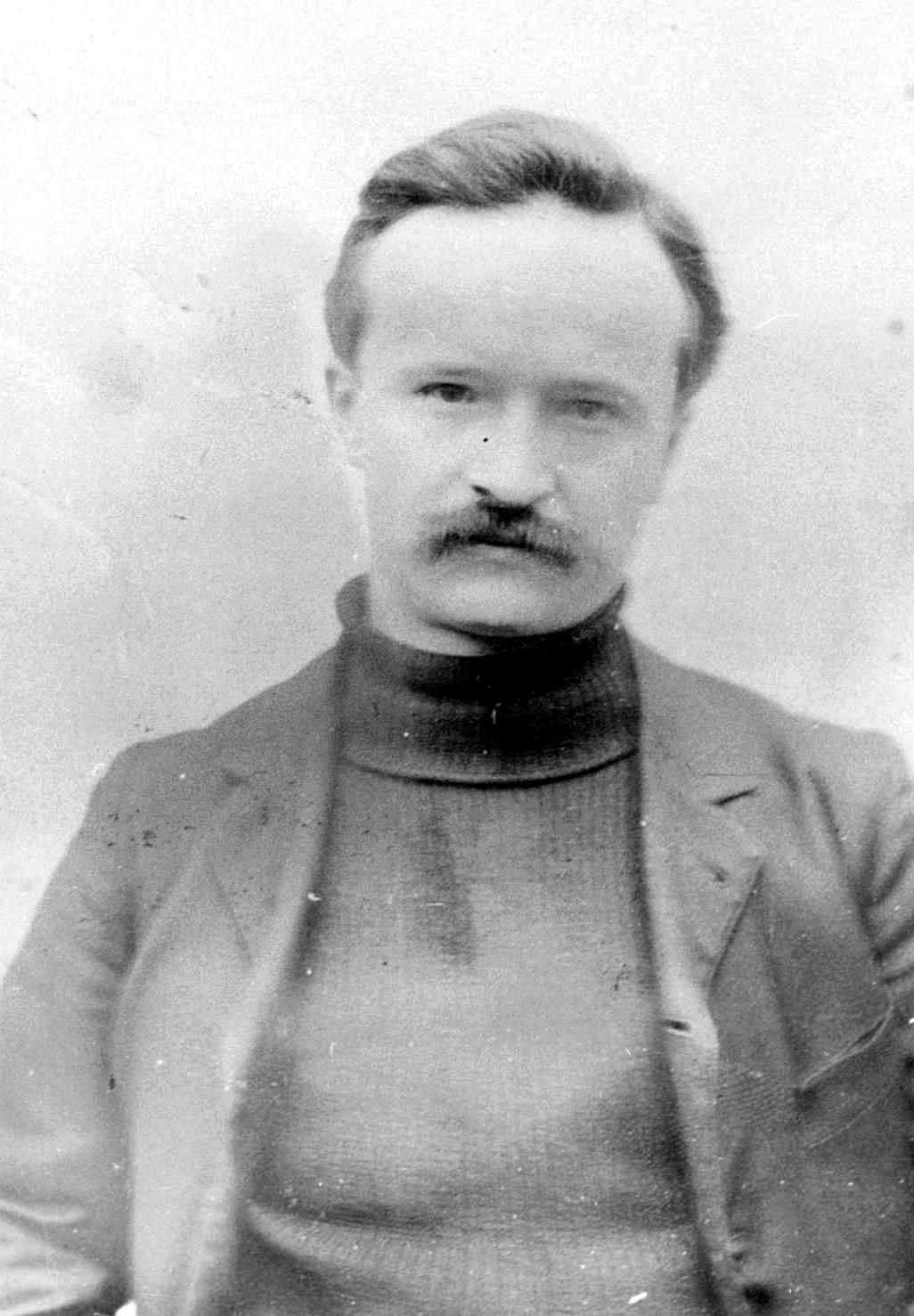
Towards the end of 1916, after two years of war, pacifist propaganda had made such progress in France that in the Socialist party the advocates and the opponents of the policy of the 4th of August became about evenly divided. The fight to a finish advocates were losing ground day by day, but they tried to conceal this by resorting to foul intrigue and malicious calumny: the rupture between them and us was now complete. They accused us of defeatism and pro-Germanism; they charged us with “playing the hypocrite to- wards the warriors at the front,” and they even hinted that we could be manoeuvred by Germany. The Socialist Party, not daring to expel Boudron for his attendance at Zimmerwald, condemned that conference in public; the movement had already become too strong for the social-patriots to oppose it openly. Besides, towards the spring of 1917 a new factor appeared on the horizon the proletariat itself. The protraction of the war, the revolver-shot of Fritz Adler, the first messages of Wilson, with their concealed imperialist motives, and above all, the Russian Revolution had aroused dormant energies and revived languid hopes. The pacifist movement, hitherto confined to a few circles, began to spread to the masses.
In May, 1917, women’s strikes broke out in Paris. The Government tried to settle things by compelling the employers to yield But the workers’ movement, held in check for a long time, was everywhere breaking through all barriers. The cost of living increased, the workers, who had been mobilised in the factories, were agitating and clamouring. for better conditions, and all above all, for an end to the war. Albert Thomas, by creating his shop delegates, expected to do away with trade unionism, and proceeded in a less bureaucratic and more lively manner than the trade. unions, working inside the factories and workshops. In spite of all interference by the military authorities, the delegates on the whole proved themselves faithful to their mandates. Towards the end of 1917, in the district of Lyons, the despatch of a delegate, named Andrieux, to the front, caused a strike which did not terminate until Andrieux was brought back to his place. The whole of the first half of 1918 was marked by strikes which were put down in one place only to break out in another; such were the strikes in the districts of Laon, Loire, Bourges, Paris and so on. The government, having failed by kind methods, resorted to force, backed by a servile Press which was raving about high treason. The movement did not abate entirely until the very moment of the Armistice. Needless to say that the old General Confederation of Labour did not support these mass. strikes; if it did depart for a moment from its lethargic state, it was to declare it solidarity with Malvy, who was the tool of Clemenceau.
The trade union minority, like the Socialist minority, was increasing in numbers. In May, 1918, a congress of the trade union minority was held at St. Etienne; Merrheim, absented himself as a preliminary to his final treason.
The congress was led by G. Dumoulin, who was at the time a whole-hearted “revolutionary,” no one suspecting that in him there were already the makings of a traitor. The Congress demanded the publication of the war aims, followed by a resolution for an armistice and just to test the strength of the movement, a general strike was proclaimed.
The leaders of the movement-except Dumoulin-were immediately arrested, with Herclet and Richetta at the top of the list. Then only did the old G.C.T. think it fit to convene a congress of the Confederation, the first one in seven years. The congress was held in October. After a few days of heated debates it terminated to everybody’s surprise in a reconciliation between the majority and minority and in Dumoulin becoming a member of the Bureau of the G.C.T.
At the same time the majority Socialists were defeated by the coalition of the Longuetists and Zimmerwaldians. The Longuetists took over the conduct of the party and of the Humanité One month later, the bells of the armistice were heard.
The events which followed do not exactly belong to our present subject. But our study would be too incomplete if we did not enquire into post-armistice happenings. The forces set in motion by the imperialist war did not stop immediately with the war. The crisis, which had been started in the French proletariat by the social-traitors, remained unsolved even after the boycottists had taken command of the Socialist Party and after Merrheim and Dumoulin in the G.C.T., under the pretext of unity, had made common cause with Jouhaux. The only way to solve the crisis was by a total revision of the principles and methods used during the war, and by definite abandonment of the policy of opportunist concessions which had resulted in the fiasco of 1914.
In reality the struggle in the Party and in the G.C.T. was carried on under new slogans. The Centrists in the Party did not aspire to more than reconstruction of the Inter- national as it had been before the war, or something like it; the Zimmerwaldians insisted on immediate adherence to the Third International, which had just been formed at Moscow, under the banner of the October Revolution. This conflict ended after two years (December, 1920) in the victory of the Zimmerwaldians, who were reinforced by half of the Centrists while the other half of the Centrists went over to the right wing. By joining the Third International, the Party of Jaures, Guesde and Vaillant showed that at last it understood the chief lesson of the war; that opportunism must always end in treason, and that in order to prevent the possibility of treason, a determined fight must be waged against all forms of opportunism.
In the field of trade unionism, the struggle between the revolutionary advocates of adherence to the R.I.L.U. and the reformist partisans of the Amsterdam International would have also ended in a victory for the revolutionary elements, and in a retirement of the treacherous and crafty leaders, if the revolutionaries, exasperated by the expulsion policy of the reformists, had not resolved to quit the old G.C.T., and to form their own revolutionary organisation of trade unions, the Unity G.C.T., which adopted a programme of class struggle without compromise. The U.G.C.T., by the amendments which it introduced into the famous motion of Amiens (which put the unions in opposition to parties and sects) and by its agreement with the Communist Party, had brought back the trade union movement to its revolutionary basis. (* The Amiens resolution had meant this opposition in the revolutionary sense, whilst the promoters of the resolution interpreted it in the shallow reformist sense.) The U.G.C.T. took cognisance of the fact that the Party and the trade unions, different organs of the working class, but complimentary to each other, cannot ignore each other without danger to the common cause, and that the old formula-trade unionism must be independent of politics which might have had some justification in the past, has to-day become distinctly counter-revolutionary.
III.
I said in the beginning of this article that the surrender on the 4th of August was one of the pages of history which one would like to be able to destroy. In saying this, I gave way to a sentimental point of view. From the viewpoint of practical politics, history is the sum total of all the com- ponent parts. Not a single leaf of the great book can be destroyed, not a single line can be deleted, everything written thereon must be left intact.
Rather than tear out the shameful pages of a historic past, let us read and reread them, let us ponder over them and seek to derive profit from them.
The crisis which occurred both in the majority of the parties of the Second International and in the trade union organisations was a salutary one. It brought to the surface. the bad ulcers from which the organism was secretly suffering. It removed not only the men, but what is more important, the methods that were the root cause of the disease, it thus paved the way for the creation of a select, disciplined and seasoned political party, of a revolutionary party of the masses, hard and supple like steel.
Lenin had grasped the fact at once that the great treason on the 4th August, 1914, far from being an exception or an accidental phenomenon, was indeed the fatal consequence of the opportunist tactics of the Second International, the last link in the long chain of theoretical compromises and deviations. He, therefore, promptly denounced as sheer delusion the Centrist slogan, resurrection of the International. What did it mean to revive the Second International? It meant to revive the pseudo-revolutionary phraseology and the deceptive rhetoric with which it used to cloak its opportunist deeds. In opposition to the slogan of resurrection (which accomplished, during the war, nothing but the pitiful negotiations at Stockholm), Lenin advanced the slogan of creating a new International, free from the maze of petty-bourgeois democracy and the will ‘o the wisp of maudlin pacifism. This Third International was not created before March, 1919, but it already had its origin in what was known as the “left wing of Zimmerwald,” which was in itself a reproduction of Bolshevism on a large international scale.
It had always been asserted-in France it constituted one of the familiar themes of Guesde-that the revolution, like Minerva out of Jupiter’s head, would emerge fully armed, out of a European war. That it should emerge out of the war, it is necessary first of all to put it there; this necessitated the existence everywhere of parties which were revolutionary both in ideology and practice, of class parties which were organised for the express purpose of fighting against the bourgeoisie, of parties which probably existed nowhere except in Russia. On the 4th of August, instead of parties of civil war and armed insurrection, there were only parties of the holy alliance which had been committed through their long opportunist practices, to play the role of the left-wing of the bourgeoisie. The revolution did not emerge out of the war”; except in the vanquished countries, and wherever it did emerge except in Russia, where Bolshevist energy maintained it by the force of the dictatorship-it was finally crushed. In the victorious countries, it was the capitalist and bourgeois reaction, sometimes under the form of Fascism which emerged from the war, and this was due to the lack of revolutionary parties, both ideologically and politically, capable of controlling the situation like Bolshevism did in Russia.
But if, owing to the lack of solid revolutionary parties, the war did not everywhere “hasten the overthrow of capitalist domination,” in accordance with the well-known slogan of international congresses, it did bring about in all countries the formation of these definite revolutionary parties, which have been so strongly felt since 1914.
The Communist International was born out of the necessity to put an end to opportunism, the cause of treason, and to lead the masses away from democratic illusions into the relentless fight against bourgeois dictatorship under whichever guise it might appear. The Communist International is the legitimate child of the Bolshevik party which had always been the irreconcilable enemy of all avowed or veiled opportunism. In comparison with the Hamburg International, always ready to return to its effusion of the 4th of August, the Communist International now represents the grand army of the workers who have understood that capitalism will yield to nothing but force, and that in the historic period of imperialism and war through which we are passing, the historic mission of Communism is to organise methodically the violent opposition of the masses. No more alliances with the bourgeoisie, no more adulterous compromises with bourgeois ideology, no more collaboration even as between class. and class, these are the definite tactics of the Communist International.
The Second International admitted the possibility of an understanding with the bourgeoisie under exceptional circum- stances; the war was one of these circumstances. The Communist rejects all possibility of this kind, and regards war as only another reason for a more determined fight for the overthrow of the bourgeoisie and of capitalism. It declares openly that it will endeavour at all costs to transform the imperialist war into civil war, in conformity with the slogan given by Lenin.
When France invaded the Ruhr last year, the Communist International had the opportunity of passing from slogans to acts. It worked to bring about the union of the workers of France and Germany “against Kuno and Poincaré “; it called upon the French soldiers and the workers of the Ruhr to fraternise with each other the severe penalties imposed recently at Mayence on a score of soldiers and workers proves that the instructions of the International have not remained a dead letter. Ever since the French occupation of the Ruhr, not for a single moment was the contact lost, and the united front broken between the workers of the two hostile countries. What happened in the Ruhr serves as a miniature indication of what the action of the Communist International would be in case of a world war.
The surrender on the 4th of August, 1914, had its irreparable consequences, and as Zinoviev said at the opening Session of the Fifth World Congress, “we shall never forgive the social-democracy the 10 million dead, the 13 million mutilated and the 20 million wounded of the world war.” But in spite of the blackness of the crime, it has not been entirely useless. The international proletariat no doubt needed this appalling experience to rid itself of the democratic and national illusions which befogged its intelligence, and overshadowed its clear revolutionary class duty. Thanks to the Communist International, the crime of 1914 shall not be committed for a second time.
The ECCI published the magazine ‘Communist International’ edited by Zinoviev and Karl Radek from 1919 until 1926 irregularly in German, French, Russian, and English. Restarting in 1927 until 1934. Unlike, Inprecorr, CI contained long-form articles by the leading figures of the International as well as proceedings, statements, and notices of the Comintern. No complete run of Communist International is available in English. Both were largely published outside of Soviet territory, with Communist International printed in London, to facilitate distribution and both were major contributors to the Communist press in the U.S. Communist International and Inprecorr are an invaluable English-language source on the history of the Communist International and its sections.
PDF of full issue: https://www.marxists.org/history/international/comintern/ci/new_series/v02-n05-1924-new-series-CI-grn-riaz.pdf

