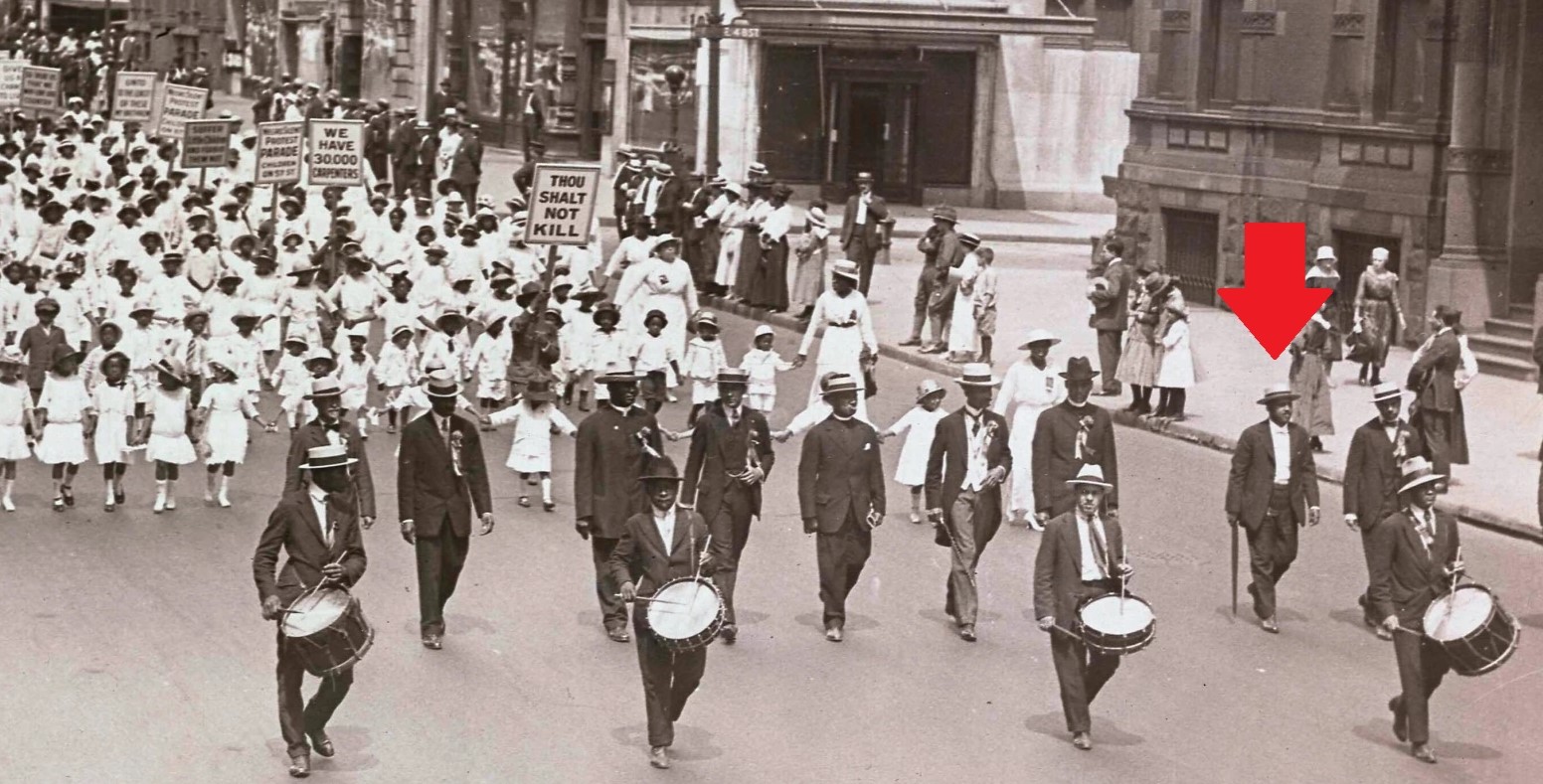
A major statement from A. Phillip Randolph written just before the ‘Red Summer’ of 1919, and the basis of a future pamphlet.
‘Lynching: Capitalism its Cause; Socialism its Cure’ by A. Phillip Randolph from The Messenger. Vol. 3 No. 3. March, 1919.
First, What is lynching? Lynching, historically speaking, is a loose term applied to various forms of executing popular justice, or what is thought to be justice. It is punishment of offenders or supposed offenders by a summary procedure without due process of law. In short, the essence of lynching is that it is extra-legal.
What Object Does It Achieve?
From the lynchers’ point of view it avenges crime–and is calculated to prevent future crime.
During the Reconstruction period the Klu Klux Klan applied the lynch law to intimidate the newly enfranchised Negro voter; to prevent him from voting the Republican carpet-baggers, from the North, into control of the Southern State Governments. The competition was between the former slave-holding class and the carpet-baggers for the power to levy taxes; to issue paper money; to raise revenue; and to grant franchise to private individuals for the operation of public utilities.
Today lynching is a practice which is used to foster and to engender race prejudice to prevent the lynchers and the lynched, the white and black workers from organizing on the industrial and voting on the political fields, to protect their labor-power.
Why do I affirm this and how is it done? This brings me to the consideration of capitalism as the cause of lynching.
Now, just a word as to the reason for inquiring into the cause. All medical scientists are agreed that precedent to prescribing a remedy for a disease, a diagnosis should be made in order to ascertain its cause. Because in order to remove the effects of a disease, physical or social, you must first remove the cause.
To illustrate: Let us assume that a community is situated beside a swampy marsh where poisonous vapors hover over the putrid, pestiferous, standing waters, and where malarial germs and mosquitoes infest. Let us further assume that the people of this community suffer continually from malarial fever. Scientists have determined that mosquitoes are carriers of malarial germs. Now, is it not logical to assume that the swampy marsh is the cause of the malady and that the mosquito but the occasion and that in order to wipe out the effects, malarial fever, it is necessary to remove the cause of the occasion–the marsh? This, then, is no less true of lynching than of any other disease or social evil, such as child labor, white slavery, intemperance, poverty and criminal acts in general.
For clarity of exposition I shall divide the causes into two classes, and I shall treat them in the order of ultimate and immediate or occasion causes.
But, before proceeding to build our structure of the real causes of lynching, we shall do the excavation work by clearing away the debris of alleged but fallacious causes.
First, it is maintained by most superficial sociologists that “race prejudice” is the cause of lynching.
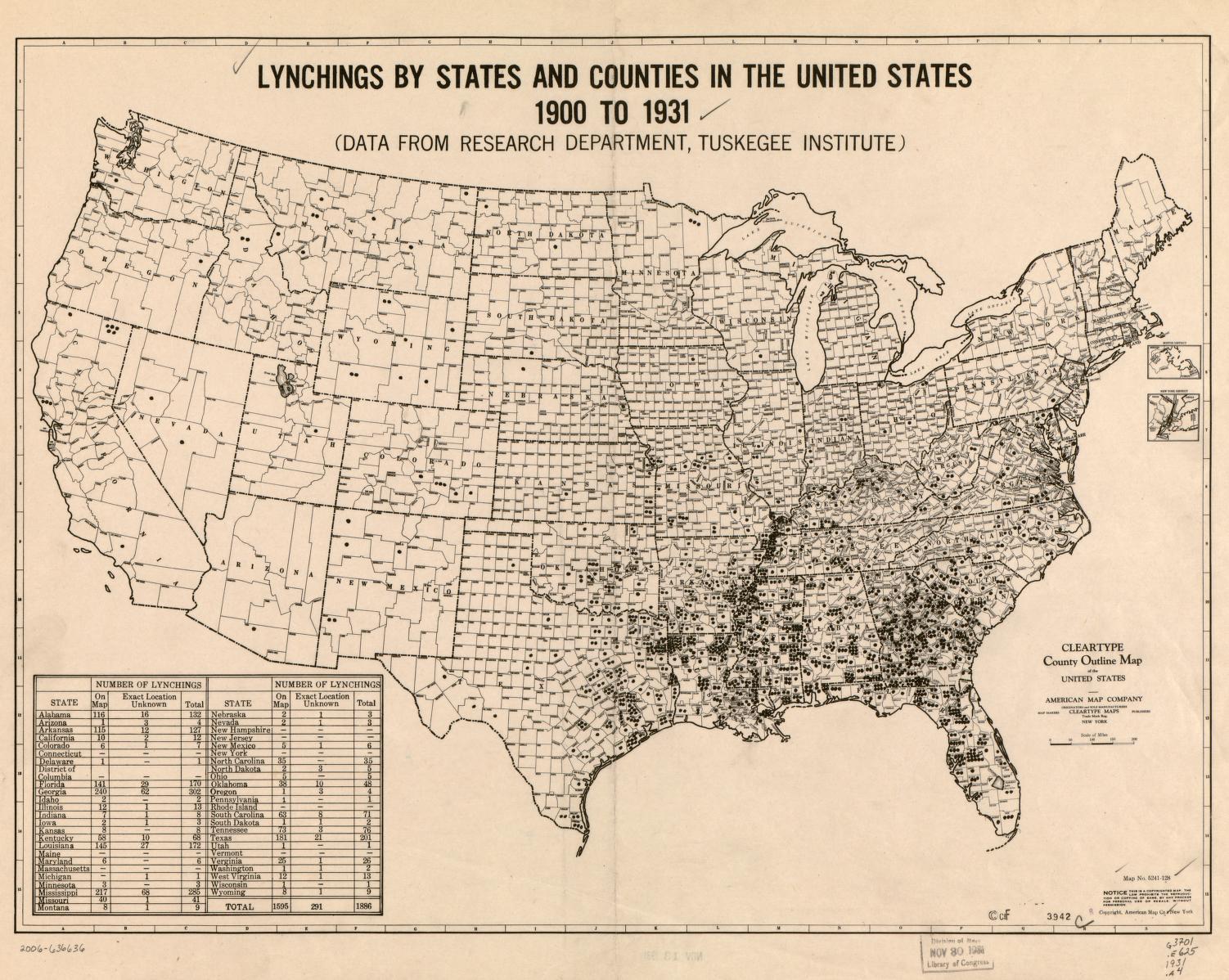
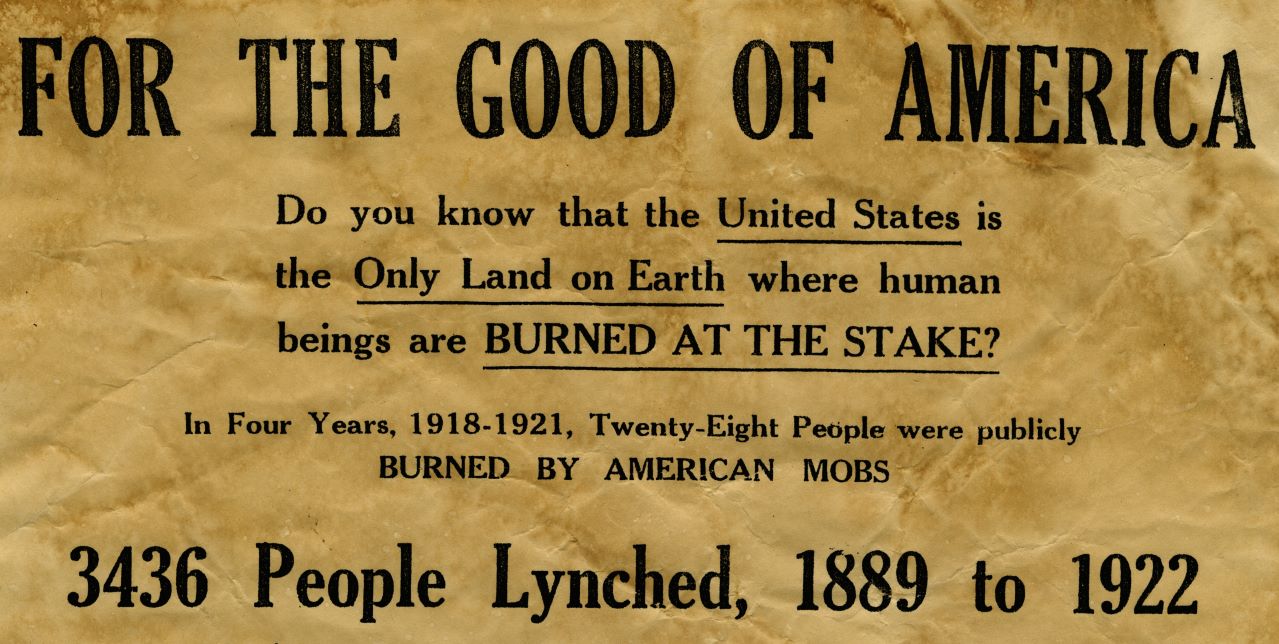
But the fallacy of this contention is immediately apparent in view of the fact that out of 3337 persons lynched between 1882 and 1903, there were 1192 white persons.
Leo Frank, Frank Little and Robert Prager, all white men, are instances of recent date.
Second, it is held by some that “rape of white women” is the real cause. Again this argument is untenable when it is known that out of the entire number of persons lynched, during the above stated period, only 34 per cent. can be ascribed to rape as the cause.
Third, still others contend that the “law’s delay” is the controlling cause. This also is without force when the fact is known that men have had their day in court–taken out and lynched, despite the fact that they (the accused) were convicted or acquitted. Leo Frank is an instance in proof. Thus much for what are some of the occasions but not the causes of lynching.
We shall now consider the real and positive causes of this national evil.
As to the Meaning of Capitalism
Capitalism is a system under which a small class of private individuals make profits out of the labor of the masses by virtue of their ownership of the machinery and sources of production and exchange. For instance, the railroads of this country are owned by less than 600,000 stockholders who employ more than 3,000,000 persons. The ownership of the railroads by the 600,000 stockholders enables them to make billions of profits out of the labor of the 3,000,000 workers. Now there is the crux of the problem. A business is carried on for profits.
Labor is the chief item in the expense of production. It is to the interest of the employer to work the laborer as long hours and to pay as low wages as possible. On the other hand, it is to the interest of the laborer to get as high wages and to work as short hours as possible. Hence, the conflict between the capitalists and the workers. The desire and the power to make profits of the owner of the means of wealth production, which labor must use in order to make wages with which to live, is at the basis of this conflict.
Let us see how it applies to our proposition in question.
We will now review its economic aspects.
During the Civil War one-third of the man-power of the South was killed off. The Civil War resulted in the abolition of property rights in Negroes. Free labor was abolished. For 250 years the slave-owning class had the right, sanctioned by the government, to use a Negro as a horse, a machine. And the invention of the cotton gin had forced the market value of slaves up. Huge fortunes had been made and the slave-owners had lived in luxury, ease, comfort and splendor off the labor of Negroes.
When the end of this came, the industry of the South was paralyzed. There was a shortage of white labor-power. The Negroes had been freed and they distrusted and suspected their former masters. In short, intoxicated with the new wine of freedom, they were disinclined to work.
But cotton must be picked; lumber must be cut; turpentine must be dipped; railroads must be built. In fact, profits must be made to work, besides they must made. Negroes must work or be work cheaply.
How can this be done? This is how it was and is done:
Vagrancy laws are enacted which provide for the imprisonment of all Negroes who have no visible means of support. Of course, it is impossible for a Negro to show that he has any visible means of support. The result is that hordes of unemployed Negroes are hustled off to jail and the convict camps. Their fines are paid by employers of labor for lumber mills, cotton plantations, railroads, etc., they are assigned into their custody, put to work at a wage of 30 and 40 cents a day. They are also compelled to trade at the company’s store, which sells its wares at 100 per cent higher than other stores. A debt for railroad fare to the works and for maintenance while at work ’til payday is made. Moreover, when the fines of imprisoned Negroes are paid, they are required to sign labor contracts, the non-performance of which is presumptive proof of fraudulent intent at the time! of making it, which the State laws make a crime. And as a white planter himself tells the story: A planter can arrest a man upon the criminal charge of receiving money under false pretenses, which is equivalent to the charge of stealing; you get him convicted; he is fined, and being pennyless, in lieu of the money to pay the fine he goes to jail; then you pay the fine and cost and the judge assigns him to you to work out the fine and you have him back on your plantation, backed up by the authority of the State. This is peonage. It is maintained for profits. This is capitalism. And this does not apply to Negroes only. It is the common fate of the servant class, black and white. But they must not understand that their interests are common. Hence race prejudice is cultivated. Lynching, jim-crowism segregation is used to widen the chasm between the races.
This profit system of capitalism also applies to the farmer through the crop-lien system. This is a system whereby a lien mortgage is taken upon the crops of the poor white and black farmers for a loan. It operates in this way: The poor farmer being in need of provisions for his family until harvesting time, borrows money on his planted, and sometimes unplanted crop, from a big merchant or bank. The rate of interest is so high, sometimes as high as 1000 per cent on the dollar, according to Comptroller of Currency John Skelton Williams, the farmer is unable to pay the interest to say nothing about the principal.
The farmer’s inability to meet his note results in the loss of his farm. He then becomes a farm tenant and works upon the metayer system or the plan of giving a part of the crop produced to the owner for the privilege of cultivating the land. This crop-lien system is profitable to the bankers of the South. Both white and black farmers are fleeced by this financial system. But white and black farmers won’t combine against a common foe on account of race prejudice. Race antagonism, then, is profitable to those who own the farms, the mills, the railroads and the banks. This economic arrangement in the south is the fundamental cause of race prejudice, which is the fuse which causes the magazine of capitalism to explode into race conflicts-lynchings.
Prejudice is the chief weapon in the South which enables the capitalists to exploit both races. In the East, North and West, State militias, secret detective strike-breaking agencies, religion or nationality is used. The capitalists play Jewish against Irish Catholic workers. As we have our Waco, Memphis and East St. Louis lynching of Negroes, there are also Bayonne, West Virginia and Ludlow massacres of white workers and their families. The capitalists want profits, they don’t care who makes them for them. In the South today over a million little white children are taken from school, put into factories and driven 10 and 12 hours a day until their little bodies are broken upon the wheels of industry; all because their labor is cheaper and more profits can be made out of them than out of grown-ups. They are competing with their fathers and brothers and they force the wage scale down by virtue of their increasing the labor supply.
This is how much the Southern white gentlemen capitalists care about white children whom they prate so much. Capitalism knows no color line. It will coin the blood, sweat and suffering of white women and white children or black women and black children into dollars and dividends. So much for the economic aspects.
But this thing must be supported by laws. And this brings us to the political cause of lynching. How does it operate?
Vagrancy laws are enacted by politicians who are selected by political parties which are controlled by those who supply the campaign funds. These funds are contributed by the bankers, railroad directors, lumber mill and cotton plantation-owners whose large profits depend upon the low wages and long hours of work of the servant class. This has been the work of Vardaman, Tillman and the “Lily white” Republicans. The laws making the non- performance of a labor contract a crime are placed on the statute books by certain anti-labor and incidentally anti-Negro politicians. Sheriffs into whose custody Negroes charged with criminal acts are placed are nominated, elected or appointed by parties, which are responsible to powerful financial agencies which profit by fostering race prejudice and lynching, etc. This is why sheriffs don’t protect their prisoners and not because they are afraid of the mob. So that when a mob demands a Negro in the custody of a sheriff nominated and elected by a political machine whose campaign funds are made up by banks and loan agencies, and by big employers of labor, which lend money to poor white and black farmers, at usurious rates of interest and who hold labor in peonage; you can realize and appreciate how the sheriff will act. Self interest will control his action and he can always be expected to act in the interest of those who have the power to remove him.
The ruling class of the South have, through disfranchisement and the poll-tax, deprived the working class of the power to protect their interests. The electorate there is small. It is easier for the capitalists to control or to corrupt a small electorate than a large one.
Politically race feeling is also capitalized by young, ambitious politicians who make their campaigns on the slogan of “Negro domination.”
This is how politics fortifies and re-enforces lynch law in the South.
What are the social causes? There are three, the school, church and press.
An uneducated working class hence, the meagre sums of $2.22 won’t revolt, won’t organize; and $4.92 are appropriated for the education of the black and white child, respectively, per year.
The white church is paid to preach the Christianity of lynch law profits.
The press is owned and controlled by the employing class and it is used to influence the minds of the races; to foment race hatred; it gives wide circulation to that insidious doctrine of the Negroes being the hewers of wood and drawers of water for white men. It features in bold headlines such titles as “lynch the black brute,” “young white girl raped by black burly fiend,” etc.
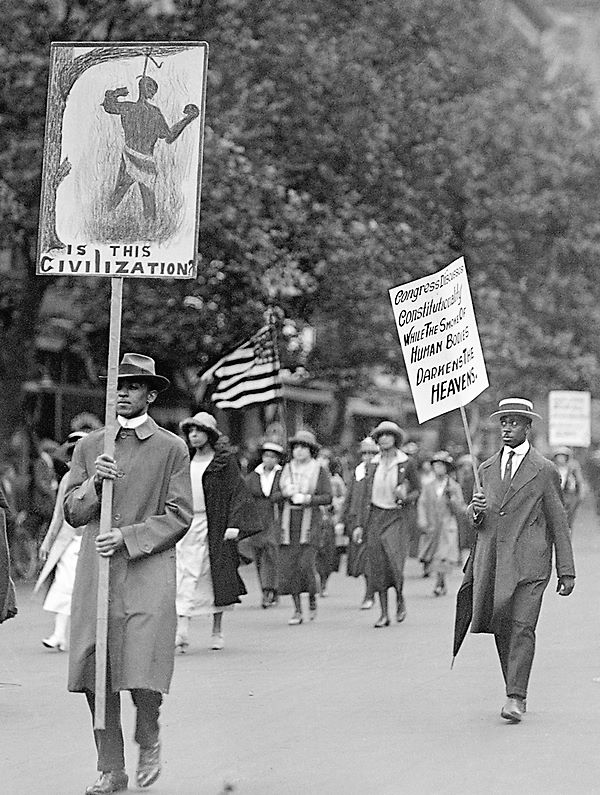
This produces a psychology which expresses itself through the mob. Anything may occasion a community to burn a Negro. It might be a well-dressed Negro; a Negro who speaks good English or a Negro who talks back to a white man.
To sum up, capitalism is at the basis of the economic, political and social arrangements of the South and it is defended, supported, promoted and upheld by the Republican and Democratic parties of the North, South, East and West. Neither Republican nor the Democratic party has ever condemned peonage lynching. They can not. They are owned by the capitalists.
What then is the cure. I hold, maintain and aver that Socialism is the only cure. Why?
First, what is it? Briefly, it is the social ownership and democratic management of the means and sources of production and exchange for social use and not for private profit.
How Does This Effect Lynching?
Socialism would deprive individuals of the power to make fortunes out of the labor of other individuals by virtue of their ownership of the machinery which the worker must use in order to live. When an individual or class may make profits out of the labor of black and white workers, it is to his or to the interest of the class to use any means to keep them (the workers) from combining in order to raise wages; to lower their hours of work or to demand better only reason why prejudice is fostered in the South. This is the working conditions. Of course, it may not be possible to trace every lynching or act of prejudice to a direct economic cause, but the case may be explained by the law of habit. When social practices are once set they act or recur with a dangerous accuracy. So that it is now a social habit to lynch Negroes. But when the motive for promoting race prejudice is removed, viz., profits, by the social ownership, control and operation of the machinery and sources of production through the government, the government being controlled by the workers; the effects of prejudice, race riots, lynching, etc., will also be removed.
For instance, if railroads were owned and democratically managed by the government, its collective and social service function would not be prostituted to jim-crow cars in order to pander and cater to race prejudice. No individuals would be making profits. out of them and consequently there would be no interest in promoting race antagonisms. Lynchings, the product of capitalism, would pass as the burning of heretics and the Spanish Inquisition, the product of religious intolerance, passed.
Besides Socialism would arm every man and woman with the ballot. Education would be compulsory and universal. The vagrancy law, child labor and peonage would no longer exist. Tenant-farming and the crop-lien system would be discarded. And every worker would receive the full product of his toil.
This is the goal of Socialism. This is why every Negro should be a Socialist.
In conclusion, workingmen and women of my race don’t allow Republican and Democratic leaders to deceive you. They are paid by Rockefeller, Morgan, Armour, Carnegie, owners of Southern railroads, coal mines, lumber mills, turpentine stills, cotton-plantations, etc., who makes millions out of your labor. Don’t be deceived by the small increase in wages which you are receiving; the capitalists are taking it back by increasing the cost of food, fuel, clothing and rent. Don’t be deceived by any capitalist bill to abolish lynching; if it became a law, it would never be enforced. Have you not the Fourteenth Amendment which is supposed to protect your life, property, liberty and guarantee you the vote? Does it do it? No. Why? Because it is nullified through ad- ministration by capitalists, Republican and Democratic representatives, who profit from lynching; who want lynching to continue. Lynching will not stop until Socialism comes. You can strike a death blow to lynching by voting for Socialism.
Black and white workers unite. You have nothing to lose but your chains; you have the world to gain.
The Messenger was founded and published in New York City by A. Phillip Randolph and Chandler Owen in 1917 after they both joined the Socialist Party of America. The Messenger opposed World War I, conscription and supported the Bolshevik Revolution, though it remained loyal to the Socialist Party when the left split in 1919. It sought to promote a labor-orientated Black leadership, “New Crowd Negroes,” as explicitly opposed to the positions of both WEB DuBois and Booker T Washington at the time. Both Owen and Randolph were arrested under the Espionage Act in an attempt to disrupt The Messenger. Eventually, The Messenger became less political and more trade union focused. After the departure of and Owen, the focus again shifted to arts and culture. The Messenger ceased publishing in 1928. Its early issues contain invaluable articles on the early Black left.
PDF of full issue: https://www.marxists.org/history/usa/pubs/messenger/1919-03-mar-Messenger.pdf

