
Report on activity in Brazil between the Fifth and Sixth Comintern Congresses includes a look at the state of the country, political parties, trade unions, and the work of the Communist Party.
‘The Brazilian Communist Party’ from The Communist International Between the Fifth and the Sixth Congresses, 1924-28. Published by the Communist International, 1928.
THE economic basis of Brazil is agriculture (coffee). The industry is young and not very developed.
Economically and politically, Brazil is a colony of Anglo-American imperialism. Till 1927 Brazil’s debt to Great Britain amounted to £157,000,000, and its debt to the United States was $191,000,000.
The biggest enterprises o! the country (banks, railways, mines, tramways, electricity, gas, etc.) are owned either by the British or the Americans.
Till 1914 British imperialism predominated. Then began the penetration of American imperialism, and with it the struggle for control which is gradually developing in favour of the United States. The growing influence of the United States is making itself also felt in foreign politics: Brazil’s exit from the League of Nations, Brazil’s active participation in the Havana Conference on the side of North America, etc.
POLITICAL PARTIES.
Until 1920 the ruling party was the Republican Party (big landowners), which is under direct British influence and to which there was no opposition. Then the industrial bourgeoisie began to take action, at times even in the form of an armed rising (the insurrection of 1922 in Rio de Janeiro, and the insurrection of 1924 in Sao Paulo), and parties of the industrial bourgeoisie sprang up: the Democratic Party in Sao Paulo and Rio de Janeiro.
The Republican Party, which has been in power since the proclamation of the republic (November 15th, 1889), is the only party in the full sense of the word. The National Democratic Party, which was created through the fusion of the Democratic Party in Sao Paulo and the Liberation Alliance of Rio Grande do Sul is a young party with a big membership. It embraces big and petty bourgeois elements, professional! soldiers, liberal intellectuals, civil servants, etc., and even a certain number of workers.
The Democratic Party of the Federal District (Rio de Janeiro) has no programme and no definite standpoint, but is full of democratic and liberal phraseology. Its leaders are petty bourgeois intellectuals and small industrialists. Most of its members are of the civil servant and professional type.
TRADE UNIONS.
The general position of the trade unions is satisfactory. After a period during which the trade unions were almost entirely deserted their re-organisation was taken in hand. Since the beginning of 1927, when the Communist Party carried on a legal existence for six months, it accomplished a great deal of trade union work. For instance, a regional federation was formed in Rio de Janeiro, which embraces at present 20 trade unions with 30,000 members. A C.G.T. (General Labour Federation) group is still working for the establishment of a central national trade union federation. Two new national industrial unions (printers and food workers) were formed, and several small trade unions were fused. A relentless struggle was also carried on against the “yellow” leaders, who have the support of the police. It sometimes happens that these yellow leaders get our candidates arrested just before the trade union elections, because they would otherwise lose their trade union posts, or they expel Communists from the trade unions, etc. In this work the yellow elements have the support of Anarchists and even Socialists. In spite of this Communist influence in the trade unions is growing.
THE PARTY’S WORK.
Work in the trade unions is controlled through the trade union commissions of the Central Committee of the C.P. and through the trade union commissions of the regional committees. There are at present 35 trade union fractions in the biggest labour organisations of the country.
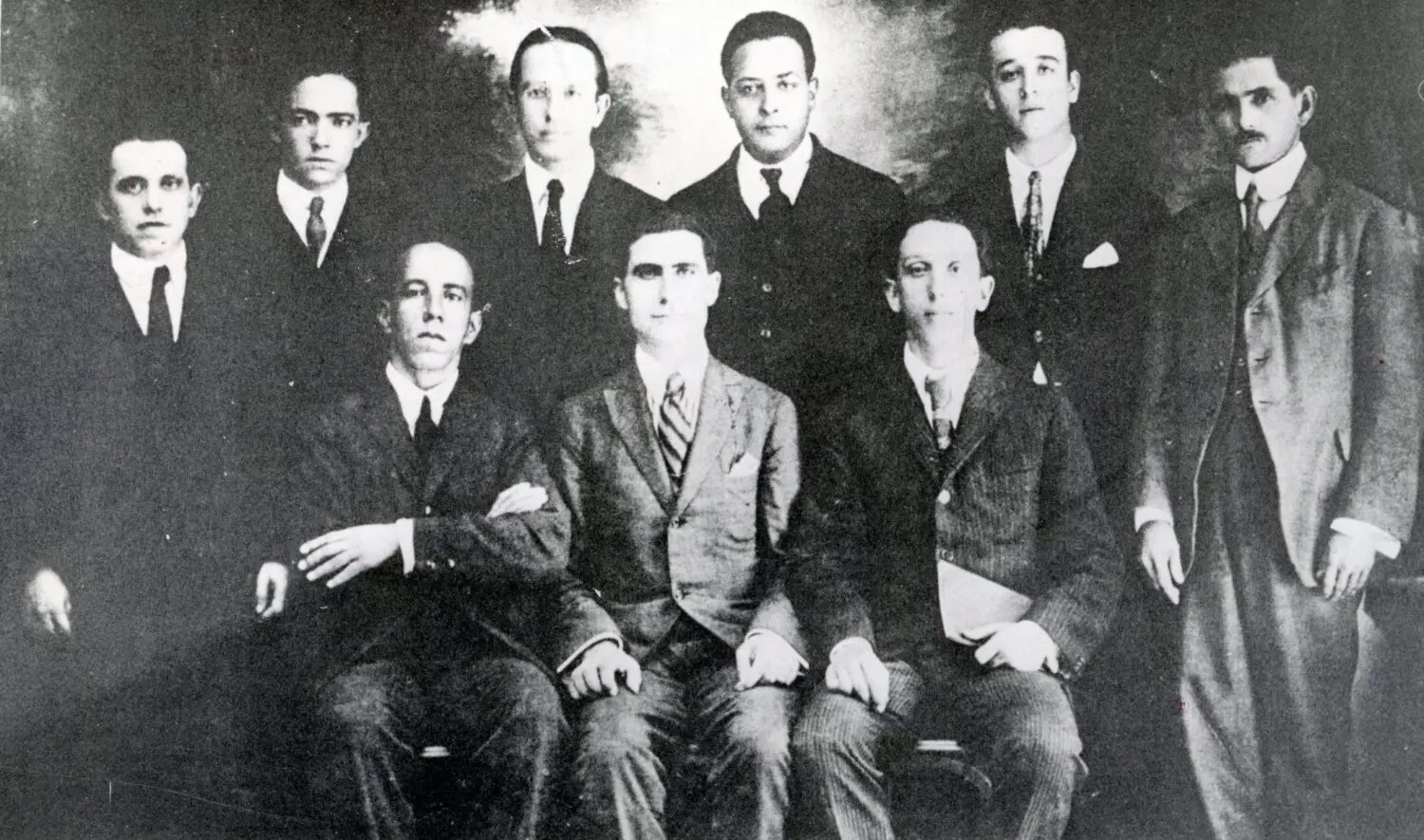
The Communist Party has thus become a political factor in the country. In 1927 a Labour bloc was formed, and a successful election campaign was carried out, the bloc securing one deputy. The Labour bloc continued its activity also in the subsequent municipal elections, and it is hoped that in this year’s elections it will be possible to get two or three municipal councilors through. Other campaigns were: May Day, Lenin Memorial Day, Sacco and Vanzetti campaign, and campaigns on the danger of war against Soviet Russia and against imperialist intervention in China.
The main activity of the party in connection with the most important industrial conflicts was as follows: Campaigns against the proposed currency reform, struggle for the retention of the Leave of Absence Act and struggle for the prolongation of the Rent Protection Act, etc. Other campaigns carried out by the Agitprop Department, apart from the regular campaigns for the eight-hour day, higher wages during strikes, etc., were as follows: Campaign against the Penal Act, against the despatch of former Anarchist workers to the International Conference in Geneva, against Fascism, for trade union unity, for the release of political prisoners in Brazil and all other countries, for the de jure recognition of the Soviet Union, against the occupation of Nicaragua, etc. The activity of the Agitprop Department was, of course, greatly hampered by the illegality of the Party.
In the second half of 1926, when the reaction prohibited the publication of newspapers and public meetings, illegal theoretical courses were organised which were attended by 100 comrades.
The party newspaper had on an average a daily circulation of 5,000. A series of elementary pamphlets were also published.
Work in the rural districts is still in its initial stage. Although there are about 9,000,000 agricultural labourers, they are not yet organised owing to the enormous size of the area, their backward mentality and also owing to negligence of this work. It is only quite recently that the party has begun to organise small landowners, and there are already three agricultural trade unions.
An I.R.A. (I.C.W.P.A.) organisation was started, but the reactionary government and the lack of comrades capable of leading it compelled the party to give up this work for a time. The same can be said in regard to the Friends of Russia Society.
Work among women is also in its initial stage. Brazilian women are not very active in the revolutionary movement.
In regard to the internal life of the party, there have been no big political divergences, and there is no opposition.
Although the party apparatus is not perfect, it works fairly well, and has been able to resist all reactionary attacks. The party has about 1,200 members, 98 per cent of whom are manual workers. The remainder are petty bourgeois elements and intellectuals. According to its national composition, the party has among its membership 70 per cent Brazilians and 30 per cent foreign immigrants. The party is organised on a factory nucleus basis. There are 24 factory nuclei with 186 members, and 31 street nuclei with 420 members in Rio de Janeiro. Including the organisation in Rio de Janeiro, there are altogether 40 local organisations throughout the country. Characteristic of the influence of the Communist Party among the masses are the elections, in 1927, to the mutual aid organisations of the railwaymen, at which the party polled 8,000 votes of the total poll (20,000). Two factory newspapers are published in Rio de Janeiro.
In spite of all its weak points, the party is progressing and is becoming stronger and more efficient.
The Communist International Between the Fifth and the Sixth Congresses, 1924-28. Published by the Communist International, 1928.
PDF of full book: https://archive.org/download/comintern_between_fifth_and_sixth_congress_ao2/comintern_between_fifth_and_sixth_congress_ao2.pdf
 Revolution's Newsstand