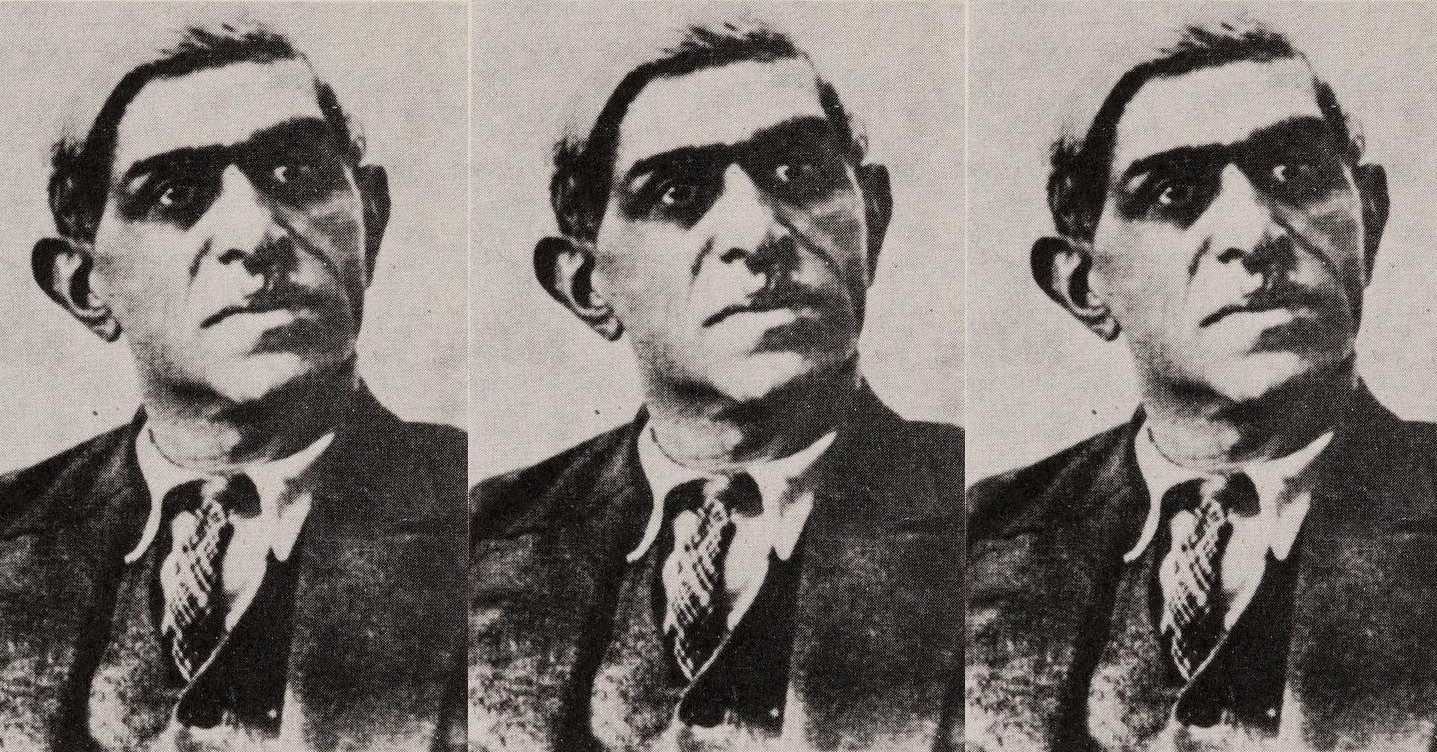
Chattopadhyaya surveys the Indian class war and struggle for self-determination in the summer of 1930, and takes a closer look at the motivations and impact of Gandhi’s ‘home-spun’ movement to boycott British-made cloth.
‘On the Situation in India’ by Virendranath Chattopadhyaya from International Press Correspondence. Vol. 10. No. 30. June 26, 1930.
I. The Situation in the various Camps.
During the last few days very little news about the Indian movement have appeared in the European press, but it would be a mistake to draw the conclusion that there is a lull in the anti-imperialist struggle. On the contrary, both the published as well as the confidential information received from Indian sources shows that there has been a considerable intensification of the fight all along the line. The outstanding features of the situation at the present moment may be summed up as follows:
On the revolutionary side–growth of strikes among industrial workers with economic and political objects; spread of the no-tax campaign among the peasantry of the North (United Provinces, Bengal, Behar and Orissa); growing radicalisation of the petty bourgeois youth leagues; growing influence and activity of the revolutionary youth leagues of the Panjab and the North-West; intensification of the boycott of foreign cloth and British goods generally; steadily growing participation of women; social boycott of Government servants; increasing solidarity of the Indian police and the lower ranks of Government servants; spread of the anti-imperialist agitation to important States. In general, growing resistance and class-consciousness of the masses, and practical submerging of the non-violent movement.
On the counter-revolutionary side–attempts of Congress leaders to prevent the campaign for non-payment of land rent in the above-mentioned provinces, where the cultivators pay the rent to Indian landlords and not directly to the Government; handing over of the direction of the movement for the boycott of foreign cloth to leading Indian capitalists and textile manufacturers; negotiations of Liberal leaders and of certain leaders of the religious and social minorities with the Viceroy with regard to the personnel of the Indian delegation to the Round Table Conference; formation of fascist leagues of the propertied classes to support imperialist rule; attempts by Labour Party agents to win the co-operation of Gandhi and therefore the National Congress leaders’ co-operation in the Round Table Conference; increased activity of the reformist Indian labour leaders both in India and in Europe.
On the imperialist side–enormous increase in the severity of repressive measures (savage bombing of North-West Frontier tribes; military attacks on demonstrations; daily mass arrests; increasingly brutal sentences of imprisonment; ruthless government by martial law and special “ordinances”; suppression and confiscation of newspapers; etc.); corruption of police and village officials by special increases in salary; deception of “public opinion” in Great Britain by the Simon Commission’s Report, and of the Indian nationalist leaders by a “new formula” to attract them to the negotiations in London.
To complete the picture we must mention that Britain’s imperialist rivals, the United States and Japan, are profiting by the boycott of British goods and capturing the Indian market in a number of lines that had hitherto been the monopoly of the British manufacturers.
On each of the above-mentioned points there is a vast amount of material to hand, but we shall refer here only to a few of the most recent developments.
As regards the industrial workers, even the reformist leaders are being compelled to admit that the mass of the workers are determined to carry on the struggle for their full liberty. Speaking before a mass meeting of workers at Kharagpur, Giri, President of the Bengal-Nagpur Railway Labour Union and General Secretary of the All-India Railwaymen’s Federation, emphatically denied the statement made by the Government that Indian labour was keeping aloof from the struggle. As regards the hundreds of thousands of railway workers he declared that “anyone who stayed in the big railway colonies in India knew and realised the depth of the feeling of the workers for liberty.” He did not point out however that he and his fellow-traitors to the cause of the Indian workers, as for example, S.C. Joshi of the G.I.P. Railway Employees’ Union, who is the Indian “Labour delegate” to Geneva, had been doing their utmost to prevent the movement from becoming revolutionary.
How the Government, the millowners and the reformist leaders combine to achieve this end is shown by their action in Sholapur, the industrial town which was recently in the hands of a workers and peasants government and where a veritable regime of terror has since been established by placing the city under the rule of the military. The cotton and silk spinning and weaving mills are being worked in an unbroken shift from 8 a.m. to 3 p.m. without a midday interval as formerly. This move is intended to prevent the workers of the different mills from coming together for consultation. And when the work is over the military regulation forbidding a gathering of more than five workers under a penalty of five years hard labour, places enormous difficulties in the way of the workers.
The Naujawan Bharat Sabha (Revolutionary Youth League) organised a magnificent series of anti-imperialist demonstrations on the 24th of May, the “Empire Day”. Details have just come to hand of the demonstrations in Lahore, where Comrade Ram Chandra hoisted the Red Flag in the Municipal Gardens outside the Mochi Gate before a large gathering, mostly of workers and small traders. In unfurling the Red Flag amidst thundering shouts of Inquilab Zindabad (Long live the Revolution!), he called upon the workers and peasants of India to rally under this flag and overthrow imperialism and capitalism. A song in praise of the Red Flag was sung, and a procession marched through the city shouting anti-imperialist slogans and singing revolutionary songs.
A new feature of the movement is the increasing refusal of the Indian police to open fire upon demonstrators. The Congress committees are making special propaganda among the police to persuade them to join the struggle for freedom.
From a confidential Indian source in Calcutta we learn that in the first week of May at a mass meeting of 50,000 people in Mirzapur Park, the 200 policemen who were ordered to fire upon the demonstrators refused to obey orders and were arrested and taken to the Lalbazar Police Station in the prison vans intended for the demonstrators. The meeting was dispersed by a British regiment. Over 2,000 constables of the Calcutta Police Force went on strike for a week until their demand for the release of their arrested colleagues were satisfied.
In Bankipur a military squad consisting of fourteen Indian soldiers under an Indian petty officer, an English sergeant and an English lieutenant shot down the two English officers, because the Indian petty officer had been killed by the lieutenant for having refused to give the order to fire.
Owing to the unrest among the police, the Government of Bombays has announced the grant of special allowances to Indian constables and officers, especially in those districts where the anti-imperialist movement is particularly strong. The salary of village tax collectors of the Jalalpur District has also been raised by ten rupees a month and they are being supplied with special police protection because of the menacing character of the social boycott of Government servants that is being rigorously carried through.
The reign of terror established by the MacDonald Government in India is illustrated by the decrees issued by the Military Governor of Sholapur. No person in Sholapur is allowed to give food or shelter to anyone who in the opinion of the military authorities is engaged in propaganda against the Government. Anyone suspected of infringing this order is punishable with five years’ imprisonment of hard labour. Vehicles, property and labour may be requisitioned at will; non-compliance is punishable with two years of hard labour. For dissemination of “information calculated to create alarm or despondency” five years hard labour and a fine. The inhabitants are compelled to remain indoors during fixed hours, infringement being severely punishable.
Other aspects of the situation will be discussed in subsequent articles.
Il. Some Results of the Indian Boycott Movement
While the leaders of the Indian National Congress are so conducting the movement for the non-payment of land revenue as to protect the interests of the Indian landlords the whole of the movement for the boycott of British goods is proving to be a highly profitable weapon in the hands of the Indian capitalists.
When Gandhi initiated his campaign for the “nation-wide” use of the spinning-wheel–recognised even by many of his Congress colleagues as a return to retrograde mediaeval methods–he gave it the outward character of an anti-British movement in order to make it popular. But the real motives of the movement are twofold: a) the villager is confined to his home in order to spin yarn and save a rupee or two, and is thus removed from the mass struggle with revolutionary agrarian slogans, while at the same time the exodus of the villagers to the industrial and proletarian centres is prevented; b) the demand created for Indian home-spun yarn and home-woven cloth acts as a great stimulus on the Indian mill industry and, while increasing its production, opens up also a large home market for Indian mill cloth. In other words, the Gandhi conception of the boycott of foreign cloth by the adoption of the spinning-wheel aims on the one hand at diverting the attention of the peasants from the agrarian revolution, and on the other strengthens the hands of the Indian mill-owners and business men.
This is very clearly shown by the developments of the last few weeks. When the Indian Cotton Tariff Bill was passed by the so-called Legislative Assembly, giving practical preference to Great Britain against other foreign countries by making the import duty on cotton textiles 15% for the former and 20% for the latter, G.D. Birla, President of the Federation of Indian Chambers of Commerce and one of the leading Indian capitalists, journeyed down specially from Delhi to Gujerat to meet Gandhi and discuss with him the whole question of the production of Khaddar (home-spuns) and the boycott of foreign cloth. Since then Birla has been in constant touch with the Congress leaders, V.J. Patel and Pandit Madan Mohan Malaviyya, and it is now clear that the conduct of the foreign cloth boycott movement is to be. entrusted to the merchants and textile capitalists, who regard Gandhi as their own friend and spokesman.
It is natural, therefore, that the Congress should hand over the leadership of the movement to the merchants and mill-owners. In fact, the Working Committee of the Congress has decided, with the full consent of Gandhi, to concentrate its attention on the boycott of foreign cloth to the exclusion of such “dangerous” issues as the “non-payment of taxes”, “social boycott” etc. And the satisfaction of the textile capitalists may be judged from the high praise of Gandhi and his movement in the columns of the “Indian Textile Journal“, the organ of the textile magnates, which is bitterly hostile to the working class. In its latest issue that journal makes the following noteworthy remarks:
“Thanks to the movement started by Mr. Gandhi, a complete and happy change has come over in the textile industry. A couple of months ago the sky was thickly clouded and there was not a ray of hope for the industry. The first indication of the change manifested itself during the visit of the mill-owners to Mr. Gandhi in Surat…The constant demand for swadeshi cloth is mainly responsible for the now empty godowns, which had stocks worth hundreds of thousands. In spite of strikes every other day in the mills owing to the imprisonment of various leaders, the mills are now thriving, and some of them are putting in new looms. Even the calico mills which had hitherto been running double-shift have commenced working for 23 hours, and the New Commercial Mills have started double-shift to cope with the demand for cloth”.
This refers to Ahmedabad. In Bombay, the New City Mills, the Finlay Mills, the Apollo Mills and the Jacob Sassoon Mills propose to work night-shift “to meet the growing demand for Bombay mill products”. The mill-owners have increased the prices of several categories of goods. No statement is, however, made as to the effect of these increased orders and increased prices on the conditions of the textile workers.
On close cooperation with the mill-owners, the merchants in almost all important cities have unanimously resolved to boycott foreign cloth. The Karachi Piece-goods Merchants Association in resolving on the boycott called on the Government to “concede the legitimate national demands of Indians before it becomes too late”, and similar resolutions were passed by the Bombay Piece-goods Merchants Association, the Lahore Cloth Merchants Association, the Delhi Hindustani Mercantile Association, etc.
Another result of the boycott of foreign cloth and of the demand for cloth created thereby is the growing establishment of new cotton spinning and weaving mills in Sindh, Panjab and the United Provinces.
In order to further promote the interests of the capitalists, a new organisation called the “Swadeshi League” has just been started in order, among other things, to encourage the exclusive use of swadeshi (home-made) cloth. It is declared that the “activities of the League will be conducted on lines detached from political party or creed”. The President is Sir Ali Imam, a well-known supporter of British imperialist rule, and the Secretary is his brother, Hassan Imam, a sympathiser of the Indian National Congress.
From the facts cited above it is clear that the Congress by concentrating on the boycott of foreign cloth has not only acted directly in the interests of the capitalists, but has also found a common economic platform with the Liberals who are advocates of a Round Table Conference and of a new constitution granting far less than Dominion Status.
It may be said, therefore, that concentration on the boycott of foreign cloth has completely deprived the Congress movement of the character of a mass revolt, while its anti-foreign or rather its anti-British emphasis is intended to deceive the masses into the belief that the Congress movement is anti-imperialist. The leadership of the boycott movement and therefore of an essential item of the Congress programme has gone into the hands of the Indian capitalists, and it is these, therefore, that will determine largely the terms that will ultimately be accepted by the Congress leaders for participation in the coming Round Table Conference.
That the leading Congressmen, that is the Right Wing leaders, Gandhi, Motilal Nehru, Patel, etc., are prepared for “peace on honourable terms” is asserted by Lord Irwin’s agent, Sir Tej Bahadur Sapru, who has gained this conviction after having discussed the political situation with Congress leaders.
It must be pointed out, however, that the deliberate attempts of the Congress leaders to prevent the movement from retaining its revolutionary mass character are leading to a further radicalisation of the youths and the poorer elements in the Congress Committees. The Youth Leagues in the cities that had been under the influence of the Gandhi programme, are now turning more definitely towards the working-class, while the District and Village Congress Committees are carrying through the non-payment of taxes campaign even in those areas where the leaders consider it to be “dangerous”.
A few words may also be said regarding the effect of the Indian boycott movement on Great Britain and her imperialist rivals. Combined with the increased import duty (15% for Great Britain), the boycott is having an effect on Lancashire.
“Interviews with employers” writes the “Textile Mercury” of Manchester, “reveal an anxious disposition on the part of manufacturers in the Blackburn district, and it is feared that before long most of the mills engaged in the Indian section of the trade will have the majority of their looms idle”.
And J.A. Ormerod, ex-Mayor of Blackburn and a leading textile industrialist, declared:
“It is a most serious situation, the most serious I can remember It will mean that three-fourths of our machinery will have to close down…It will be a nasty blow to Lancashire as a whole”.
And he uses the occasion to
“…emphasise the necessity of operatives and employers. getting together in a great effort to save the industry”.
The Indian Boycott is also telling on the German textile industry, particularly on the cheap printed cotton goods of Saxony, on the silk industry of Yokohama and on the French silk ribbon industry. As regards the Japanese textile industry which maintains offices in India, it is asserted by the Japanese Consul-General in Bombay, that they do not intend Closing down the offices. The way in which the 20 % import duty on Japanese goods is met is that the shipping companies Nippon Yusen Kaisha and Osaka Shosen Kaisha, have decided to cut the freight rates for cotton yarn and cotton goods to Shanghai and India by one yen per ton, thus depriving Lancashire of the advantage that had been secured by forced preferential treatment.
The American bourgeoisie has declared its “sympathy for the Indian movement”, while U.S.A. manufacturers have obtained a large number of orders from India for goods that hitherto been imported from Great Britain.
International Press Correspondence, widely known as”Inprecorr” was published by the Executive Committee of the Communist International (ECCI) regularly in German and English, occasionally in many other languages, beginning in 1921 and lasting in English until 1938. Inprecorr’s role was to supply translated articles to the English-speaking press of the International from the Comintern’s different sections, as well as news and statements from the ECCI. Many ‘Daily Worker’ and ‘Communist’ articles originated in Inprecorr, and it also published articles by American comrades for use in other countries. It was published at least weekly, and often thrice weekly.
PDF of full issue: https://www.marxists.org/history/international/comintern/inprecor/1930/v10n30-jun-26-1930-Inprecor-op.pdf

