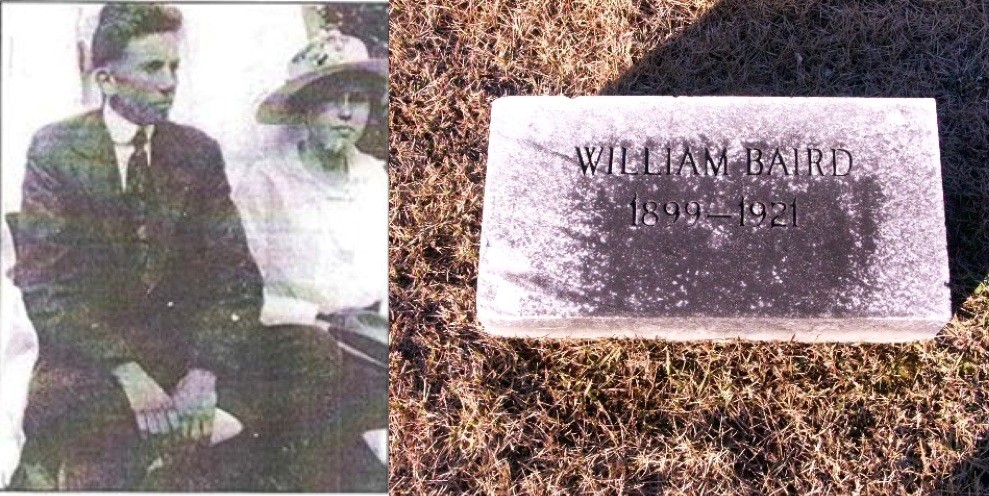
Will Baird was a militant white miner on strike with his fellow Black U.M.W.A. workers, a crime worthy of death in Alabama. After his arrest for defending his home in an incident in which his uncle was murdered and two militia shot, he was taken from jail and lynched on the night of January 13, 1921. Art Shields on his murderers going free after years of court cases seeking some justice.
‘Will Baird: A Southern Frame-up’ by Art Shields from Labor Defender. Vol. 4 No. 4. April, 1929.
ALABAMA coal operators and the national guard have gotten away with murder again. Will Baird, a militant young miner was lynched and his slayers go unpunished. After four trials the Jasper County authorities say the case is closed against Sergeant Robert L. Lancaster and eight other troopers.
Few northern workers have heard of this ugly murder. Yet the lynching of Will Baird was the climax of the 1920-21 strike that broke the miners’ union in this far south field. It was a brutal, cowardly crime against the labor movement like the lynchings of Frank Little and Wesley Everest.
The ghost of this murder has been haunting Alabama courts for eight years. Lancaster was tried last Fall, for the fourth time. Once the supreme court obligingly reversed a conviction, saving him from 18 years in the pen. Thrice he won a mistrial. Now the district attorney throws out the case.
Baird’s murder stirred Alabama labor, though little news got outside. It happened in the hilly country half way between Birmingham and Muscle Shoals where labor struggles had been going on obscurely for 40 years. Will Baird came from a miner’s family and was a fine young specimen of manhood, just 24, with a young wife. That last strike that began in May 1920 showed his mettle. It was a strike of 12,000 men for the restoration of the wage agreement and the former scale, and Baird knew what the extra cents a ton would mean for his loved ones. He was active on the picket line and in relief work. Guardsmen seeing him erecting tents for evicted families and appealing to strike-breakers marked him as a man to watch.
Fifteen hundred soldiers were patrolling the coal counties, government gunmen for the coal operators. Lancaster and the eight in his gang were from Tuscaloosa to the south, just a bunch of youngsters from town and country, filled with propaganda and liquor for the job of subjugating the bituminous counties. Youths of 18 to 22, they took their orders from their officers who got them from Gov. Kilby (Democrat) and the coal operators.
A series of killings led up to the murder of Will Baird. December 22, 1920 a guardsman killed his father-in-law, old John Northcutt. The sturdy old man, with many others, had continued to picket whenever possible despite the soldiers’ orders. So one day Private James Morris arrested him at Nauvoo and charged him with “picketing and intimidation.” To make a thorough job of it the trooper drew his service revolver and shot Northcutt seven times through the body.
Private Morris lived just a few minutes, when a bullet passed through him. Baird fled. Later he gave himself up in the woods to the sheriff after exacting the promise that he would be furnished protection from the soldiers. But like the promise that the governor of West Virginia gave Sid Hatfield before he surrendered to the McDowell County indictment, this promise was not kept. Baird was lodged in Jasper jail till his lynching.
Christmas day, just three days later, another striker was killed. This was Monroe Norwood, a prisoner in the soldiers’ barracks. Private Edward Gartman shot him dead. His gun went off “accidentally”, he claimed.
General Steiner whipped up the lynching spirit by violent statements against Baird and the strikers. Lancaster came to the jail to have Baird pointed out to him. This the jailer afterwards testified to. Midnight of January 12 a gang forced its way in, took the jailer’s keys and dragged Baird from his cell.
“Come on, damn you,” said one, as he seized Baird, jailer Sides testified. They rushed the miner in his nightshirt to an automobile.
Leslie West, taxi man who drove one of the two cars and identified Lancaster, tells of the slaying. They threw Baird into a patch of woods three miles out and fired from all sides. He was pierced by 22 holes. Dozens of empty .45 caliber automatic and .30 caliber rifle cartridges were by the body when it was found next day.
Lancaster swore he slept at the barracks that night. But Clyde Springer, a guardsman, said the sergeant boasted of the killing the next day. There were many other witnesses. Mud-stained civilian clothes worn at the lynching were found behind a partition in the barracks’ wall. They bore the soldiers’ initials. Empty cartridges. were found in the Ford car attached to the company.
“What the Hell Do We Care”
The files of the Birmingham Age-Herald for this period make interesting reading. Strongly sympathetic to the lynchers the stories tell how gaily Lancaster and his fellow prisoners passed their time as they waited for the first trial. The jail echoed with “Hail, Hail the Gang’s All Here, What the Hell Do We Care,” and other carefree ditties.
Wealthy Tuscaloosa lawyers had already procured a change a venue to an agricultural county that did not have a union man in it, the Age-Herald declared. Despite this part of the jury held out for conviction. Indeed a later jury convicted Lancaster, but the supreme court, his ace in the hole, saved him. The others in the gang were never brought to trial.
The strike ended in February 1921. Hundreds of men were blacklisted and Alabama miners are probably worse off today than ever in their history.
Labor Defender was published monthly from 1926 until 1937 by the International Labor Defense (ILD), a Workers Party of America, and later Communist Party-led, non-partisan defense organization founded by James Cannon and William Haywood while in Moscow, 1925 to support prisoners of the class war, victims of racism and imperialism, and the struggle against fascism. It included, poetry, letters from prisoners, and was heavily illustrated with photos, images, and cartoons. Labor Defender was the central organ of the Scottsboro and Sacco and Vanzetti defense campaigns. Not only were these among the most successful campaigns by Communists, they were among the most important of the period and the urgency and activity is duly reflected in its pages. Editors included T. J. O’ Flaherty, Max Shactman, Karl Reeve, J. Louis Engdahl, William L. Patterson, Sasha Small, and Sender Garlin.
PDF of original issue: https://www.marxists.org/history/usa/pubs/labordefender/1929/v04n04-apr-1929-LD.pdf

