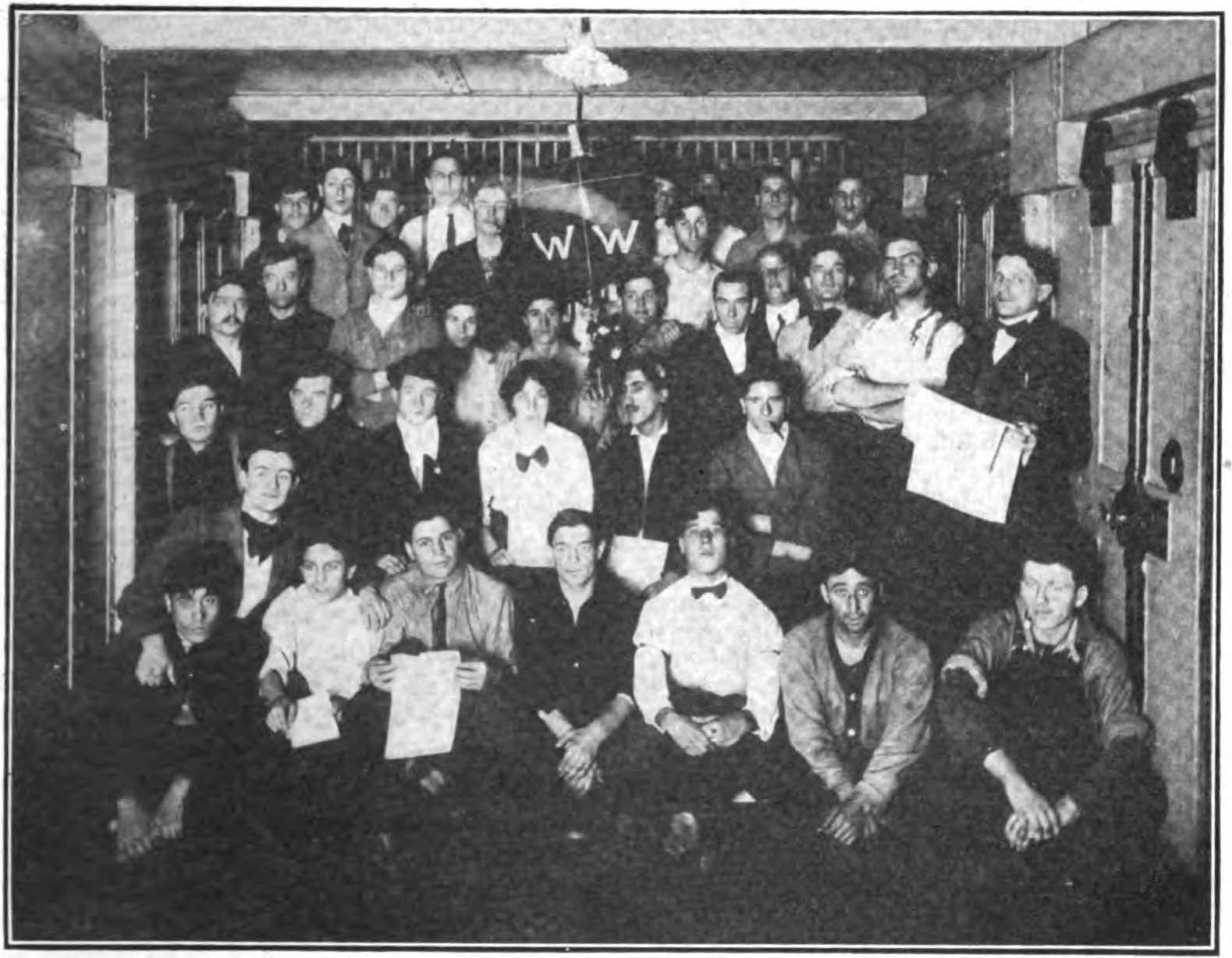
Largely immigrant workers, women and girls, in Little Falls, New York walked out of the Phoenix Knitting and Gilbert Knitting Mills in October, 1912. Nearby Schenectady, with its Socialist mayor and movement, sent help and in late October the workers, with the leadership of Matilda Rabinowitz, established I.W.W. Local No. 801, the National Industrial Union of Textile Workers of Little Falls.
‘Liberty is Dead in Little Falls’ by Phillips Russell from Industrial Worker. Vol. 4 No. 36. November 28, 1912.
LITTLE FALLS, N.Y., Nov. 18. Despite “authoritative” reports that all the textile mill strikers would return to work this morning, the picket line was the largest that has turned out in several days, and the total number of new scabs that obtained entry was two. The rumor factory was unusually busy yesterday and nearly all the news agencies sent out circumstantial stories to the effect at the strike was “settled” and that the big parade of strikers Saturday afternoon was in the nature of a celebration.
There was no truth whatever in these stories. No return to work was even contemplated, and the only thing even remotely resembling a settlement was a meeting between a committee of strikers and Judge Gilbert of the Gilbert Knitting Mills. This conference resulted in nothing, Judge Gilbert merely making an offer to allow 60 hours’ pay for 54 hours’ work; but as the strikers are holding out for a 10 per cent increase for day work and 15 per cent for night work, they got little satisfaction.
No word whatever has been received from Manager McLaughlin of the Phoenix Mills, whose obstinacy continues to stand in the way of a complete settlement. A committee of business which recently visited him in the hope of bringing about an end to the strike was received coldly, and public sentiment is now rapidly turning against him. The merchants of the town are beginning to feel the pinch severely, trade having fallen off to a minimum. These gentry, who early in the strike saw fit to hold a public meeting which approved of the course of the police in their ferocity toward the strikers, are now waking up to the fact that the working people are not only the producers of the community, but the consumers, and that if the strike is not ended soon the little savings of the workers will be exhausted and a dull winter for trade will be the dismal prospect.
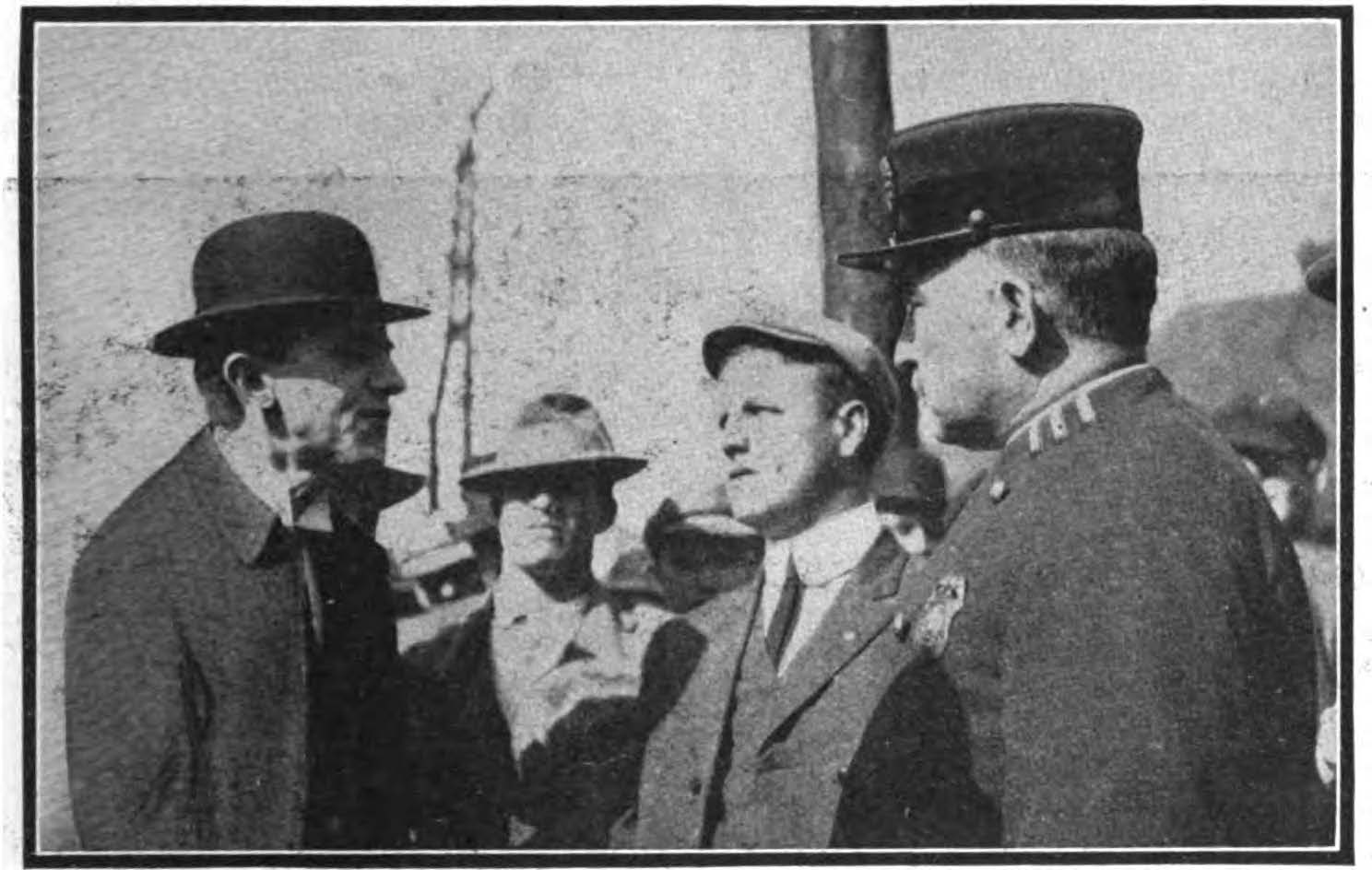
The mass meeting held in the Lumberg Theater in Utica yesterday raised a total of $125 for the strikers. Mayor Lunn of Schenectady and William D. Haywood made addresses to an audience of about 600, which applauded almost continuously. Five girl strikers from Little Falls helped take up the collection and sold copies of the Schenectady Citizen, containing Robert A. Bakeman’s terrible story of what took place in the cells of the local police station after the arrest of the first batch of strikers, when helpless men had their faces beaten into a pulp by blackjacks in the hands of the police and detectives. Bakeman tells how one boy, who was shot through the back of the head, was left lying in his cell for several hours without any attention whatsoever. Bakeman tried to wash the blood off some of the prisoners and had to carry water to them in an envelope.
Mayor Lunn plainly charged that the “riot” of October 30, for which more than forty men and women have been arrested, was purposely started by the police. He told of having been accompanied to Herkimer jail Saturday by Valeria Vitasziek, the little Polish woman with a 2-year-old child, who is accused by a 214- pound detective of having committed a murderous assault on him with a six-inch knife. Haywood declared that the fight was by no means over, but was going to be extended, and that Utica might be discussing its own strike within a week. He pointed out that the strike in Little Falls was but a part of the general class struggle, and that will not be ended until “overalls are put on every capitalist in the country.” In the presence of the policemen and plain clothes men who were thickly planted in the rear of the theater he mercilessly arraigned the police and detectives of Little Falls and Lawrence as being expressions of the brutal force of the master class. The Little Falls strike would be won, he said, and the rights of the working class would be fully established before the I.W.W. had finished with the town. Eight hundred members had already been taken into the organization, he said, and word had been received that 250 men were ready to come at a moment’s notice to establish the right of, free speech and assemblage.
It was for revolting against the theft of 60 cents that the textile workers of Little Falls have been punished with a ferocity unparalleled in any town of any civilized country on earth except America, where the police are given arbitrary powers not approached in any other nation.
Efforts are now being made to cover up the unmerciful beatings given strike prisoners in their cells, and in the past few days a number of them have been brought over at unusual hours from Herkimer jail and released after being made to believe that nothing would happen to them if they would plead guilty to a charge of assault in the third degree. Most of them were young Polish, Italian and Austrian boys, and few of them understand English perfectly. They were not allowed a lawyer and in some cases their interpreter was the very policeman whom they accused of beating them. An estimate may be made of the court they were tried in when it is stated that when Attorney Cooper of Schenectady accused the police of these practices a policeman leaped to his feet and exclaimed: “You’re a liar! A G-D- liar!” and went unrebuked for it by the judge.
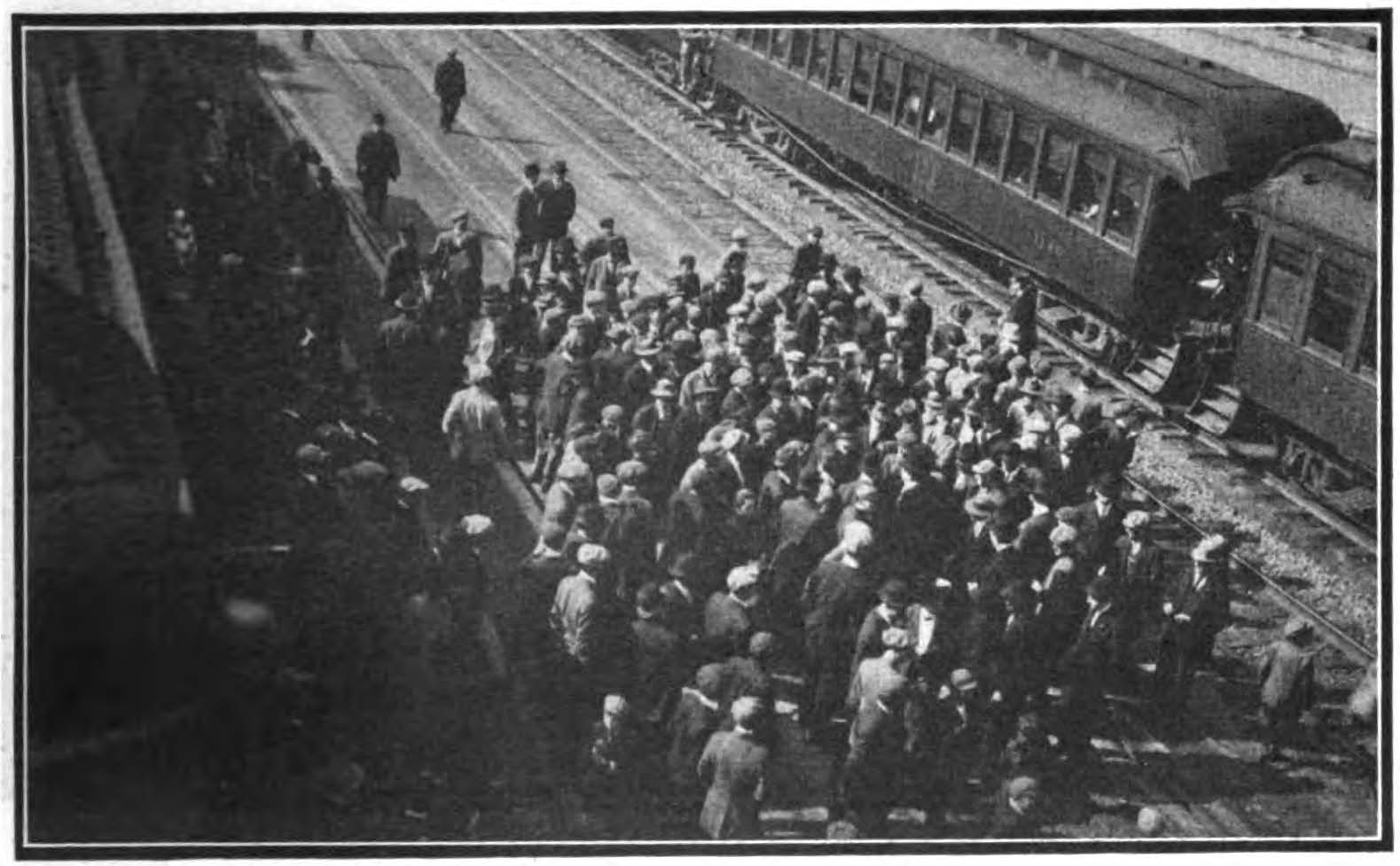
Meantime the Relief Committee is taking good care of the strikers and their families through help received mostly from the Socialists of Schenectady and from some of the more progressive labor organizations. Needy families receive supplies directly in their homes. The single men and women are fed in the relief kitchen twice daily under the direction of Miss Helen Schloss, who spent ten days in jail herself for being seen in the picket line. About 50 people are fed each day at a cost of about seven cents each per meal. Very few strike-breakers have been obtained–and those, sad to say, are mostly Americans–and victory must come shortly if the strikers can be cared for. Money must also be raised for the defense of Strike Chairman Legere, Organizer Bochino and Speakers Vaughan and Hirsh of Schenectady, who will get terms in the penitentiary if the authorities have their Way. Contributions should be sent to Miss Matilda Rabinowitz, Sec. Little Falls Defense Committee, Box 458, Little Falls, N.Y.
The Industrial Union Bulletin, and the Industrial Worker were newspapers published by the Industrial Workers of the World (IWW) from 1907 until 1913. First printed in Joliet, Illinois, IUB incorporated The Voice of Labor, the newspaper of the American Labor Union which had joined the IWW, and another IWW affiliate, International Metal Worker.The Trautmann-DeLeon faction issued its weekly from March 1907. Soon after, De Leon would be expelled and Trautmann would continue IUB until March 1909. It was edited by A. S. Edwards. 1909, production moved to Spokane, Washington and became The Industrial Worker, “the voice of revolutionary industrial unionism.”
PDF of full issue: https://www.marxists.org/history/usa/pubs/industrialworker/iw/v4n36-w192-nov-28-1912-IW.pdf
 Revolution's Newsstand