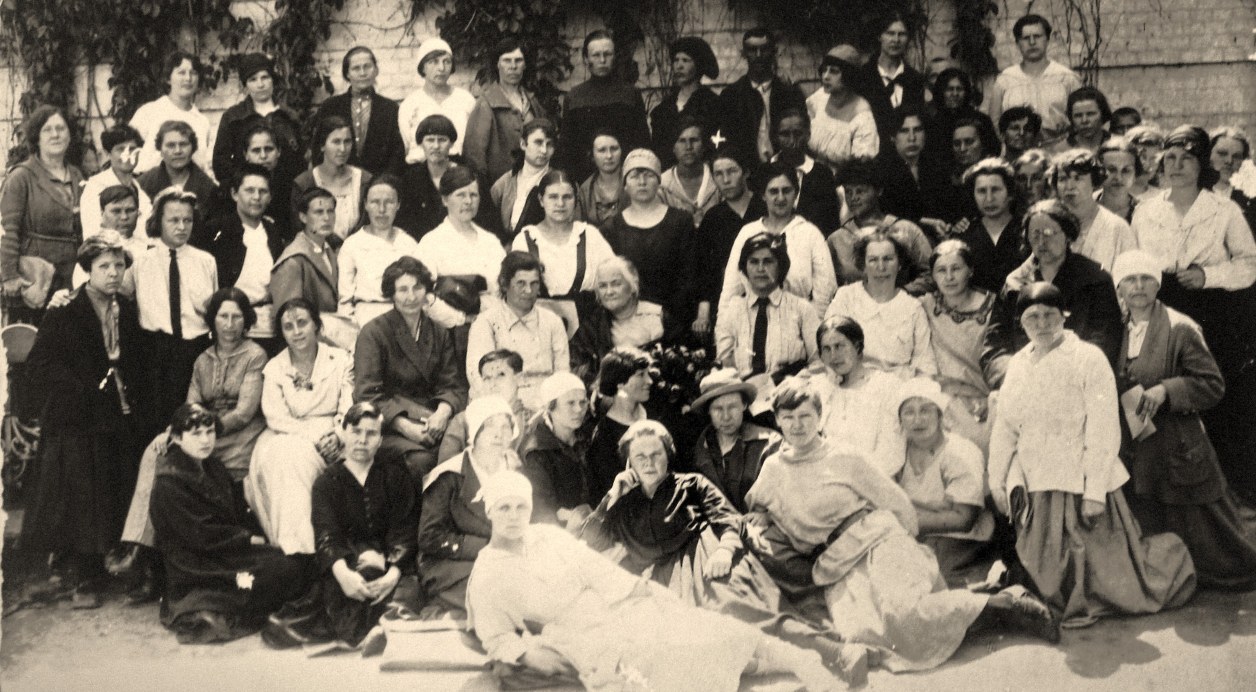
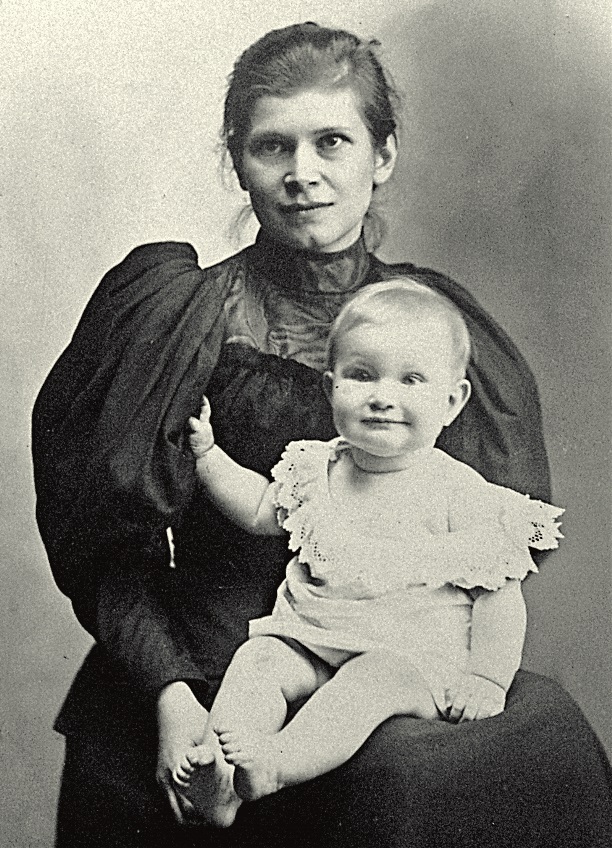
The facts and figures, as well as the obvious frustrations as well as optimisms of these speeches will be of interest to all students of the Communist women’s movement. Reports at the Comintern’s Fourth Congress in 1922 from Clara Zetkin, as head of the International Women’s Secretariat, Hertha Sturm speaking for the Western Bureau, Sofia Smidovitsh on work in Soviet territories, and Varsenika Kasparova for the Eastern Bureau. While Zetkin is well known, the other three made their own contributions in extraordinary revolutionary careers. A central figure in the proletarian women’s movement both before and after the creation of the Third International, Hertha Sturm’s contributions were enormous, and deserving of much greater recognition and understanding. Born in 1883 as Edith Fischer, she became a schoolteacher at 19. After several years of teaching, she left for Leipzig University in 1911, the same year she joined the Social Democratic Party, to pursue higher education. A rarity, Sturm received her doctorate in Social Economy in 1914. Taking a leading role in the Party’s women’s work, she worked closely with Clara Zetkin and others. On the internationalist left, Sturm was an original member German C.P. 1919 and was imprisoned for activities with the Bavarian workers’ republic. A German delegate to the 2nd Comintern Congress in 1920, she became a leading force in the emerging Communist Women’s movement. Strurm organized its first international gatherings as member of the Comintern’s International Women’s Secretariat. She led the Western European Bureau based in Berlin from 1921-24. Though she would lose her positions in the German Communist Party as a ‘rightist’ in 1924, she relocated to Moscow and continue here work under Clara Zetkin in the International Women’s Secretariat, organizing and leading its conference and work. By October, 1928 changes in the Comintern made Sturm’s ‘rightist’ associations incompatible with the new Third Period and she returned to Germany, where she lost Party positions but remained a member. Sturm (also known by her married name Edith Schumann) was arrested immediately on the Nazi’s taking power in March, 1933. After her release she began work with the anti-fascist left Socialists in the Neu Beginnen underground group. Arrested against September, 1935, she was tortured and reportedly attempted suicide. March,1936 she was sentenced to five-year prison, after which the historical record of this pioneering and leading Communist who helped define a proletarian women’s politics and led antifascist resistance, ends. She likely perished in jail or in the war’s mass bombings. Kasparova was an ‘Old Bolshevik’ and exiled since 1904 in Switzerland with Lenin, whom she worked closely with. She returned in 1917 and became the lead Political Officer in the Red Army, working as Stalin’s personal secretary. After the Civil War she focused her work in the Comintern’s Women’s Secretariat while also becoming one of the leading women in U.S.S.R., a member of the Central Executive Committee of the Soviets. A Left Oppositionist early on, she would be expelled in from the Party in late 1927 and sent to internal exile. Recanting in 1935 she was released from exile, but arrested the following year. She was shot on September 11, 1941 along with many surviving figures of the Oppositions in the Medvedevsky executions. She was ‘rehabilitated’ in 1961. Sofia (nee Chernosvitova) Smidovitsh was from a liberal, bourgeois-noble family marrying the brother of Anton Lunacharsky at just 18, joining the R.S.D.L.P. in 1898, the same year she also developed a close relationship with the Ulyanov family. Arrested in Moscow in 1901, she was exiled to Tula where she worked in the town’s library. During this period, Lunacharsky died and Sofia was arrested several more times for political activity, remarrying fellow Bolshevik Petr Smidovich, Petr. From 1914, she was active in Moscow where she participated in the 1917 Revolutions. She played a leading role in the Moscow Party, serving on its C.C. and leading its women’s work until she would take over from Kollontai in 1922 as head of the Party’s women’s work as a whole. In 1925 she moved to the Party’s Central Control Commission as a functionary, serving until 1930 then returning to women’s work in the early 1930s. She died on November 26, 1934 at 62 years old.
‘Reports on Communist Activity Among Women’ from Abridged Report of the Fourth Congress of the Communist International, 1922.
REPORT ON COMMUNIST ACTIVITY AMONG WOMEN
SESSION 24, November 27, 1922,
Chairman: Comrade Neurath. Speakers: Comrades Zetkin, Sturm, Smidovitsh, Kasparova.
Clara Zetkin: Comrades, before I begin my report on the activities of the International Women’s Secretariat and the development of Communist activity among the women, allow me a few short remarks. They may seem unnecessary, for they only repeat much that has been said and decided before; nevertheless, they are necessary because our work is still misunderstood not only by our opponents but even by our own comrades. They misunderstand the work of the Communist among the women and the tasks of the national sections and of the International in this connection. This is with some the remains of an old view, and with others it is willful prejudice because they do not sympathise with our cause, and even partly oppose it.
The International Women’s Secretariat is not as many believe, the union of independent organisations of the women’s movements, but a branch of the Executive of the Comintern. It conducts the activity not only in constant co-operation with the Executive, but under its immediate leadership. What we usually designate as the Communist women’s movement is not an independent women’s movement and has nothing to do with any feminist tendencies. It exists for systematic Communist propaganda among the women. This has a double purpose: first, to incorporate within the national sections of the Comintern those women who are already filled with the Communist ideal, making them conscious co-workers in the activity of those sections; second, to win over to the Communist ideals the indifferent women and draw them into the struggles of the proletariat. The masses of working women should be mobilised for these fights. There is no work in the Party, no struggle of the movement in any country in which we women do not regard it as our first duty to participate. Moreover, we have the ambition to take our place in the Communist parties and the international where the work is hardest and the bullets fly thickest, without shunning the most menial, most modest everyday work.
One thing has become apparent: we require special organs to carry on the Communist work of organisation and education among women and to make it a part of the life of the Party. The Communist agitation among the women is not only a woman’s task, it is a task of the whole Communist Party of each country, of the Communist International. To accomplish our purpose it is necessary to set up party organs as Women’s Secretariats, Women’s Departments, or whatever we may call them, to carry on this work.
During the last year we have had evidence of the good and bad sides of Communist work among the women. We have seen the good sides in those countries where the Communist sections of the International have created such separate bodies, as in Bulgaria and Germany, where the women’s secretariats have carried on the work of organising and educating the women Communists, mobilised the working women, and led them into the social struggle. In those countries, the Communist women’s movement has become one of the strong points of the general life of the Party.
In those countries we have many women members and militants in the Party and still larger masses of women as Comrades in arms outside the Party. This is also true for the country which for its importance should be mentioned first—Soviet Russia. In Soviet Russia the Women’s Department of the Communist Party, acting with and under the leadership of the Party, have proved how important the co-operation of the women is, especially in this difficult period of economic and social transition to Communism. The problems and the tasks which the Communist Party and the proletariat of Russia has to face will be forced upon the Communist Parties and the proletariat of other countries which are still suffering under the capitalist rule. This is why the report of Comrade Smidovitch on the activity of the Women’s Department of the Communist Party of Russia is especially important.
And now, Comrades, let me give you a few examples of the bad effect of the lack of special organs for work among women in Communist Parties. Whenever there are no women’s secretariats or similar bodies, we have observed a falling-off in the participation of women in the life of the Communist Party and the withdrawal of the feminine proletariat from the struggle of their class. In Poland the Party has refused until now to set up special bodies for work among women. The Party was content to allow women to fight in its ranks, and participate in strikes and mass movements.
In England organisation for conducting systematic agitation among the feminine proletariat are altogether lacking. The Communist Party of England excused itself by its weakness and has continually, refused or has postponed the setting up of a special body for systematic agitation among the women. Al! the exhortations of the International Women’s Secretariat have been in vain. No women’s secretariat was established; the only thing that was done is to appoint a woman comrade as general party agitator. Our women comrades have organised various meetings for the political education of the Communist women and their closer connection with the Party out of their own feeble means.
These institutions have achieved such good results that the establishment of similar educational institutions must be encouraged by the Communist Party. The attitude of the Executive of the Communist Party of Great Britain is, in my opinion, not only an outcome of its financial weakness, but partly also to its youth and the shortcomings resulting from it. The British section of the International cannot remain indifferent to the fact that in its country many millions of proletarian women are organised in women’s suffrage societies, in women’s trade unions of the old type, in consumers’ co-operatives, in the Labour Party and in the Independent Labour Party. It behooves the Communist Party to engage in a struggle with all these organisations for capturing the minds, the heart, the will power and the actions of the proletarian women. Therefore, it will in the long run realise the necessity for the organisation of special organs by means of which it will be able to organise, and train, the Communist women within the Party and to make the proletarian women outside the Party willing fighters for the interests of their class. The International Women’s Secretariat will naturally assist the Party in this work as the representative and the auxiliary organ of the Executive.
The same, minus the party crisis and subsequent general reorganisation, may be said of the Swedish section of the Communist International. Here, too, we have separate Communist women organisations. Moreover, in Norway and Sweden these separate organisations are relics of the old and strong women’s suffrage movement. They will disappear when the ideological relics of the social-democratic past will have been overcome, and the Communist orientation will have firmly established itself.
In nearly all places, some more and some less, the Women’s Day was carried through as a collective act of the whole Communist Party.

The same was true of the other great international work in which we took part—the International Workers’ Famine Relief of Soviet Russia. In all countries this was carried on with the aid of conspicuous initiative and co-operation of the women. From Norway and Finland to Switzerland and Italy, from West to East, it was the women who, together with their Communist Parties, have been the most active propagandists, collectors, and organisers for the International Workers’ Famine Relief. They have shown in this work a real proletarian solidarity.
Comrades, I must also call your attention to the fact that our work during the past year has made us realise, in connection with one particular phase of our movement, the importance of drawing women into the ranks of the Communist International. I mean the important role which the Communist women and women who are in sympathy with us are playing in those countries where illegal agitation is the only form of Communist activity, or where, side by side with the legal organisations, illegal organisations are working underground. In countries, such as Finland, Poland and others, the self-sacrificing and intelligent work of Communist women is proving invaluable. If we are to be confronted with the blackest reaction, Fascism, and compelled to fight illegally, answering violence with violence and retaliating the lawlessness of the bourgeoisie by ignoring and treating with contempt bourgeois law and order, the Comrades will find that they will be able to make no headway unless they have the women working side by side with them.
The backwardness and weakness of the women in the political movement only reflects the backwardness and the weakness in the Communist ranks in general.
Comrades, we do not know in the present situation how soon we, men and women, will be faced with the world revolution. Therefore, we must not lose a single hour, nay, a single minute without working for the world revolution. World revolution does not only mean the destruction of capitalism. It also means world construction and the creation of Communism. Let us get our inspiration from the real meaning of the word: Let us be ready, and let us make the masses ready, in order that they might become the world creators of Communism. (Loud applause.)
Hertha-Sturm (Germany): Comrades, the task of the Communist Party with regard to the women’s movement is that of drawing the broad masses of working women into the proletarian class struggle in order to organise and train them. In our forward march to this end we still have the greater part of the way ahead of us. Just as the Communist Party has not yet won over the majority of the men workers, so is this still more true of the women, who are still unorganised, not only because of the general reasons affecting the organisation of the men also, but for special reasons of their own as well. The comparatively undeveloped consciousness of the women accounts for, this just as it does for the scarcity of women in all political parties.
If we want to measure the influence which we have on the working class women we have merely to count the number of women members in the Communist Party. We then observe that, while the women workers nowadays constitute more than half of the working class—in the ages from 20 to 45 years (an age which is of special importance for political activities). Instead of having 50 per cent. or more in the Communist Party they number only about 10 per cent. of the total membership. But, on a closer view we see that there are considerable differences between various parties. The bigger the party becomes numerically the larger is the percentage of women members.
I will give you a single example of this. We have in Czecho-Slovakia, for example, 36,000 women members, which makes 20 per cent. of the total membership; Germany, with 25,000 women members, has 11-12 per cent. of the total membership.
In the Norwegian Party there are 15,000-16,000 women members, forming 15 per cent. of the total membership. Contrary to this example there is a whole group of parties, including France, Italy, England and Belgium, which shows us quite different results. In France there are only 18,000 women members, making 2 per cent. of the total membership; in Italy there are from 8,500 to 4,000 members—a percentage of one and a half. In England the number of women members is not definitely ascertained, but it is undoubtedly very small. In Belgium about 300 women members form 6 per cent. of the whole Party.
I can make this even clearer by showing how the proportion of women members varies, not only from party to party, but also in various districts according to the amount of organisation and activity. For example, in the biggest sections in Berlin the women make 20 per cent. of the membership as against the national average of 10 per cent. On the other hand, in some districts where organisation is weak and party policies are not clearly defined, the percentage is below. Similarly, in Czecho-Slovakia, of the German speaking district of Aussig, which has for long had a well-organised women’s movement, the women formed 50 per cent. of the membership, as against the general average of 20 per cent., while in Czech and Slovakian districts there are many party sections with much less than that average.
It is evident then that the more intensive the work of the Communist Party, the more firm and definite the stand of the Party or of any particular branch, the stronger is the influence of the Party on the women, and consequently the larger the number of women in the Party organisations.
What shall we conclude from these facts? And what lesson shall we draw from them to guide our future work?
The organisation of the women of the proletariat has not been considered by the Communist Parties as a task of first importance. On the contrary, one had to fight rather vigorously within the ranks of the party for its recognition.
Still another lesson is to be drawn from the way in which our women members are recruited. They are partly politically unschooled fighters. The great majority of them are not workers but housewives, the wives of our comrades, who have joined the Party less out of conviction than because they were persuaded to do so. By their very nature such elements are passive, they lack the experience and the training for any agitation, and first of all they are out of touch with the mass of the women workers of the factories and of the Trade Unions.
This makes it all the more necessary to make systematic use of these weak forces, to organise them in such rational fashion as to obtain the greatest amount of work from the expenditure of energy. The women’s committees of the Communist Party have been created for that very purpose. The first task of the International Women’s Secretary since the time when its centre was removed to Berlin has been to increase the effectiveness of these organisations on an International scale. We may say that the preliminary conditions have been created to win over the large masses of the women workers. At least one thing has been accomplished; we have convinced our Comrades of the necessity of special women’s organs. There is still a long way to the practical activity of these committees and here I must speak or certain points which Comrade Zetkin has already somewhat dwelt upon.
I wish to point out that in England, a country especially important for the International struggle of the proletariat, no central women’s committee has been created by the Executive to conduct the work systematically for the whole country.

I wish to point out that in France today there are only 15 women’s committees as against many hundred local organisations of the Party, and that the central women’s secretariat in France has been jeopardised and actually dissolved by the crisis in the Party.
I wish further to point to Czecho-Slovakia, where the Party is strongly organised, and where, in spite of this, only one-seventh of the local groups have deemed it necessary to answer a questionnaire sent by the women’s secretariat, that only one-tenth of the local organisations have women members, and that 47 in all, i.e., only 2 per cent., can boast of a women’s committee.
It is no wonder then that when the work of organisation among the women is so much neglected in a strong Party like that of Czecho-Slovakia, that in the smaller Parties, like Austria, Holland and Denmark, their activity is confined to the capital of the country, to the seat of the Central Executive.
The coming period of intensified proletarian struggle over all Europe demands that the number of women’s committees be increased to extend into the smallest local organisations.
What are the tasks of these committees? The most immediate, the most elementary task is that the few active Comrades should do all the necessary work; they must become maids of all work. They must carry on organisation and propaganda work throughout the whole country; they must speak, they must write, they must issue instructions for definite activity within all branches of the political life. We cannot hope to accomplish the tremendous work before us with the few active comrades which we have. It must be another task of these comrades to educate the inexperienced women in the Party and prepare them for definite tasks. For this purpose discussion evenings, courses, and circles for women must be organised, in order to prepare them for their work among the masses outside of the Party. It is a sign of strength in the English movement, or at least a positive beginning of the work, when our comrades with true instinct begin their activity by creating the small Party schools for women comrades of which Comrade Zetkin spoke.
The third task, however, is the most important. The women’s committee must see to it that agitation among the large masses of the women proletariat be included in the general work of the Party; that it does not remain a special task of a small handful of communist women. They must make all efforts that the agitation among the women becomes a branch of the whole movement, that it be carried on by all organisational and political means at the disposal of the Party, and be supported by the full authority of the Party and its various organs.
The most important task which we have to fulfil in order to get the women into general party work, is the work within the factories and unions. It was no accident, but the result of a definite plan of the International Women’s Secretariat that we proceeded as soon as the resolutions on the women’s movement had been adopted in the International, to organise, immediately, common action of the Women’s International with the Trade Union Section, which were entrusted by the Party with the work of agitation and education in the factories and Trade Unions.
It is no accident that Bulgaria, which possesses the model party of the International—of course, relatively, as Comrade Zinoviev has said—is that country where the organisation of the working women in the labour unions and the factories has been farthest extended. In Bulgaria there are special organs in the Party and in the Trade Unions which are completely controlled by the Party; the co-ordination between the Party and Trade Union Committees is definitely defined by rules and statutes; and the greatest care is taken of the special conditions and needs of the working women and the task the Communist Party is to accomplish for the mobilisation of women in the unions and factories.
In the illegal parties the work within the Trade Unions is of special importance. In Finland, Rumania, and Spain, where the Party is not able to function openly and obtain contact with the working women, the Trade Unions are practically the only field through which they may influence the women workers from the Communist standpoint.
The Czech women comrades on the Executive have quite rightly requested the International Women’s Secretariat and the Red International of Labour Unions that the R.I.L.U. sees to it that the demands of the working women be more seriously taken up by the unions affiliated with it, among which, for example, the agricultural workers alone have 30,000 women members.
Comrades, the necessity of mobilising the working women for the struggle forces us to organise the work among the unions systematically. This means that the Communists must absolutely take active part in the most important portion of the general party work. So long as the construction of Communist tractions is not accomplished as the foundation of our work within the labour unions and factories, the Communist women, with all their special plans and proposals for the revolutionary education of the working women in the factories and unions, are merely beating the air. Just a word on the question of the consumers’ co-operatives. The co-operatives differ from the trade unions inasmuch as their members consist not only of working women but of great masses of proletarian housewives. Here we have a field for work which contains large numbers of women whom we could not reach through our work in the factories and unions.
A second factor causes us to undertake work within the co-operatives at the present time. This is the daily increase in the cost of living and the general suffering which may be found in nearly all countries. The co-operatives are one of the means by which, working together with the proletarian political parties and the unions, the struggle will be made against the deterioration of the standard of living of the working masses.
The work of education, among the women members of the co-operatives, will build up a revolutionary consciousness which will strengthen the United Front of the proletariat among the women of the working class who are not yet engaged in the productive processes.
Comrades, a few words on the question of the press. The press is one of the most important means to win over the unorganised masses and influence them in the Communist sense.
We must increase the importance of the women’s movement so that we secure in the general section of the Party press and in every other organ of the Party, in the Trade Union magazines, in the scientific publications, in the agrarian publications, etc. The women’s movement will not attain its due importance until it receives the full support of the Party, until all the problems of the women are thoroughly discussed in the Party organs and the importance of agitation among women has been recognised.
In conclusion, I would say that the prospects for the women’s movement are very favourable.
At the preceding congress, everything still remained to be done in the Communist women’s movement. Today, the foundations have been laid for agitation among women, and at the next World Congress we must be able to declare that the work among women has become an integral part of the general Party work, that we have been able to mobilise the women and lead them into the revolutionary movement to fight in a United Front for the final victory of the proletariat.
Smidovitch (Russia): In Russia the propaganda and agitation among the women workers are conducted by special departments under the auspices of the Communist Party, which use special methods in their work owing to the backwardness of the female masses. These departments work on equal terms with all the other departments of the party committees. The methods of the working women’s sections consist in directing the activity of the working women in the accomplishment of the practical tasks embodying the aspirations and demands of the working class. This method of attracting the working women in practical activity has greatly contributed towards increasing the influence of the Communist Party among the masses of the working and peasant women. In each Communist nucleus there is a Comrade whose duty it is to carry on political agitation among the working women, who is, in fact, the organiser of these women. The women workers of every workshop have elections of delegates at their general meetings two or three times a year. These delegates are subsequently convened to delegates’ meetings by the women’s section of the Party Executive. There are 70,000 such delegates throughout Russia. These delegates’ meetings are in the nature of practical and political schools. At these meetings reports are presented on all political economic questions, and it is here that the women are encouraged in their first attempts at social activity. The delegates are sent on practical work in various commissions and organs of soviet construction.
At the Soviet elections it became evident that the women delegates were very active, that they were taking part in the elections, that they vote for Communist candidates and that a considerable number of them were becoming members of the R.C.P.
The Russian Communist Party has 29,773 working women in its ranks. The number is not very considerable, but one must take into consideration the fact that the Russian Communist Party demands regular party activity from all its members.
The number of working women in the trade unions is growing from year to year, and we have at present about a million and a half women trade union members.
A considerable number of working women are members of workshop committees and of Administrative Councils of Trade Unions. The Central Trade Unions. The Central Trade Union Committees have also some women members. The new economic policy imposes upon us the task of preventing the women workers becoming scattered owing to unemployment caused by the reduction of industrial activity. The working women’s sections displayed much energy on this field. It is owing to their initiative that artels, i.e., women’s co-operatives were formed for the benefit of the unemployed women. By this means thousands of working women have remained under the influence of the party.
In the present conditions of the new economic policy, when the Soviet State is temporarily being deprived of the means to come to the assistance of the mothers, it is precisely in the field of co-operation that the activity of the working women can find its expression. In Petrograd, 24,000 working mothers are organised within the co-operative society, “The Mother and Child,” which is part of the network of the Petrograd Consumers’ co-operatives. This co-operative society provides the necessaries of life at reasonable prices, and proposes to establish homes for infants.
Such co-operatives exist also in some of the towns and countries of the Pskov Province, and also in one of the communes. Since the International “Women’s Day,” in 1922, the working women’s sections were given the right to send working women as apprentices to the co-operative sections. A certain number of these working women are already in the co-operative societies. In many instances the working and peasant women are members of the administrative councils in the workshop and village co-operatives.
Moreover, a considerable number of working women are attending courses on co-operation. We consider our work on the co-operative field as a means of bringing together the urban and the rural workers, and to bring them under the Party’s sphere of influence. Therefore, we convene our peasant women conferences by village or by county, and do house to house canvassing, getting the more advanced among these women to attend lecture courses and agricultural colleges.
The working women’s sections do their utmost to attract the working and peasant women into the schools for adults. Preparatory courses are organised for them. There are 3,683 working women at the working women’s faculty (Rabfak), and a considerable number are sent to the Communist Universities, where they receive their education. The Central Committee of the Communist Party publishes two periodicals for women: one for the peasant women and the other for the working women. There are also several provincial magazines and about 60 working women’s papers. These publications have several hundreds of working and peasant women correspondents.
At present there is not a single field of Soviet construction on which the Russian working women do not display their remarkable capacities and activity. Neither is there a front at which the working and peasant women did not prove themselves excellent comrades. Thousands of working women fell in our struggle, whose names have remained unknown to history.
The thoroughly awakened working women are animated by an entirely Communist spirit, and the energy which they have displayed in Communist and Soviet construction knows no bounds.
Being convinced of the importance of this work, I call upon all Communist Parties to pay the greatest attention to the agitation and propaganda among the working women. Their participation in the united proletarian front is indispensable for its success in the final victorious struggle.
Kasparova (Russia): Comrades, in the great struggle for the proletarian revolution, the Communist International has always devoted particular attention to the national-revolutionary movement against imperialism, which in recent years has drawn into it the masses of working men and women, and men and women of the peasant class in all the colonial and semi-colonial countries of the East. Inasmuch as the Third International supported this movement, inasmuch as it protected the interests of the large masses of workers in the East, it could not fail to take part in the women’s revolutionary movement in those countries for, as Karl Marx has already pointed out, no social revolution is possible without the aid of the women.
But since the Second World Congress of the Communist International laid down the guiding principles of the colonial-national question for the period of the struggle between imperialism and the proletarian dictatorship, the following events have taken place in the East:
(1) The development of the struggle against imperialism in all the colonial and semi-colonial countries, such as Korea, British India, Dutch East Indies, Egypt, and Syria, China and Persia, with the extension of the independence of Turkey.
(2) The beginning of a proletarian class movement in nearly all the countries of the East, starting in the capitalist country of Japan, and the simultaneous formation of Communist Parties in nearly all these countries.
At the same time we observe an ever-increasing participation of the women in the movement, who have been languishing under the oppression of slavery, particularly in those Eastern countries where the industries are beginning to develop. As far as Japan is concerned, the following figures may be taken as an illustration: 3,047,902 male workers and 3,225,363 female workers, out of a population of 28,042,395 men and 27,918,145 women.
The working population of British India in 1911 was approximately 101,825,424 men and 47,359,582 women, out of a total population of 320,000,000. Out of that number there were 11,500,000 men and 6,000,000 women engaged in industry. The weaving trade alone employed 1,764,193 women, the spinning trade 1,215,714, the food preparing industries 2,200,000, the women working on the land were 12,000,090, as against 13,000,000 men employed in the same industry.
In Egypt, as well as in Syria, the number of women employed in the cotton factories and in silk spinning, as well as in tobacco industries, has been continuously on the increase. Even in China, where there has been a weaker development of industries, there are already over 200,000 women in the factories. The ever growing participation of women in industrial pursuits has resulted in a correspondingly increasing participation of women in the general labour movement. This is shown by the strikes in Japan in 1918 and 1920, in the great weavers’ strike in China in 1921.
In India, after the weavers’ strike at Bombay and at Achmedabhad in 1916, we had the strike of the Madura Factory at Madras in 1920 (700 working women), then the strike at the pottery works at Bombay in 1922. An All-Indian Union of working women was organised at Bombay in 1922. Many more similar instances could be quoted.
At the same time, even in the colonial and semi-colonial countries of the East, which have as yet no big industries, as, for instance, in Persia and in Turkey, owing to the economic conditions of the post-war period, the women are becoming an ever more indispensable factor in industrial production. In all the Eastern countries where a strong national-revolutionary movement exists, as in Korea, India, Egypt and even in Turkey, the woman takes an active part.
In almost all these countries there are illegal or legal revolutionary women’s organisations, which are under the influence of the national bourgeoisie, although they embrace large masses of working women and peasant women. The economic condition of working women and peasant women is very bad in all the countries of the East. They form a cheap labour force for European and Japanese capitalists and a defenceless object of exploitation.
Thus the development of the women’s movement in the Eastern countries has furnished us with fruitful soil for Communist propaganda and agitation. Then experiences of Communist propaganda activities in the regions of Soviet Trans-Caucasia and Turkestan may be made use of in the other Eastern countries in a majority of cases, in so far as Mahommedan women are concerned. We draw the attention of the Communist Parties and groups of the Eastern countries, as well as of the Communist Parties of England, France and other colonising countries, to the extraordinary importance of the work among women during this revolutionary period. In this work the diverse objective conditions in every country are to be taken into consideration. Where there are already organised Communist Parties and a labour movement, as, for instance, in Japan and partly also in China and India, the Communist Parties may create special organs for work among the women. Where there is chiefly a national-revolutionary movement embracing large masses of working women, the Party should take advantage of this movement to get into closer contact with the masses, to emancipate them from the influence of the bourgeoisie and to lead them into the fight against alien imperialism and for the proletarian revolution under revolutionary and democratic slogans.
In the East, where it is the task of the Communist Parties to deepen and broaden the popular national-revolutionary fight by establishing close contact with the national liberation movement, the Communist women’s groups, by taking part in this struggle and attracting the other women’s organisations (cultural and educational associations as well as the suffragist) should make this the basis of their activity and train cadres of intellectual revolutionary women.
The United Front against imperialism, like the United Front of the workers, can be realised only by the attraction of the largest masses of women. (Prolonged cheers.)
 Revolution's Newsstand