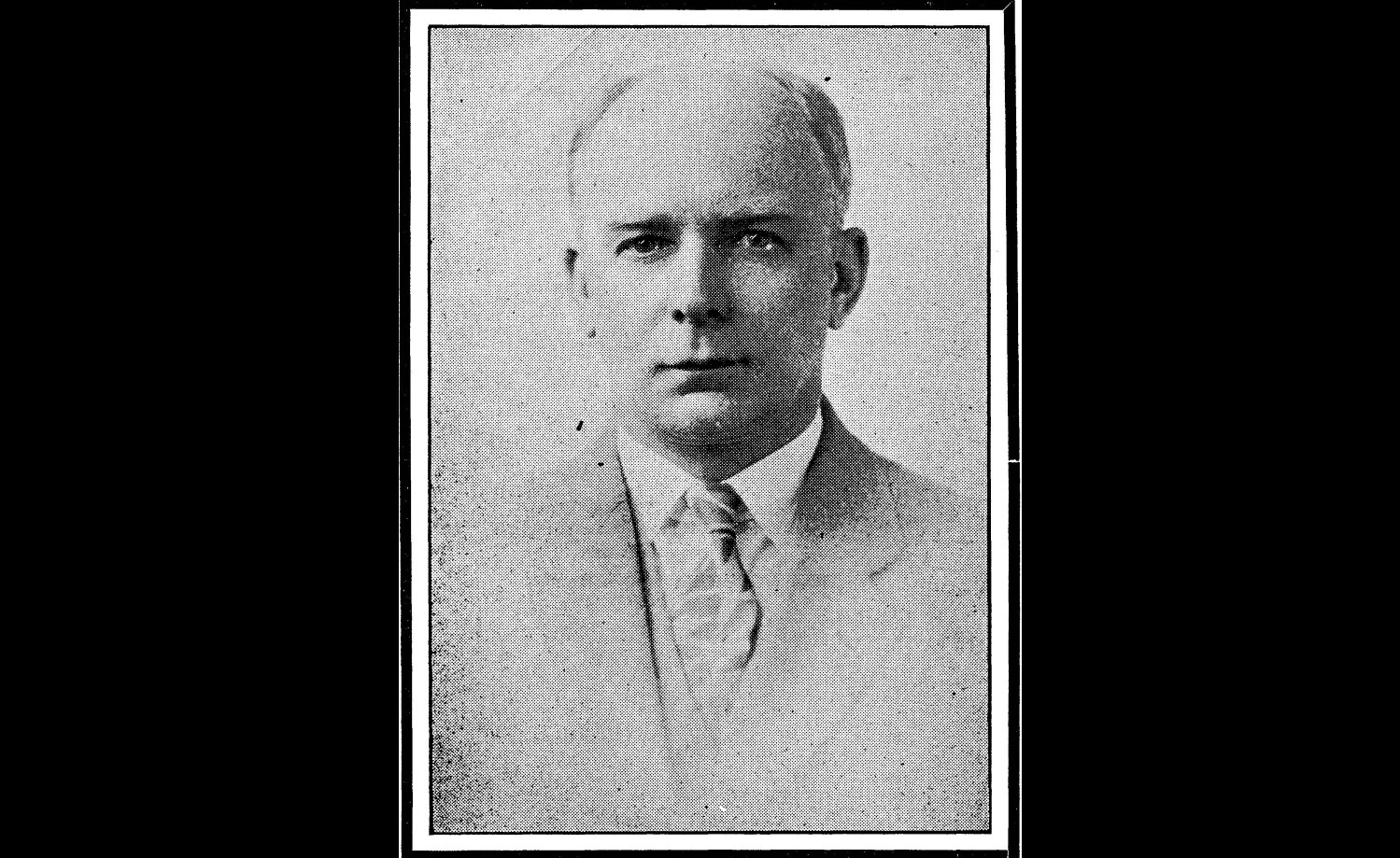
Max Bedacht remembers Charles E. Ruthenberg, long a close co-worker he shared much with culturally and politically. Bedacht was a German-born Marxist barber, Swiss labor leader, who later moved to the U.S. where he was a central figure of the German-speaking Socialist movement, and on the Left Wing. Moving to the Bay Area in 1913, Bedacht became editor of Vorwärts der Pacific Küste. Influenced by the I.W.W. and the specific politics of California, Bedacht was a California delegate to the 1919 Emergency Convention and a founding member of the Communist Labor Party, later Communist Party. There he was trade union activist, a Comintern delegate and, despite his C.L.P. origins, a leader of Ruthenberg-Lovestone’s faction. He would serve on the leadership with Lovestone, but escaped his fate breaking broke with him after Ruthenberg’s 1927 death and was not expelled in 1929. Though loyal to the Party throughout its many turns in 1930s, and made Acting General Secretary for a moment in 1929, he was never embraced by the new leadership and would spend much of his remaining time serving as head of the International Workers Order. He would be expelled in 1948, but later readmitted before his 1972 death.
‘C.E. Ruthenberg’ by Max Bedacht from The Communist. Vol. 6 No. 2. April, 1927.
IN the death of Charles E. Ruthenberg the American working class lost its most conscious, its most courageous and its ablest leader. There may be, or may have been, individuals who, at times, played a more spectacular role in the militant labor movement of the United States than Ruthenberg did. But there is none whose activities were more continuous, more logical and more persistent in the direction of the revolutionary liberation of the working class.
The American revolutionary proletarian movement traveled a road all its own; it traveled a road vastly different from that followed by its European contemporaries. On account of the doctrinarianism of its apostles socialism in America was more of a school of social philosophy than a guide to proletarian action. Because of the open road which American capital had before it for its development it could storm along this road with the least possible positive pressure on the working class. While relatively the American worker is the most exploited in the world, positively he enjoys the highest standard of living. The conditions which made this possible made also possible the comparatively higher effectiveness of economic struggles of American workers as compared with the economic struggles of the German and French workers, for instance. This condition was not conducive to the development of political consciousness with the American workers. All these peculiarities of American capitalism created the queerest ideas and theories about the applicability of socialism in America, and, most important of all, about “Americanized” socialism.
The laws which Marxian analysis shows governing the existence and development of capitalism are also operating in America. But American capitalism found different historical and physical conditions for its existence and its development than were found by capitalism in Europe. Marxism does not deny these differences; but it demands their analysis as a prerequisite of correct policies of a Marxian Party of the workers. Instead of that the American socialist movement was fearfully deficient in the application of the Marxian analysis of capitalism to specific American conditions. This was so in the seventies and eighties, although in those days both Marx and Engels in their correspondence with American friends urged and pleaded “Americanization” of the movement. Even at the height of the socialist movement in America this deficiency was never rectified.
Since the American socialist movement did not make any serious attempts to adapt itself to the specific proletarian movement of the country, it is no wonder that petty bourgeois ideology succeeded so well in “adapting” (falsifying) Marxism to its economic needs. Thus it came about that at the height of the socialist movement in America it was not dominated by proletarian leaders, but by the ideologists of the petty bourgeoisie, by the muck rackers. The increased economic pressure which the trustification of production created against the petty shop keeper and small entrepreneur was for them the outstanding shortcoming of capitalism. Opposition to these ills, however, was paired with suspicion against the proletariat and with fear against revolutionary methods of struggle.
Out of this condition grew the conflict within the Socialist movement for a party of revolutionary struggle of the proletariat, a battle, which finally culminated in the formation and development of the Workers (Communist) Party. This conflict and its gradual solution was the process of proletarianization—and, therefore, Americanization and Bolshevization—of the socialist movement in America.
Charles E. Ruthenberg was the personification of, and, at the same time, the leader in this development.
The socialist movement attracted many men and women active in the class struggle. Socialism supplied them with a theory about the complex problems of the class struggle. However, they did not accept socialism, Marxism, but adapted it to their varying degrees of understanding and militancy. A variety of theories resulted, all parading under the application “socialism”. All these theories stuck to the surface. They explained, but did not analyze. They raised the hope of a vague but glorious aim; but they did not supply an understanding of the means with which to realize it. They all had in common that they conceived of the working class as a pariah which needed a savior; but they could not conceive of the working class as a revolutionary power playing its own savior. They had pity with the working class; but they had no confidence in its revolutionary powers and did not believe in its historic mission.
Little wonder, therefore, that the unwillingness of the proletarian masses to accept these “socialists” as their saviors resulted in an air of hopelessness with the saviors themselves. Uncertain of their own aim they could not supply an aim to the masses. Unclear in their own understanding they could not become a source of understanding for the masses. Unwilling themselves to fight, they could not instill the masses with a spirit of struggle. Dejected themselves they could not inspire the masses with self-confidence. These “leaders” saw themselves in the role of saviors. The unwillingness of the masses to accept them as such created in them the conviction that the masses do not want to be saved and that all is hopeless.
This development manifested itself first within the socialist movement in form of an organized attack against the proletarian element and against proletarian ideas of struggle against capitalism. In 1912 the Indianapolis convention of the Socialist Party gave birth to an article against proletarian mass action, dressed up in an anti-“direct” action paragraph. Good militant proletarian elements were thus driven from the party. Their Marxian understanding was not clear enough to see the need of—and therefore the necessity of a fight for a revolutionary political party. From the purely parliamentary actionism of the S. P. they swung to the equally wrong antipolitical actionism of syndicalism.
But there was a revolutionary Marxian kernel in the S.P. And C.E. Ruthenberg was an outstanding leader of this kernel. The fight for a revolutionary party was taken up. C.E. Ruthenberg never lost his confidence in the revolutionary power of the working class. And he never lost sight of the need of a revolutionary party to lead the masses in the development and in the exercise of their revolutionary power. Ruthenberg’s persistent activities in the direction of the formation of such a party of revolutionary leadership are his greatest and most valuable contributions to the revolutionary movement of the United States.
In these years of struggle for a revolutionary proletarian party in America many fell out of the ranks. Many deserted to go openly over to the enemy. Others gave up hope of success and “retired”. Others again “tried” new methods and new movements for the emancipation of the proletariat. Again others acquired an air of cynicism toward the working class and finally landed on the rocks of a social] fascist philosophy and tactic. In this development, though it was directly away from the revolutionary movement, they kept pace with the development of the Socialist Party itself.
Amidst all these trends, all these groupings and regroupings, amidst all these movements away from socialism and from a revolutionary proletarian Marxian party in America, C.E. Ruthenberg stood his ground and exerted his energies in the direction of the formation of such a party.
The world war came. The big bourgeoisie of the country did everything to create a wave of patriotic paroxism on which they desired to sail their imperialist profit ship. This was the hour of test for the American revolutionists and their party. Many, all too many, fell by the wayside. Some out of conviction, for social chauvinist reasons, others for pure cowardice, became mouthpieces of imperialism. This hour found at the head of the Socialist Party as its responsible leaders men like Victor Berger, a pro-German, Morris Hilquit, who covered his apologies for the monumental treachery of the German Democrats on the 4th of August under a mask of pacifism, Job Hariman, an American patriot—various tendencies, but all united in the desire to prevent proletarian anti-war action. In this situation, C.E. Ruthenberg lead the revolt of the revolutionists in the S.P. against the social traitors. So formidable was this revolt in the special convention of the party in St. Louis that the German-Pacifist-American-patriots finally even acquiesced in a ringing anti-war declaration. Opposition to it would have swept them out of the party. Acquiescence made possible for them to retain leadership and thus made possible the realization of their hearts’ desire, the sabotage of the anti-war resolution.
But that was the last act of treachery perpetrated by these “socialist” leaders without a consciously organized and directed opposition by the revolutionary proletarian element in the movement. Opposition to these social traitors was then the form of struggle for a revolutionary proletarian party. This struggle developed and presented the revolutionary leadership of C.E. Ruthenberg in its full value.
In his years of activities in the city of Cleveland, Ruthenberg had made the socialist movement of this city a movement of the masses. Indefatigable in strikes, ever active in actual organization work for the trade unions, which earned him honorary membership in the I.L.G.W.U., C.E. Ruthenberg won the confidence of the great masses of workers in Cleveland. The city of Cleveland was one of the few places where the socialist movement Was a movement of the working and struggling masses themselves, the Party and its local leader, Ruthenberg, giving initiative and leadership to them After complete failure of an attempt to railroad him on a charge of accessory to murder, Ruthenberg, after leading some magnificent anti-war demonstrations, was sent to jail for one year for obstructing conscription.
Though incarcerated Ruthenberg continued his connection with and his leadership over the revolutionary movement. Had this movement received new inspiration from events in Russia in November, 1917, so certainly did Ruthenberg receive new inspiration through the Russian revolution by a better and clearer understanding of the role of a revolutionary party. This better understanding he exercised upon release from prison by leading the attempt to take the Socialist Party from its German-Pacifist-American, patriotic leaders. But the strict adherents of democracy at all costs, the Bergers and Hilquits, preferred to expel three-fourths of the party to submitting to the will of an overwhelming majority of it and by vacating their position of leadership. It was then when the experience which C.E. Ruthenberg had gathered in years of attempts to revolutionize the Socialist Party, served the revolutionary workers of the United States in the work of creating a new party, a Marxian, a Bolshevik party, the Communist Party of America.
Ruthenberg had no illusions about the possibility of forming an effective revolutionary party by a single convention. All the diseases which pestered our infant Communist Party had to be overcome. First, dogmatic leftism raised its head. The question of “systematic and persistent” propaganda of armed insurrection paralyzed the new party. Later came the question of parliamentary action. A correct approach to the trade union work had to be found. Illegalism on principle had to be defeated. The tactic of united fronts had to be assimilated and applied. Centralization had to overcome the organizational and ideological chaos of 19 language federations. In al] these stages of ripening of the party, C. E. Ruthenberg was the initiator, the leader, and the most energetic force of accomplishment. Even nearly two years of imprisonment in Sing Sing, for publishing the left wing manifesto in 1919, did not interrupt Ruthenberg’s decisive influence and activities in the party. In building and forming the American Communist Party, Ruthenberg was most instrumental in creating an opposite force to that which the S.P. presented in its days. The anti-revolutionary attitude of the S.P. especially in its heydays drove the militant proletarian elements of the labor movement out into the camps of syndicalism, anarchism, O.B.U.-ism, etc. The revolutionary aims and policies of the Party formed under the leadership of Ruthenberg is, on the contrary, a gathering force for all militant elements. It supplied the centrifugal political revolutionary power which attracts rea] militant enemies of capitalism, and thus insures a further ripening, a further organizational strengthening, and a further Bolshevization of the American Communist movement.
The historic role played by C.E. Ruthenberg makes his death the most serious loss yet sustained by our movement in America. The current contempt for theory among the American workers was not very conducive to the development of a theoretically clear leadership. C.E. Ruthenberg represents the only outstanding example of an American proletarian leader who followed a straight and logical line of revolutionary development. From the moment of his accepting Marxism as a guiding principle he moved straight and unwaveringly onward with the work of transforming the Socialist Party into an effective Marxian Party of proletarian leadership. Failing in this he led in the formation of the Communist Party. No vacillations, no try-outs of one and then another Utopian or un-Marxian panacea; that was the line of C.E. Ruthenberg’s activities and development as a revolutionary proletarian leader.
Ruthenberg was a Marxist. His Marxism was not of the dusty scholastic kind but that of a fighter. Marxism did not supply him with formulas for discussion but with a guide for action. Because he was primarily a man of action his years of experience gathered in the front ranks of the revolutionary movement in America supplied him with an inexhaustible fund of practical Marxian knowledge. This was a most valuable reserve fund for our party to draw from for the solution of the many complex problems of the class struggle.
Now Comrade Ruthenberg is dead. But the Communist Party lives. That cause lives for which Ruthenberg labored and fought. And the Communist Party must continue to be the leader in the struggle for this cause. Therefore even the loss of the best of our comrades must be made a source of new struggle. In closer consolidation of our ranks, in recruiting of new fighters and in furthering the process of bolshevization our party can hope, in time, to make good the loss we sustained. But time will not and cannot obliterate the service of our friend, our comrade and our leader Charles E. Ruthenberg.
There are a number of journals with this name in the history of the movement. This ‘Communist’ was the main theoretical journal of the Communist Party from 1927 until 1944. Its origins lie with the folding of The Liberator, Soviet Russia Pictorial, and Labor Herald together into Workers Monthly as the new unified Communist Party’s official cultural and discussion magazine in November, 1924. Workers Monthly became The Communist in March, 1927 and was also published monthly. The Communist contains the most thorough archive of the Communist Party’s positions and thinking during its run. The New Masses became the main cultural vehicle for the CP and the Communist, though it began with with more vibrancy and discussion, became increasingly an organ of Comintern and CP program. Over its run the tagline went from “A Theoretical Magazine for the Discussion of Revolutionary Problems” to “A Magazine of the Theory and Practice of Marxism-Leninism” to “A Marxist Magazine Devoted to Advancement of Democratic Thought and Action.” The aesthetic of the journal also changed dramatically over its years. Editors included Earl Browder, Alex Bittelman, Max Bedacht, and Bertram D. Wolfe.
PDF of full issue: https://www.marxists.org/history/usa/pubs/communist/v06n02-apr-1927-communist.pdf

