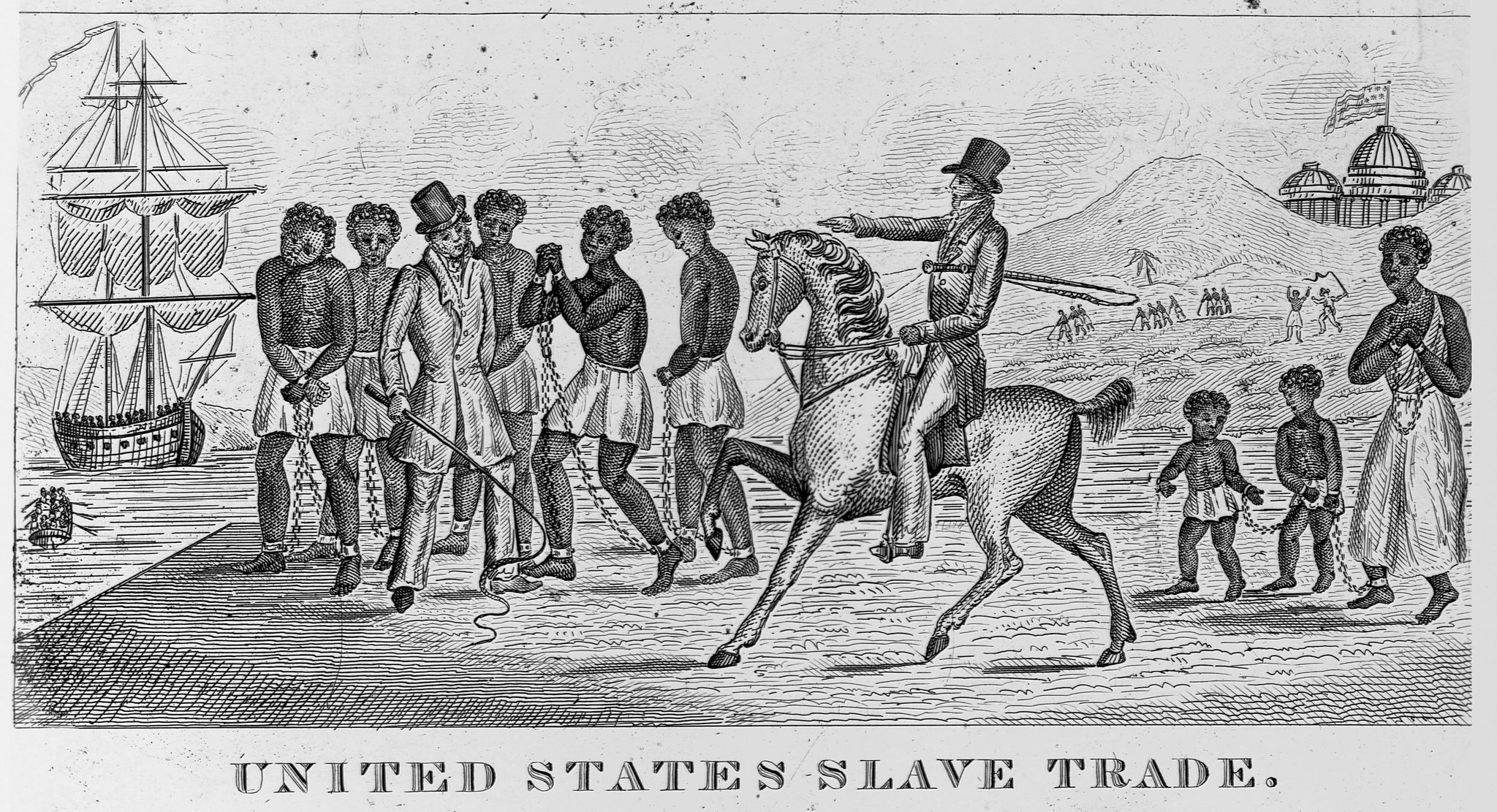
If you are like me, you dread the public discussion surrounding the upcoming 250th anniversary of the United States. As we approach, here is a fine corrective from revolutionary Astoria, Washington teacher J.E. Sinclair. Sinclair was a Left wing Socialist, director of the Washington Socialist Parents’ and Teachers’ Bureau, and the state Socialist Educational Bureau, heroic educator who fought to keep his job when attacked by reactionaries on the local School Board. He would later join International Socialist Review as education writer. Emerging from organizing teachers for Socialist Sunday Schools, the Washington State Socialist Party became intensely active in organizing educators and running for school boards, presenting Socialist teachers in the elections to try and win local power, much the way the right does today. We could learn from what they did.
‘Condition of the Working Class in 1776’ by J.E. Sinclair from The Commonwealth (Everett). No. 153. December 11, 1913.
A CAPITALIST-MINDED TEACHER WOULD HIDE THE REAL FACTS OF AMERICAN HISTORY.
Bulletin of the Socialist Educational Bureau Study Club.
This study will cover pages 96 to 136 in Oneal’s Workers in American History (published by Charles H. Kerr & Co., 118 West Kinzie St., Chicago, Ill. Paper 50 cents, cloth $1).
Those of us who have been following this course carefully remember how the soil was stolen from the producers before they arrived as settlers or as slaves. We remember the terrible economic conditions that forced them away from the Old World. We remember also the extent and cruelty of the traffic in white bond servants of which the “fathers,” including Washington and Franklin were the direct beneficiaries.
In Chapter V we see the worm beginning to turn. The workers cannot be oppressed forever. Regardless of their resolutions not to use direct action, which resolutions always receive favorable comment from the masters, the workers of every age when sufficiently pressed have demonstrated their ability to better their conditions by force. The only question that any honest revolutionist is concerned about is when and where to apply this force. He knows that intelligence is needed back of the force that must set us free. And yet even the blundering rebellions of these poor forefathers of ours got us somewhere, did more than all the political speeches ever made to make this country a better place to live.
Such names as Nathaniel Bacon, Jacob Leisler, John Culpepper and Daniel Shays deserve a higher place in Liberty’s Hall of Fame than any mere speechmakers. And those daring spirits of the black race, Nat Turner and the great Toussaint L’Ouverture, how shall we honor them when the working class shall have the shaping of the literature of the world? The student of working class progress who reads this chapter is compelled to agree with the sentiment: BLEST BE THE SPIRIT OF REVOLT, NO MATTER HOW IT EXPRESSES ITSELF!
On page 97 occurs this statement: “Soldiers captured the slaves and twenty-one were executed. One was broken on the wheel and several were burned alive at the stake, while the rest were hanged.” This was in New York in 1712. The slaves had rebelled and had slashed and shot just as they had been slashed and shot. Yes, they lost; but the world gained. These black martyrs and hundreds of others like them who nobly dared are the only kind of heroes worth while in history. They stand for mass heroism which is class heroism.
No wonder the masters wanted a strong government! No wonder they believed in spreading the gospel of non-resistance. They needed both cajolery and coercion in their business. In Chapter VI we see the large gobs of freedom enjoyed by the workers before they began organizing to upset things. We see that those who wore the “shameful badge of toil” were disfranchised unless possessed of considerable property. This property qualification bobs up today in some Henry Dubb settlement every so often. Even wage-workers can be found who will say that none but taxpayers should be allowed to vote.
Another qualification necessary to holding office was a belief in the Christian religion. How divine the rascals were, anyhow! Here we see them cutting off human ears, branding runaway servants with red-hot irons, torturing men and women to death in debtors’ prisons, and burning workers at the stake. And over yonder we see the same black-hearted brutes mumbling to their God and insisting on none but Christians holding office. We saw in the last chapter why they needed their government and we know full well the way in which they used their religion to make the slaves obedient and full of the doggerel of non-resistance.
So precise were these old colonial “fathers” about their station in life that they had to pass laws against the poorer folks trespassing on their robber rights to wear silver buckles, to sit in certain seats in church, and all that. They do that now by regulating wages. The black cloud of Puritanism that shaped itself in the superstitious minds of the rising British bourgeoise and killed the spirit of spontaneity in England for two centuries came skulking to America with solemn humbuggery. The disgusting hypocrisy of these whining dervishes has made them models for the whole world of suckerdom. In school we learn of their pious Thanksgiving day, their love of freedom, their town meetings, and the strength of character. In these idyllic school histories we see nothing of the auctioning off of little children, the arresting of children for playing on the streets or the village green, the squirming victim under the red-hot branding iron, the pious trade in rum and slaves, and the deep love for law that smuggling implies.
Peter Faneuil, who founded Faneuil Hall, “that cradle of liberty,” was a smuggler. Now, my gentle friend, do not get alarmed. Smuggling wasn’t a bit worse crime then than it is now. Not a bit. Nearly every ship owner in New England was engaged in it when the trade in rum and slaves got dull. Freedom to choose these lines of action was a part of the original Puritan “freedom to worship God” that we heard about in the fourth grade.
He who does not believe that capitalist government is an engine of oppression and that it is but a tool in the hands of the rich let him look into that underground prison in Connecticut where the poor who owed a few pennies were doomed to die in filth and misery. Then let him note the leniency shown the rich who often owed the government millions that they refused to pay. Let him look into the Astor home, where $5,000,000 belonging to the government furnished stinted hospitality.
Get The Workers in American History into the hands of every school teacher. Buy the cloth-bound book and put it in the school libraries to kill the lies that blind the souls of the children. There was never a greater imposition than the present system of history teaching.
Keep up your note book work. Study maps of the eastern coast of America. The surface features, the soil, the climate, are all factors in the making of history. The poor soil, the cold winters, the broken surface of New England made slavery unprofitable and therefore sinful in New England. Of course, the cotton manufacturers were not so sure as to its sinful character when their supply of raw cotton depended upon its perpetuation along about 1833. But mainly surface and climate and soil form the staging upon which economic forces act in the shaping of opinions and institutions. Get a relief map in some geography or atlas and note the wide coastal plain in the southern states.
Topics for discussion, for essays, or for short addresses before the club: (1) Revolts of the black workers; (2) the Bacon rebellion; (3) revolt led by Culpepper; (4) Jacob Leisler; (5) rebellion in Florida; (6) qualifications of voters; (7) the codfish aristocracy of New England; (8) life on the southern plantations; (9) life in a debtors’ prison; (10) how the great politicians helped the poor.
Questions for review: (1) What forms of compulsory servitude existed in the colonies? (2) how did the existence of this compulsory servitude affect the wage-workers? (3) what constituted a passport to “good society” then? (4) how do you regard the legal qualifications for voting as told in Chapter VI; do you think that a residence qualification is necessary to working class emancipation now? Why? If so, why do the masters favor it? (5) how did the outcome of the revolution affect the political freedom of the workers? (6) how did it affect their economic status? (7) what is the poor man’s duty? (8) describe the dress of the colonial worker; compare with that of the colonial shirker; (9) tell about child labor in the colonies; (10) what is Puritanism? (11) were the workers of America ever free? (12) what do you understand by freedom? (13) what appears to be the purpose of government. Give your proofs.
The Commonwealth was a Socialist Party-aligned paper based in Everett, Washington that began in February, 1911. First edited by O.L. Anderson, the weekly paper was quickly involved in the state’s very fractious inner Socialist Party life. Editors followed the changing political fortunes with Anna A. Maley directing The Commonwealth from September, 1911 until May, 1912, who also focused the paper nationally. Maley left the paper to run for governor in 1912, the first woman and first Socialist in the state to run for that office, winning a respectable 12% of the vote. Six more editors followed Maley, including Maynard Shipley. The paper’s orientation was left and supported the I.W.W. when many S.P. papers were denouncing them. The Commonwealth struggled, like nearly all left publications in history, with money financially and sold to the Socialist Party of Snohomish County in April, 1914 to be reborn as The Washington Socialist.
Access to PDF of original issue: https://www.loc.gov/resource/sn84025731/1913-12-11/ed-1/?sp=1&q=j.e.+sinclair&r=0.377,0.162,0.614,0.302,0#viewer-pdf-wrapper


Great piece I am doing a series on IST for our 250th and would like to include this in my series. Thanx for sharing this …..keep up the excellent work chuq
LikeLike
Fantastic, Sinclair is an interesting comrade. Thanks as always for the support. It is very much appreciated.
LikeLiked by 1 person
You are welcome and I appreciate your effort to keep us informed and educated. chuq
LikeLike