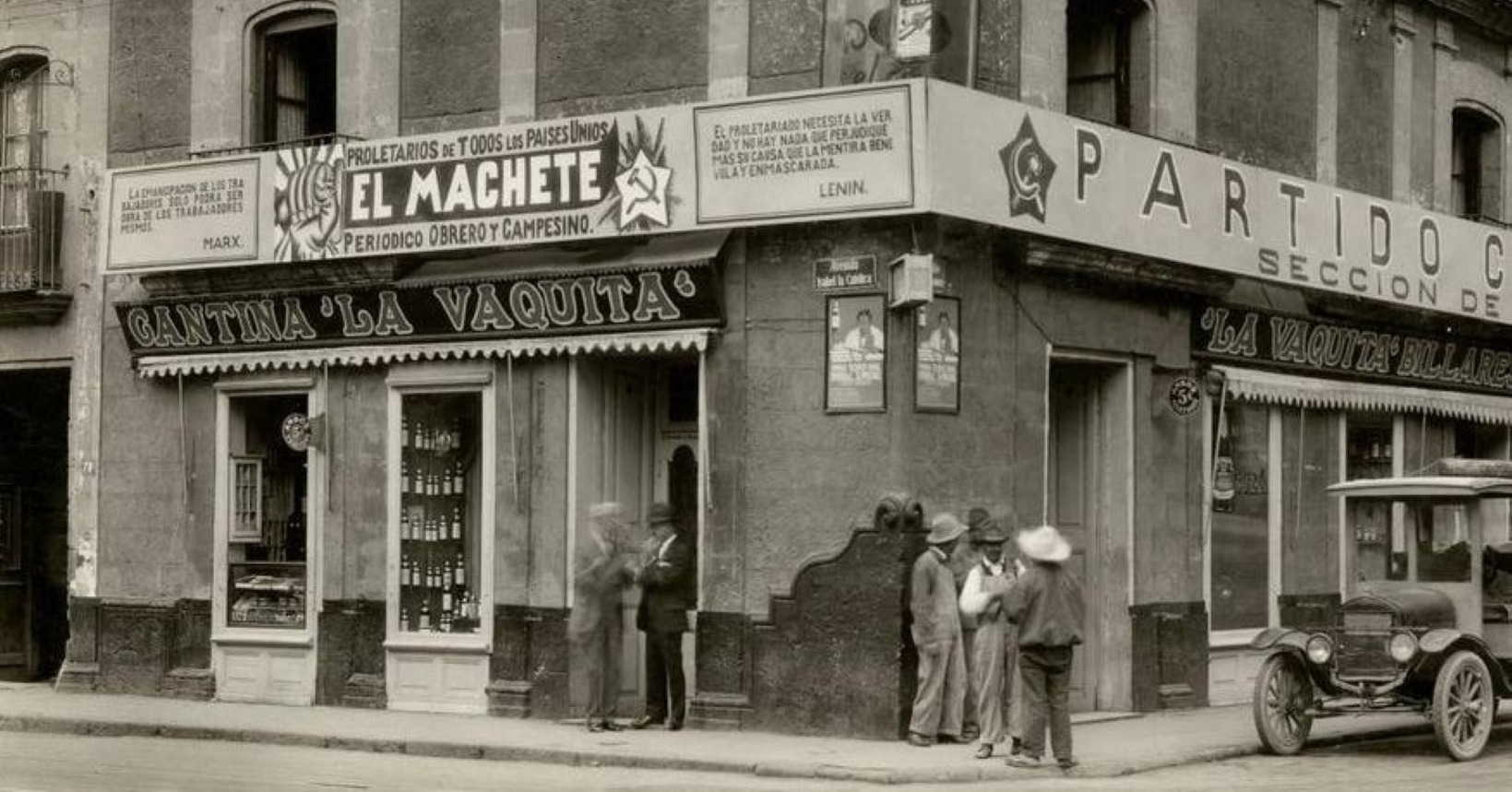
With the background of the global Great Depression and rising anti-imperialist and workers’ movements, a series of coups, guerrilla struggles, and U.S.-sponsored ‘revolutions’ wash over the region.
‘The Growth of the Revolutionary Upsurge in the Caribbean’ by O. Rodriguez from The Communist. Vol. 11 No. 8. August, 1932.
AN OUTSTANDING characteristic of the present situation in the Caribbean countries is the rise and development of strike movements among the workers and of various forms of peasant struggles. This is taking place in Mexico, Cuba, Colombia, Costa Rica, Honduras, etc. These movements do not develop evenly in each of these countries. In Mexico, for instance, they are growing at a more rapid rate than elsewhere. In Colombia the peasant movements seem to predominate over the strike movements among the workers. And, in general, it will be seen that the rising mass movements in each country have certain characteristics that are peculiar to each individual country. But nearly everywhere in the Caribbean the revolutionary upsurge of the masses is rising, expressing itself in the growth of strike movements among the workers and of peasant movements in the villages.
These developments have accentuated stronger than heretofore the lagging behind of the Communist Parties and of the revolutionary unions. In Mexico we find the following situation: that most of the strikes among the agricultural workers, which were very numerous among this basic section of the Mexican proletariat, took place without any effective interference by the revolutionary unions. Most of these strikes developed spontaneously and in some few instances the reformist leaders got hold of them and betrayed them. The big strikes on the railroads, tramways, and of the telephone employees, which broke out despite the fascist labor law and the opposition of the reformist leaders, remained under the hegemony of these reformist leaders, who maneuvered very skillfully to demoralize and break up these struggles after they had broken out. The revolutionary opposition in the reformist union of the railwaymen did not succeed in unmasking the social-fascist leaders and in winning the masses for a united front from below under independent revolutionary leadership. This resulted primarily from the fact that very little mass work has been carried on among workers in the reformist unions and whatever work was carried on, it was deeply tinged with trade union legalism and “left” sectarianism.
However the above does not present a complete picture of the situation in Mexico. A number of important strikes took place in recent months that were organized and led by the Communists, such as the textile strike in San Bruno, the metal workers’ strike in Monterey, and several more important struggles. Some of these strikes were either fully or partially won. But the greatest significance of these struggles lies in the fact that a somewhat new form of struggle is being developed, the form of strikes with “folded arms” (stopping work but remaining in the factories), which seems to have a wide appeal to the masses. If this form of struggle is properly understood and utilized, that is, as an elementary form of struggle to be raised to higher and more active forms, the revolutionary unions and the Communist Party have now a splendid opportunity to establish their leadership in wide and numerous struggles of the Mexican proletariat.
The lagging behind the growing upsurge is showing itself in all countries of the Caribbean, not only among the workers but also among the peasants. In Cuba we see deep fermentation going on among the workers and peasants, but as yet very little organized mass struggles under our leadership. One of the most important strikes this year, the strike of the tobacco workers organized in the reformist union of the Torcedores, is being betrayed daily and driven to defeat by the reformist leaders without the revolutionary militants being able to organize the masses for effective resistance against this treachery. The sore spot here is lack of systematic and persistent revolutionary mass work in this important reformist union, on the one hand, and right opportunist refusal to fight the reformist leaders, on the other hand. More important still is total insufficiency of mass work among the sugar workers, although certain significant beginnings have been made. And among the peasants in the countryside a serious beginning is yet to be made. To a smaller or larger degree (in Colombia, to a larger degree) this woeful lagging behind is true also of the other countries in the Caribbean.
THE GROWING INSTABILITY OF THE EXISTING REGIMES
For a fuller understanding of the dangers contained in this lagging behind we must take into consideration the fact that the existing bourgeois-landlord-imperialist regimes in the Caribbean countries are becoming ever more unstable. This arises from the fact that the developing mass movements (economic strikes of the workers, struggles of the peasants against taxation and for land, etc.) are taking place in the surroundings of a general sharpening of all the contradictions of the bourgeois-landlord-imperialist regimes in the Caribbean countries, due to the further deepening of the world economic crisis and to the fact that the period of partial stabilization of capitalism has come to an end and that we are approaching a new period of wars and revolutions.
This results, among other things, in an extreme sharpening of the contradictions between the interests of the Caribbean countries as semi-colonial countries and the interests of foreign imperialism, especially the dominating Yankee imperialism. As a consequence, we observe a rapid growth of anti-imperialist sentiments and movements (anti-Yankee) among the workers and peasants and also among the city petty-bourgeoisie. The questions of foreign debts, payment of interest on these debts, the question of tariffs, militarization of the Caribbean, all of which impose terrific new burdens upon the Caribbean countries and especially the toiling masses, are reaching great acuteness.
The above results also in a greater sharpening of the contradictions between the various bourgeois and landlord factions in each Caribbean country intensified manifold by the sharpening rivalries between Yankee and British imperialism. The “gentlemen’s agreement” between France and England on the war debts, and the present British Empire Conference in Ottawa, whatever its outcome, will still further deepen the antagonisms between the Yankee and British imperialist robbers, thus aggravating more the contradictions between the various bourgeois and landlord factions.
As a consequence of all this we see the growing instability of the existing bourgeois-landlord governments. More frequently than heretofore coup d’etats are taking place, especially in South America where the rivalries between British and Yankee imperialism are more active and acute than in the Caribbean, the latter region being more predominantly under Yankee control. Numerous so-called “revolutions” of one bourgeois-landlord faction against another are either impending or actually in progress throughout Latin America. With this relatively new characteristic, these bourgeois-landlord factions are everywhere trying to exploit for their counter-revolutionary purposes the growing revolutionary upsurges of the masses (which is growing despite these factions and against them) resorting to the wildest fascist demagogy, on the one hand, and to the most brutal white terror against the revolutionary movements of the masses, on the other hand, most especially against the Communist Parties.
This particular feature of the situation requires a few additional remarks. The first wave of bourgeois-landlord coup d’etats that swept over Latin America, as an immediate result of the world economic crisis, was characterized by the fact that the masses involved in them were relatively small in numbers. The governmental changes that took place were more in the nature of “palace revolutions” carried out on top with great rapidity. However, in the succeeding waves of coup d’etats (and there were several) the situation became much more complicated, due primarily to the growth of the revolutionary upsurge of the masses (workers, peasants, petty-bourgeoisie) and the spreading influence of the Communist Parties. This new development, which is one of the most powerful factors in undermining the shaky stability of the existing governments, introduced certain new characteristics to the succeeding waves of coup d’etats. In some instances bourgeois-landlord oppositions actually rode into power on the crest of the revolutionary upsurge of the masses. The most outstanding example was Chile—the overthrow of Ibanez and the coming of Montero as well as the overthrow of Montero and the coming of Davila. Similar developments, in various degrees, are to be seen everywhere in Latin America. It is in the light of these developments that we can understand the veritable debauch of fascist demagogy with which the latest coup d’etats are being accomplished as well as the ever-growing white terror against the revolutionary organizations of the workers and peasants, especially the Communist Parties.
What we are confronted with here is the following. The various bourgeois-landlord factions, seeing the growing revolutionary upsurge of the masses and the spreading influence of the Communist Parties taking place despite of them and against them, are trying to exploit this upsurge for their counter-revolutionary ends, in the struggle against one another. For this purpose they develop all sorts of “socialist,” “anti-imperialist” and other demagogy to confuse and befuddle the masses, also taking measures to create for themselves social bases among the peasants, city petty-bourgeoisie, and even among the workers, at the same time carrying on the wildest terror against the revolutionary organizations of the masses. Thus, while the latest coup d’etats retain fully their bourgeois-landlord class character, marking merely a shift of power and regrouping of forces within the camp of the exploiting classes, the methods and forms of the coup d’etats are undergoing changes in the direction characteristic of fascism.
Mexico offers some fresh evidence of this in the growing activity of the so-called “lefts” of the ruling National Revolutionary Party (Tejeda and Company). We refer here especially to the “expropriation” laws passed in the states of Vera Cruz and Hidalgo, both of which are ruled by “left” governors. These laws in effect mean an effort to salvage bankrupt capitalist enterprises with the funds of the government squeezed out from the masses. The “cooperative” feature attached to it (the “expropriated” factories were given to the workers to be operated as a cooperative) are nothing else but a swindle to secure the consent of the workers to accept without struggle wage-cuts, lay-offs, lengthening of hours, etc., which the workers were unwilling to accept before the “expropriation.” But this new maneuver of unloading upon the workers the full weight of salvaging bankrupt capitalist enterprises is brought forward as a “Socialist” measure and by the “left” demagogs of the Calles-Ortiz Rubio clique. This same “left” Tejeda, governor of Vera Cruz, is the most brutal persecutor of the workers and peasants and their revolutionary organizations. It goes without saying that the social-fascist leaders have accepted this new fascist swindle and are assisting the government to put it over on the workers.
Something of the same character we observe in Cuba. There the bourgeois opposition has given birth to a, “left” group, the leaders of the so-called A.B.C. This “left” wing of the bourgeois oppositions has begun to operate with certain mass slogans, such as the proposal for the establishment of “workers’ cooperatives,” “distribution of state lands to the peasants,” etc. This is something new because up until very recently the only important slogan of the bourgeois opposition, including its “lefts,” was the one calling for the resignation of Machado. In preparation of the latest uprising, scheduled for July but not yet materialized, the “left” section of the bourgeois opposition was trying to penetrate masses of peasants and certain sections of the workers with the help of these new slogans. What are these slogans? Essentially, fascist demagogy. The proposal for “workers? cooperatives” under the existing conditions means either nothing or else some such swindle as the one perpetrated in Mexico by Tejeda. The distribution of “state lands,” which the pauperized peasants are expected to buy and therefore can bring no relief to the toiling peasantry, is another bourgeois-landlord trick to fool the masses. At the same time, numbers of workers and peasants are to be found among the rank and file of the A.B.C. which, with a correct policy, we can win over to the revolutionary struggle under our leadership.
If, in addition to the above, we consider that the revolutionary trade union movement in the Caribbean and the peasant leagues have not yet become powerful mass organizations and that the Communist Parties (notwithstanding the progress that they are making) are still seriously lagging behind, especially in the organization and leadership of the daily struggles of the masses for their partial demands, then we must reckon with the following possibilities. Large mass movements (in some places—armed movements), especially among the peasants and city petty-bourgeoisie, but involving also certain sections of workers, may break out spontaneously and independently of us, headed by one or another variety of petty-bourgeois chieftains. Also that the bourgeois and landlord demagogs will try to exploit these movements (in coup d’etats, etc.) for their counter-revolutionary and fascist purposes. The possibility of such developments is imminent in most countries of the Caribbean as well as in South America.
CONCLUSIONS
The first conclusion that we must draw from this analysis is the utmost intensification in the unfolding of the daily struggles of the workers and peasants for their immediate economic and other demands (strike movements, unemployed struggles, peasant movements, etc.), building the revolutionary trade union movement, the peasant leagues, the unemployed committees, the Communist Parties into genuine mass organizations, linking up these fights with the anti-war struggle. Special and concentrated attention must be given to the organization and spreading out of the economic strike struggles of the workers, especially in the imperialist enterprises and plantations, as well as co the organization of the peasants (for the cancellation of their debts and abolition of taxation), developing these struggles into mass refusals to pay taxes, mass resistance to eviction from the land and for a revolutionary struggle for land, increasing manifold the organization of the struggles of the unemployed. This is the main road towards combatting the offensive of the exploiters, towards winning the masses for the revolutionary way out of the crisis and war, towards overcoming the lagging behind the revolutionary upsurge.
The second conclusion is the need of more skillfully and systematically politicalizing these struggles, raising them to higher levels, linking them up with the fight against the white terror and for the elementary political rights of the workers and peasants. More than ever before we must widely popularize our anti-imperialist slogans and demands, bringing into central prominence the demand for the withdrawal of all imperialist forces from Caribbean countries, the abolition of all imperialist control and supervision, the repudiation of all government foreign debts, linking these up with the basic demands of the agrarian anti-imperialist revolution and undertaking to organize a wide anti-imperialist movement of the workers, peasants and city poor under the hegemony of the working class.
The third conclusion is the absolute impermissibility for the Communist Parties to remain “neutral” or passive to the mass movements break out independently of us or even under the leadership of petty-bourgeois elements (armed or otherwise) that have a revolutionary character and which bourgeois demagogs and “oppositions” are trying to exploit for counter-revolutionary purposes. In all such movements of peasants, workers and city petty-bourgeoisie that are directed against the landlords, capitalists and foreign imperialism, we must actively participate, clarifying the toiling masses on the revolutionary aims of the struggle, fighting also from within these movements for the hegemony of the working class and the leadership of the Communist Party. To accomplish this aim, the Communist Parties must under all circumstances maintain their political and organizational independence, fighting to win the masses for their program, systematically criticizing the vacillations and inconsistencies of the petty-bourgeois leaders that may be at the head of such movements and waging a merciless struggle against the bourgeois landlord demagogs, allies of foreign imperialism, that are trying to exploit these movements for counter-revolutionary and fascist ends.
In doing so we must combat without mercy all “left” sectarian opportunist tendencies to drag the movement into putchist adventures (coup d’etats for the “seizure of power’’) as well as all right opportunist tendencies—the chief danger—to remain passive or to subordinate the Communist Party in any way to the policies of petty- bourgeois chieftains or bourgeois “oppositions.” Our main aim in participating in these struggles is to direct them against the offensive of the exploiters, to widen and deepen the movement, to win the majority of the workers and the toiling peasants for the revolutionary way out of the crisis and war, to establish Communist leadership, and to build up the revolutionary organization and power of the masses. In this way we shall be organizing the agrarian anti-imperialist revolution in the Caribbean. In this way we will create the necessary subjective factors which, with the maturing of the objective factors, will place before the Communist Parties as a practical task the organization of the armed struggle for the establishment of a workers’ and peasants’ government.
There are a number of journals with this name in the history of the movement. This ‘Communist’ was the main theoretical journal of the Communist Party from 1927 until 1944. Its origins lie with the folding of The Liberator, Soviet Russia Pictorial, and Labor Herald together into Workers Monthly as the new unified Communist Party’s official cultural and discussion magazine in November, 1924. Workers Monthly became The Communist in March, 1927 and was also published monthly. The Communist contains the most thorough archive of the Communist Party’s positions and thinking during its run. The New Masses became the main cultural vehicle for the CP and the Communist, though it began with with more vibrancy and discussion, became increasingly an organ of Comintern and CP program. Over its run the tagline went from “A Theoretical Magazine for the Discussion of Revolutionary Problems” to “A Magazine of the Theory and Practice of Marxism-Leninism” to “A Marxist Magazine Devoted to Advancement of Democratic Thought and Action.” The aesthetic of the journal also changed dramatically over its years. Editors included Earl Browder, Alex Bittelman, Max Bedacht, and Bertram D. Wolfe.
PDF of full issue: https://www.marxists.org/history/usa/pubs/communist/v11n08-aug-1932-communist.pdf

