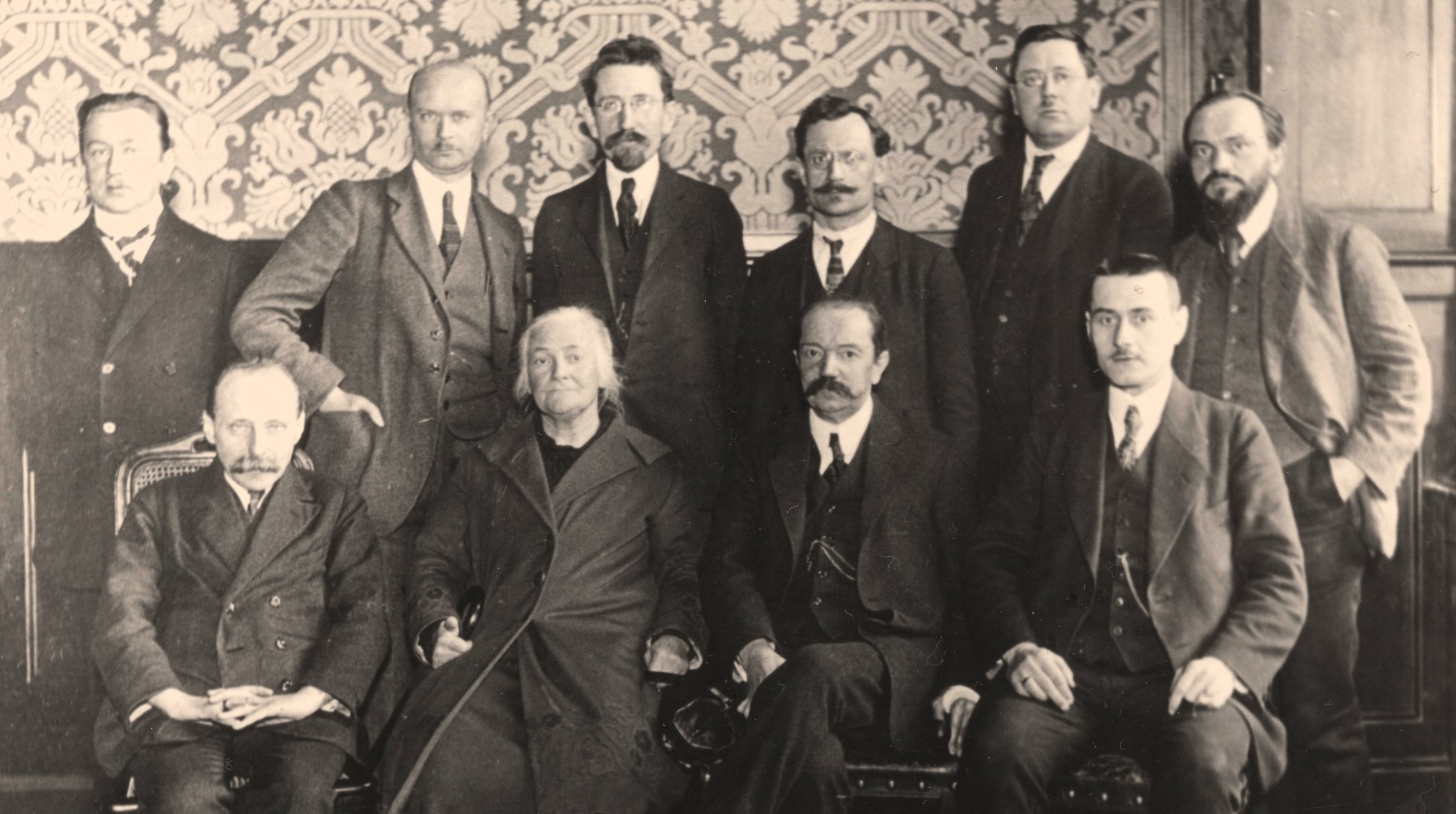
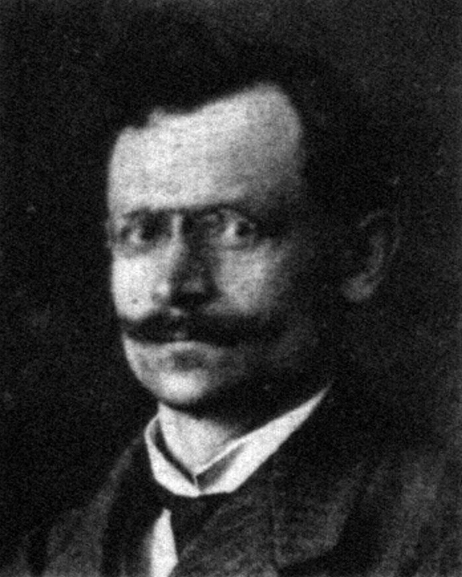
A Communist member of the Reichstag with five dispatches from 1923’s crisis known as the ‘German October,’ the consequences of which would have a profound impact on the course of German history, and the Communist International. A Social Democrat since 1900 Wilhelm Bartz was a working class printer who became an editor of the Socialist and Communist press. Bartz joined the USPD in 1919 and the Communist Party in 1920. Elected from Hanover, Bartz served in the Reichstag from 1920-1924 and as an editor for the German edition of Inprecor and of Roten Fahne until his 1929 death.
‘The October Crisis in Germany’ by Wilhelm Bartz from International Press Correspondence. Vol. 3. September-October, 1923.
I. The Hunger Revolts in Germany. September 27, 1923.
The Vicious Circle of Capitalist Policy.
In Sorau, in Lörrach and in many other places in Germany the armed forces of capital have won bloody victories over starving human beings during the last few days. Workmen have been shot, women and children injured. Tomorrow, the day after, and every following day, these frightful scenes of terror will be repeated. And they will become more frightful and more cruel, will demand an ever increasing number of victims–but without removing a single one of the causes of these bloody massacres.
How is it possible for such conditions to have arisen in Germany?
Germany, despite the upheaval of 1919, despite its veneer of republicanism and despite the participation of the social democrats in the government, is a purely capitalist country, in which every measure is regarded from one point of view only, that of its being advantageous or disadvantageous for the capitalist system. Those governing the country are not capable of judging by any other standard. Capitalist-monarchist Germany lost the war, and the Republic was obliged to sign the peace treaty, Versailles, however reluctantly. This entails burdens and obligations which, if actually distributed on “democratic” principles in accordance with the capacities of the various strata of the population, would endanger the basic principle of capitalist economics: that is, the profits of the capitalists would be considerably lessened. Who would care to continue the production of goods unless he “earned something by it? It was therefore imperative to discover some other possibility of meeting the obligations involved by war and peace; a way had to be found of combining the so-called policy of fulfillment with the continued production of goods, that is, with the securing of continued profits to the capitalists.
And we see that the German post-revolutionary governments have found excellent recipes for accomplishing this. The very idea of laying hands on property, of seizing real values, would be a mad crime in the eyes of any capitalist, and would encounter the strongest imaginable resistance. Of course it was solemnly laid down as a principle, that in these times of great emergency, every German must be prepared to make the greatest sacrifices, from the capitalist down to the poorest creature; but in actual practice this principle has been altered, and a policy pursued of burdening the non-propertied with all the sacrifices. Again and again the screw of taxation has been tightened, that is, the indirect taxes have been tripled, quadrupled, and multiplied. Is there any better proof of the assertion that almost all the burdens are put upon the non-propertied in Germany than the tax statement issued by the government, a statement certainly biassed in favor of the capitalists, and yet showing clearly that the total revenues from income tax in the different months have been raised to the extent of 92% from the recipients of wages and salaries! To this must be added the milliards, or now it is rather billions, from indirect taxation! Every government has done its very best to maintain this state of affairs, to maintain it in the interests of capitalist production, and not even the acute aggravation of the crisis through the Ruhr occupation could bring about the least thought of a fundamental alteration.
In the same manner as it was intended to carry out the “fulfilment policy” by means of indirect taxation, it was also attempted to meet the financial emergencies created by the Ruhr occupation by means of fresh burdens on the non-propertied. The banknote printing press, which had already been working at high pressure, and whose great activity had already reduced the mark to a small fraction of its prewar value, was set working harder than ever, threw out billions and billions of valueless notes, attaining thereby by no means the financing of the Ruhr struggle, but an even greater impoverishment of the broad masses of the people on the one hand, and a senseless enrichment of the capitalists on the other. Whilst the recipients of wages and salaries were fobbed off with the enormously depreciated paper marks, the capitalists employed the Ruhr credits placed at their disposal by the Reichsbank for the purpose of throwing this present of milliards upon the money market, and thereby dealing the final blow to the “value” of the mark. The mark lost all significance as the measure of value. The foreign bill became the trump card. The cry for gold prices was raised.
In the midst of this situation came the change of government, caused beyond all doubt by the united will of the proletariat. The government of the “strong” men took the reins. Stresemann spoke repeatedly of the necessity of mobilizing even capital, Hilferding hinted at “drastic” measures, and presented a bill of direct taxation to capital. Several billions of marks in taxes were to be raised within a comparatively short time, the foreign bills seized, the hopelessly depreciated mark stabilized. But Hilferding’s hopes were shattered by the necessity of maintaining the capitalist form of economy. That which was hailed by the social democratic press when the decision was reached, and designated as the first decisive step toward the restoration of “sound” financial conditions–this turned out, as it was bound to do, to be a fresh and great piece of deception practised on the proletariat. The billions of new taxes were indeed decided upon with the approval of all the bourgeois parties, but the bourgeoisie has paid nothing, or at least only a small fraction of the sums which it declared itself ready to pay. In order to avoid the payment of taxes, it heaped new mountains of marks upon the money market, and drove the dollar to the dizzy height of 150 to 200 million marks. Not one of the strong men of the government ventured to put a stop to the rise of the dollar, not one found the strength to collect the taxes decreed to their full value, and, despite the appointment of a “commissary for foreign bills”, not one of these people thinks of seizing the foreign bills where they really exist in sufficient quantities to afford at least some alleviation. Not one of these men of strong phraseology has found strength enough to take up arms against the complete impoverishment of wide circles of the German people!
Whilst the capitalists have been converting their paper marks into foreign bills, whist they have been demanding gold mark prices for their products, the recipients of wages and salaries have found their scanty wages melting away in their thousands. Besides the tremendous burdens already imposed upon them, they now found themselves burdened with a fresh sacrifice involved in the depreciation of the mark, the inflation tax. The wild chase of the capitalists after the gold mark prices thrust these fresh burdens upon the shoulders of the workers. It was not only that prices rose constantly at a rate bearing no relation to the paper mark wages, but the gold mark prices actually introduced caused a stagnation of export and resultant unemployment. The same effect was produced by the factory ax decreed by the Great Coalition, by which the employers were to be obliged to pay an amount exceeding several times the sum paid in taxes by the workers employed in the factory. The capitalists capable of destroying the effectiveness of the other taxation decrees were not at a loss for means to sabotage this factory tax, and employed it as a fresh scourge for the working class, simply throwing the workers into the street. Whole undertakings were closed down, or their output greatly diminished. The burdens to be borne by capital were thus again transferred twofold and threefold to the non-propertied class. Once again the rich have become richer, the poor poorer.
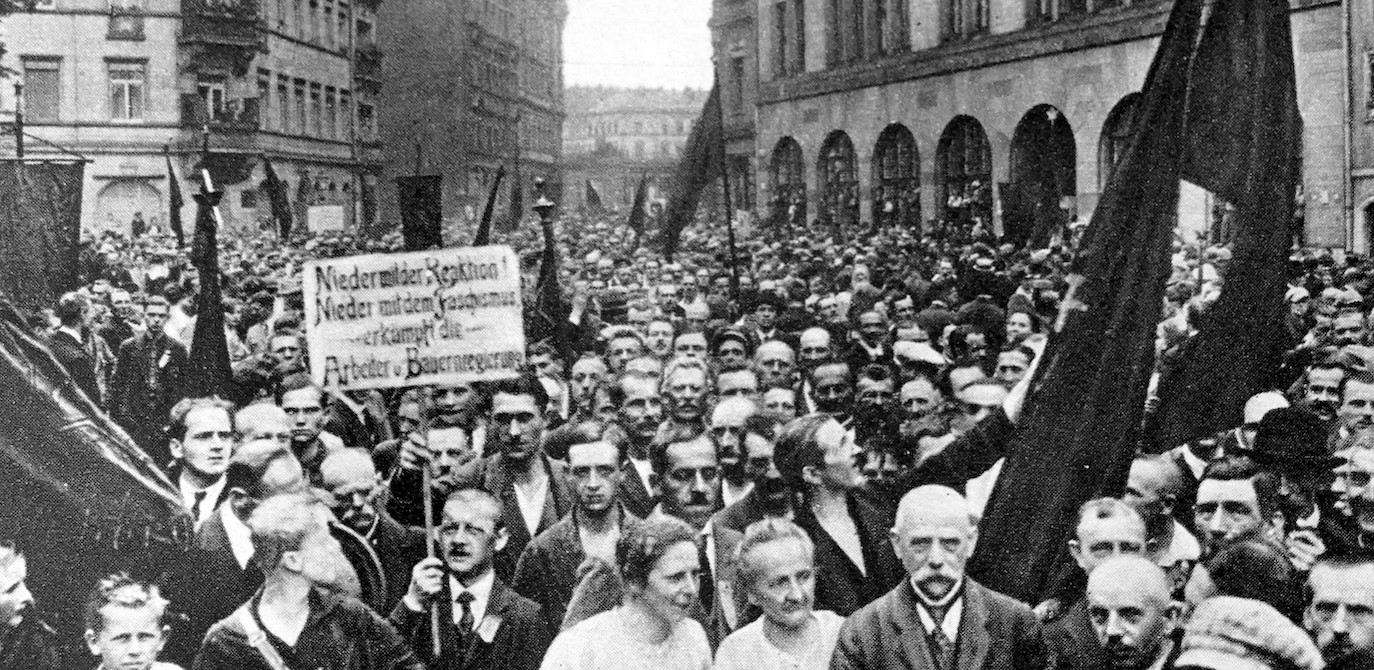
The wages of the German workers are so low that they bear no comparison whatever with the wages of any other country. In Berlin, the highest wages paid in the week from September 10. to 17. in the printing trade were 100 to 110 million paper marks, the rate of exchange of the dollar being over 100 millions and so-called gold prices being calculated. Thus the workers received scarcely a dollar a week! Even the most incarnate enemy of the worker must recognize that nobody can exist on this. But the workers must and will exist. And if the position of the employed worker is so wretched, what about the vast army of the unemployed? Is it hard to understand that they express their indignation in actions which cannot bring any permanent relief from their unhappy situation? Thus it comes about that the inability of the present rulers to make any inroads on capital is the direct cause of the hunger revolts which we have now experienced in Sorau and other parts of Germany, and which will continue to occur in even acuter forms. In these struggles the government, in which the social democrats wield an overwhelming influence, takes sides against the starving, and mobilizes the armed forces of capital. This government cannot do anything else. On the contrary: if it wants to maintain its position, if it wants to gain the complete confidence of the capitalists, if it wants to fulfil its task of saving capitalism from Bolshevism, it will find itself forced to take even more drastic measures against the working class.
The Minister for Finance of the Great Coalition, Herr Rudolf Hilferding, announced drastic measures against capital. However inadequate these measures were, the attempt to execute them was frustrated by the capitalist system which they were intended to support and strengthen. The measures taken by the present government have proved as powerless as all others to unravel the tangled knot, and they will not unravel it, for the moment of execution of really effective measures would be a moment of danger to the existence of capital. And this the capitalists, as we have seen, will not suffer. They cling desperately to their possessions, and resort to every possible means to maintain their position. It is clear that nothing but the united will of the workers themselves can find and apply the means assuring the solution of the great problems of the present day–the solution which means the breaking down of the capitalist barriers which lie between them and a betterment of their situation. Short of this, the attempt of Herren Ebert and Hilfer ding at restoration is turning in a vicious circle.
II. The State of Emergency in Germany. September 29, 1923.
In the middle of August, the Social Democracy conducted a violent campaign against Gessler becoming the Reichswehr Minister of the Great Coalition. On this rock, the Coalition Government, then in the making, threatened to go to pieces. The Social Democrats gave way. Gessler remained Reichswehr Minister, but the campaign against him continued. A few days ago, the Berlin Social Democratic District Conference adopted a resolution, in which it demanded, in the strongest terms, the removal of Gessler. Two days later the whole public power was handed over to the same Gessler, all constitutional safeguards were suspended, and this–the most significant aspect of the matter–with the consent of the Social Democratic leaders and of the Social Democratic Party Executive.
This is characteristic of the present position in Germany. These measures were necessary, so the Vorwärts, the Social Democratic central organ, maintains, in order to prevent the Republic from being overthrown by a monarchist “right” putch on the occasion of the liquidation of the Ruhr conflict. This danger appears, as a matter of fact, to have been momentarily averted; the movement of Hitler and his armed bands has been brought to a standstill. Hitler will not, for the present, march on Berlin. Nor is it in fact necessary that Bavaria come to Berlin; Bavaria is being set up in Berlin itself. For there is no doubt that a development to the right is now proceeding in double quick time, and with the inevitability of a natural force. The positions held by the workers up to the present are most seriously menaced. The Vorwärts openly admits this. In its morning edition of September 28 it states:
“As to the relation of the Reich to the individual states, it is in the nature of things that, just as in the case of individual citizens, so must the individual states also submit to temporary curtailments of their full powers. We are confident that, everywhere where the State governments stand under Social Democratic influence, this necessity will be acknowledged without more ado.”
The “right” organizations, of course, will not need to impose such restrictions upon themselves. Proceedings against the “right” organizations, such as were still in evidence here and there, will now stop completely. The state of emergency will rather bring grist to their mill. Indeed, their best friends have the whole power in their hands. If Social Democrats were, here and there, appointed as so-called Civil Commissaries, which incidentally, only happened to a very limited extent, this has not taken place in order to secure the rights of the workers, but in order to have Social Democratic assistants in the liquidation of these rights. When the work is advanced to a certain stage, then these also will receive their dismissal.
We have already witnessed something of the kind in Bavaria, where the Social Democracy has smoothed the way for the counter-revolution. The same thing would now repeat itself on a national scale. Provided, of course, if the development should consummate itself in the sense of the “right”, and along the road cleared by the Social Democracy. Opposed to this, however, stand obstacles, both of an external and of an internal political nature. The Government’s position in relation to the Entente is certainly not strengthened by the surrender of all power to the Generals of Wilhelm II. Poincaré will, in laying down the conditions, which, apart from this were already hard enough, have no hesitation in weakening an adversary from whom he must fear revenge. Hard capitulation conditions, however, coupled with the renewal of the Reparations payments, imply an aggravation of the financial crisis, imply an increased expropriation of the middle class, imply more grinding poverty for the working masses.
To be sure, this aggravation of the internal conditions may temporarily increase the ascendancy of the “right”, which regards bayonets and machine guns as the most effective means of healing the wounds. But it must not be forgotten that Germany has a proletariat of fifteen millions, which plays an important role both numerically and as the upholder of production and the transport system, that it can be held down for only a very short time by the methods which are employed in Bavaria, in Italy, in Spain or in Hungary.
Such is the state of affairs in Germany to-day. The black patches on the map of Europe show a further increase. But that is the surest way to hammer the German proletariat into a solid block, upon which all the waves of reaction will ultimately break.
In another place, we bring as a historical document the manifesto of the Communist Party of Germany, in which the Party sets out the position as it sees if it the moment, and makes public its attitude in regard to it.
III. The Position in Germany. October 4, 1923.
Berlin, October 3., 1923. Events in Germany are developing more rapidly than we can follow them; but they are developing in the direction already indicated by us. Things are veering violently to the right. Kahr rules in Bavaria. He is said to have taken over the government. This report is, however, denied. And what need is there for a change of government? Kahr has only to whistle and all the authorities, including those of the Reichswehr, will obey his call. The latest is that he has had one of the members of the social democrat defense units arrested, because he is said to have molested the national socialists. The harmless occupation of the old portion of the town of Küstrin, appears now, according to the more recent official reports, to be a concerted Putsch plan. The guilelessly designated “national communist bands”, of which the first official reports spoke, turn out now to be the “Steel Helm” people who, on the Oder and the Havel and in other places, wished to launch an attack on the 1st of October. The bomb has exploded prematurely.
A number of reckless spirits find themselves in custody. In North Germany the military dictatorship continues. Such measures of freedom as had hitherto existed for the working people were to be entirely done away with by an authorization law, which would empower the government to render invalid, by means of special orders, such laws as the eight hour day law. Behind this authorization law stood the social democratic ministers, as well as the ministers of the People’s Party, but not, however, the parties from which these ministers came. German People’s Party was, of course, heart and soul for this law. But it demanded that it be carried through by a government which the German Nationals, that is, the rightest of the right, should be represented. Nay, more. It demanded that these German Nationals should supplant the social democratic ministers. The social democrats would not immediately consent to this act of suicide. They stood by their ministers; in fact, as an answer to this thrust from the right, they were going to support a motion of the communists which demanded the setting aside of the state of siege in Bavaria which meant the destruction of the legal cloak for the dictatorship. Hence the crisis. This ended, as was not otherwise to be expected, with a compromise. The social democrats gave way.
A cabinet meeting which lasted until the early hours of the morning deliberated on the situation. Up to the time when these lines are given into the press the position is as follows: that in the Bavarian question, the social democrats will vote against the communist motion demanding the abolition of the state of siege. The social democrats agree to swallow the authorization law which will endow the government of the Republic with extraordinary powers, provided that this law shall not remain in force to the March 31st 1924, but only so long as the present cabinet is in office. With regard to the setting aside the eight hour day law, it is stated that “a formula has been found to which all the coalition parties could consent.” In the event of the resignation of the Food Minister for the Republic, Dr. Luther, which up to the present moment has not yet been finally confirmed, the social democrats will assent to this post being filled by a nominee of the agrarians.
The state of confusion obtaining in the social democratic Reichstag fraction is continually increasing. The fraction has held sittings lasting for hours, without coming to any final decision. The leader of the fraction, Hermann Müller, runs to the Reichschancellor, makes a report and the fraction then continues its deliberations. The opposition which has hitherto existed in the fraction is being augmented by all those who have stood behind the Finance Minister for the Republic, Hilferding, whom they do not yet wish to be allowed to fall.
This government crisis only marks a small stage in the great march to the right, which in turn is determined by the outer and inner situation. Poincaré is obdurate. The result is an increase in bitterness which seeks to find vent in a national struggle for liberation. The financial and economic crisis is becoming more acute. The discontent is to be held in check by bayonets.
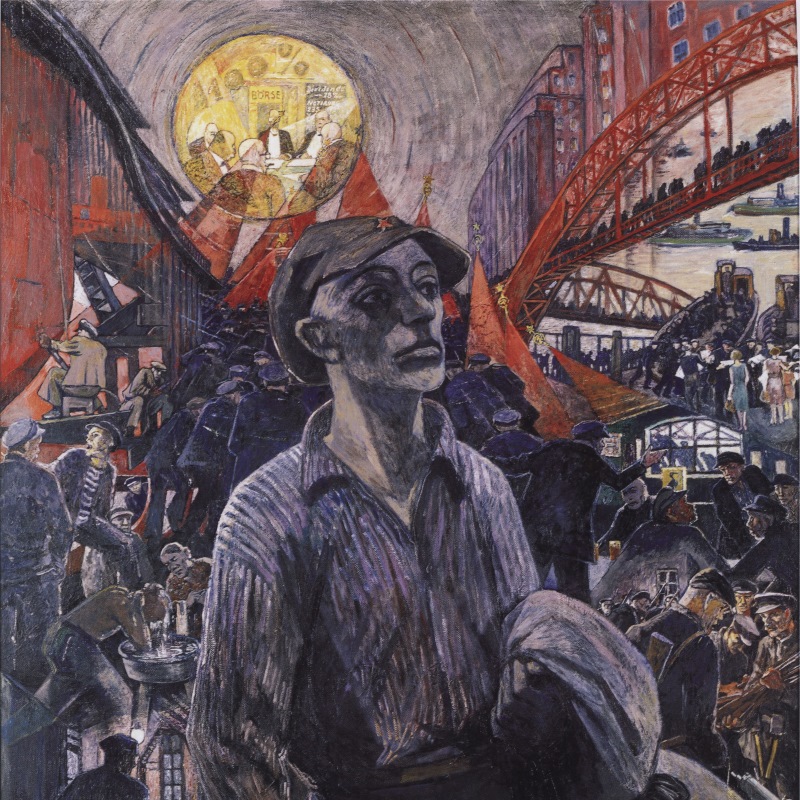
The overwhelming mass of the workers do not as yet see this clearly. The ruling classes are deliberately steering in this direction. They even venture to make such an attempt.
IV. The Situation in Germany. October 18, 1923.
Berlin, 15. October 1923. The Reichstag has passed the Special Powers Bill, the bill which constitutes the external cause of the crisis in the government. It was passed by almost all the votes of the governmental parties. Only a few members of the German People’s Party–it is characteristic that Hugo Stinnes, whose plans do not coincide with the Emergency Law, was among them–abstained from voting. We observe a similar phenomenon on the other side of the governmental coalition, on the side of Social Democracy. The opposition which has hitherto existed here has suddenly vanished. While at the Reichstag session held on Thursday there were still about twenty deputies belonging to the opposition who demonstrated against the bill by withdrawal, at the decisive division on Saturday there were only two such deputies left, who together with the communists and the deputies of the Ledebour group, left the House, whilst the remainder of the members of the social democratic opposition present in the Reichstag calmly voted for this law for the strangulation of the working class. This is a fact demonstrating the utter lack of inner strength in the opposition, which only responds to powerful direct pressure from the masses.
The trend of feeling prevailing among the workers in Germany is very clearly revealed by a report published by the bourgeois Berlin morning paper, the Montag Morgen, concerning the public meetings held by the Communist Party on Sunday in Berlin. This paper states:
“Ten great meetings were held by the communists on Sunday morning in Berlin. For the most part they were well attended. In several places the huge crowds which put in an appearance rendered it necessary to hold overflow meetings in the adjoining gardens. The close of the meetings was not attended by the customary street demonstrations, with cheers and singing, and cries of “Up” with this and “Down” with that. There was no party propaganda, no distribution of admission forms to the German C.P., no sign of the usual agitation work generally accompanying such meetings. The leaders of the meetings declared in many cases that the Party was not anxious to admit new members at present, as the administrative work would only be a hindrance to the preparations for the struggle; the sole point of importance at the present juncture is that the proletarians outside of the party be gathered together in the workshops and factories, and prepared for the acute and decisive struggle which may break out within the next few days. The extreme quietness of the meetings was perhaps the most disquieting thing about them. The communists believe that the signal for the decisive struggle will come from Central Germany, when the military commanders, allied with the Bavarian Bolsheviki of the Right, take steps against the socialist-communist governments of Saxony and Thuringia. The latest ordinations issued by some of these military commanders, combined with Rossbach’s release from imprisonment, and various other things, are regarded as a proof that the decisive conflict is certain to break out within a few days, as the dissolution of the proletarian defence units ordered by the Saxon Commander-in-Chief cannot be simply carried out without more ado. The communists believe that within a few days they will be faced with the duty of defending the Saxon and Thuringian workers against the Bolsheviki of the Right by a relief offensive.”
The quiet and earnest attitude so aptly described by the writer of the this article as being the most disquieting circumtance at the meetings, is characteristic of other parts of Germany as well. The above mentioned paper concludes its article as follows:
“The slogan of “Proletarian Defence” is also proclaimed in the “Roten Sturmfahne” which is now appearing illegally as a substitute for the forbidden Rote Fahne. In this organ, which consists of a single sheet printed on both sides, one reads in the place where the names of those responsible for the paper usually appear: “Responsible Editor: Ewald Kanntomich, Printers and Publishers: Seeckthorn & Co., Berlin.”
“On Sunday the walls in the street were plastered with small communist appeals, summoning the masses to the struggle.”
The indignation of the working class is being particularly aroused by the systematic work and outcry of the Right elements for the establishment of their open dictatorship. The latter no longer make any pretence of concealing their aims, and even calculate on making the starvation of the people, which they deliberately intensify, serve their own ends–for did not a representative of the German Nationals declare in the Reichstag that the people would starve whilst the granaries were full? They are opponents of the Emergency Law, not on account of principle, but because it does not go far enough, and above all because the persons forming the present government are not chosen according to their desires. They are relying upon the “insight” of those holding military power, and will contrive to attain their ends by the aid of these. The latest measures taken by the military commanders–prohibition of the proletarian hundreds in Saxony and Thuringia–tend towards the fulfilment of their wishes, but on the other hand they give rise to immediate possibilities of conflict between the Saxon-Thuringian workers’ government and the reaction, the more so that the Saxonian government has declared the promotion of the defence organizations to be one of its main tasks.
Thus, in Germany, everything is drifting towards a state of affairs which is pertinently characterized by the words above cited. The proletariat recognizes more and more the necessity for unity. Not only in Saxony and Thuringia, but also in Hamburg, Lübeck, Bremen, and other parts of Germany, negotiations have been commenced, and in part brought to a satisfactory settlement, for the formation of a common defensive front. React on stands fully armed–the proletariat is preparing to oppose it by a united fighting front.
V. The Situation in Germany. October 27, 1923.
Berlin, October 26, 1923. The struggles in Hamburg, in which, as it now turns out, not only Communists but also Social Democratic workers have taken part, have been relinquished. Everywhere the attacking Police found the workers positions abandoned. It has not yet come to a general strike in Hamburg. The strike of the dockworkers, however, is still going on. In the meantime extensive strikes are reported from Kiel and Bremen, while a general strike is reported from Frankfort and from several cities in Saxony. The threatened strike of the printer, with its ultimative demand for the abolition of the state of siege and the removal of the prohibition of the Rote Fahne, has not been carried out. On the other hand, the committee of action of the free trade unions of Berlin have made the demand for the abolition of the state of siege their own, and have declared for the enforcement of this demand by all suitable means. It is obvious that this is only intended as a means of placating the workers, but with things as they are at present the workers will be asking tomorrow or the day after, what has become of these demands. From Saxony, reports arrive daily as to the sharpening of the situation. Not only leaders of the workers “Centuries” are being arrested, but also government officials, and not a day passes without the military making use of their weapons.
Meanwhile the economic situation increases in intensity. The collapse of the finances proceeds with incredible rapidity. The increase in prices exceeds all bounds. The position of the workers grows worse every day to an extent which formerly would have been regarded as impossible. Workshops and Factories are closing down and the number of unemployed and those on short time increases enormously. The feeding of the people through public agencies proves to have completely broken down and suffices to meet the needs of only the smallest fraction of the suffering population. People set out in droves for the potato fields and, in spite of all prohibitions and in spite of the police guards, attempts are made to remove potatoes from the fields in order to stay the pangs of hunger.
These conditions not only obtain in the “Bolshevik-tainted” North, but also in the “True German and Marxist-free” kingdoms of Kahr, Ludendorff and Hitler. A telegram of the Berliner Tageblatt reports from Munich today:
“There are daily repeated in the markets of Munich those scenes of mule or eloquent desperation of which the whole of Germany is now full. A means of payment having a constant value is announced for Bavaria, but it has not yet materialized and up till now even the rapid and daily increasing wages of the manual workers fail to keep pace with the hourly increasing prices of food–not to speak of the incomes of the officials and professional men. The prices are enormously high and goods scarcely obtainable. The excited crowds demonstrate in front of the Bakers’ shops which contain not a single loaf of bread, and in the Butchers’ shops there hang a few sausages against the bare walls. In the cattle market only a quite insufficient quantity of cattle are offered for sale; the wholesale prices for swine and oxen are five times that of the previous week and for calves and sheep seven times. In spite of this, all the available cattle are sold in a few minutes. The middle classes have given up eating meat, except where they have been able to overcome their repugnance and dog flesh has appeared on the market. They have been long strangers to beer, tobacco and milk. It is true the manual worker is not held back by the milliard price demanded for beer–3% to 5 Milliards a pot–and between the work place and the beer shop the pots of beer pass and repass uninterruptedly. The proclamations of the General State Commissary remain scraps of paper and fail to frighten the dullest clod of a peasant and the usurious trader.”
Of special interest is the report concerning the misery of the so-called middle classes, i.e. those circles which have expected most from the Right Dictatorship and from whom the best supporters of Kahr and Hitler are recruited. In the North the feeling of the middle classes is already marked by a change in favor of the workers. They suffer from the same misery as the proletariat and realize that a betterment of their position can only result from a betterment of the position of the proletariat.
The hostility which the efforts of the workers previously met with from precisely these middle classes appears now to have disappeared. It is known that in Hamburg small traders and business people supplied the fighting workers with provisions, provided them with shelter, cared for the wounded and rendered them assistance during their retreat.
In the meanwhile there is another crisis in the Reich’s government. There is a conflict raging on account of the attitude towards Bavaria. The Social Democrats are pressing for drastic action against the national traitors and mutinying Generals in Munich. They seek to persuade Suesemann and the bourgeois members of the cabinet not to make any concessions. They are quite unable to understand why the government shows such great forbearance, this same government which proceeds so sharply against Saxony, where the constitution has not been infringed in the least. Indeed, the Social Democrats are often puzzled by what previously was perfectly clear even to the veriest infant in the Social Democracy. The conflict is finally not a question of the formal violation of the constitution and of the idea of national unity, but a question which is concerned with certain deep-lying interests of the classes. Kahr, Hitler and Ludendorff are the most rabid representatives of the Stinnes people, of the great ground landlords, of the feudal officers’ corps–in a word–of the leading sections of the bourgeoisie. They wish to represent these interests by methods which are incompatible with the methods of government hitherto prevailing, of parliamentarism and of equal rights. Kahr and Stresemann, Luther and Knilling, Geßler and Ludendorff are united in their aims, they only differ as to methods. On the other hand, the Social-Democratic-Communist Government in Saxony represents–or at least is endeavoring to represent–the interests of the workers, at the expense of the war-profiteer, of the great land owners–in one word–the great bourgeoisie. The Reich’s government will therefore, have nothing to do with the realizing of the aims of the Saxon government, nor even with the constitutional methods for the attainment of these aims. Hence its attitude towards Saxony and towards Bavaria. In Saxony, Müller, the dictator, is given a free hand to proceed against the government, against the working class. And in Munich, there of course, a Minister is sent in order to negotiate, in order to arrive at an agreement, where finally there only exists “differences concerning so-called personal questions Hence the vain entreaties of the Vorwärts and of the Social Democratic ministers. Hence also there takes place what Bavaria and Ludendorff wish, not only in Bavaria but also in Saxony. And if the Vorwärts fails to comprehend this also, still it is being grasped by continually broader sections of the Social Democratic workers.
The Bavarian Social Democrats no longer believe in the help which is to come to them from Berlin, from the Republic. A portion of them sought to obtain shelter under the wing of the French, and wanted to proclaim the independence of Pfalz. It is characteristic that the leader of this movement is that Hoffmann who, at one time, was Minister President in Bavaria and who called the Reichswehr to Bavaria in order to crush the Soviet Republic there. He has saved the bourgeoisie, in return for which he has to seek refuge under the French bayonets! In the fate of these Social Democrats, one sees in a miniature form the fate of Social Democracy as a whole: four years of Social Democratic policy, which had all the state and social means of power at its disposal, and today, Germany stands on the verge of a White Dictatorship which will make an end of the Social Democrats just in the same way as it will the Communists. And the worst part of the whole business is, that even today, the Social Democrats do not possess the strength to pull themselves together and to offer a bold front and a strong fist to the threatening catastrophe. Nay, they hope by gratuitous service to the reaction, by sowing confusion in the Banks of the working class who are prepared to fight, to secure their right to existence.
The influence of the Social Democratic and trade union leaders is the greatest hindrance to united and determined action by the working class, namely, the influence which these leaders exercise over the so-called Left of the Party which has the masses of the Social Democratic workers behind it. For these, however, there remains no choice. The United Front from below is becoming continually stronger. The revolutionary mood of the workers increases day by day. The isolated outbreaks in which the present movement finds vent do not serve to cool off this mood, but on the contrary only foment it the more. The culminating point of the crisis has not yet been reached.
International Press Correspondence, widely known as”Inprecorr” was published by the Executive Committee of the Communist International (ECCI) regularly in German and English, occasionally in many other languages, beginning in 1921 and lasting in English until 1938. Inprecorr’s role was to supply translated articles to the English-speaking press of the International from the Comintern’s different sections, as well as news and statements from the ECCI. Many ‘Daily Worker’ and ‘Communist’ articles originated in Inprecorr, and it also published articles by American comrades for use in other countries. It was published at least weekly, and often thrice weekly. A major contributor to the Communist press in the U.S., Inprecorr is an invaluable English-language source on the history of the Communist International and its sections.

