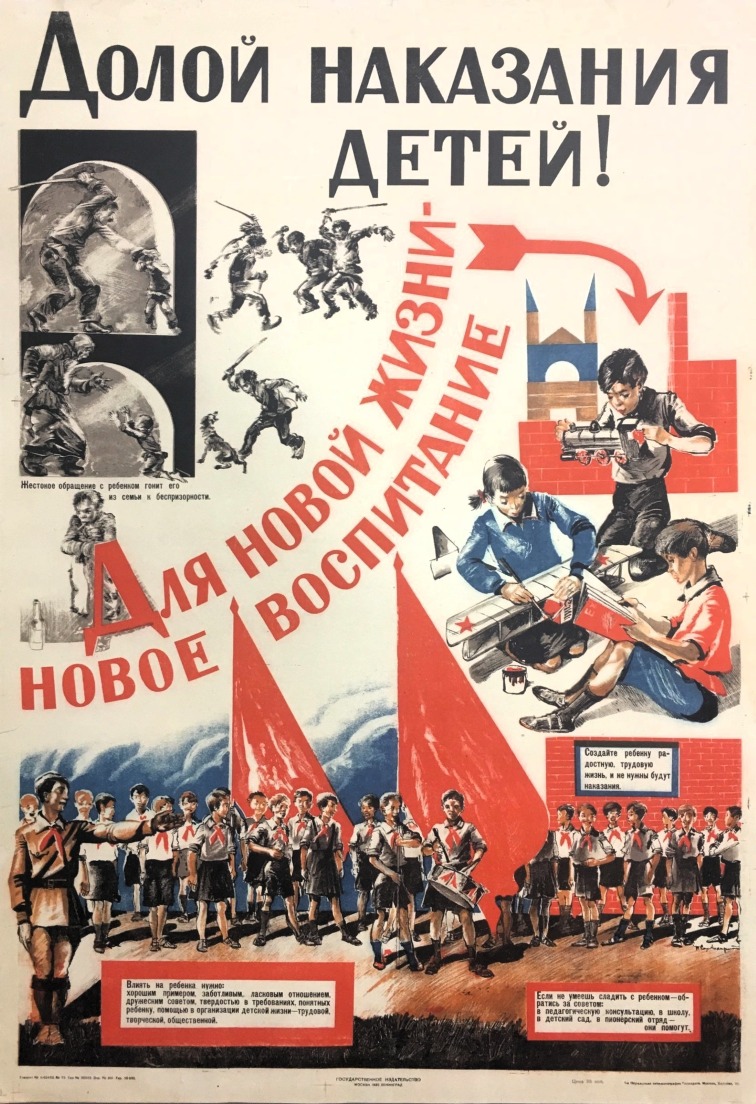
Resolution of the Presidium of the Young Communist International on the state of current work and calling for a new approach to organizing children in response to the sharpening social crisis internationally.
‘Questions and Tasks of the Communist Children’s Movement’ from International Press Correspondence. Vol. 10 No. 32. July 10, 1930.
1. The Presidium of the E.C.Y.C.I. declares that at the present time the Communist children’s movement is going through a serious crisis. This crisis is characterised mainly. by continuous decline in the membership of the Communist Children’s organisations in a number of the most important countries, by the isolation of the children’s leagues and by the inability to satisfy the needs of children of the various elements and of various ages.
2. The causes of the crisis are: 1. An unmistakable misunderstanding which exists in the Y.C.L. of the character and tasks and concrete forms of work amongst children. Instead of bringing the children together on a large scale in the most varied forms, the children’s organisation was built on almost the same lines as the Party and the Y.C.L., mechanically carrying over the forms of Party and group work, which inevitably led to a transformation of the children’s organisations into a children s Communist Party. At the same time we find also restrictedly cultural work with outright social democratic tendencies. 2. Absolutely inadequate guidance and attention by the Y.C.L. and the Party in connection with the children’s movement. The necessary cadres of tested leaders were not released by the League Committees of the Y.C.L., and prompt energetic measures were not taken to ward off the clearly maturing elements of the crisis in the children’s movement. The resolutions adopted in this connection, even including the resolution of the November Plenum of the Y.C.L. were inadequate and even to some extent erroneous, so that they did not point out the way to improve the situation and therefore only contributed to making conditions worse.
The crisis of the children’s movement in a number of most important countries arose on the one hand in a situation of radicalisation of the working masses, general growth of the influence of the Communist movement and increase in the activity of the proletarian child masses and on the other hand under conditions of extensive development of the social democratic and bourgeois children’s organisation. This contrast in development shows clearly that great mistakes have been made in our children’s work.
3. The Presidium, therefore, considers it necessary to radically reorganise the Communist children’s movement and transform it into a real Communist mass organisation of proletarian and working children.
The task of the Communist children’s movement consists in making the broad masses of proletarian children understand their class situation and recognise the necessity for the class struggle, thus training them in a spirit of Communism on the basis of the participation of the children in the class struggle of the proletariat. All of this can occur only on the basis of the development of the widespread activity and self-sacrificing individual work of the children, utilising the various organisational forms and live methods of work and satisfying and organising the various needs of the different elements of proletarian children within the children’s movement.
Consequently, it is entirely wrong to identify the attitude of the Communist children’s organisation towards the mass of proletarian children and the existing mass organisations with the attitude of the Communist Parties towards the big mass organisations (trade unions, Y.C.L., Cooperatives) etc., or with the attitude of the Y.C.L. to the so called transmission belts (sport and cultural organisations), for example, the view that special auxiliary children’s organisations, such as Red Lancers, proletarian Boy Scouts, etc., should be built up side by side with the Communist children’s movement, can only be considered as an expression of sectarianism.
4. The varied forms and methods of work among children must correspond to the various organisational forms applied to the masses of children under Communist influence. We must utilise all opportunities for organising the masses of children, i.e. establish school, sport, industrial, tourist, cultural, general educational, music organisations and such like, which even if they vary widely in character, nevertheless form a united Communist children’s movement under the united leadership of the YCL and the Party, with common Communist principles and duties.
5. As a result of the varying capabilities and requirements of the children the nature of the work of the Communist children’s movement must be many-sided. The work of the various organisations must be based on a common character according to the following guiding points: participation in the struggles of the adults, mobilisation of the child masses on the basis of children’s demands around the general slogans of action, and adapting all activity to the understanding of the children.
Economic and school struggles of the proletarian children and all wage-earning children (for example against corporal punishment, for hot food, for school supplies and clothing, against reactionary teaching, against the application of disciplinary measures to revolutionary teachers etc.).
Struggles against national, religious and military training in and outside the schools.
Popularising the life and attainments of the children of the Soviet Union, and Socialist construction, contact with the children of the Soviet Union and other countries, popularising the experiences of common struggle, preparation for constant readiness to defend the Soviet Union.
Systematic work in the rival camp to disrupt its ranks and win over the proletarian children for the Communist children’s movement.
All organisations must have common features, such as badges, oaths and regulations, which are suitable for all children. For all organisations the support of the struggle of the proletarian children of the schools and factories, as well as participation in the activities of the entire organisation, in the demonstrations and struggles of the Y.C.L. and the C.P. and also of the working class, distribution of the children’s press, etc. must be made obligatory.
Contacts and exchange of experience between the organisations must be established and collective work must be carried on in the organisations themselves.
6. Communist children’s organisations can be set up in factories, clubs, mass organisations of the adults and on a residential basis wherein strong leadership on the part of the party and the Y.C.L. must be assured. In the effort to reach the broadest possible masses of children we must utilise also the influence and the opportunities offered by the revolutionary mass organisations (Red Aid, W.I.R., trade unions, sport organisations, etc.). Therefore, insofar as Therefore, insofar as we are not in a position to bring all workers’ children directly into our organisation at once, the establishment of children’s organisations and groups in these other organisations is permissible. These sections and groups must be considered as friendly organisations, and the way must be paved for unified leadership. (through common agreements, common regulations, etc.). The question of the formal amalgamation of these organisations with our children’s league can be worked out in individual cases according to the circumstances.
7. In connection with the tasks of the basic change in the children’s movement, the entire system of leadership must be radically transformed and made elastic and many-sided so that a true leadership and development of the Communist children’s Movement is assured. The following concrete measures are necessary:
a) Reorganisation of the Pioneer Bureau of the Y.C.L., transforming it into an organ of leadership over all organisations, which issues slogans at the proper moment, makes use of experience and extends it, works out methods and character of the activity of the various organisations, organises the training of leaders and makes the immediate live support of the organisations its chief task. The bureau is to draw into its work specialists in the various fields, adult workers, mothers and members of the revolutionary workers organisations.
b) The active children must be drawn into this work on a large scale, their importance in the leadership is to be increased and special meetings, conferences, meets, courses, etc. are to be organised both for the movement as a whole and for the individual organisations.
c) The children’s press must be developed in various forms on a broader scale, and the printing of children’s papers must be guaranteed. Furthermore, artistic publications and fiction are to be issued for the children. In every country there be a uniform publication for the entire movement.
d) The reorganisation of the Communist Children’s Movement calls for the providing of reliable Y.C.L. members. The Presidium of the Y.C.L. proposes to all C.C.s of the Leagues a mobilisation of League members for the work among children. Such leaders must be systematically trained in schools, correspondence courses, etc.
e) The Central Committees of the Communist Children’s organisations in all countries must be strengthened. The instructors and representatives of the Y.C.L. must include instruction for the children’s movement in their own activity. The Secretariat is instructed to take the necessary measures for carrying out this decision.
f) The work of the International Children’s Bureau must absolutely be reorganised on the same principles. This work must be brought near to the masses in the Pioneer Leagues by a serious study of the various problems of the children’s movement. The I.C.B. must work out before the world, rally the main practical and organisational questions of the new line.
8. The Presidium of the Y.C.L. considers it necessary to on serious systematic work among the Communist Parents. The Presidium instructs the Secretariat to work out corresponding instructions for the Communist Parties in conjunction with the I.C.B. and the Org. Department of the C.I.
9. The mobilisation of the proletarian children in all countries on the occasion of the Rally and the Second International Congress must be made the starting point for carrying out the change in the work among children.
10. The Presidium instructs all League organisations to start on the reorganisation at once in the spirit of this resolution and to develop a discussion on this basis in the international press and in the Communist Children’s Organisation on the practical questions of reorganisation, for the purpose of preparing for the international leaders conference which is to be held at the close of the Rally. On the basis of this discussion the international conference of the leaders of the Communist Children’s Movement must adopt the necessary resolutions for giving concrete form to the present resolution.
International Press Correspondence, widely known as”Inprecorr” was published by the Executive Committee of the Communist International (ECCI) regularly in German and English, occasionally in many other languages, beginning in 1921 and lasting in English until 1938. Inprecorr’s role was to supply translated articles to the English-speaking press of the International from the Comintern’s different sections, as well as news and statements from the ECCI. Many ‘Daily Worker’ and ‘Communist’ articles originated in Inprecorr, and it also published articles by American comrades for use in other countries. It was published at least weekly, and often thrice weekly.
PDF of full issue: https://www.marxists.org/history/international/comintern/inprecor/1930/v10n32-jul-10-1930-Inprecor-op.pdf

